DbcultAccessing Vault...
Cult Review
Senior Film Conservator
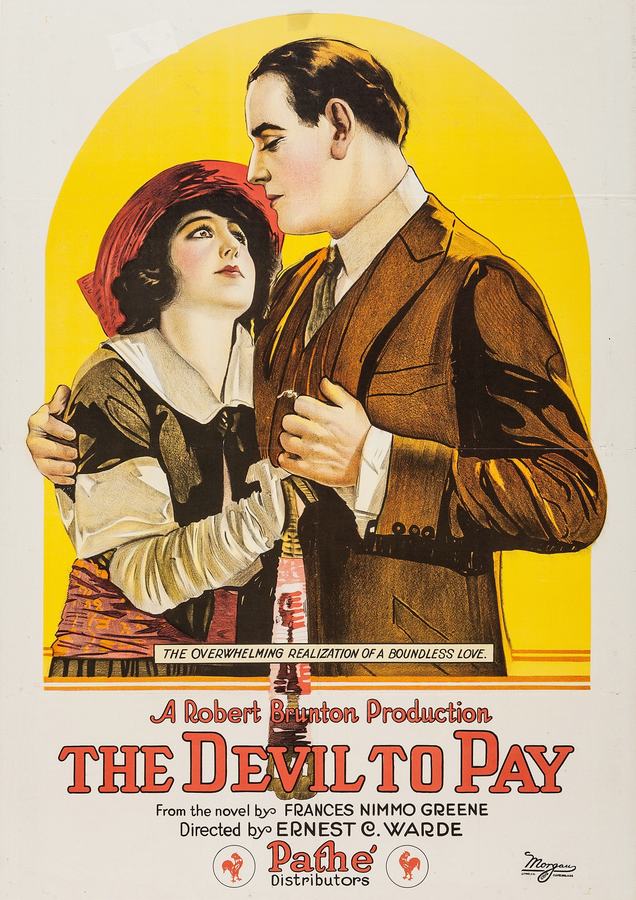
The 1920 cinematic landscape was often dominated by clear-cut delineations of virtue and vice, yet The Devil to Pay introduces a protagonist—or rather, an antagonist of such central gravity—that it challenges the simplistic moralities of its contemporaries. Brent Warren, portrayed with a chilling, calculated stillness by Robert McKim, is not merely a criminal; he is a social predator who views the legal and political structures of Hampton as personal playthings. Unlike the more overt villainy found in The Wolf Woman, Warren’s malice is wrapped in the fine silk of respectability. He is the quintessential man of the people, a facade that makes his betrayal of George Roan all the more harrowing. When he sends Roan to the gallows, he isn't just disposing of an accomplice; he is attempting to execute his own conscience. The film meticulously tracks the erosion of this facade, showing how the weight of a secret can turn a titan into a trembling shell of a man.
Roy Stewart’s Cullen Grant serves as the narrative’s moral compass, yet he is far from a one-dimensional hero. His pursuit of Warren is complicated by his history with Dare Keeling, a woman who remains stubbornly loyal to the man who would eventually destroy her world. This romantic friction adds a layer of psychological complexity rarely seen in early silent dramas. Grant’s struggle is not merely with the law, but with the collective blindness of a town that refuses to see the monster in their midst. In many ways, his uphill battle mirrors the investigative desperation seen in The Man of Mystery, where the truth is obscured by layers of social standing and deceptive appearances. Grant’s alliance with Larry, Dare’s brother, provides a necessary bridge between the sterile world of the courtroom and the visceral reality of Warren’s crimes.
The most audacious element of The Devil to Pay is undoubtedly the 'miracle of surgery' that brings George Roan back from the dead. While modern audiences might find the concept of a man surviving a hanging through surgical intervention to be a leap of faith, within the context of 1920s storytelling, it serves as a powerful metaphor for the inescapability of the past. Roan becomes a literal ghost in the machine of justice. This plot point shifts the film from a standard political thriller into the realm of the uncanny, reminiscent of the atmospheric dread found in The Haunted House. The moment Roan enters the courtroom is a masterstroke of silent cinema suspense—the visual of the man Warren thought he had permanently silenced standing as a living indictment is a visceral shock that triggers Warren’s final descent into madness.
The cinematography in The Devil to Pay utilizes shadows and tight framing to emphasize Warren’s claustrophobic mental state. As the mysterious phone calls begin to haunt him, the camera lingers on his face, capturing the minute tremors of a man losing his grip on reality. This focus on psychological interiority distinguishes the film from more action-oriented fare like Baree, Son of Kazan. The director understands that the true horror isn't the threat of prison, but the internal realization that one's sins are no longer hidden. The phone, a relatively modern invention at the time, is used here as a conduit for the supernatural—or perhaps just the hyper-vivid manifestations of Warren’s guilt. It is a proto-noir technique that anticipates the technological anxieties of later decades.
Fritzi Brunette as Dare Keeling delivers a nuanced performance that captures the agony of misplaced loyalty. She isn't just a damsel in distress; she is a woman caught between two eras—the old world of blind devotion and a new world of harsh accountability. Her eventual turn toward Grant for solace is not a simple romantic ending, but a weary acceptance of the truth. Joseph J. Dowling and George Fisher provide solid support, ensuring that the world of Hampton feels lived-in and authentic. The ensemble work here is much more grounded than the theatricality often found in Polly of the Circus, lending the film a gravitas that supports its darker themes.
At its core, The Devil to Pay is an interrogation of the American power structure. It asks whether a man can ever truly be 'above' the law if he cannot escape his own mind. Warren’s ultimate suicide is the only logical conclusion to a life built on the exploitation of others. It is a starker, more cynical ending than one might expect, avoiding the easy redemption arcs found in In Bad. The film suggests that while the legal system (represented by Grant) is necessary, the ultimate justice is often internal. Warren is his own judge, jury, and executioner. This theme of self-imposed punishment is a recurring motif in high-brow silent drama, providing a psychological depth that elevates the film above its genre roots.
When comparing The Devil to Pay to other works of the era, one can see a distinct evolution in narrative complexity. For instance:
The direction by Ernest C. Warde (though often uncredited or overshadowed by the writers Jack Cunningham and Frances Nimmo Greene) shows a keen understanding of pacing. The transition from the political maneuvering of the first act to the psychological horror of the second is handled with a seamlessness that prevents the film from feeling disjointed. The use of the courtroom as a stage for the 'miracle' is particularly effective, utilizing the space to emphasize the isolation of the defendant. Unlike the somewhat frantic energy of Right Off the Bat, there is a somber, deliberate cadence to this film that demands the viewer's full attention. It is a work that respects the intelligence of its audience, trusting them to follow the intricate web of evidence and emotion.
The trope of the resurrected witness would go on to become a staple in crime fiction and film noir, but in 1920, it carried a weight of profound novelty. It tapped into the post-WWI fascination with medical advancement and the spiritualist movement’s obsession with life after death. The Devil to Pay manages to ground these high-concept ideas in a gritty, realistic setting, making the 'miracle' feel earned rather than gimmicky. It stands as a testament to the creative ambition of early cinema, proving that even a century ago, filmmakers were pushing the boundaries of what a 'crime drama' could be. It is a dark, challenging, and ultimately rewarding piece of film history that deserves a place alongside the more well-known classics of the era.
In its final moments, the film offers no easy catharsis. Dare’s turn to Grant is a quiet, almost mournful acceptance of a new reality. The devil has been paid, but the cost has been exorbitant. The town of Hampton is left to reckon with its own complicity, and the audience is left with the haunting image of a man who had everything and chose to trade it for a handful of dust and a guilty conscience. This is cinema at its most moralistic and its most macabre, a combination that remains potent even today.
A masterclass in silent suspense and psychological disintegration. 9/10.
IMDb 4.5
1930
Community
Log in to comment.