DbcultAccessing Vault...
Cult Review
Senior Film Conservator
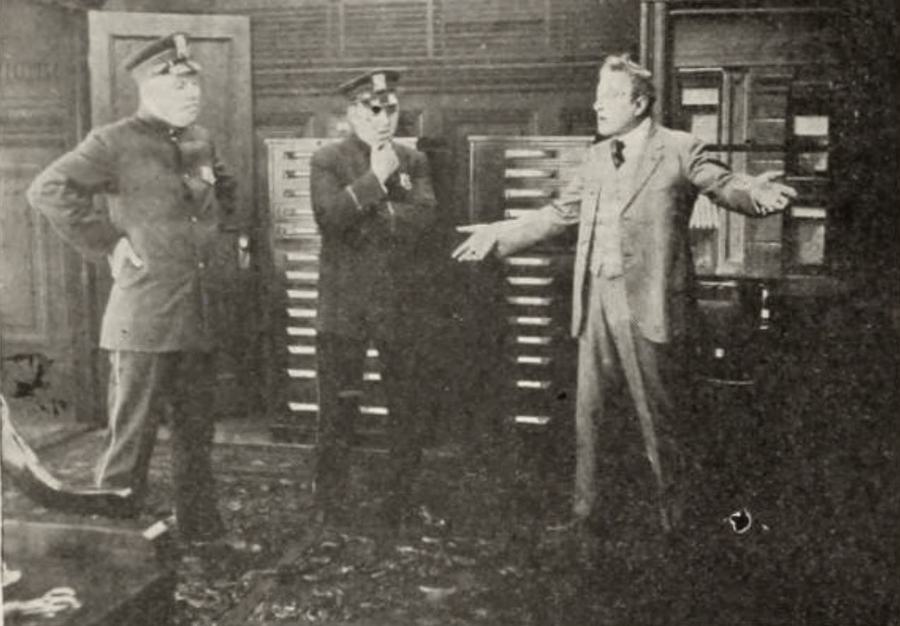
The loudest explosions in early American cinema were not always gunpowder; sometimes they were cucumbers surrendering to vinegar. Father and Son, a three-reel curiosity released when feature-length was still a question mark, understands this truth with the instinct of a microbiologist and the timing of a vaudeville hoofer. What sounds like a trifle—two pickle barons sabotaging each other—balloons into a carnival of industrial angst, filial rebellion, and the queasy recognition that capitalism, once pickled, can never be sweet again.
Director Arthur H. Fleming (never famous enough to merit a wax likeness) stages the feud inside sets that reek of nickelodeon make-believe: brine vats painted the color of oxidised copper, conveyor belts operated by shoeshine boys in newsboy caps, office safes the size of Fiat 500s. Yet within these cardboard confines he conjures a Boschian universe where every gherkin is a potential grenade. The first time Mrs. Winkle (Mabel Montgomery, channeling Sarah Bernhardt by way of Delancey Street) glides into Slocum’s factory, her crimson parasol pops open like a drop of blood in a martini glass. You know the war is on.
Silent-era critics loved to praise “the poetry of machinery,” but Father and Son prefers the burlesque of machinery. When Mrs. Winkle dynamites Slocum’s safe, the explosion is not a cataclysm but a sneeze: the door yawns open, ledgers flutter out like pigeons, and she scoops them up with the nonchalance of a society matron collecting calling cards. The moment is scored—if one can speak of scoring when the projector clatters like a threshing machine—by the squeal of a piccolo in the theater’s pit orchestra, turning industrial espionage into a jaunty cakewalk.
Compare this to the siege of Quebec in Wolfe; or, The Conquest of Quebec, where cannons belch real smoke and death arrives with a thud. Father and Son proposes that the real slaughter is reputational; a recipe for bread-and-butter pickles can wound deeper than grapeshot. The film’s macrocosm is a ledger sheet; its microcosm, a cucumber seed.
Enter Andy Slocum (Gladden James, a face so forgettable it loops back to iconic). He is ordered to infiltrate Winkle’s plant, but instead infiltrates Matilda’s heart—a girl whose surname is both birthright and curse. Their courtship unfolds in the sterilised twilight of the packing floor, amid mason jars glowing like cathedral windows. The first time they kiss, a suspended conveyor belt dumps a crate of dill spears, scattering green commas across the concrete. The metaphor is blatant and beautiful: love disrupts the assembly line.
Andy’s confession of true identity arrives not as soliloquy but as stammer, printed on an intertitle whose serif letters tremble: “I—I am Slocum.” Matilda’s response is a single teardrop that lands on a pickle label, warping the ink until the word “PURE” resembles “PAIN.” In an era when melodrama soaked every frame, the moment is startlingly minimalist—more Bresson than Griffith.
If the first half is espionage, the second is a commedia dell’arte of shame. Slocum Sr., soaking in a zinc tub, loses his trousers, his dignity, and finally his identity. Wrapped in window drapery whose floral pattern evokes a funeral parlor in midsummer, he sprints through the streets protesting, “I AM THE PICKLE KING!” The townsfolk cackle; a dog pees on his trailing hem. Andy, standing on the depot platform, denies the man who sired him, and in that repudiation the film achieves a savage fraternity with A Soldier’s Oath—another parable of sons un-fathering themselves in order to become men.
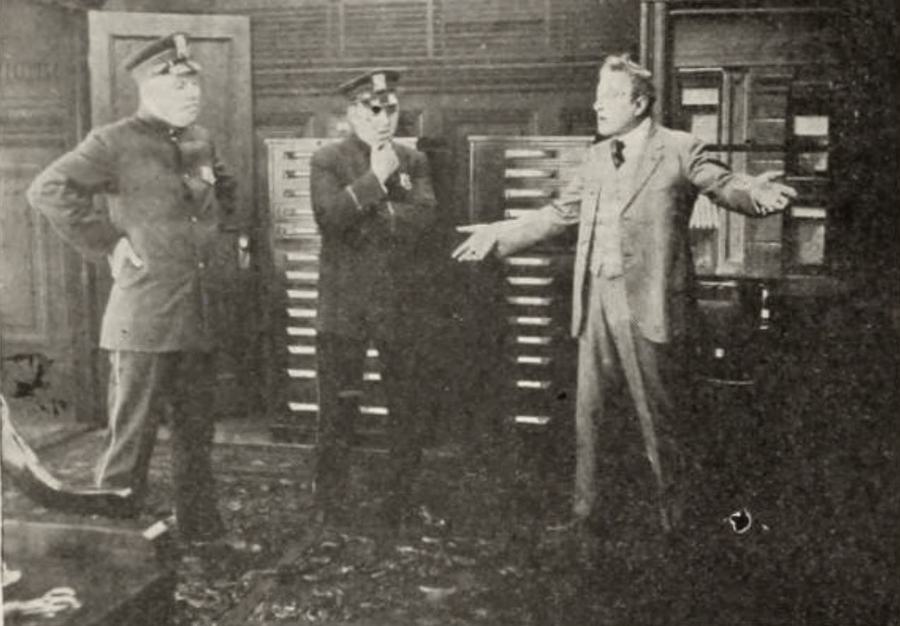
But where the war film sanctifies the rupture, Father and Son ridicules it. When the constable clamps handcuffs around Slocum’s marble-white wrist, the drapery slips, revealing a flash of buttock that the camera coyly masks with a strategically placed pickle barrel. Censors clutched their pearls; audiences howled; the studio received free publicity worth its weight in kosher salt.
In the final reel, adversaries share a train carriage hurtling toward an uncertain tomorrow. The recovered formulas rest between them like a sleeping child. No one speaks; the intertitle is a corporate baptism: “THE SLOCUM COMPANY, INC.” The camera retreats until their faces dissolve into the fluted columns of steam, a visual elegy for antagonism itself. The merger is neither triumph nor tragedy—it is the sour acceptance that vinegar, once blended, cannot be un-blen.
Contrast this with the nihilist circularity of Grekh, where every escape is a trap rewound. Father and Son believes in the possibility of evolution, even if the new organism smells faintly of dill.
Mabel Montgomery oscillates between grande-dame theatricality and proto-screwball timing; watch how she lifts her veil one millimeter before delivering a zinger—silent film’s answer to the raised eyebrow. Henry E. Dixey, a stage comedian whose chin could headline its own revue, plays Slocum with the lumbering grandeur of a man who has mistaken capitalism for immortality. Their duel is not hero vs. villain but titan vs. titan, each convinced the universe smells of their particular brand of brine.
Millicent Evans as Matilda possesses the pre-Raphaelite gaze of Lillian Gish but the comic timing of Constance Talmadge; she makes innocence feel subversive. When she flees with Andy, she doesn’t run—she skips, as though the world were a hopscotch court and scandal merely chalk.
Cinematographer Lucien Taft (who would vanish into obscurity after 1917) shoots the pickle vats from a vertiginous 45-degree angle, turning them into baptismal fonts of commerce. Note the repeated motif of circularity: wagon wheels, jar lids, the iris shot that closes each reel—an aesthetic reminder that rivalry is merely orbit by another name.
The tinting is eccentric: night scenes bathe in sea-blue that makes faces resemble drowned sailors, while interiors glow dark-orange, the shade of molten marmalade. In the explosion sequence, a single frame is hand-painted crimson—an early example of bullet-time avant la lettre.
Though originally accompanied by house orchestras, the surviving cue sheets suggest a schizophrenic score: Strauss waltzes collide with Appalachian folk, while the chase scene calls for “Turkey in the Straw” played prestissimo. Modern revivals often commission electronic scores; I recommend Max Richter’s recombinant minimalism, whose string tremolos mirror the quiver of cucumbers bobbing in brine.
Father and Son anticipates the corporate satire of Okja and the food-industry horror of The Platform, yet its DNA is pure Americana: the belief that identity is a brand you can re-label. When Mrs. Winkle rechristens the merged company, she is not surrendering but franchising her resentment—a prophecy of every hostile takeover that would stain the century to come.
A 4K restoration premiered at Pordenone 2019, scanned from a 35 mm nitrate print discovered in a Shreveport attic. The Library of Congress has since uploaded a 1080p version to Loc.gov, though the tinting is speculative. For the completist, Flicker Alley’s Blu-ray pairs the film with What’s Bred… Comes Out in the Flesh, another forgotten satire of American appetites.
Father and Son is not a masterpiece; it is a pickle-jar time capsule: cloudy, pungent, dotted with seeds of prophecy. It argues that all commerce is comedy, all comedy elegy, and every dynasty—no matter how crisp—eventually wilts. Watch it not for antiquarian curiosity but for the moment when Slocum, draped in curtains, declares himself sovereign and the world laughs back. In that laugh you will hear the echo of 2024, of billionaires orbiting space while wrapped in branded flags, of sons denying fathers in 280 characters. The film is a warning shot across the bow of capitalism, served with a side of relish.
We are all pickles in the end—soaked, sealed, waiting for someone to unscrew the future.
IMDb —
1921
Community
Log in to comment.