DbcultAccessing Vault...
Cult Review
Senior Film Conservator
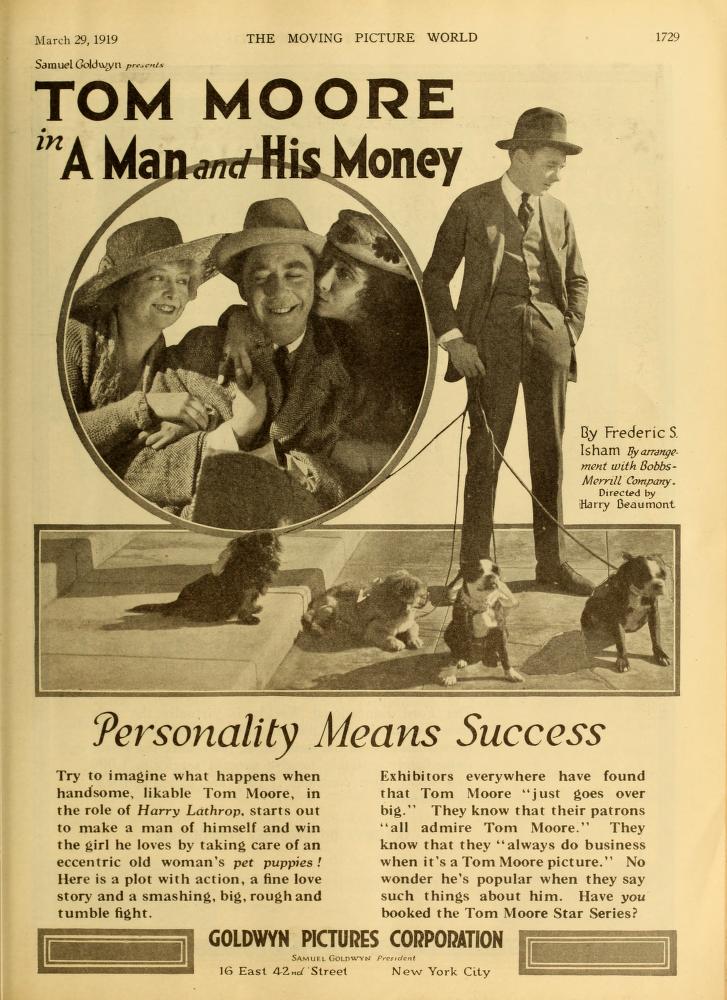
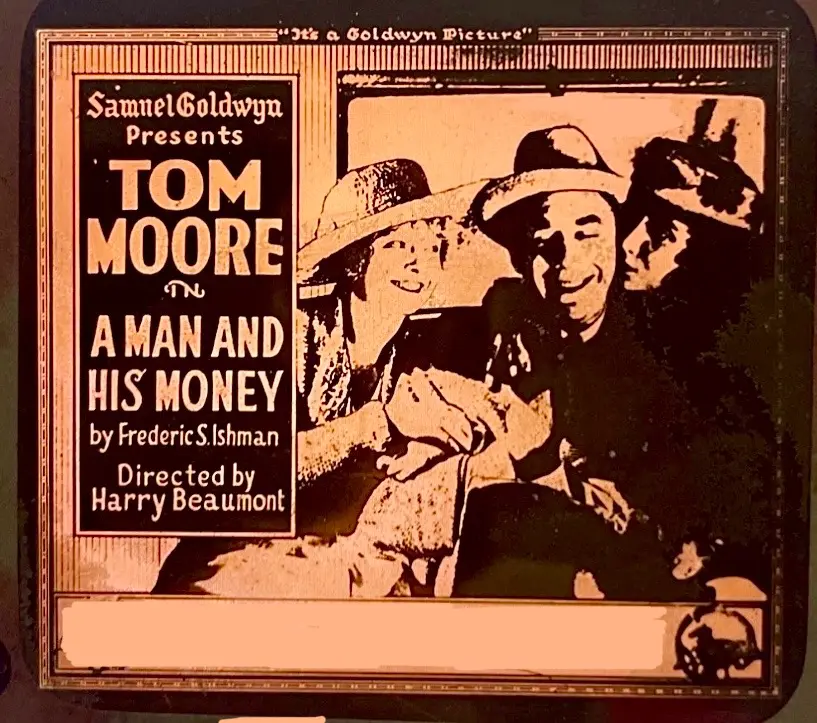
In the vibrant, burgeoning landscape of early 20th-century cinema, where narratives often served as moral compasses for a rapidly changing society, "A Man and His Money" (1919) emerges as a fascinating artifact. This silent drama, a poignant exploration of self-discovery and the redemptive power of love, transcends its era, offering insights into timeless human struggles. It's a film that, despite its age, resonates with an earnestness that often eludes contemporary productions, inviting viewers to ponder the true value of wealth, character, and genuine affection.
Our protagonist, Harry Lathrop, is introduced as the archetypal inheritor, a young man adrift on a sea of unearned affluence. His days, as depicted with a certain decadent flair characteristic of the period's cinematic portrayals of high society, are a blur of lavish expenditures, boisterous wine parties, and the ephemeral company of chorus girls. This lifestyle, while seemingly enviable to some, is painted as ultimately hollow and destructive. Harry’s indulgence isn't merely a matter of taste; it’s a symptom of a deeper malaise, a lack of purpose that inherited wealth often fosters. The film cleverly establishes this early on, not through lengthy exposition, but through vivid visual cues – the sprawling estates, the overflowing champagne, the superficial smiles of his companions. It’s a classic cinematic trope, yet handled here with a degree of conviction that makes Harry’s eventual awakening feel earned rather than contrived.
The catalyst for his profound reevaluation comes in the form of Betty Dalrymple, his childhood sweetheart and fiancée. Betty represents an anchor to a more wholesome past, a reminder of values Harry has seemingly forsaken. Her decision to return his engagement ring, prompted by his inexcusable inebriation at a dinner meant to solidify their future, is more than a lovers' quarrel; it's a stark judgment on his character. This moment, delivered with the dramatic intensity typical of silent film performances, is the emotional linchpin. It forces Harry to confront the abyss he’s created, to see his reflection not as a carefree bon vivant, but as a man whose self-indulgence has alienated the one person who truly matters. The morning after this pivotal rejection, a scene often played for comedic effect in lesser films, is here imbued with a genuine sense of disgust and self-loathing, propelling Harry towards a drastic, life-altering decision.
Harry's subsequent action is audacious and, for its time, quite revolutionary: he persuades his attorney to withhold all funds for an entire year. This isn't just a symbolic gesture; it's a deliberate severance from the very source of his undoing. It’s an act of self-imposed austerity, a quest for authenticity born from desperation. This narrative choice elevates "A Man and His Money" beyond a mere romantic drama, transforming it into a compelling study of character and the search for purpose. Harry doesn't just want to win Betty back; he wants to become a man worthy of her, and more importantly, worthy of himself.
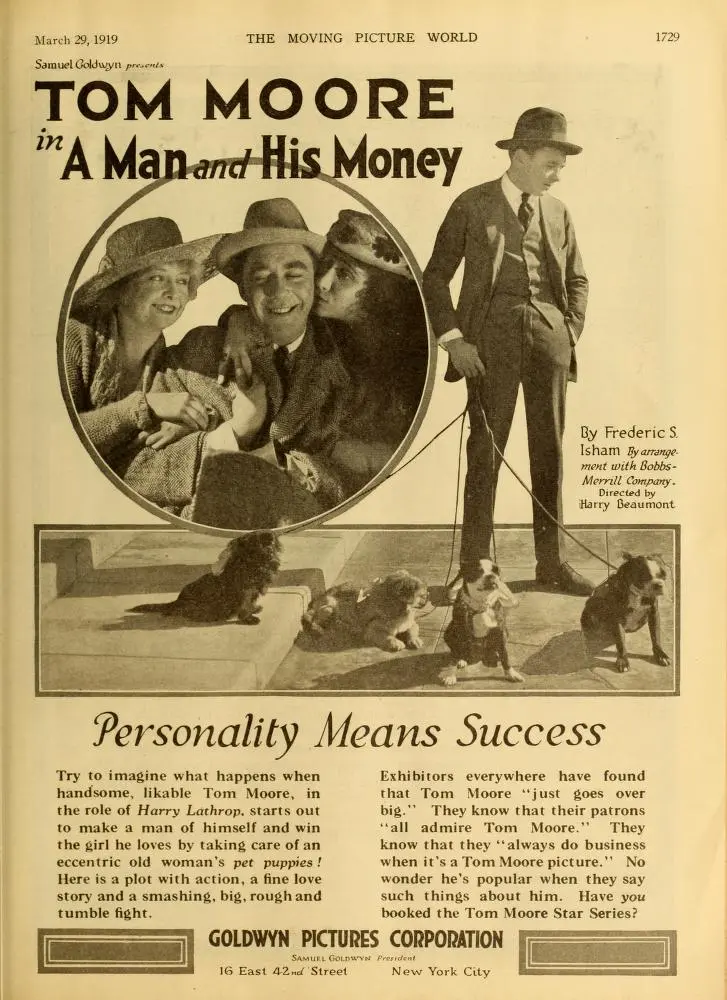
His journey takes him to another city, a blank slate where his past reputation holds no sway. Here, he answers an advertisement for a handyman, a role starkly contrasted with his former life of leisure. The transition is not without its challenges, yet Harry embraces the physical labor and anonymity. His diligence and innate capabilities soon lead to a promotion: he becomes the manager of a kennel on the sprawling estate of Mrs. Johnston DeLong. This unexpected elevation, while still a far cry from his previous station, signifies his burgeoning self-reliance and the recognition of his inherent worth, not tied to his surname or bank account. The portrayal of Harry in this new environment, often shown interacting with the animals, hints at a deeper, more compassionate side of his character that was previously obscured by his superficial pursuits.
As fate would have it, Mrs. Johnston DeLong is none other than Betty’s aunt. Betty, visiting her relative, is naturally appalled to find Harry in such a lowly position. Her initial scorn is palpable, a mixture of disappointment and perhaps a lingering resentment. She cannot yet see the man beneath the soiled clothes, the genuine transformation that has occurred. This dramatic irony is skillfully handled, creating tension and allowing the audience to root for Harry’s vindication. It’s a classic setup that allows the film to explore themes of appearances versus reality, and the often-misguided judgments we make based on superficial markers of status.
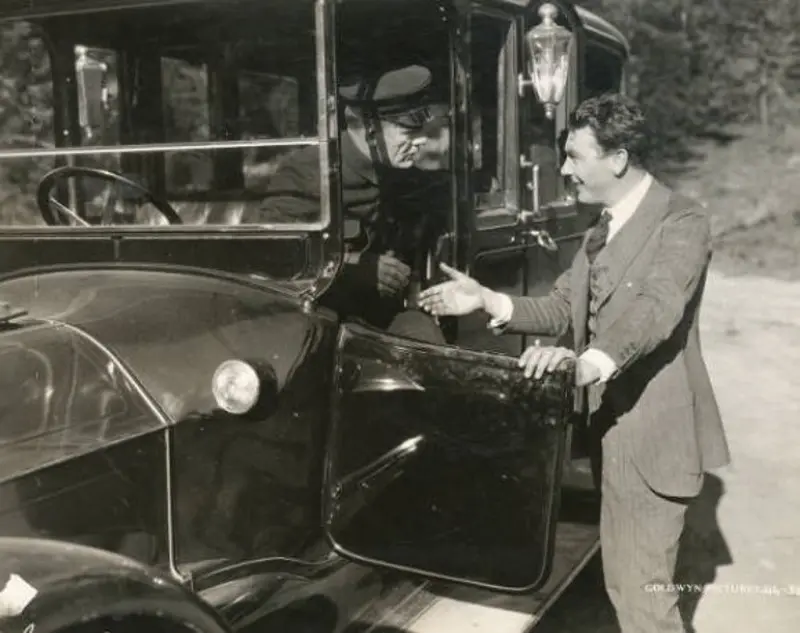
However, the plot thickens with the introduction of Walter Randall, a character designed to embody the very superficiality Harry has renounced. Randall, a man whose chauffeur brazenly boasts that "every dame falls for him," immediately sets his sights on Betty. He is the antithesis of the reformed Harry: charming on the surface, but utterly predatory beneath. Harry, observing Randall’s relentless pursuit, understands the true nature of the threat. This new antagonist provides Harry with a renewed sense of purpose, not just to prove himself to Betty, but to protect her from a genuine danger. It’s a compelling narrative device that shifts Harry from a passive recipient of fate to an active guardian, solidifying his heroic arc.
Betty, maintaining her integrity, steadfastly resists Randall's advances. Her refusal, however, only fuels his villainous resolve. In a dramatic turn, Randall resorts to abduction, forcibly taking Betty to a deserted cabin. This moment ratchets up the tension considerably, transforming the romantic drama into a full-blown thriller. Harry, ever watchful, swiftly discovers their whereabouts. What ensues is a classic cinematic confrontation: Harry, no longer the soft, pampered socialite, engages Randall and his accomplice (the boastful chauffeur) in a brutal physical struggle. The fight, often a highlight in silent films for its raw physicality and clear good-versus-evil dynamic, is depicted with a visceral energy that underscores Harry’s transformation. He fights not for money or status, but for love and justice.
The climax is further amplified by a torrential downpour, a common yet effective cinematic device to heighten drama and symbolize emotional catharsis. Amidst the lashing rain and the aftermath of the struggle, Harry emerges victorious. Betty, witnessing his bravery and selflessness, finally sees beyond his handyman's attire to the true nobility of his character. Her embrace, drenched and defiant, is the ultimate validation of his journey. It is a powerful, wordless declaration that his transformation is complete, his worth proven not by inherited fortune, but by inherent courage and genuine affection. This scene, steeped in dramatic symbolism, serves as a powerful testament to the film's core message: true value lies within, not in external trappings.
The success of "A Man and His Money" largely hinges on the compelling performances of its cast, particularly Tom Moore as Harry Lathrop. Moore delivers a nuanced portrayal, effectively conveying Harry's initial ennui, his subsequent self-disgust, and ultimately, his determined resolve and heroic transformation. His physical acting, crucial in the silent era, communicates a wide range of emotions without relying on intertitles, making his journey palpable to the audience. You truly believe his growth from a dissolute playboy to a man of substance.
Opposite him, Seena Owen as Betty Dalrymple provides a strong, principled counterpoint. Owen skillfully navigates Betty's conflicting emotions – her initial love, her heartbreak, her scorn, and finally, her profound re-admiration. Her expressions convey both vulnerability and an unyielding moral compass, making her character far more than a mere damsel in distress. The chemistry between Moore and Owen, though expressed through the conventions of silent film, is undeniably potent, making their eventual reunion deeply satisfying.
The supporting cast also contributes significantly to the film's texture. Sydney Deane, Eddie Sturgis, and Sidney Ainsworth, though perhaps in less prominent roles, add depth to the narrative fabric. Claire Du Brey and Kate Lester, in their respective roles, help to flesh out the societal backdrop against which Harry's drama unfolds, particularly Lester as Mrs. Johnston DeLong, whose estate becomes the unexpected crucible for Harry’s transformation. Each actor, through exaggerated gestures and facial expressions, masters the art of silent storytelling, drawing the audience into their emotional worlds.
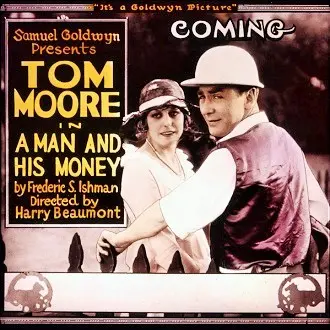
The narrative, penned by Frederic S. Isham, is a testament to the enduring power of classic storytelling archetypes. Isham crafts a compelling journey of a man who must lose everything to find himself, a theme that resonates across cultures and eras. The plot, while adhering to certain conventions of melodramatic silent cinema, is structured with an admirable sense of pacing, building tension effectively towards its rain-soaked climax. The use of intertitles is judicious, providing necessary dialogue and exposition without interrupting the visual flow, allowing the actors’ expressions and actions to carry the bulk of the emotional weight.
The direction (attributed to Tom Moore himself, who often directed his own vehicles in this period, or an uncredited director depending on sources) maximizes the visual potential of the medium. The contrast between the opulent party scenes and the humble kennel, or the serene estate and the desolate cabin, is stark and intentional. Cinematography, while basic by today's standards, effectively captures the emotional landscape, using close-ups to emphasize key reactions and wider shots to establish setting and scale. The film's ability to communicate complex emotions and moral lessons without spoken dialogue is a powerful reminder of the artistry inherent in early cinema. It’s a masterclass in visual communication, where every gesture, every glance, and every set piece contributes to the narrative's emotional resonance.
At its core, "A Man and His Money" is a profound meditation on redemption. Harry's journey is not merely about winning back a girl; it's about reclaiming his soul. The film challenges the notion that wealth equates to worth, instead positing that true value lies in character, integrity, and the willingness to work for what one desires. This theme of self-discovery through hardship is universal and remains as relevant today as it was a century ago. It argues that adversity, when embraced, can be a powerful forge for character, shaping individuals into better versions of themselves.
The film also subtly critiques class distinctions and societal expectations. Harry, stripped of his wealth, is initially scorned, highlighting the superficial judgments society often makes. His eventual triumph is not just a personal victory but a quiet indictment of a system that values inherited status over earned merit. This exploration of class is deftly woven into the romantic narrative, adding layers of social commentary that elevate the film beyond a simple love story. It’s a narrative that champions the underdog, proving that true nobility isn't inherited but forged in the crucible of experience.
Comparisons to other films of the era reveal "A Man and His Money" as a strong exemplar of its genre. While not as overtly political as Abel Gance's J'accuse! or as starkly dramatic as some of the moralistic tales like A Branded Soul, it shares a common thread of exploring human nature under duress. The narrative's focus on personal transformation and the overcoming of moral failings aligns it with films such as Pride, where characters often navigate complex social landscapes to achieve personal honor. The dramatic rescue sequence, a staple of early cinema, might evoke memories of similar climaxes in adventure serials like What Happened to Mary, though "A Man and His Money" grounds its heroics in a more personal, character-driven context rather than pure spectacle. It’s a less sensationalized heroism, one born of necessity and genuine affection.
In its depiction of a man's struggle to earn respect and love, it echoes the earnest endeavors seen in films like The Ring and the Man, where protagonists often grapple with societal expectations and personal integrity. The journey from a life of excess to one of humble service, and the eventual vindication, is a compelling arc that continues to resonate. It’s a timeless narrative, proving that the silent era was capable of telling stories with profound emotional depth and enduring moral relevance.
"A Man and His Money" may be a relic from a bygone cinematic era, but its themes are anything but dated. It’s a testament to the power of silent film to convey complex human emotions and profound moral lessons without the aid of spoken dialogue. The film's message — that true wealth lies not in material possessions but in strength of character, integrity, and the enduring power of selfless love — remains as potent and relevant today as it was in 1919. For those willing to delve into the rich tapestry of early cinema, this film offers a deeply satisfying experience, a journey of a man who finds his true self only when he strips away the superficial layers of his inherited world. It reminds us that sometimes, the greatest treasures are found not in what we possess, but in who we become.
It's a film that deserves to be rediscovered, not just as a historical curiosity, but as a compelling piece of storytelling that speaks to the universal human desire for purpose, connection, and redemption. Its simple yet powerful narrative, coupled with strong performances, ensures its place as a significant, if often overlooked, gem of the silent era. The journey of Harry Lathrop is a reminder that the path to true happiness often requires shedding the very things we believe define us, and embracing the authentic self that emerges from the crucible of challenge.
IMDb 4.1
1930
Community
Log in to comment.