DbcultAccessing Vault...
Cult Review
Senior Film Conservator
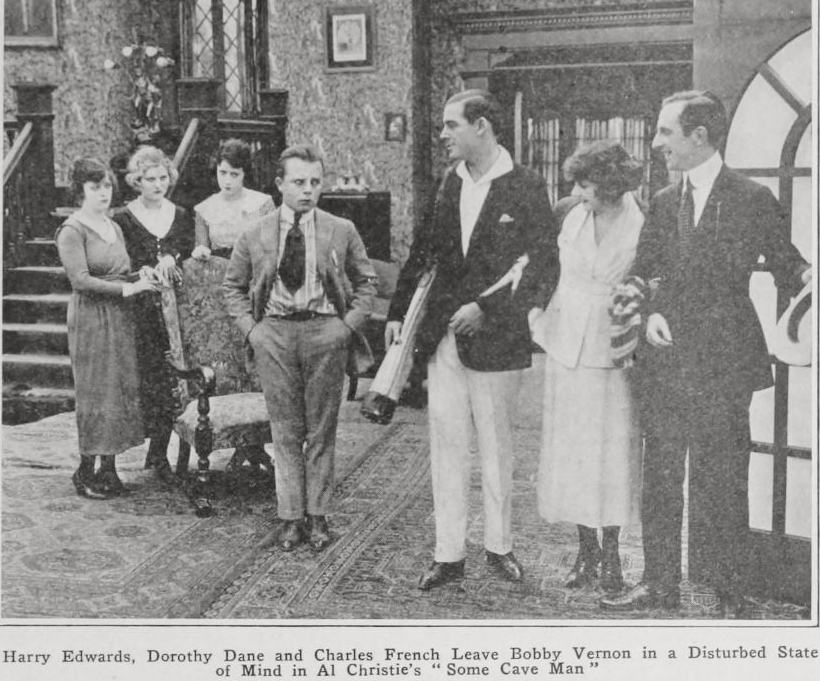
Ah, the silent era! A time of grand gestures, exaggerated emotions, and narratives that, through a contemporary lens, often oscillate between charmingly quaint and utterly bewildering. Today, we're unearthing a cinematic relic from 1918, a film boldly titled Some Cave Man. Right from the get-go, that title promises a certain brand of archaic romance, a primal tug-of-war for affection that, even then, must have raised an eyebrow or two. But what a fascinating window it provides into the social mores, comedic conventions, and burgeoning cinematic language of its time!
Let's set the scene: Bobby Vernon, a name synonymous with early comedic charm, plays our protagonist, a man utterly smitten with Dorothy Dane's character, Dorothy. Bobby, ever the strategist, orchestrates a weekend getaway, a pastoral idyll designed as the perfect backdrop for his grand proposal. One can almost picture the meticulously planned moments, the whispered sweet nothings under a moonlit sky, the carefully chosen flowers. But alas, Dorothy, in a delightful display of early cinematic agency (or perhaps just playful capriciousness), proves a rather elusive prize. She's not one to be easily monopolized, flitting between Bobby and his various rivals with an almost mischievous glee. This isn't the demure damsel waiting to be swept off her feet; Dorothy, at least initially, seems to revel in her suitors' competitive dance.
Bobby, naturally, is distraught. His carefully constructed romantic edifice crumbles before his very eyes. Enter the Greek chorus of sympathetic girl friends, purveyors of dubious wisdom and an almost shockingly direct approach to matters of the heart. Their advice? Embrace the mantra of the tanks: "Treat 'Em Rough." This isn't subtle; it's a direct endorsement of a more aggressive, domineering form of courtship. And here, the film pivots from a conventional romantic comedy setup into something far more audacious and, frankly, problematic from a modern perspective. Bobby, taking this counsel to heart with a literal-mindedness that only silent film can truly capture, decides to embody the titular 'cave man.'
What follows is an act of cinematic abduction. Bobby, with a determined glint in his eye, bundles Dorothy into a motorcar and speeds off into the wild, untamed mountains. The imagery here is crucial: the transition from the manicured lawns of the weekend party to the rugged, primal landscape of the wilderness. It's a visual metaphor for Bobby's own transformation from refined suitor to primal captor. He forces Dorothy to shed her contemporary attire for rudimentary tiger skins, wielding a symbolic 'cave man's club' as a prop of his newfound authority. This scene, undoubtedly intended for comedic effect in its day, now serves as a potent, albeit uncomfortable, reminder of historical gender dynamics and the tropes that once passed for romantic humor. It pushes the boundaries of what's acceptable, even for a silent comedy, and invites us to consider how far our understanding of consent and courtship has evolved.
Yet, the most startling twist in Some Cave Man isn't the abduction itself, but Dorothy's reaction to it. Far from being terrified or indignant, she seems, remarkably, to enjoy the whole affair. Her initial protests quickly melt into a playful submission, a curious acceptance of Bobby's audacious tactics. This is where the film truly demands a suspension of modern disbelief. It's a fantasy, of course, a comedic exaggeration, but it reflects a certain societal fascination with the idea of a woman being 'won' through sheer force of will, an impulse that, disturbingly, persisted in various forms for decades in popular culture. The film culminates in the entire weekend party, including Dorothy's discarded suitors, tracking them down to the mountain cave, not for a rescue mission, but to witness and celebrate the impromptu nuptials, complete with a minister in tow. It's an ending that cements the film's commitment to its outlandish premise, suggesting that sometimes, a little 'rough treatment' (in the comedic, non-literal sense, we hope!) was all it took to seal the deal.
Bobby Vernon, as our titular cave man, delivers a performance that is, by turns, frantic and charming. Vernon was a master of physical comedy, and his transition from flustered gentleman to determined abductor is played with a delightful earnestness that almost makes his questionable actions palatable within the film's comedic framework. His expressions, crucial in a silent film, convey a wide range of emotions, from lovelorn despair to triumphant, if misguided, determination. Dorothy Dane, too, is a revelation. Her portrayal of Dorothy is nuanced; she's not a mere prop in Bobby's scheme. Her initial flirtatiousness, her coy evasions, and then her surprising embrace of the 'cave man' act showcase a performative range that elevates the character beyond a simple damsel in distress. She brings a vivacity and a knowing sparkle to the role, suggesting that perhaps she was playing a longer game all along, or at least found a certain thrill in Bobby's unconventional approach. Charles K. French and Harry Edwards, though in supporting roles, contribute to the ensemble's comedic energy, providing the necessary foils and reactions that ground the more outlandish elements of the plot.
From a technical standpoint, Some Cave Man is a product of its time. The cinematography, while not groundbreaking, effectively tells the story, utilizing the prevailing techniques of early cinema to convey action and emotion. The use of intertitles is sparse but effective, often delivering the pithy lines of dialogue or narrative exposition with a directness characteristic of the era. The pacing is brisk, a hallmark of many silent comedies, ensuring that the audience is swept along by the escalating absurdity of the plot. The shift in setting from the genteel party to the rugged mountains is handled competently, using location shooting to enhance the narrative's dramatic (and comedic) shift. It's a testament to the filmmakers' ability to craft a coherent and engaging story with the tools available to them.
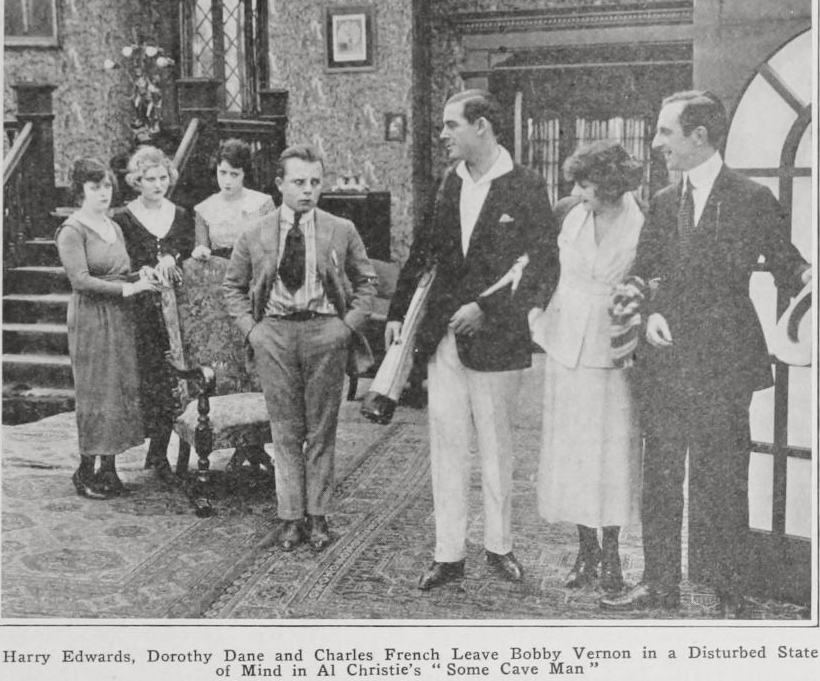
Now, let's talk about the 'cave man' trope itself. This wasn't an isolated incident in early cinema. The idea of the primitive man, the alpha male who takes what he wants, was a recurring motif, often played for laughs but occasionally venturing into more serious, albeit still problematic, territory. It reflected a certain societal anxiety about changing gender roles and the perceived 'softening' of masculinity. Films like this, though comedic, tapped into a primal fantasy, a simplified view of courtship where strength and assertiveness trumped nuanced emotional negotiation. It's a trope that, thankfully, has largely been relegated to the dustbin of history, or at least heavily recontextualized when explored today. However, understanding its prevalence helps us contextualize films like Some Cave Man not just as entertainment, but as cultural artifacts.
When we compare Some Cave Man to other films of its period, we see it occupying a specific niche within the burgeoning landscape of romantic comedies. While films like I Love You might have explored more conventional romantic entanglements, Some Cave Man leans heavily into exaggeration and farce. It shares a certain theatricality with films like Madame la Presidente, where comedic situations often arise from absurd premises and mistaken identities. The physical comedy, so central to Vernon's performance, aligns it with the broader tradition of slapstick that was immensely popular, perhaps even echoing the boisterous energy found in something like Sleuths and Slickers, though the latter leans more into pure action-comedy. It's a film that isn't afraid to be outlandish, to push the boundaries of what its audience might expect from a romantic narrative.
The film's reception in 1918 would have been quite different from how we perceive it today. Audiences then, accustomed to different comedic sensibilities and societal norms, likely found its premise uproariously funny, a harmless romp. The idea of a strong-willed man taking charge, even to the point of a staged abduction, might have been seen as a romantic ideal rather than a concerning display of patriarchal dominance. This is the challenge and the fascination of engaging with early cinema: it forces us to confront our own historical biases and to understand the cultural context in which these stories were created and consumed. It prompts us to ask: what did this film say about love, power, and gender in 1918? And what does it say about us, the modern viewers, in our reaction to it?
Beyond its controversial premise, Some Cave Man also offers insights into the burgeoning star system of the silent era. Bobby Vernon and Dorothy Dane, though perhaps not household names today, were significant figures in their time. Their on-screen chemistry, even within the confines of such an unusual plot, is palpable. Dane, in particular, avoids the trap of being a mere object, infusing Dorothy with a spirit and agency that, while ultimately consenting to the 'cave man' narrative, still hints at a character who knows her own mind. This isn't the passive heroine of some melodramas; she's an active participant in the comedic chaos, even if her participation is framed by a narrative that we now question.
The film's enduring legacy, if it can be said to have one beyond being a historical curiosity, lies in its candid (if unintentional) documentation of a particular cultural moment. It's a snapshot of a time when gender roles were rigid, yet also beginning to be playfully challenged, even if those challenges often reverted to conventional power dynamics. It's a testament to the ingenuity of early filmmakers to wring humor from almost any situation, no matter how outlandish. While we might wince at the 'Treat 'Em Rough' slogan, we can also appreciate the sheer audacity of the filmmaking and the performances that bring this peculiar tale to life.
In conclusion, Some Cave Man is more than just a forgotten silent film; it's a fascinating artifact that sparks conversation. It's a reminder that cinema, even in its earliest forms, was a mirror, albeit a distorted one, reflecting the anxieties, desires, and comedic sensibilities of its audience. It challenges us to look beyond the surface, to understand the historical context, and to appreciate the artistry of performers like Bobby Vernon and Dorothy Dane, who, with little more than expressive faces and physical prowess, could tell a story so bizarre, so audacious, and ultimately, so revealing. So, if you ever get the chance to unearth this cinematic gem, approach it not with judgment, but with curiosity, and you'll find a surprising amount to ponder within its rollicking, problematic, and undeniably entertaining narrative. It might not be a blueprint for modern romance, but it's certainly a compelling piece of cinematic history.
The film, much like its contemporary The Medicine Man, delves into the peculiar societal expectations of the era, albeit through a comedic rather than dramatic lens. While The Birth of a Man might have explored themes of masculine identity with gravitas, Some Cave Man playfully, if controversially, tackles the performance of masculinity in courtship. It stands apart from more politically charged narratives like The Life of General Villa or Il potere sovrano, choosing instead to focus on the domestic, albeit hyperbolized, sphere of romantic entanglement. Its comedic sensibility also differs from the more earnest dramatic explorations of relationships seen in films like Jealousy (1916), opting for farce over melodrama. The film's approach to female characters, while problematic by today's standards, still presents Dorothy with a degree of agency not always seen in films of the period, perhaps more akin to the spirited protagonists in The Girl at Home, even if that agency ultimately serves a questionable narrative resolution. The film's lighthearted, albeit forceful, resolution stands in stark contrast to the more somber or morally complex conclusions of films like The Apostle of Vengeance or A Friend of the People, firmly placing it within the realm of escapist, if thought-provoking, comedy. It is a vibrant example of how early cinema grappled with universal themes of love and desire, even if its methods now provoke a complex blend of amusement and critical reflection. Its historical value is undeniable, a vibrant, albeit contentious, brushstroke on the vast canvas of early 20th-century entertainment.
IMDb 4.1
1930
Community
Log in to comment.