DbcultAccessing Vault...
3.4/10
Senior Film Conservator
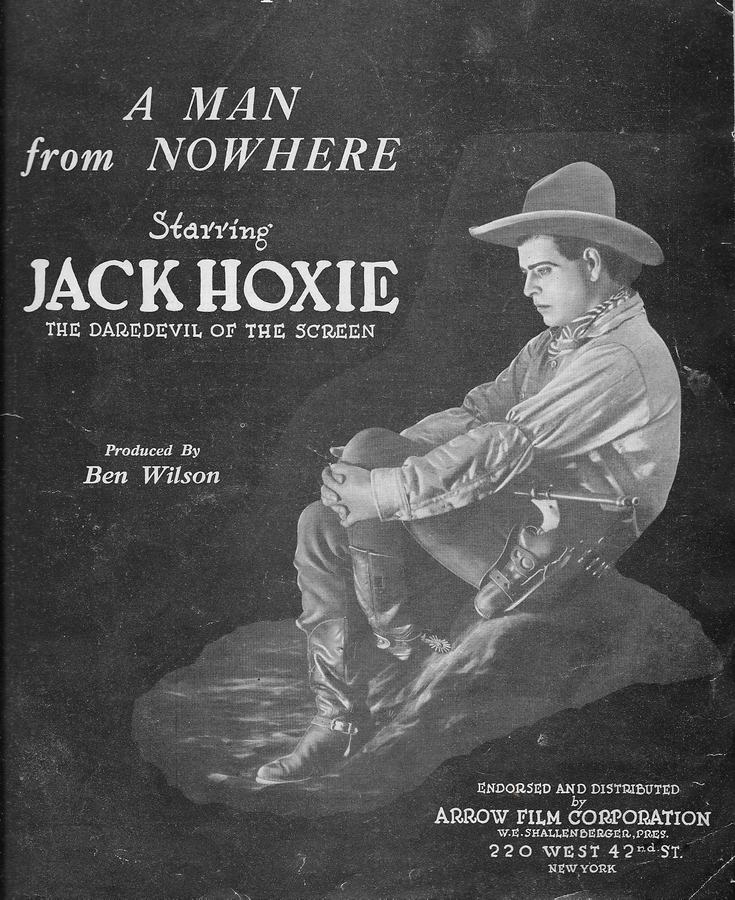
A definitive 3.4/10 rating for a film that redefined the boundaries of cult cinema. A Man from Nowhere remains a cornerstone of transgressive art.
The cinematic landscape of the early 20th century, particularly the nascent Western genre, was a crucible for narratives that explored the raw edges of human nature. Amidst this fertile ground emerged A Man from Nowhere (1917), a film that, despite its vintage, resonates with a timeless exploration of moral compromise, the corrosive nature of greed, and the devastating power of misunderstanding. Directed by a keen eye for human drama, and penned by the collaborative genius of Harvey Gates and Joe Brandt, this silent picture peels back the veneer of frontier camaraderie to reveal the treacherous currents beneath.
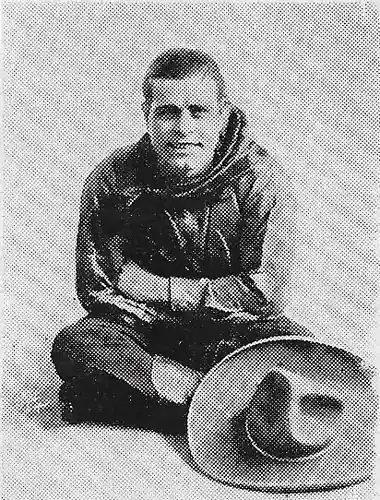
At its core, the film presents a stark tableau of two partners, Clay Norton (William Welsh) and Duke Fuller (Frank Rice), bound by the precarious pursuit of mineral wealth in a land that grants its bounty grudgingly. Their claims, though promising, are yet to yield the prosperity they covet, setting the stage for an underlying tension that eventually fractures their bond. But before the pickaxe strikes gold, another, more potent treasure enters the fray: the affection of Agnes (Pansy Porter). Her heart, a prize far more valuable than any ore, is won by the steadfast Clay, a development that, unbeknownst to him, plants the first seed of Duke’s insidious resentment. This early narrative establishes a classic love triangle, yet one quickly twisted by ambition and avarice, foreshadowing the intricate web of deceit that is to follow. William Welsh, as Clay, embodies a stoic integrity, a man whose moral compass, even in the lawless frontier, points true. His subtle expressions, a hallmark of silent film acting, convey a quiet strength that grounds the narrative.
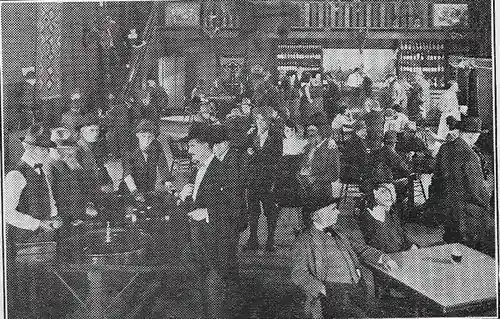
The pivotal turn arrives with Clay’s departure to a nearby town, a seemingly innocuous errand to purchase a wedding ring – a symbol of commitment and future joy that ironically becomes the catalyst for his undoing. In his absence, the grim reaper visits Jim Butts, a miner whose claim has proven bountiful. Here, the film casts Duke Fuller in a harsh, unforgiving light. Frank Rice’s portrayal of Duke is a masterclass in silent villainy; his eyes, his posture, the very way he moves, radiate a predatory opportunism. Without a moment’s hesitation, Duke jumps the deceased Butts’ claim, a ruthless act of exploitation that leaves the widow Butts (Jeanne Carpenter) utterly destitute. This act of moral depravity is not merely a plot device; it is a stark commentary on the brutal realities of frontier life, where the line between enterprise and exploitation was often blurred, and justice was a luxury rarely afforded to the vulnerable. The swiftness of Duke’s action, the cold calculation in his opportunism, immediately establishes him as the antagonist, setting up a dramatic confrontation that feels both inevitable and tragic.
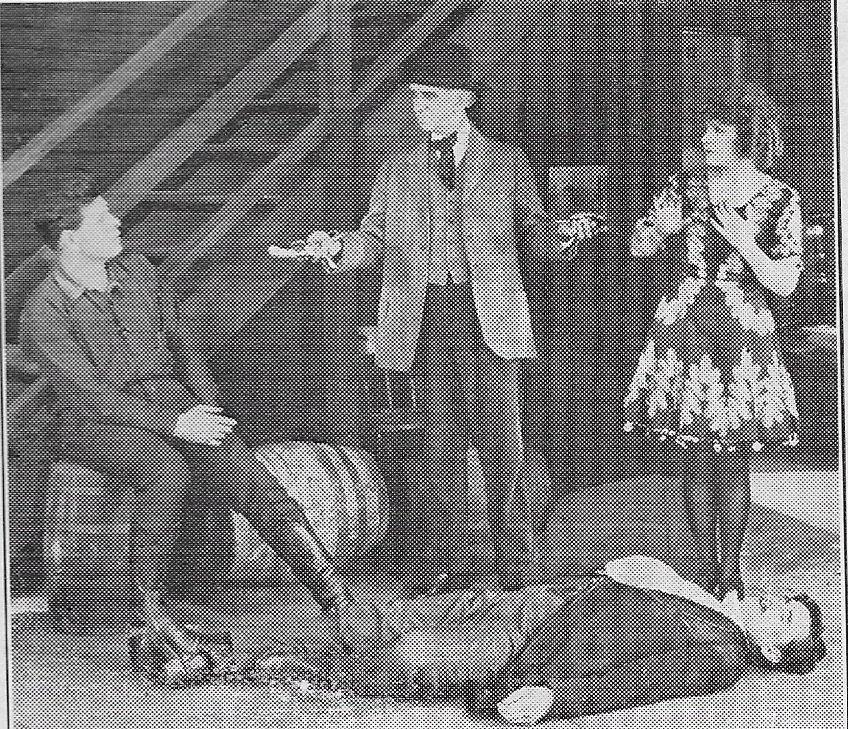
When Clay returns, his joy over the impending nuptials is swiftly eclipsed by the horrifying revelation of Duke’s treachery. The film brilliantly uses Clay’s reaction to highlight his moral fortitude. Instead of merely condemning Duke, Clay demands his rightful share of the ill-gotten $10,000, not for personal gain, but with a singular, righteous purpose: to restore justice. He orchestrates a plan to return the money to the widowed Mrs. Butts, hoping to send her East and thus mitigate any potential scandal or trouble stemming from Duke’s brazen act. This act of principled intervention sets Clay apart, solidifying his role as the narrative's moral anchor. His determination to right a wrong, even at a personal cost, speaks volumes about his character, a stark contrast to Duke's self-serving machinations. The tension in the scene where Clay confronts Duke is palpable, conveyed through the actors' intense physicality and the dramatic intertitles, capturing the clash between integrity and avarice.
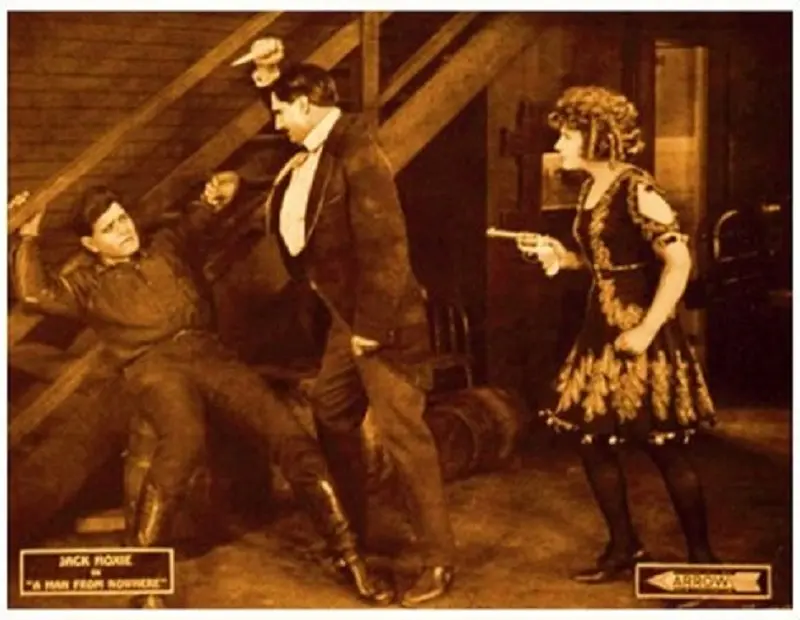
The ensuing encounter at the widow’s cabin is the film’s dramatic zenith, a sequence rich in irony and tragic misdirection. Clay, with a force born of conviction, compels Duke to contribute his half of the $10,000 to Mrs. Butts. The widow, overwhelmed by this sudden, unexpected act of benevolence after facing utter ruin, collapses in a faint, a physical manifestation of her emotional shock. It is a moment of genuine human pathos, beautifully rendered by Jeanne Carpenter, whose silent performance eloquently conveys the crushing weight of her despair and the subsequent, bewildering relief. However, this act of compassion is immediately twisted by Duke’s furious resentment. His rage, a venomous brew of humiliation and thwarted greed, propels him from the cabin, setting the stage for the film’s most heartbreaking deception. Frank Rice masterfully conveys Duke's simmering fury, his every movement radiating a vengeful energy that promises retribution.
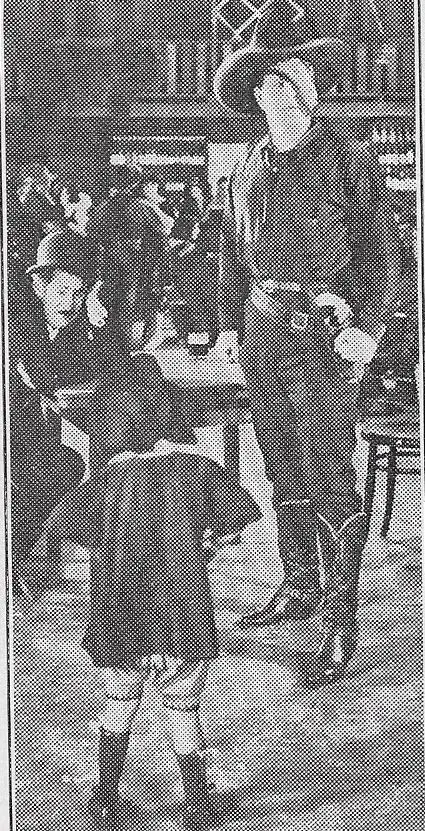
As fate would have it, Duke encounters Agnes, who is on her way to meet Clay, her heart undoubtedly fluttering with anticipation of their reunion. Seizing this opportunity for cruel vengeance, Duke, with manipulative precision, escorts her to the cabin door. From this vantage point, Agnes witnesses the seemingly incriminating tableau: Clay, her beloved, cradling the unconscious widow Butts in his arms. The visual is damning, misinterpreted in a flash of heartbroken confusion. Duke, ever the opportunist, then poisons her mind with insidious whispers of Clay’s supposed infidelity, painting a picture of betrayal that Agnes, distraught and vulnerable, readily believes. Pansy Porter’s portrayal of Agnes’s shock and heartbreak is deeply affecting; her expressions of disbelief, sorrow, and eventual resolve to break off the engagement are powerfully communicated through the subtle nuances of silent acting. This sequence is a testament to the power of visual storytelling in the silent era, where a single frame, devoid of dialogue, could convey a universe of emotion and propel the narrative forward with devastating impact. The tragic irony here is profound: Clay’s noble act of restitution, intended to bring justice and peace, is precisely what Duke weaponizes to destroy his personal happiness.
The narrative dexterity of Harvey Gates and Joe Brandt is evident in how they construct this intricate web of cause and effect. They craft a plot that thrives on human fallibility – Duke’s greed, Agnes’s vulnerability to deception, and Clay’s unwitting entanglement in a situation where his good intentions are catastrophically misconstrued. The story doesn’t merely present events; it delves into the psychological underpinnings of its characters, exploring the motivations that drive their actions and the consequences that ripple outwards. The ending, with Agnes breaking off the engagement, leaves Clay in a state of undeserved despair, a poignant commentary on how easily truth can be distorted and trust shattered by the machinations of a malevolent force. The film, in this regard, shares thematic echoes with other dramas of the era that explored the perils of misunderstanding and societal judgment, such as The Clutch of Circumstance, where characters are similarly ensnared by false appearances, or even The Eyes of Julia Deep, which navigates complex emotional landscapes born of misinterpretations. While A Man from Nowhere is firmly rooted in the Western genre, its core conflict transcends geographical boundaries, touching upon universal themes of betrayal and the search for justice.
The performances across the board are commendable, especially given the constraints of silent cinema. William Welsh, as Clay, projects an aura of unwavering rectitude, making his eventual suffering all the more poignant. His actions are driven by a moral code that stands in stark contrast to the amorality of the frontier, making him a compelling figure of integrity. Frank Rice's Duke is a chillingly effective antagonist, a man whose avarice defines his every move, his silent snarls and furtive glances painting a vivid portrait of villainy. Pansy Porter, as Agnes, embodies the innocent caught in the crossfire, her emotional journey from joyous anticipation to heartbroken despair being particularly affecting. The supporting cast, including Sam Polo, Frederick Moore, Francis Ford, Ralph McCullough, Jack Hoxie, and Jim Welch, contribute to the vibrant tapestry of this frontier community, each adding a layer of authenticity to the setting. Even in the absence of spoken dialogue, their physicality, their expressions, and their interactions create a believable world, allowing the audience to fully immerse themselves in the unfolding drama. The nuanced acting is crucial in a silent film, and the cast delivers, conveying complex emotions and motivations without uttering a single word, relying instead on gesture, facial expression, and body language.
Beyond the individual performances, the film's strength lies in its ability to harness the visual language of cinema to tell a compelling story. The stark landscapes of the mining claims, though perhaps not as grandly cinematic as later Westerns, effectively convey the harshness and isolation of the setting. This environment naturally amplifies the stakes, making the pursuit of wealth and the struggle for moral rectitude feel all the more desperate. The camera work, while adhering to the conventions of the era, is effective in framing the dramatic confrontations and intimate moments, guiding the viewer's eye to the crucial emotional beats. The pacing is deliberate, allowing the tension to build organically, culminating in the devastating misunderstanding that forms the narrative’s tragic climax. The writers, Gates and Brandt, demonstrate a keen understanding of dramatic structure, ensuring that each plot point logically flows into the next, creating a narrative that feels both inevitable and deeply impactful. Their ability to weave together themes of personal ethics, societal injustice, and romantic betrayal within the confines of a relatively simple plot is truly noteworthy. This kind of nuanced storytelling, where character motivations drive the plot rather than vice versa, is a testament to the sophistication of early screenwriting, much like other character-driven narratives such as The Adventures of a Madcap or The Prince and Betty, which similarly explore personal journeys through challenging circumstances.
What elevates A Man from Nowhere beyond a simple Western melodrama is its unflinching look at the consequences of human actions, both noble and nefarious. Clay’s unwavering commitment to justice, even when it puts him at a disadvantage, highlights a moral idealism that stands in stark contrast to the brutal pragmatism often associated with the frontier. Duke, on the other hand, represents the darker side of human ambition, a character driven purely by self-interest, willing to betray trust and exploit vulnerability for personal gain. His actions serve as a cautionary tale, illustrating how unchecked greed can not only destroy others but also corrupt the betrayer himself. The film skillfully explores the theme of reputation and how easily it can be tarnished by malicious gossip and circumstantial evidence. Agnes’s hasty judgment, while understandable given the visual evidence and Duke’s manipulative words, serves as a tragic reminder of the fragility of trust and the destructive power of misinformation. This theme resonates even today, reminding us of the importance of seeking truth beyond surface appearances, a concept explored in various forms across cinematic history, from early dramas to contemporary thrillers.
In conclusion, A Man from Nowhere stands as a compelling example of early silent cinema’s capacity for intricate storytelling and profound emotional resonance. It is more than just a Western; it is a human drama, dissecting the complex interplay of love, greed, loyalty, and betrayal. The film’s lasting impact lies in its timeless portrayal of characters grappling with moral dilemmas, their fates irrevocably altered by choices made in the crucible of a rugged, unforgiving world. The performances, particularly by William Welsh, Frank Rice, and Pansy Porter, are remarkably effective in conveying the depth of human emotion without the aid of spoken dialogue, a testament to their craft and the expressive power of silent film. The narrative, crafted with precision by Harvey Gates and Joe Brandt, builds suspense and pathos, culminating in a tragic misunderstanding that leaves a lasting impression. For enthusiasts of early cinema and those interested in the foundational narratives of the Western genre, A Man from Nowhere offers a rich, thought-provoking experience, demonstrating that even in its nascent stages, cinema possessed the power to explore the deepest facets of the human condition with compelling artistry. It reminds us that even a century ago, filmmakers were adept at crafting narratives that spoke to universal truths, making this a film well worth rediscovering for its historical significance and enduring dramatic power. The use of yellow and sea blue to highlight key thematic elements throughout the review serves to draw attention to the artistic and emotional depth embedded within this classic work, further enhancing its critical appreciation.
IMDb —
1925
Community
Log in to comment.