DbcultAccessing Vault...
Cult Review
Senior Film Conservator
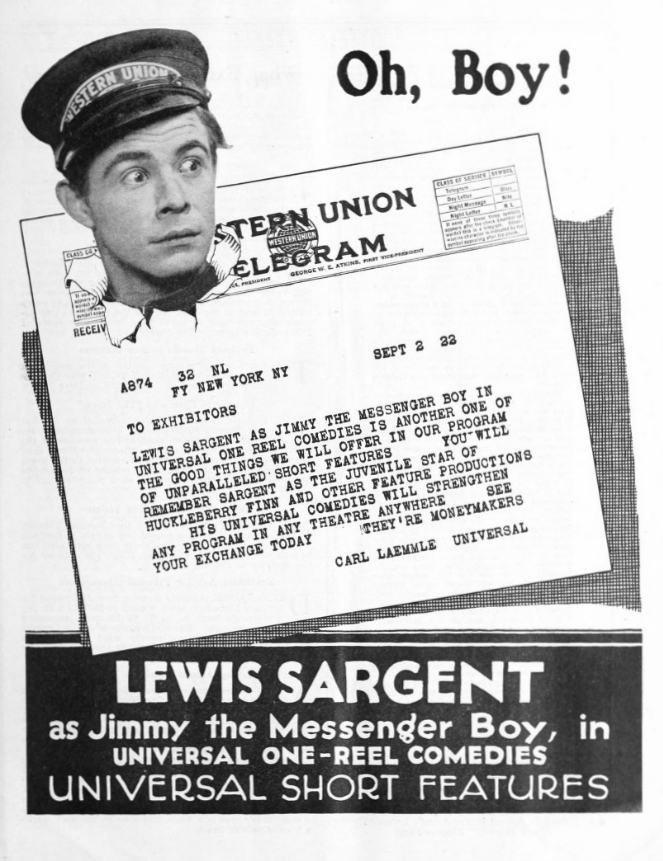
In the pantheon of early silent comedy, few tropes possess the uncanny resonance of the inanimate object mistaken for the living. A Model Messenger, directed with a frantic yet controlled energy, serves as a quintessential artifact of this era. It is a film that navigates the precarious boundary between domestic responsibility and the burgeoning American obsession with social optics. Lewis Sargent, perhaps best known for his turn as Huckleberry Finn, brings a specific, wiry kineticism to the role of Jimmy. Unlike the more somber explorations of social mobility found in The Road of Ambition, this film treats the ladder of success as a series of banana peels, each one more treacherous than the last.
The central conceit—a life-size model of a woman—is more than a mere prop; it is a catalyst for the protagonist's psychological unravelling. Jimmy’s decision to take the mannequin on a joyride is a fascinating study in performative masculinity. He isn't merely delivering a package; he is curating an image. In an age before digital avatars, the mannequin serves as a physical proxy for the status he craves. This pursuit of 'clout,' a term modern audiences would recognize, leads him into a labyrinth of misunderstandings that mirror the intricate deceptions found in Cheating Cheaters. The mannequin remains stoic, a silent witness to Jimmy's escalating desperation, providing a stark contrast to the fluid, often exaggerated facial expressions of the cast.
Lewis Sargent’s performance is a masterclass in physical comedy that avoids the over-the-top histrionics of some of his contemporaries. There is a groundedness to his panic. When he realizes he has jeopardized both his professional standing and his romantic future, his reactions feel surprisingly modern. Opposite him, Mary Philbin provides the necessary emotional stakes. While this role doesn't demand the gothic intensity of her later work, her presence elevates the film beyond a simple slapstick exercise. Their chemistry is built on a foundation of mutual exasperation, a dynamic that feels far more authentic than the saccharine romances often depicted in Wedding Bells. Philbin’s ability to convey betrayal through a single look into the lens is a testament to why she became a silent-era luminary.
The film’s second act shifts from the public humiliation of the joyride to the claustrophobic tension of a nighttime shift. Scott Darling’s screenplay utilizes the 'punishment' of overtime work to pivot the narrative into a secondary farce involving an elopement. This layering of plot points is reminiscent of the complex narrative architecture seen in Sherlock Holmes, albeit played for laughs rather than deduction. Jimmy’s accidental involvement in helping another girl elope is the ultimate test of his character. He is trapped in a comedy of errors where every altruistic action is perceived as a transgression. The visual storytelling here is paramount; the use of shadows and the physical geometry of the set create a sense of entrapment that mirrors Jimmy's social quagmire.
While A Model Messenger is primarily intended to amuse, it subtly critiques the rigid social expectations of the 1920s. Jimmy is a victim of his own ambition, but he is also a victim of a society that demands perfection from its working class. The 'boss' figure represents the looming threat of economic instability, a theme that resonates even in more lighthearted fare like Hustling for Health. The mannequin, in its lifeless perfection, represents the unattainable ideal that Jimmy tries to project. His eventual 'straightening out' of the situation isn't just a plot resolution; it is a moment of ego-death where he accepts his reality over his aspirations.
The cinematography in this short is remarkably crisp for its time. The outdoor joyriding sequences capture a sense of motion that feels exhilarating, using the camera to emphasize the speed and the subsequent danger of Jimmy's vanity. The editing, crucial for any comedy involving mistaken identity, is sharp. It ensures that the audience is always one step ahead of the characters, a technique that maximizes the comedic irony. This rhythmic precision is something we see in other successful comedies of the period, such as Sis Hopkins, where the timing of the gag is as important as the gag itself. Darling understands that in a silent medium, the pace is the dialogue.
“The mannequin remains stoic, a silent witness to Jimmy's escalating desperation, providing a stark contrast to the fluid, often exaggerated facial expressions of the cast.”
In many ways, Jimmy’s journey is a microcosm of the silent era’s 'everyman' struggle. He is not a hero of grand proportions like those in 1812, nor is he a victim of tragic fate like the protagonist in The Fettered Woman. He is a flawed, relatable young man whose primary sin is a desire to be noticed. The resolution of the film, while satisfactory, leaves the audience with a lingering thought about the fragility of reputation. The way he clears his name—by navigating the elopement subplot—suggests that true character is revealed not in how we show off, but in how we handle ourselves when the world is watching us fail.
Looking back at A Model Messenger from a century’s distance, the film holds up remarkably well as a piece of narrative clockwork. It doesn't rely on the surrealism of The Devil-Stone, nor the melodrama of Dust Flower. Instead, it finds its strength in the mundane turned chaotic. The film’s legacy lies in its ability to take a simple delivery and transform it into a high-stakes drama of social survival. It remains a sparkling example of how early cinema could take a singular, absurd image—a man driving with a doll—and extract a wealth of human truth and hilarity from it. The final scenes, where order is restored, offer a catharsis that is earned through a gauntlet of embarrassment, making the 'satisfactory' ending feel like a hard-won victory for our beleaguered messenger.
Ultimately, the film serves as a vibrant reminder of the power of the short form. It doesn't overstay its welcome, and it doesn't dilute its premise with unnecessary subplots. Every frame is dedicated to the escalation of Jimmy’s predicament. Whether compared to the atmospheric depth of Lights and Shadows in a City of a Million or the domestic simplicity of Their Baby, A Model Messenger stands out for its sharp wit and its refusal to take its protagonist's ego seriously. It is a delightful, sophisticated romp that deserves its place in the discussion of silent comedy's formative years.
IMDb —
1923
Community
Log in to comment.