DbcultAccessing Vault...
Cult Review
Senior Film Conservator
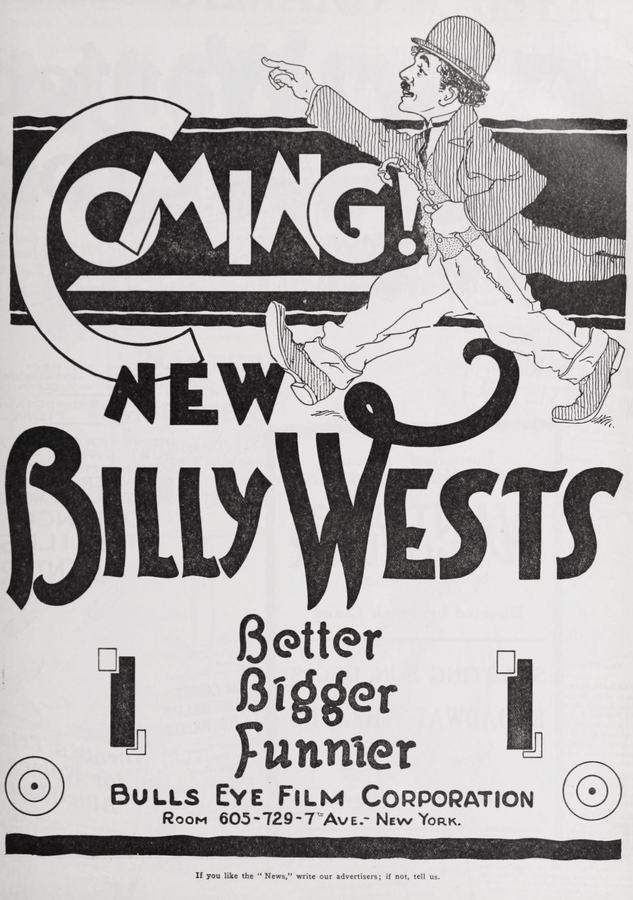
The year 1920 was a threshold, a temporal doorway through which the medium of cinema passed from its infancy into a more robust, albeit still silent, adolescence. In this vibrant era, Hands Up, starring the acrobatic and often underestimated Billy West, stands as a fascinating artifact of comedic evolution. To watch West is to witness a performer engaged in a perpetual dialogue with the physical world—a world that, in the context of this film, is both a playground and a minefield.
It is impossible to discuss Billy West without addressing the elephant in the screening room: Charlie Chaplin. For years, West was dismissed by contemporary critics as a mere simulacrum, a performer who donned the greasepaint and the baggy trousers to capitalize on a global phenomenon. However, by the time we reach Hands Up (1920), there is a palpable shift. West is no longer just mimicking; he is deconstructing. While Chaplin’s comedy was rooted in a Dickensian pathos, West’s approach in this short is more aligned with the frantic, mechanical energy of the machine age. There is a hardness to the gags, a certain cynicism that mirrors the post-war disillusionment of the early twenties.
When compared to the epic scale of something like The Dumb Girl of Portici, which utilized thousands of extras and sweeping historical narratives, Hands Up feels intimate, yet its stakes are no less dire for its protagonist. The film thrives on the micro-movement—the flicker of an eyelid, the near-miss of a swinging door, the precarious balance on a rickety chair. These are the building blocks of a universal language that required no intertitles to convey the universal human experience of being slightly out of step with the rest of the world.
The direction in Hands Up displays a sophisticated understanding of the frame. In the early 1920s, the concept of the 'gag' was being refined from a simple occurrence into a multi-layered sequence. Consider the way West interacts with the set design. Every prop is a Chekhovian gun, destined to go off in a flurry of feathers, dust, or shattered glass. The pacing is relentless; it lacks the operatic pauses found in The Death Dance, opting instead for a percussive rhythm that keeps the audience in a state of anticipatory tension.
"The genius of the silent short lies not in what is said, but in the spaces between the movements. West fills these spaces with a desperate, beautiful kineticism."
The cinematography, though standard for the era, manages to capture the grit of the locations. Whether West is navigating a dusty saloon or a cramped domestic interior, there is a sense of place that grounds the absurdity. This grounding is essential; without it, the slapstick would float away into meaninglessness. By anchoring the comedy in a recognizable reality, the film heightens the impact of every fall. This is a technique we see explored with more dramatic weight in films like The Path Forbidden, where the environment serves as a moral crucible for the characters.
In the absence of spoken dialogue, West’s body becomes a highly articulate instrument. His knees are exclamation points; his spine is a question mark. In Hands Up, the central conflict often revolves around the protagonist’s inability to maintain dignity in the face of gravity. There is a sequence involving a confrontation with a much larger adversary that perfectly encapsulates the 'David vs. Goliath' trope that fueled so much of silent cinema. However, West adds a layer of neuroticism that feels surprisingly modern. He isn't just trying to win; he's trying to survive the sheer embarrassment of the situation.
This psychological depth, though subtle, distinguishes the film from the more straightforward action found in Cyclone Smith's Partner. While the latter relies on the bravado of the Western hero, Hands Up subverts those very tropes. When the command 'hands up' is issued, West’s reaction is a symphony of hesitation and exaggerated compliance, turning a moment of peril into a comedic meditation on power dynamics.
To truly appreciate Hands Up, one must view it through the lens of its contemporaries. The global cinema of 1920 was a tapestry of experimentation. In Italy, we saw the swashbuckling bravado of I tre moschettieri, while in the Middle East, the documentary-adjacent Eretz Yisrael Hameshukhreret was capturing a changing world. Against this backdrop of high drama and political upheaval, the Billy West comedies provided a necessary catharsis. They were the pressure valves of a society under construction.
The film shares a certain DNA with the mystery serials of the time, such as Judex, in its use of suspense. However, where Judex uses shadow and costume to create a sense of dread, Hands Up uses the same elements to create a sense of the ridiculous. A masked figure in a West film isn't a symbol of justice; they are a catalyst for a chase sequence that will inevitably end with someone falling into a water trough. This cross-pollination of genres—the western, the thriller, and the domestic comedy—is what gives the film its enduring charm.
From a technical standpoint, Hands Up utilizes the 'under-cranking' of the camera to an expert degree. By filming at a slower frame rate and projecting at the standard speed, the movements take on a supernatural, jittery quality that is essential to the slapstick aesthetic. This wasn't just a gimmick; it was a fundamental tool of the trade, allowing for stunts that would be physically impossible in real-time. The editing is equally sharp, cutting on action to maintain a sense of fluid, albeit chaotic, motion. It lacks the somber, deliberate cutting of Half an Hour, favoring instead a montage of mishaps that build toward a crescendo of absurdity.
The lighting, though often flat due to the reliance on natural sunlight in early studio sets, occasionally breaks into moments of expressive brilliance. During the more 'noir-ish' moments of the film—when West is hiding in the shadows—the high-contrast visuals prefigure the German Expressionism that would soon dominate the decade. It is a reminder that even in a 'low-brow' comedy, the artisans behind the camera were master craftsmen, experimenting with the very limits of the celluloid medium.
Why does Hands Up matter today? In an age of CGI-saturated blockbusters and over-scripted sitcoms, there is something profoundly refreshing about the honesty of a Billy West short. There are no safety nets here—only the performer, the camera, and the relentless pull of the earth. It is a form of 'pure cinema' that transcends the boundaries of time and language. While films like The Glory of Yolanda or Heads Win may offer more complex narrative structures, they often lack the raw, unadulterated joy found in West’s frantic scrambles.
West’s contribution to the genre was his ability to synthesize the influences of his peers into something that felt uniquely his own. He took the precision of Buster Keaton, the pathos of Chaplin, and the sheer audacity of Harold Lloyd, and filtered them through a lens of high-energy vulnerability. Hands Up is the pinnacle of this synthesis. It is a film that demands to be watched not just as a historical curiosity, but as a living, breathing piece of entertainment that still has the power to elicit a genuine, belly-deep laugh.
As we navigate the vast archives of silent film, it is easy to overlook the shorts in favor of the towering features. Yet, it is in the shorts that the language of cinema was truly written. Hands Up (1920) is a vital chapter in that story. It captures a moment in time when the possibilities were endless and the only limit was how far a man was willing to fall for a laugh. It stands alongside the great dramas like The Two Sergeants or the intricate mysteries of The Riddle of the Tin Soldier as a testament to the diversity of the 1920 cinematic landscape.
The film’s resolution, while predictable in its structure, satisfies a deep-seated human desire for the underdog to come out on top—even if he does so by accident, covered in soot and missing a shoe. In the end, Hands Up is not just about a man being told to surrender; it is about the indomitable spirit of the clown who refuses to stay down. It is a vibrant, neon-hued (metaphorically speaking) reminder that sometimes, the best way to deal with a world that’s gone mad is to simply throw your hands up and join in the dance.
Reviewer Note: This analysis is based on the surviving fragments and historical reconstructions of the 1920 Billy West comedy cycle. For fans of the era, this is an essential piece of the slapstick puzzle.
IMDb —
1925
Community
Log in to comment.