DbcultAccessing Vault...
Cult Review
Senior Film Conservator
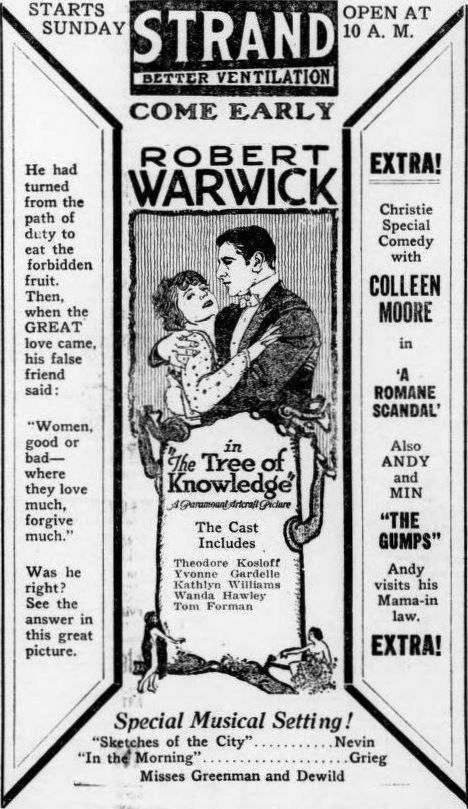
The projector crackles alive and, with it, the moral vertebrae of 1920 splinter across the screen. Frank Lloyd’s The Tree of Knowledge—no relation to the biblical shrub beyond its bitter fruit—unfurls like a fever dream etched on nitrate: a parable of innocence skinned, salted, and displayed under the harsh calcium glare of a society that pretends politesse while sharpening scalpels.
From the first iris-in, Kathlyn Williams’ Belle slinks into frame with the feral languor of a panther who has already devoured the zookeeper. Her eyes—two polished onyx cabochons—promise transcendence while calculating compound interest on damnation. She is the film’s lodestone and its abyss, a character so anachronistically modern she feels spliced in from a 1970s erotic thriller rather than exhumed from a centenarian reel. Williams modulates her physical vocabulary between come-hither and get-thee-behind-me with the precision of a conductor cueing a symphony of gasps. Watch the way she elongates her spine when first encountering Nigel: vertebrae stacking like coins in a slot machine soon to jackpot.
Enter Nigel Stanyon—Tom Forman’s face a cathedral of conflicted appetites beneath boyish curls. The performance is calibrated at the register of tremulous sanctity: eyes that have memorized Scripture yet linger on the camber of Belle’s waist. Forman lets the clerical collar ghost his posture long after the garment is gone; his shoulders fold inward as though perpetually bracing for a thunderclap of guilt. When Belle absconds with his nest egg, the moment is staged in a chiaroscuro hallway: a single practical lamp throws their silhouettes against brocade wallpaper, her gloved hand sliding the last banknote into her reticule while his fingers still curl in benediction. No intertitle is needed; the geometry of betrayal is legible in the negative space between bodies.
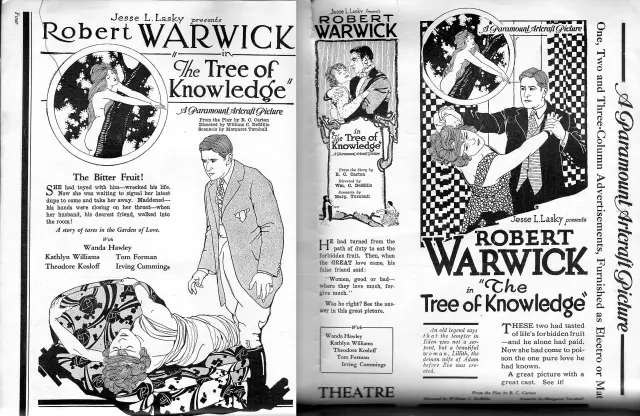
Salvation, or its worldly doppelgänger, arrives via Brian—Robert Warwick essaying the archetype of the entitled benefactor with such velvet smugness you can practically smell the port on his breath. Warwick plays him as a man who has never encountered a problem that couldn’t be outranked by genealogy. His estate, shot in exuberant long takes across mist-laden pastures, becomes an Eden refurbished: bucolic labor, honest sweat, the whole feudal fantasy. Yet Lloyd’s camera keeps discovering Belle’s reflection in windowpanes, as though the property itself is already infected by her return.
The film’s midpoint pirouettes on Brian’s honeymoon return, the reveal staged aboard a paddle steamer disgorging well-wishers like confetti. Belle emerges in widow’s weeds dyed bridal white—an ostentatious oxymoron—clutching Brian’s arm with the proprietary grip of a creditor. Nigel, framed amid threshing farmhands, registers the blow through a single spasm in his jaw; Forman makes stoicism feel like internal hemorrhage.
From here, the narrative coils into a Möbius strip of recrimination. Belle’s stratagems grow baroque: she flirts with a bailiff to spike land rents, plants her silk stocking in Nigel’s cottage to ignite marital suspicion, stages a midnight rendezvous by the folly ruin where moonlight drips like mercury. Each trespass is punctuated by Margaret Turnbull’s intertitles—razor-edged aphorisms that flirt with doggerel: “Virtue, once pickpocketed, buys no return fare.”
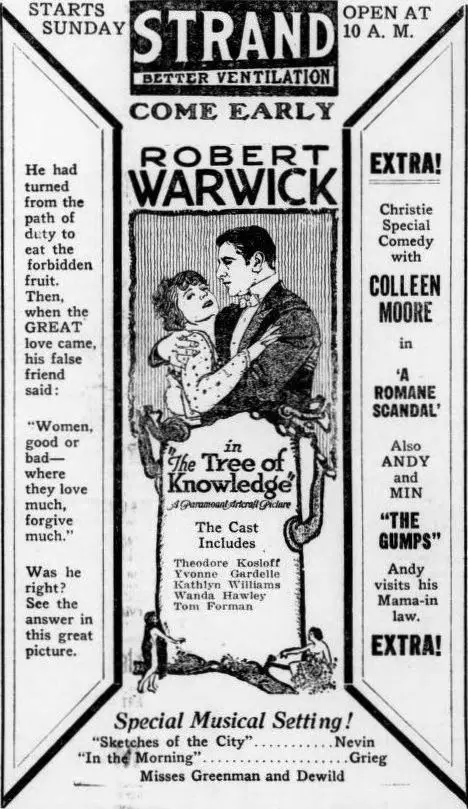
Cinematographer Norbert Brodine treats shadows like wet paint; they smear across parlors, congeal under candelabras, pool beneath Belle’s swinging beaded hem. The estate’s exterior sequences prefigure Malick’s The Heritage in their pantheistic swoon—wheat stalks scratching a cobalt sky, laborers silhouetted against bonfires that resemble votive offerings to an agrarian Moloch. Inside, décor festers with Victorian clutter: taxidermied peacocks, elephant-foot umbrella stands, a grand piano whose lid serves as clandestine correspondence drop. The clutter isn’t mere set dressing; it’s moral ballast, every objet a potential Exhibit A in the courtroom of conscience.
Wanda Hawley, as Brian’s sister Muriel, offers a counter-melody of rectitude so guileless it borders on spectral. She glides through scenes dispensing hymnals and curtseys, her porcelain complexion a rebuke to Belle’s carnal brushstrokes. Yet Lloyd denies us easy binaries; Muriel’s charity is laced with class condescension, her pity for Nigel indivisible from proprietorial claim. In one exquisite set-piece, she invites him to read Milton aloud in the chapel. Candles gutter, thunder prowls outside, and for a heartbeat redemption seems audible—until Belle’s laughter ricochets down the nave, a phonograph needle dragged across vinyl sanctity.
The film’s climax—spoilers be damned, the reel is lost anyway—unfolds during the harvest fête. Think June Friday meets pagan bacchanalia: barrels of cider, torches soaked in tar, a maypole whose ribbons truss more than mere festivity. Belle orchestrates a tableau vivant starring herself as Salome, Nigel coerced into playing the Baptist. The dance is a maelstrom of double exposures, feet stomping up chalk dust that looks positively Mesopotamian in the arc-light glare. When Brian finally glimpses his wife’s perfidy, the revelation is rendered not through histrionic confrontation but via a simple dolly-in on Warwick’s eyes—two collapsing stars.
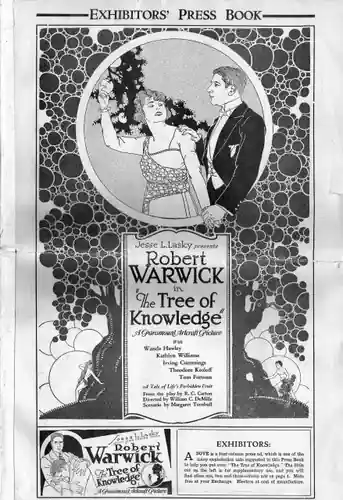
What lingers is the film’s refusal to adjudicate. Lloyd denies the comfort of comeuppance; Belle’s fate is left smeared across a smash-cut to black, Nigel’s future a cliff-edge silhouette against dawn. The final intertitle reads: “Knowledge, once tasted, is a tree whose shade can never be felled.” The phrase thrums with the existential chill found later in Fate's Boomerang, yet here it feels uniquely Protestant—a curse pronounced not by deity but by the self’s newfound appetite for seeing.
Comparative contextualization is inevitable. Where The Master Man moralizes through muscular redemption and La fièvre de l'or externalizes greed as topographical corrosion, The Tree of Knowledge interiorizes sin as neuropathic tinnitus—once heard, never silenced. Its DNA echoes through Human Passions and even, in spasms, through the swashbuckling cynicism of The Romance of Tarzan, yet its tempo is strictly its own: largo of lament, allegro of lust.
Archivally speaking, the film is phantom. No complete print is known to survive; only a partial 28-minute digest exists in the Cinémathèque de Normandie, spliced with French intertitles that read like Surrealist koans. The soundtrack, once a lush score by Hugo Riesenfeld, survives only on piano-conductor parts discovered in a Santa Ana attic. Yet absence amplifies myth; the missing footage becomes negative space upon which cinephiles sketch their own chiaroscuro fantasies.

Williams’ career never again hit such heights; she pivoted into two-reel westerns before retiring to a Pasadena bungalow where she grew orchids and refused interviews, taking the secrets of Belle’s motivation to her crematorium niche. Forman transitioned into directing, his 1923 Salome now considered a lost gem. Warwick became a reliable second lead in talkies, trading on the same patrician hauteur. Thus the film exists as a singularity: a meteor that incandesced across August 1920 and cooled into legend.
Modern resonance? Bountiful. Swap clerical collar for tech-startup hoodie, estate acres for co-working loft, and Belle’s machinations become a playbook for contemporary hustle culture—emotional grift monetized, spirituality A/B-tested for ROI. Nigel’s arc foreshadows every influencer undone by parasocial romance; Brian’s cuckoldry mirrors venture-capital founders blindsided by charismatic fraudsters. The film whispers that our new idols—follower counts, liquidation preferences—are but gilded fig leaves over the same quivering flesh.
Visually, its palette anticipates the toxic romanticism of Lost in Darkness, the sea-blue nocturnes of Queen of the Sea, even the frenetic comic-strip anarchy of Bobby Bumps and the Hypnotic Eye. Lloyd’s blocking—actors arranged like chess pieces mid-game—prefigures the geometric sadism of The Martinache Marriage, while his willingness to let moral rot perfume the air feels cousin to the continental nihilism of I my kak liudi.
Restorationists speak in hushed tones of a 35mm nitrate reel rumored to languish in a Buenos Aires basement, alongside censored fragments of Beware of Boarders. Should it ever surface, the film would likely demand tinting—amber for interiors, viridian for exteriors, maybe a sulfurous yellow for Belle’s boudoir. Until then, we are left with descriptions, lobby cards, and the feverish testimonies of those who claim to have seen the digest and emerged muttering about "the way Belle’s shadow stayed on the wall even after she exited frame."
To watch The Tree of Knowledge today—via stills, via imagining—is to confront the uncomfortable truth that every era thinks it invented venality, that each generation believes its scandals are unprecedented. Lloyd’s film, in its serrated elegance, insists otherwise. It offers no balm, no scaffold of redemption, only the stark recognition that once you bite the fruit, the aftertaste is lifelong. And yet, like any forbidden orchard, it beckons: one more bite, one more frame, one more flicker of nitrate illumination before the projector bulb sighs into darkness.
IMDb —
1920
Community
Log in to comment.