DbcultAccessing Vault...
Cult Review
Senior Film Conservator
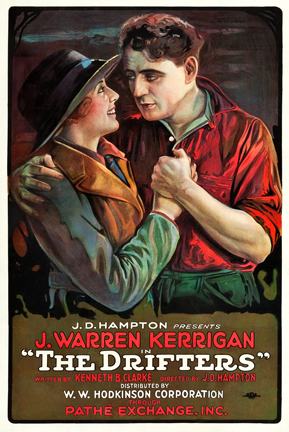
There's an undeniable allure to the silent era, a cinematic language spoken through gesture, expression, and the stark power of visual storytelling. Kenneth B. Clarke's 1919 offering, The Drifters, is a fascinating relic from this period, a film that, despite its age, grapples with themes as timeless as the Alaskan snows that serve as its dramatic backdrop: memory, justice, and the relentless pursuit of truth. From the opening frames, we are plunged into an isolated world, a snowbound cabin where three men have sought refuge, each carrying a heavy, unspoken burden. This isn't merely a tale of survival against the elements; it's a profound exploration of human nature under duress, a testament to the enduring power of narrative even without spoken words.
The film introduces us to Burke Marston, portrayed by William Conklin, a man whose weary eyes and slumped shoulders speak volumes of a past he desperately tries to drown in drink. His presence is a study in quiet desperation, a stark contrast to Hugh MacLaren (Walter Perry), whose every sinew strains with the feverish obsession of gold prospecting. MacLaren embodies the classic pioneer spirit, driven by the promise of wealth in a land that gives nothing freely. But it is Evan Mears (J. Warren Kerrigan) who truly captivates, a figure shrouded in an enigma, his motives as opaque as the Alaskan fog. Kerrigan’s performance is subtle yet unsettling, hinting at a hidden agenda beneath a veneer of civility. These three men, thrown together by circumstance, form a crucible of conflicting desires and secrets, their interactions a silent dance of suspicion and tentative camaraderie.
The arrival of the nameless girl, brought to life with remarkable vulnerability by Lois Wilson, acts as the catalyst that shatters their fragile equilibrium. Discovered half-frozen and suffering from amnesia, she is a blank canvas onto which the men project their own hopes and fears. Wilson's portrayal of a woman stripped of her identity is deeply affecting, relying on nuanced facial expressions and body language to convey her confusion and burgeoning terror. The efforts of the men to restore her memory are initially fruitless, a poignant struggle against an invisible barrier. This narrative device, the amnesiac stranger, is a powerful tool, not just for driving the plot but for revealing the true character of those around her. It forces the men to confront their own humanity, prompting a shift from their self-imposed isolation to a shared, altruistic endeavor.
The narrative truly ignites when Burke, in a moment of shared vulnerability, recounts the story of a lawyer who cruelly defrauded his mother years ago. This seemingly tangential anecdote becomes the key that unlocks the girl's repressed memories, a sudden, brutal awakening that propels the story into high-stakes drama. The revelation that Mears is not only connected to her past but is also responsible for the unjust imprisonment of her innocent brother is a masterstroke of plotting. The tension that had simmered beneath the surface between Mears and Burke finally erupts, leading to a desperate flight by Mears to the sprawling urban labyrinth of New York. This shift from the stark, natural landscape of Alaska to the bustling, artificial environment of the city is a clever visual metaphor, highlighting the contrast between raw justice and the intricate web of societal deception.
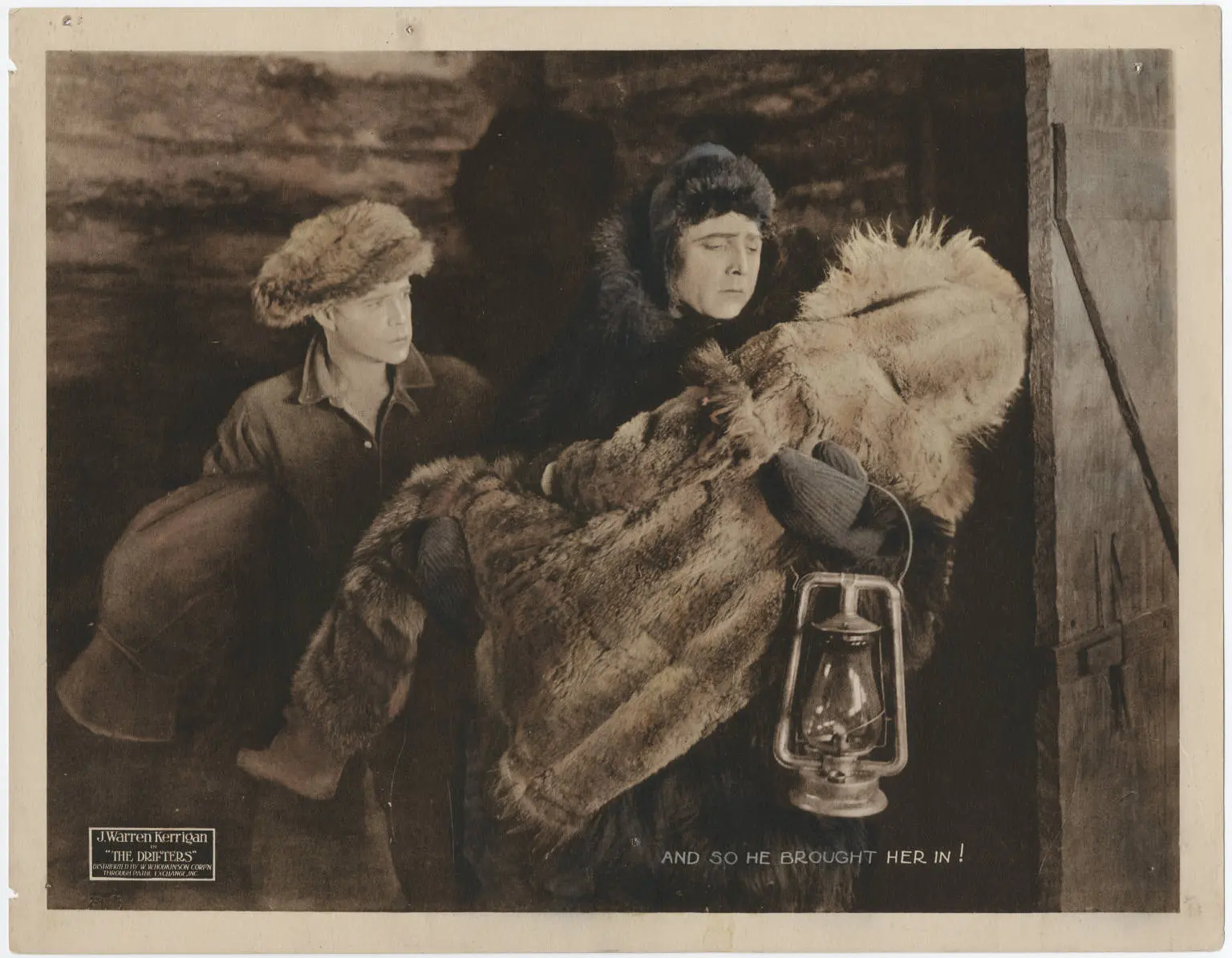
The subsequent pursuit of Mears by Burke and MacLaren transforms The Drifters into a thrilling chase narrative, a genre staple that even in its nascent stages, proved incredibly effective. The sheer determination of Burke, fueled by his own past grievances and a newfound sense of protective responsibility, is palpable. This segment of the film could draw comparisons to other early cinematic thrillers that relied on cross-country pursuits to build suspense, such as The Trap, where protagonists navigate treacherous landscapes and urban jungles to bring villains to justice. The film’s pacing accelerates here, using quick cuts and dynamic camera work (for its time) to convey the urgency of their mission. The capture of Mears is not merely a physical victory but a moral one, setting the stage for the true reckoning.
Mears' confession is the dramatic climax, a cascading series of revelations that ties all the disparate threads of the plot together. Not only does he admit to framing the girl's brother, but he also confesses to being the very lawyer who ruined Burke's mother. This double-layered villainy solidifies his role as the antagonist, making his eventual imprisonment a deeply satisfying conclusion for the audience. The film, through this intricate web of deceit and eventual exposure, champions a strong sense of moral clarity, a characteristic often found in early cinema where good and evil were presented with less ambiguity. The emotional weight of these confessions is carried entirely by the actors' ability to convey complex feelings without dialogue, a testament to their craft and Clarke’s direction.
The resolution, with the girl and her exonerated brother returning to Alaska to live with Burke, speaks to themes of found family and the possibility of rebuilding lives after profound loss. It’s a powerful message of redemption, not just for the characters, but for the harsh landscape itself, which initially seemed to offer only isolation and hardship. This narrative arc, where individuals find solace and a new beginning through unexpected connections, resonates with films like Rebuilding Broken Lives, which similarly explores the arduous journey of healing and forging new destinies from the ashes of past trauma. The ending of The Drifters is not a saccharine, unrealistic happy ending, but one earned through struggle, perseverance, and the triumph of justice.
Beyond its compelling plot, The Drifters offers a window into the artistic sensibilities of the silent era. The use of intertitles, while necessary for plot exposition, is judicious, allowing the visual narrative to take precedence. The cinematography, though perhaps rudimentary by modern standards, effectively captures the vastness and brutal beauty of the Alaskan setting. The stark white of the snow against the dark figures of the characters creates a dramatic visual contrast, emphasizing their vulnerability in such an unforgiving environment. The performances, a blend of theatricality and nascent realism, are a fascinating study in how actors communicated emotion and intent before the advent of synchronized sound. Lois Wilson, in particular, manages to convey a deep well of emotion through her expressive eyes and delicate gestures, making her character’s journey from amnesia to empowered justice deeply moving.
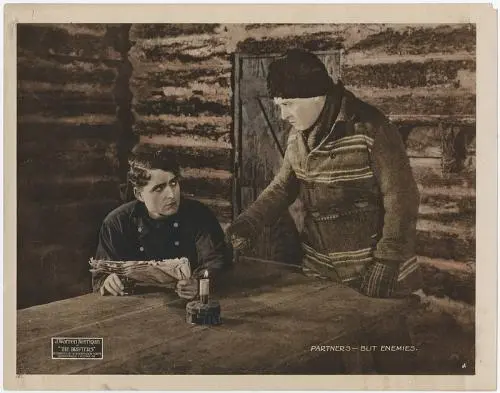
The film’s strength lies in its ability to tell a complex story with clarity and emotional resonance, relying on visual cues and the innate understanding of human psychology. It’s a reminder that compelling storytelling transcends technological limitations. The subtle shifts in character dynamics, the tension built through non-verbal communication, and the grand sweep of the adventure all contribute to a rich viewing experience. One might compare its character-driven focus and underlying moral quest to films like Jim Grimsby's Boy, where the emotional journey of individuals forms the backbone of the narrative, albeit with different settings and specific conflicts. The film's portrayal of human resilience in the face of adversity, both natural and man-made, is a universal theme that continues to captivate audiences.
In an era dominated by rapid technological advancements in filmmaking, revisiting The Drifters is more than just an academic exercise; it’s an appreciation of foundational cinematic principles. It demonstrates how effective storytelling can be when stripped down to its bare essentials. The film’s exploration of justice, memory, and the unexpected bonds that form between strangers remains as potent today as it was over a century ago. The way the plot unfolds, with its careful layering of secrets and revelations, keeps the audience engaged, demonstrating Kenneth B. Clarke's skill as a storyteller. The film doesn't rely on cheap tricks or convoluted subplots; instead, it builds its drama organically from the characters' motivations and the consequences of their actions.
The journey from the desolate Alaskan cabin to the bustling streets of New York and back again is not just a physical one but a metaphorical voyage of self-discovery and moral reckoning. Each character undergoes a transformation, from Burke's initial despair to his eventual role as a protector, from the girl's amnesia to her reclaiming of agency. Even MacLaren, though less central to the main dramatic arc, plays his part in the pursuit of justice, embodying the spirit of solidarity. The film highlights how external challenges can forge internal strength and how collective action can overcome individual grievances. It's a powerful statement on the human capacity for empathy and the enduring quest for fairness in a world often devoid of it. The enduring appeal of such narratives, where characters overcome immense odds to find a semblance of peace, is why films like The Drifters continue to hold a significant place in the annals of cinema history.
Ultimately, The Drifters is a compelling watch for anyone interested in early cinema, a testament to the power of silent film to convey deep emotional truths and thrilling narratives. It's a reminder that the core elements of good storytelling—engaging characters, a gripping plot, and resonant themes—are timeless, transcending the technological limitations of their era. It stands as a vibrant example of how early filmmakers were already mastering the craft of cinematic expression, laying the groundwork for the rich tapestry of film we enjoy today. Its intricate plot, memorable characters, and satisfying conclusion make it a film that, despite its age, still drifts into the modern consciousness with a quiet, undeniable power.

IMDb 7
1930
Community
Log in to comment.