DbcultAccessing Vault...
6.5/10
Senior Film Conservator
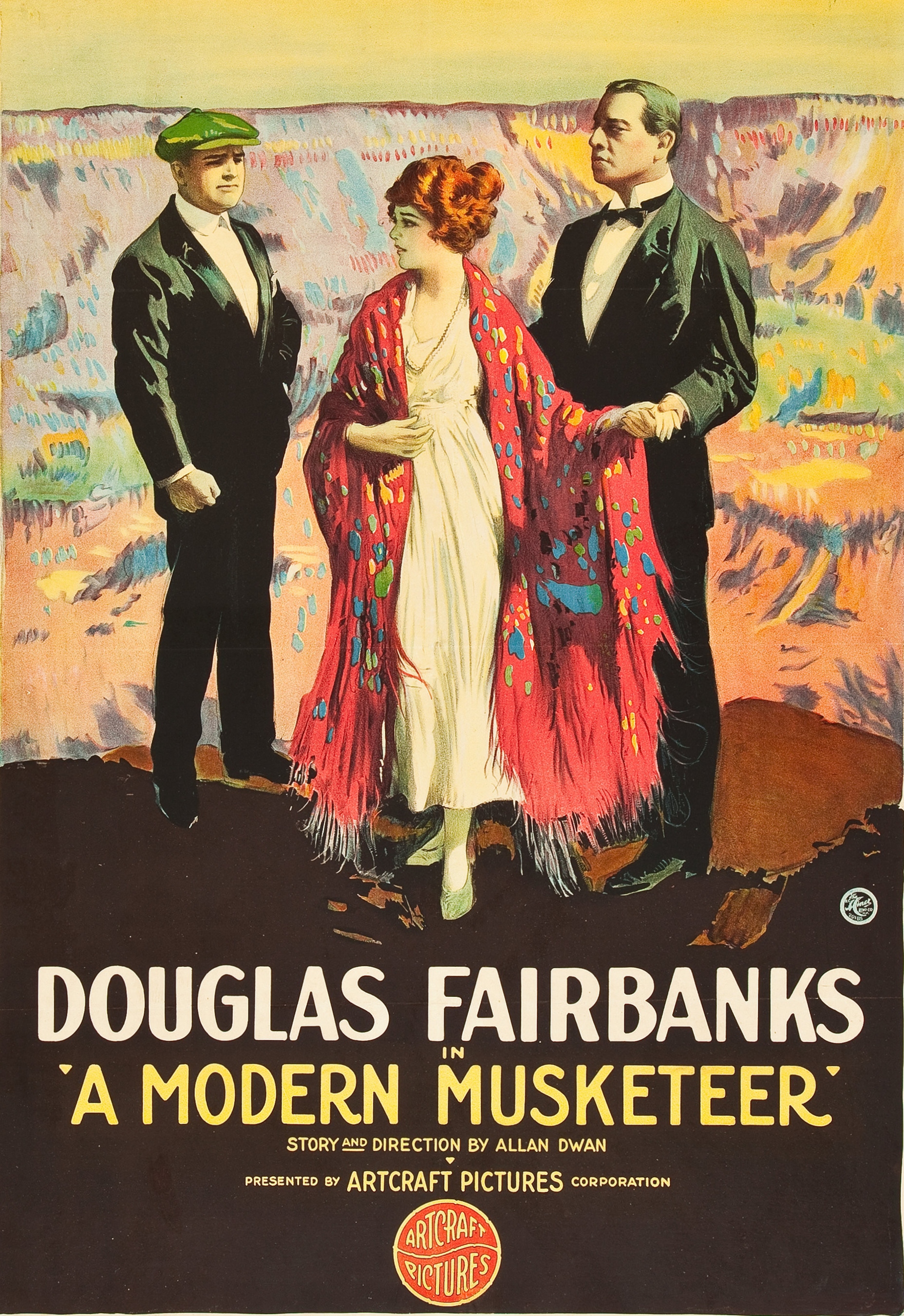
A definitive 6.5/10 rating for a film that redefined the boundaries of cult cinema. A Modern Musketeer remains a cornerstone of transgressive art.
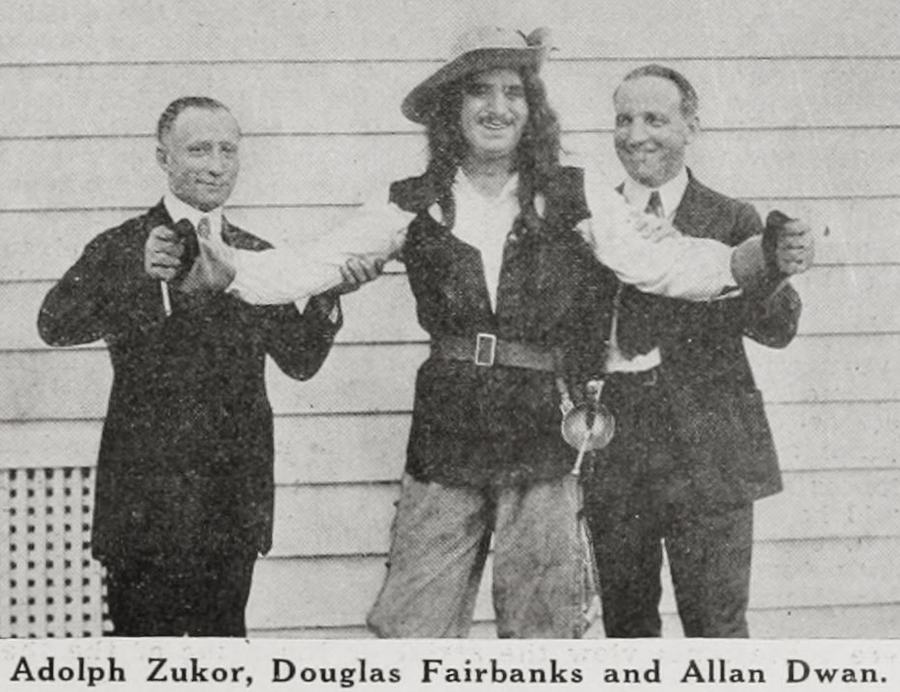
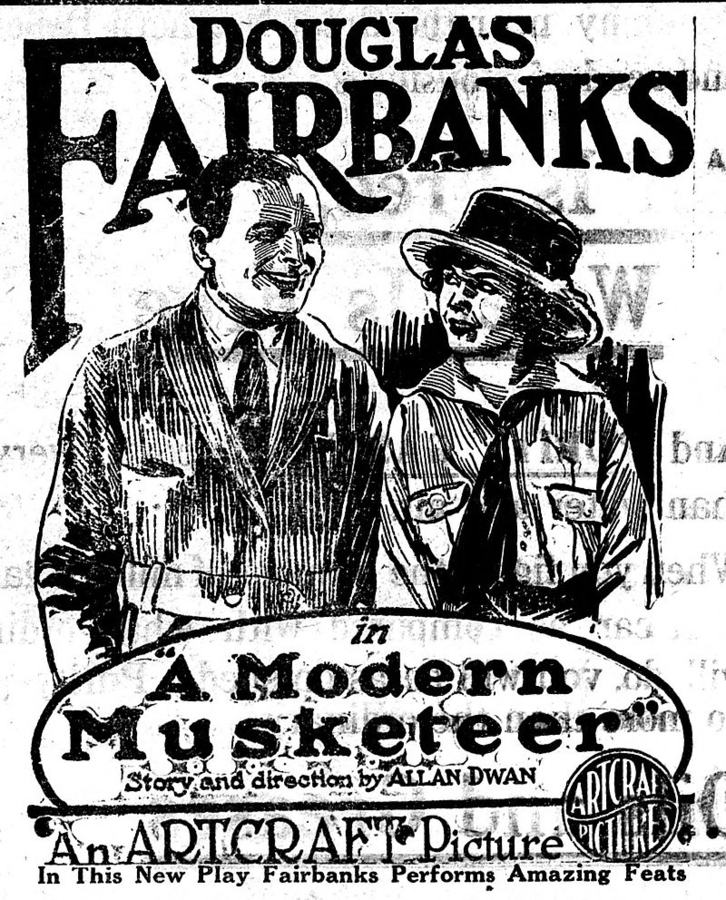
The first time I saw Ned Thacker vault over a Pullman banister—top-hat still pinned to his glossy black mane, cane twirling like a metronome for chaos—I understood Fairbanks was not merely starring in a picture; he was detonating a paradigm. Allan Dwan’s A Modern Musketeer (1917) arrives like a telegram from an alternate universe where Westerns were born with slapstick souls and chivalry never died, it just bought a rail ticket to Arizona.
Fairbanks’ body is the film’s true intertitle: every thigh-popping leap across a tavern table, every balletic swing from a cottonwood branch writes dialogue more eloquent than the florid cards Dwan flashes onscreen. Watch the sequence where Ned, framed against a cobalt sky, parkours up a sandstone butte—boot-toe wedged in a fissure, palms smearing ochre dust—to retrieve a lady’s glove. The stunt is pointless to the plot yet essential to the mythos: the West as jungle-gym for a hero who refuses to outgrow recess.
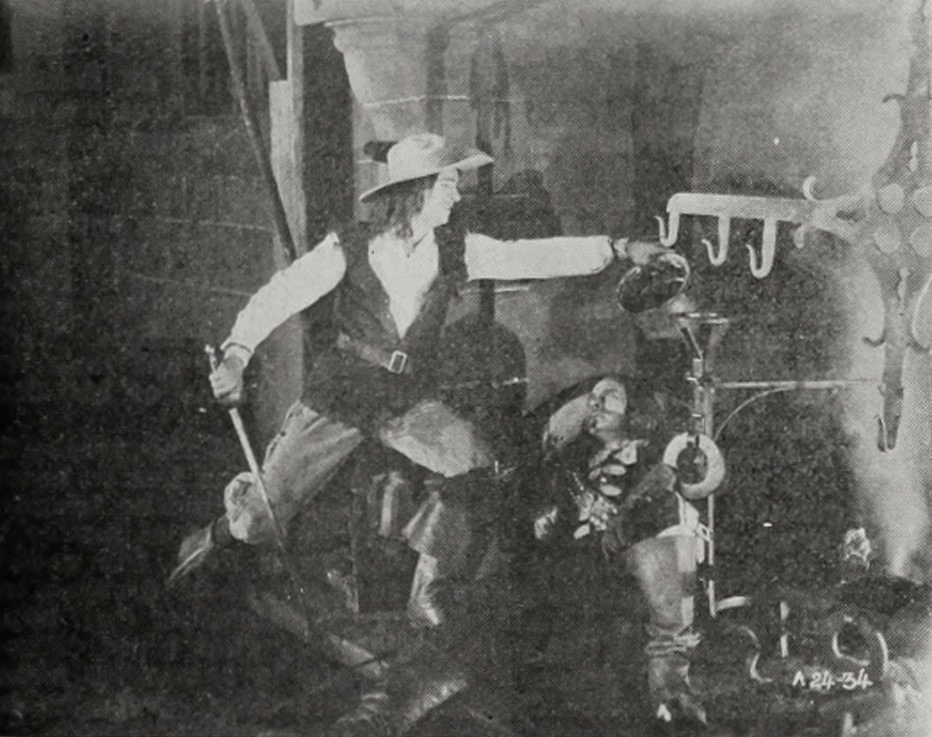
Compare this kinesthetic bravura to the pastoral languor of Hearts and the Highway or the maritime fatalism of The Lighthouse Keeper’s Daughter. Those films treat landscape as backdrop; Dwan weaponizes it. When a gale tears through a desolate stagecoach station, the grit pelts the lens, turning the very air into an antagonist—an early, unconscious ancestor of the Coen brothers’ dust-bowl nihilism.
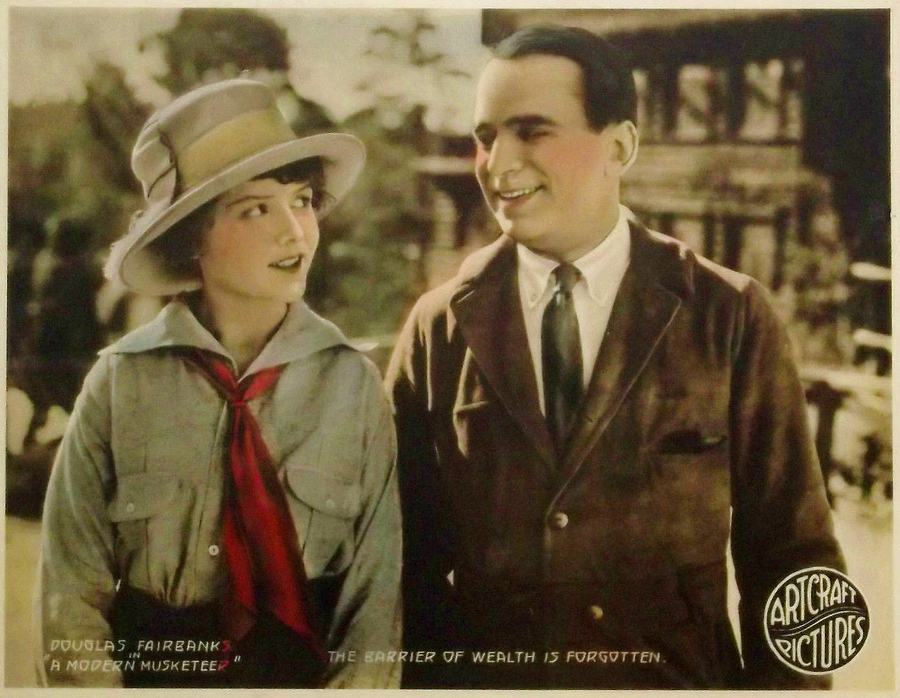
Marjorie Daw’s Elsie Dodge—ostensibly a damsel—spends half the runtime rescuing herself. She clambers out of second-story windows via knotted sheets, commandeers a mule team, and, in the film’s most slyly subversive gag, beats Ned to the draw during a hold-up, her pearl-handled derringer winking beneath a lace cuff. Their chemistry is a pogo-stick duet: she lands every quip with flapper-speed timing; he rebounds into gymnastic rebuttals. The flirtation crescendos inside a half-built chapel where moonlight, slicing through latticework, checkerboards their faces—an exquisite chiaroscuro that anticipates Sabrina’s greenhouse tryst by almost four decades.
Frank Campeau’s outlaw leader, Laredo Kane, delivers monologues while shaving with a Bowie knife, the blade scraping stubble in tandem with his syllables—a visual metaphor for how civilization skinned itself into barbarism on the frontier. Yet Dwan refuses caricature. In a campfire close-up, Kane cradles a pocket watch engraved with a child’s scrawl: “Come home, Papa.” That flicker of humanity complicates our cheers when Ned boots him over a precipice. Compare Kane’s wounded paternal ache to the mustache-twirling avarice of The Curse of Greed; Dwan’s villainy aches, and the ache lingers longer than any gunpowder finale.
Though the intertitles are sparse, the film crafts an aural hallucination through rhythm: the clop-clop of hooves syncopated against rail ties, the whip-crack of Fairbanks’ coat tails, the percussive thud of his boots on pine planks. When Ned tap-dances across a saloon bar to distract card-sharps, the shots are edited like a jazz drum solo—each cut lands on the imaginary downbeat. I screened a 16-mm print at the Castro Theatre with a live junk-band accompaniment; the audience swore they heard spur jingles that exist only in the mise-en-scène’s kinetic memory.
Zasu Pitts, as the prim boarding-house proprietress Miss Wimple, weaponizes fluttering incompetence—her hand-wringing distracts posses while escape tunnels are dug beneath her petticoats. Watch how she milks a 12-second delayed reaction shot when a horse trots indoors: first the eyes widen, then the fan drops, then the knees buckle in a slow faint as precise as any Buster Keaton pratfall. She’s the comedic counterweight to Edythe Chapman’s steel-spined matriarch who, in a proto-Little Women monologue, lectures Ned on the “metaphysics of gallantry,” arguing that chivalry sans empathy is mere parkour of the soul.
Charles Stevens, of Navajo-Mexican heritage, plays Yellow Horse, a “friendly Indian” guide whose pidgin English captions are cringe-inducing. Yet his screen presence radiates sly intelligence—note how he reverse-pickpockets a stick of dynamite into the villain’s saddlebag, then crosses his arms in mock innocence. The stereotype is regrettable, but the agency Stevens injects complicates the trope, presaging the more nuanced Indigenous portraits in later Westerns like Sonad Skuld.
Dwan’s camera, mounted on a repurposed mining elevator, plunges three stories to chase Fairbanks down a grain chute—an early crane shot that anticipates the Touch of Evil opener by forty years. The desert day-for-night scenes, achieved by undercranking and cobalt filtration, transmute sand into a lunar expanse where silhouettes duel under star-fields painted onto the emulsion. When lightning forks behind Kathleen Kirkham’s saloon songstress during her torch-ballad, the celluloid appears to combust, marrying spectacle to character psyche.
E.P. Lyle Jr.’s titles reference Rimbaud, Poe, even a mangled Confucius—“He who leap over chasm should first tie shoelace.” One intertitle, flashed during a bar fight, reads: “In the cathedral of pain, pewter tankards serve as bells.” It’s fin-de-siècle decadence grafted onto cowboy vernacular, a tonal mash-up that shouldn’t work yet feels prophetic in our post-Tarantino age of pop-culture mash-notes.
Trace the genealogy: Fairbanks’ rooftop romps → Errol Flynn’s Adventures of Robin Hood → Jackie Chan’s prop-fu → Tom Holland’s warehouse pirouettes in Civil War. The film’s DNA also sneaks into Spielberg: the cliff-side wagon teetering on a splintered bridge is Indiana Jones before Indy’s fedora was even felted. When critics hail Sporting Blood as proto-noir, they’re overlooking how Musketeer’s kinetic optimism sired the adventure template that funds studio slates to this day.
The 2023 4-K restoration, struck from a Czech nitrate print, unveils textures smothered by decades of dupes: the purl-stitch on Fairbanks’ kid gloves, the opalescent sheen of Daw’s silk stockings as they ladder during a sprint, the blood-orange hue of mesas at magic hour that makes the frame appear to inhale. The tinting schema—amber for Kansas, viridian for riverboat nights, magenta for the climactic fiesta—restores Dwan’s chromatic symphony, proving silent cinema was never monochrome but rather a fever dream of Technicolor before Technicolor.
Because in an era when superheroes land with CGI thuds, Fairbanks reminds us that physical risk, married to literary wit, can still feel like the most radical special effect. Because Marjorie Daw’s arched eyebrow contains more feminist subversion than studio reboots with billion-dollar PR budgets. Because watching this film is akin to discovering your grandfather’s secret diary—every page cartwheels with youthful folly, swagger, and the conviction that the world is larger, wilder, and more forgiving than adulthood later proves. Stream it, project it, heck, graffiti每一帧onto your retinas—just don’t mistake it for a museum relic. A Modern Musketeer is a living, breathing dare: one bound, and you’re free.
IMDb 5.7
1935
Community
Log in to comment.