DbcultAccessing Vault...
5.3/10
Senior Film Conservator
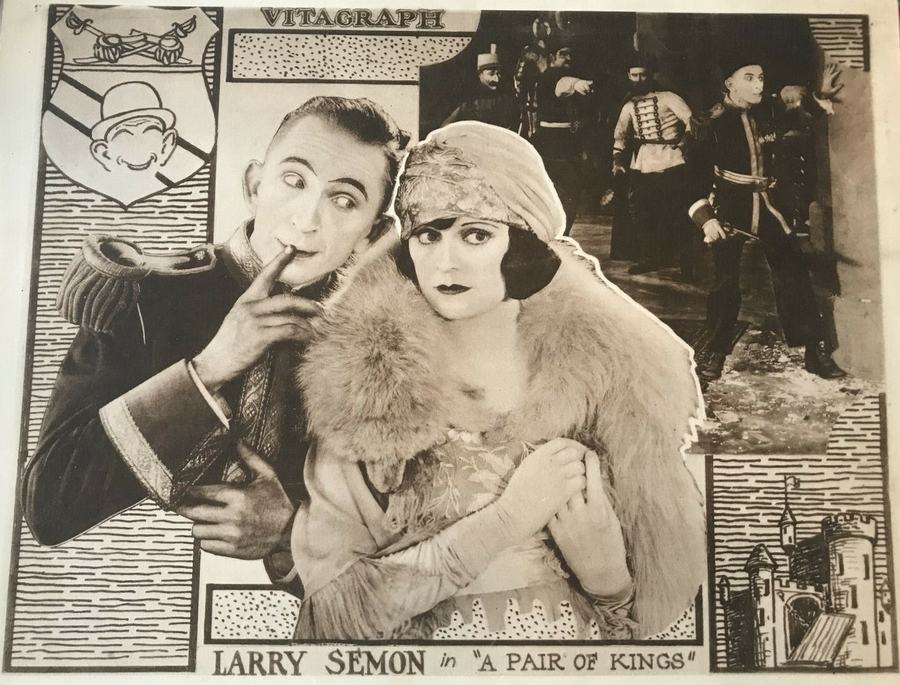
A definitive 5.3/10 rating for a film that redefined the boundaries of cult cinema. A Pair of Kings remains a cornerstone of transgressive art.
Revolutions seldom arrive gift-wrapped, but in A Pair of Kings they slide in on splintered pine.
The film, a 1922 two-reeler that clocks in just under twenty minutes, is a Molotov cocktail of monarchical panic and dockside slapstick. It opens on a kingdom whose currency appears to be anxiety: torch-bearing malcontents swarm the plaza, their shadows writhing across baroque façades like Expressionist woodcuts. Inside, the king—played by Vernon Dent with the porcine terror of a man who’s just read tomorrow’s obituary—clutches his scepter as though it were a flotation device. Dent’s performance is a masterclass in jowly perspiration; every bead on his temple gleams like a tiny crystal ball foretelling beheading.
Enter our proletarian hero, not through a gilded door but through a loading hatch. The dock laborer (Larry Semon, also directing) arrives sealed in a crate, a human parcel mis-delivered to the throne room by harried porters. The gag is vintage Semon: logistics as destiny. One thinks of Chaplin’s tramp squeezed through conveyor belts in Modern Times, yet Semon’s boxed entrance is less social critique than fairy-tale absurdity—Jack tumbling down the beanstalk straight into the crown jewels.
Once sprung, Semon’s lanky frame becomes a kinetic insult to aristocracy. His limbs possess the flailing democracy of windmill sails; he pirouettes across Persian rugs, scattering courtiers like tenpins. The new ruler’s first royal decree? Vase-to-forehead diplomacy.
The palace bric-à-brac—priceless urns, Ming knock-offs, whatever the prop department could plunder—becomes artillery. Each cranial collision is accompanied by a wood-block snap in the orchestral score, as though the film itself were cracking its knuckles. Semon’s timing is surgical: he waits for the conspirator’s smirk to reach apex curvature before fracturing it with porcelain. The result is a ballet of belittlement; every shattered vessel releases a puff of talcum that hangs in the air like the ghost of deposed etiquette.
Not to be outdone, Oliver Hardy—still a few doughnuts away from the avoirdupois that would immortalize him opposite Stan Laurel—appears as a scheming duke whose moustache wax appears flammable. Hardy’s reactions are miniature essays in delayed indignation: eyelids fluttering like theater curtains, jowls inflating to barrage-balloon proportions, then the inevitable splash as Semon tips him into the palace cistern. The imagery is proto-surrealist; a ducal head momentarily bobs amid lily pads like Man Ray’s lost necktie.
The subterranean cistern sequence is the film’s pièce de résistance: a cathedral of murk where failed usurpers flail in synchrony, their velvets saturated to the color of bruised plums. Semon lowers a drawbridge of planks, converts a ceremonial halberd into a catapult, and rains down more crockery—this time an entire dinner service—turning regicide into dish-washing.
Lucille Carlisle’s queen, initially a decorative hostage, emerges as the narrative’s fulcrum. She watches the mayhem with the detached amusement of a chess master who’s already foreseen checkmate. When she finally places the crown upon her own curls and taps Semon’s shoulder in knighthood, the gesture feels less romantic than pragmatic: a recognition that survival now belongs to whomever can weaponize whimsy.
Visually, the picture revels in chiaroscuro. Cinematographer Hans F. Koenekamp—borrowing lessons from German silents—bathes corridors in slanted shafts of light that slice through incense like guillotines. The kingdom’s architecture is a fever dream of mismatched eras: Baroque balusters, Gothic arches, Art Nouveau sconces. The cumulative effect is one of temporal vertigo, as though monarchy itself were a palimpsest being scraped clean by slapstick.
Comparative glances are inevitable. Where Insulting the Sultan trafficked in ethnic caricature, Kings subverts hierarchy without racial punch-lines. Das törichte Herz offered romantic fatalism; here, romance is an afterthought annexed by acclamation.
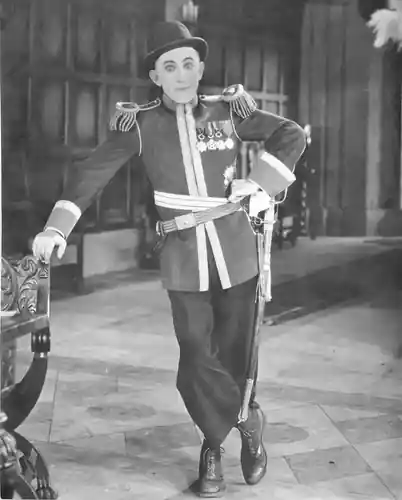
The screenplay—credited to Semon and Norman Taurog—compresses three acts into the narrative equivalent of a sneeze. Yet within that sneeze resides a manifesto: legitimacy is a costume that fits whoever’s left standing. When the abdicated king reappears in the final reel, now a broom-wielding janitor content to sweep up the debris of his former reign, the film lands its slyest punch-line: power is janitorial, merely a matter of who holds the broom.
Sound-era viewers sometimes dismiss silent comedy as frenetic pantomime. Watch Kings beside Tails Win—another Semon curio—and you’ll notice evolution. The earlier short is gag-salad; this one uses objects as plot verbs. Each vase, each tapestry, each cistern ratchets story tension rather than merely decorating it. Even the intertitles—usually expository ballast—are kept Spartan, allowing visuals to articulate causality.
Restoration notes: the 4K scan from a 35mm nitrate positive held at MoMA reveals textures formerly muddied in dupes. You can now discern the damask pattern on Semon impossibly baggy trousers, the individual sequins on Carlisle’s coronation gown glinting like captured starlight.
Scholars seeking socio-political subtext will find fertile ground. Released two years after the Palmer Raids and a year before Mussolini’s March on Rome, the film’s cartoon putsch feels eerily prescient. Yet its antidote is not governance but theatricality: monarchy saved by vaudeville. One exits pondering whether democracy might benefit from a few more pratfalls.
Performances resist the monochromatic. Dent’s king quavers on the edge of ham yet lands in pathos; his abdication speech—delivered via intertitle—reads: “Take my kingdom, my crown, my cares—just leave me my head.” The line got knowing laughs in 1922; a century later, it vibrates with darker resonance. Hardy, still billed as “Babe” Hardy, supplies the prototype of the vainglorious foil he would refine opposite Laurel. Watch how he fondles his sash, as though caressing the very concept of rank; the gesture is minuscule but telling.
Semon himself remains an acquired taste. His screen persona lacks the underdog poetry of Chaplin or the everyman pluck of Keaton. He is chaos incarnate, a stick figure scribbled by a child who’s just discovered espresso. Yet in that caffeinated anarchy lies authenticity: he embodies the immigrant jitters of an era when identities were as interchangeable as hats.
Stunts—Semon’s trademark—escalate from vase-flinging to full-body pendulums. In one bravura shot, he swings from a chandelier, somersaults across a banister, and catapults onto a suit of armor which promptly folds around him like a lobster trap. The gag is dangerous (archival photos show bruised ribs), yet the comic payoff is metaphysical: the laborer encased in steel, a knight born of slapstick alchemy.
The queen’s coronation—filmed in medium-close profile—echoes The President’s final tableau, though where that film lingers on solemnity, here Carlisle can’t suppress a smirk. It’s the smirk of someone who’s realized that pageantry is simply cosplay with better jewelry.
Legacy? Semon’s career would nosedive within five years; he died penniless in 1928, his innovations eclipsed by sound. Yet fragments of his DNA persist in everything from Duck Soup’s cabinet war to The Great Dictator’s balloon-globe ballet. Even Hitchcock cited the cistern sequence when staging the wine-cellar climax of Notorious.
Viewing tip: queue the short after Our Little Wife for marital satire double-bill, or precede it with Ladies Must Live to chart the decade’s shifting gender politics. Either pairing illuminates how 1920s cinema wrestled with modernity while wearing jester’s motley.
Verdict: A Pair of Kings is a firecracker hurled into the throne room of respectability. It scorches, it stumbles, it singes its own fingers—but once the smoke clears, the monarchy that remains is one whose legitimacy rests on laughter. Wear your crown lightly; someone is always waiting nearby with a packing crate.
IMDb 5.6
1934
Community
Log in to comment.