DbcultAccessing Vault...
Cult Review
Senior Film Conservator
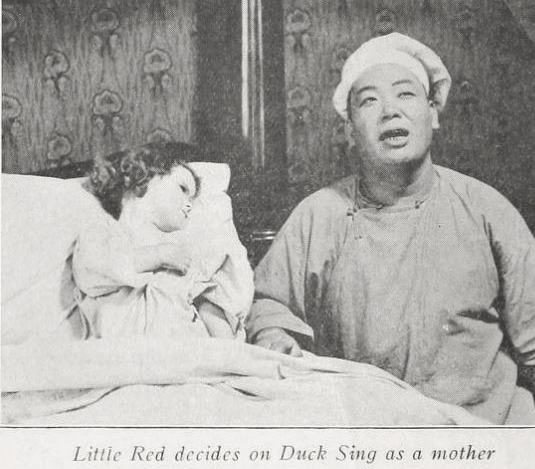
Stepping into the world of "Little Red Decides" is to journey back to an era when cinema was still finding its voice, yet already masterfully articulating profound human truths through the silent screen. This 1918 production, helmed by the creative vision of William M. McCoy, offers far more than a simple Western narrative; it's a deeply affecting meditation on family, community, and the often-surprising sources of genuine love and belonging. The film opens with a tragedy – the sudden orphanhood of a young boy, known only as Little Red. This catalyst immediately sets in motion a chain of events that challenges societal norms and probes the very definition of 'proper' upbringing.
The initial response to Little Red's plight is perhaps the most unconventional, and certainly the most heartwarming, aspect of the story: the rough-and-tumble cowboys of Colonel Ferdinand Aliso's ranch take the boy under their collective wing. This isn't a decision born of obligation, but of an immediate, undeniable affection. These men, accustomed to the harsh realities of frontier life, to the solitude and the camaraderie forged in hardship, find in Little Red a sudden, unexpected focal point for their latent paternal instincts. It's a testament to the film's nuanced characterization that these seemingly gruff figures are depicted with such a tender touch, revealing a depth of emotion often overlooked in the archetypal cowboy persona.
Their immediate embrace of Little Red contrasts sharply with the prevailing social expectations of the time. One might recall similar themes of unlikely guardianships in films like The Black Sheep of the Family, where familial bonds are tested and redefined, though often with a more comedic bent. Here, the cowboys' adoption of Little Red is portrayed with a sincere gravity, highlighting their genuine concern for the child's welfare above all else. The visual storytelling, characteristic of the silent era, would have relied heavily on the actors' expressions and gestures to convey this profound shift in their lives, from solitary wanderers to surrogate fathers.
This benevolent, if somewhat unorthodox, arrangement quickly draws the ire of the more established, 'respectable' elements of the community. Parson Jones and his church committee emerge as the moral arbiters, their protests rooted in a rigid adherence to what they deem 'refined surroundings' for the child. This conflict is not merely a plot device; it's a fascinating social commentary on the cultural divides of the era. On one side, you have the raw, unpolished, yet undeniably heartfelt affection of the cowboys; on the other, the institutionalized, perhaps well-meaning but ultimately detached, concern of the church. The film cleverly positions these two opposing forces, allowing the audience to ponder which truly offers the better environment for a grieving child.
The cowboys' response to this moralistic pressure is both pragmatic and deeply telling. So enamored are they with Little Red, particularly the Chinese cook, Duck Sing, that they willingly sacrifice their poker winnings – a significant sum and symbol of their leisure – to the church. This act of appeasement is not an admission of wrongdoing, but a powerful demonstration of their commitment to the boy, a silent declaration that Little Red's happiness is worth more than any personal indulgence. It highlights a recurring theme in early cinema: the inherent goodness often found in unexpected places, challenging the superficial judgments of society. In this regard, it shares a spirit with films like The Mischief Maker, which often explored the subversion of conventional expectations.
The narrative takes a dramatic turn when Little Red succumbs to pneumonia, teetering on the brink of death. This health crisis serves as a stark reminder of the vulnerabilities of childhood and the harsh realities of life on the frontier. Dr. Kirk, a figure of medical authority, intervenes with an ultimatum that reshapes the entire dynamic: Little Red must either be placed permanently with the minister or acquire a mother through the marriage of one of the cowboys. This decree, while seemingly benevolent, forces the cowboys into an impossible bind, pushing them to consider a solution that feels both alien and essential to their way of life.
The doctor's insistence on a 'mother figure' or a 'refined' environment reflects the prevailing medical and social wisdom of the era, which often prioritized perceived stability and traditional family structures over the raw, if unconventional, affection already present. It’s a moment that resonates with the struggles seen in films like Corruption, where societal pressures and moral judgments often dictate personal fates, sometimes with unintended consequences. The film, through this plot point, invites viewers to question whether institutional solutions truly serve the best interests of the individual, particularly a child, or merely uphold a prescribed social order.
With Little Red recuperating at the parson's home – a temporary arrangement that highlights the boy's discomfort in such a sterile environment – ranch hand Tom Gilroy is thrust into the unenviable task of finding a wife. His mission: to secure a 'mother' for Little Red and thus keep him within the cowboy family. The film injects a delightful dose of humor into this predicament as Gilroy, clearly more comfortable with horses than with women, awkwardly courts the only marriageable women in town: a widow and two spinsters. His efforts are portrayed with a charming blend of earnestness and ineptitude, making for some genuinely comedic moments that break the underlying tension of Little Red's uncertain future.
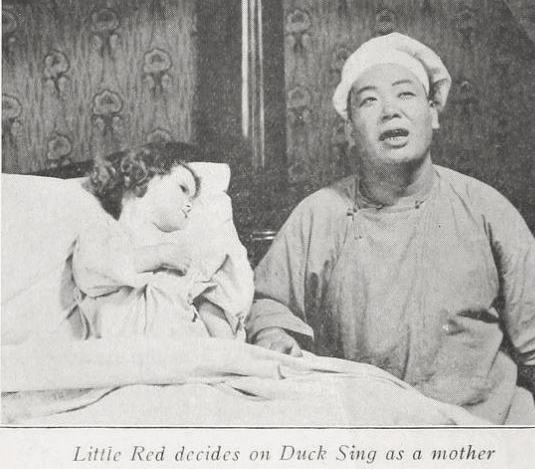
Much to Gilroy's profound relief, and perhaps to the audience's knowing amusement, all three women turn him down. This rejection, far from being a setback, becomes a humorous liberation for Gilroy, underscoring the film's subtle critique of forced marital solutions. It's a refreshing departure from typical romantic subplots, instead focusing on a man's genuine reluctance for a marriage of convenience, even for a noble cause. This sequence cleverly lampoons the societal pressure to conform to traditional family units, suggesting that true affection cannot be manufactured on demand. The comedic elements here might draw a faint parallel to the lighthearted yet poignant romantic entanglements in films like Diane of the Follies, though 'Little Red Decides' uses it to highlight a different kind of familial dilemma.
The heart of "Little Red Decides" truly beats in the character of Duck Sing, Colonel Aliso's Chinese cook. From the outset, Sing is depicted as uniquely, almost instinctively, attuned to Little Red's needs and affections. The boy, in turn, prefers Sing to the austere, if well-intentioned, Parson Jones. This preference is crucial, as it elevates Little Red's own agency in determining his future, a remarkably progressive stance for a film of its era. Sing, an outsider in many respects within the broader community, becomes the most profound advocate for the child's emotional well-being.
In a climactic act of profound devotion, Duck Sing 'kidnaps' Little Red from the parson's home. This isn't a malicious abduction, but a desperate, loving rescue, driven by the cook's intuitive understanding of where the child truly belongs and thrives. It’s a moment of quiet heroism, challenging the audience to look beyond racial and social stereotypes to recognize the purest forms of love and care. This daring act, born of affection rather than malice, resonates with the spirit of protective instincts found in other films, albeit with different contexts, such as the unwavering loyalty portrayed in The Call of the Cumberlands, where deep personal bonds drive extraordinary actions.
The culmination of this emotional journey sees Colonel Aliso legally adopting Little Red. This act is the ultimate validation of the unconventional family that has organically formed around the boy. It's a powerful statement that love, not blood or societal decree, defines a family. The Colonel's decision, undoubtedly influenced by the unwavering devotion of his ranch hands and particularly Duck Sing's audacious act, signifies a triumph of genuine human connection over rigid social structures.
The resolution is deeply satisfying, not because it conforms to expectations, but precisely because it subverts them. Little Red finds his forever home not in the 'refined' settings deemed appropriate by the church, nor through a forced marriage, but within the boisterous, loving, and distinctly unconventional embrace of the ranch community, with Duck Sing as his primary, unofficial guardian and the Colonel as his legal father. This ending champions the idea that family is a tapestry woven from shared experiences, mutual affection, and an unwavering commitment to one another's well-being, regardless of how it might appear on paper.
"Little Red Decides", despite its age, offers a surprisingly modern take on themes of adoption, prejudice, and the formation of chosen families. It challenges the audience to look beyond superficial appearances and societal dictates to the true essence of care and belonging. The film's portrayal of Duck Sing, a Chinese character who is not only central to the plot but also depicted with profound empathy and agency, is particularly notable for its era, subtly pushing against prevalent racial stereotypes and presenting a complex, heroic figure.
The film's enduring charm lies in its ability to evoke genuine emotion without relying on dialogue, a testament to the power of visual storytelling and the expressive capabilities of its cast, including Walter Perry as Colonel Aliso and Goro Kino likely portraying Duck Sing with such memorable depth. It reminds us that even in the silent era, cinema was capable of crafting narratives that resonate deeply, exploring universal human experiences with grace, humor, and a touching sincerity. This is a film that, much like its titular character, makes its own decisions about what constitutes a family and, in doing so, leaves an indelible mark on the heart.
It stands as a testament to the early days of filmmaking, showcasing how compelling narratives could be woven with simple premises and profound emotional honesty. The film’s ability to navigate complex social issues, from class distinctions to the role of community, all through the lens of a child’s welfare, is truly remarkable. It’s a forgotten gem that deserves rediscovery, a poignant reminder that the search for belonging is a timeless human endeavor, often fulfilled in the most unexpected of places. This film, in its quiet power, demonstrates that love, in its purest form, often defies convention and reshapes the world around it, much like the transformative journey of Little Red himself.
IMDb 5.8
1934
Community
Log in to comment.