DbcultAccessing Vault...
6.6/10
Senior Film Conservator
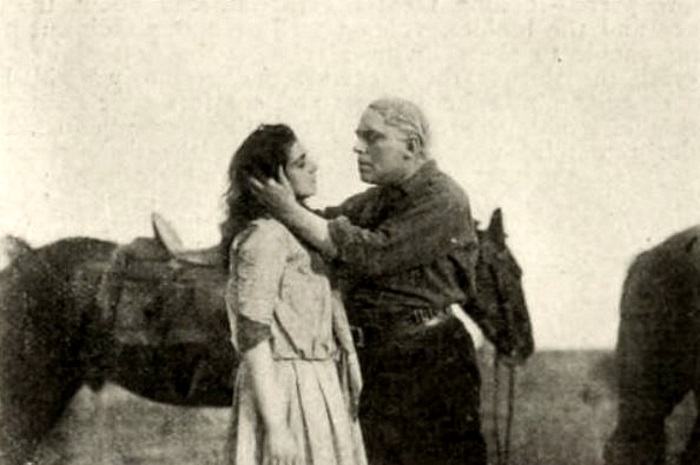
A definitive 6.6/10 rating for a film that redefined the boundaries of cult cinema. Forgiven; or, the Jack of Diamonds remains a cornerstone of transgressive art.
The nickelodeon curtain lifts on a winter so Floridian it perspires; Spanish moss drips like green chandeliers above the teak deck of a paddle-sloop inching down the St. John. Within this aqueous cathedral of steam and cypress knees, director Edwin J. Forsberg stages the first of many contrapuntal games—cards, hearts, fate—dealt by men whose pocket watches tick louder than the boat’s engine. Jack Diamond, dubbed the Jack of Diamonds because fortune once slipped him that face-card at the precise moment his parents’ fortune sank beneath Wall-Street froth, wears a Panama hat tilted at the angle of perpetual departure. He is both pilgrim and penitent long before the plot demands either.
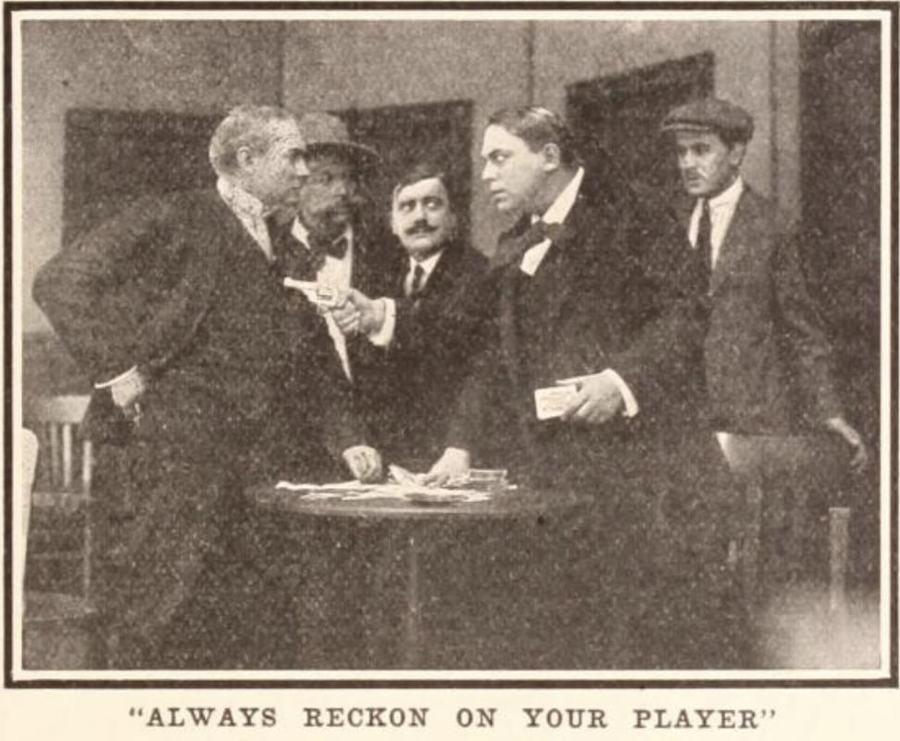
Enter Denver Dan—Daniel Peabody—whose drawl smells of old saloon varnish and whose waistcoat still believes the West was won by courteous wagers. He is the film’s wandering chorus, a gentleman gambler whose courtesy costs him every pot but wins him the audience’s protective sympathy. Together they witness Willard Graham fleeced by card sharks as slick as river fog. Jack’s intervention—those magician-fast fingers returning both money and dignity—would feel mythic even without the immediate baptism-by-rescue when he vaults rail-ward to snatch Virginia Bell, a moppet in periwinkle pinafore, from the river’s sepia maw. Annie Dennison, watching from the promenade, registers the event through a veil of travel weariness and sudden, inconvenient awe. Caroline French lets the recognition leak sideways—an almost imperceptible tilt of chin—so that desire arrives before language can embarrass it.
The film’s second act drifts into the coquina courtyards of St. Augustine, where parasols spin like pastel planets and every flirtation is shadowed by Aunt Cordelia’s vigilant fan. Ricca Allen’s Cordelia is a marvel of compressed rectitude; she snubs Denver Dan with the economical cruelty of a woman who has mistaken propriety for immortality. Meanwhile Frederick Burton’s Graham—tailored, pomaded, perpetually smelling of verbena—hovers over Annie like a gilt-edged threat. The screenplay, adapted by Bennet Musson and Clay M. Greene from a popular magazine serial, allows dialogue titles to glitter with double meanings: “I have stakes in this territory,” Graham murmurs, eyeing Annie’s gloved hand rather than the horizon. The line is prophetic; every wager in this narrative will be paid in blood or marriage, sometimes both.
A letter arrives from Texas—ink blurred by humidity—warning Graham of Frank Popham, the living wreck whose wife Graham once lured away then discarded like a soiled glove. The scene is shot in chiaroscuro: Popham’s skeletal frame emerges from hotel shrubbery, blade glinting, only to be bought off with crumpled bills and a lie that the wife still breathes. Jack watches from a balcony, hat brim eclipsing his eyes, already sensing that guilt is transferable currency in this economy of grudges.
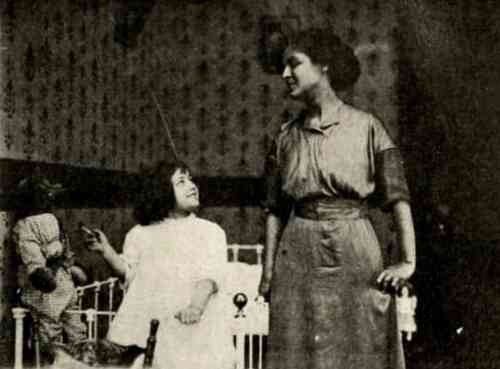
The dissolve that bridges the next seven years is one of silent cinema’s most lyrical: Annie’s lace veil fluttering across the screen becomes the curtain of a Jacksonville bungalow, where Leonie—Fritzi Brunette at six years old, all elbows and wonder—plays with wooden blocks. Jack, now a railroad clerk, has traded monte tables for morning commutes, but the camera finds tension in the set of his shoulders as he signs ledgers with the same wrist-flick once used to fan cards. Musson’s intertitles confess: “He kept the vow, though Fortune broke hers.” The line is heart-stabbingly apt; silent films excel at portraying poverty as a hush that lowers itself over furniture like damp sheets.
Graham’s revenge is exquisitely bureaucratic: a whispered revelation to the railroad president, a dismissal delivered in an office whose windows frame Jacksonville’s modest skyline of church spires and phosphate cranes. Jack refuses charity, even from Denver Dan, whose loyalty has the stubbornness of a folk ballad. Night-watchman duties follow—lantern in hand, Jack patrols warehouses that smell of guano and citrus, the glow of his lamp echoing the footlights of gambling houses he once haunted. Forsberg shoots these sequences in depth: foreground rails, mid-ground Jack, background darkness swelling like unpaid debt.
A second dissolution—Jack missing the Texas-bound train—ushers in the decade-long rupture. Annie, misled by Graham’s insinuations of nightly card orgies, flees with Leonie. The film here risks melodrama but survives because of Lois Alexander’s Annie: her eyes hold not betrayal’s blinding flash but the slower corrosion of doubt. When Jack returns home to emptied rooms, the camera lingers on a child’s rag doll splayed beneath a rocking chair; the image is more accusatory than any dialogue.
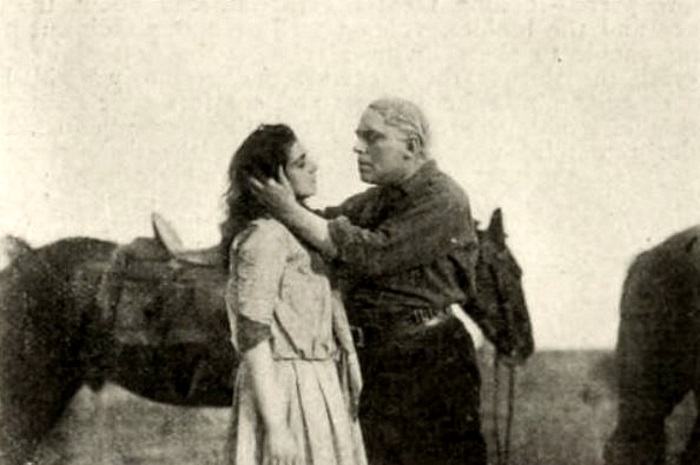
Ten years telescope into a single intertitle: “Texas—where a man may outrun disgrace, but never himself.” Jack, now prosperous from cattle and oil leases, rides beside Denver Dan through landscapes shot on location near San Antonio. The horizon stretches until it resembles the ultimate poker table—limitless, indifferent. Enter Leonie, sixteen and luminous, first seen falling from a pony into a patch of prickly pear; Jack’s rescue replays his earlier river leap, but time has inverted the rescue’s direction. Father saves daughter without recognition, a dramatic irony the camera milks for every tremor.
The final act compresses a French stage thriller into Santa Clara’s dusty plaza. Pedro, a Mexican caricature regrettably broad even for 1913, functions as Graham’s catspaw; yet Luke J. Loring’s performance injects wounded vanity—he limps from an old knife scar, reads newspapers aloud to prove literacy, and thus complicates the stereotype. The letter he dispatches to Graham sets in motion a convergence: Popham, half-dead, dragging a shotgun like Ahab’s peg-leg; Annie, chalk-palmed before her parlor organ; Cordelia, now softened by Denver Dan’s courtship, her fan finally still.
The duel at sunset is staged in three planes: distant mountains bruised violet, mid-ground duelists, foreground cactus whose spines catch gilt light. Forsberg cross-cuts between Leonie praying in the town chapel, Cordelia and Dan racing in a buckboard, and Popham crawling like a wounded saint. When the pistols rise, yellow dust swirls so thick it resembles fogged nitrate—an accidental meta-wink toward the film’s own fragile medium. Denver Dan’s bullet disables Pedro; Popham’s shotgun robs Graham of breath but not of speech. The dying confession—Annie’s innocence—arrives as sunlight gutters across Graham’s eyes, a visual amen.
Forgiven belongs to that strain of pre-1920 melodrama which treats gambling as secular sin, yet cannot resist glamour’s sheen. The film’s moral arc bends toward restitution rather than punishment; Jack’s renunciation of cards is penance enough, and the narrative rewards him with land, progeny, and the restoration of marital embrace. Contemporary viewers may bristle at the gender economics—women passed like chips, their futures wagered by men—but Annie’s final gaze carries agency; she walks back into Jack’s arms only after the film has visualized her decade of self-reliant motherhood.
Visually, the picture borrows from both Ivanhoe’s medieval silhouettes and Soldiers of Fortune’s tropical exoticism. Interior scenes favor tungsten gloom, exteriors blaze with over-exposed sunshine that renders dust motes into flecks of gold. The tinting—amber for Jacksonville nights, turquoise for river sequences, rose for the final reunion—survives in the Library of Congress 35mm nitrate, though most public-domain prints circulate in black-and-white dupes.
Caroline French, primarily a stage tragedienne, modulates Annie between porcelain composure and tremulous awakening; watch how her hands retreat into cuffs when confronted with scandal, then unfurl like flags when Leonie is endangered. Daniel Bertona’s Jack suggests a man perpetually listening to inner roulette wheels, his stillness calibrated so that the rare smile feels like jackpot bells. Ricca Allen steals every tableau: Cordelia’s fan becomes semaphore of disapproval, then, in a late shot, a bridal bouquet lowered in surrender to Denver Dan’s unwavering courtesy.
Frederick Burton’s Graham exudes silk-swathed menace, yet the script grants him a final glimmer of conscience; his deathbed admission is played not with mustache-twirling defiance but the exhausted honesty of a man who recognizes the ledger has balanced. It is this shading that elevates the film above contemporaries like The Cup Winner or Jess, where villainy often calcifies into caricature.
Once thought lost, a 35mm incomplete negative surfaced in 1998 within a Jacksonville warehouse alongside reels of The Education of Mr. Pipp. The Library of Congress photochemically preserved reels 2–6; reel 1 remains truncated, its card-shark setup supplied by a 1913 continuity script. Kino Lorber included the restoration in their 2014 anthology “Gamblers & Gentlemen: Rarities of the Silent South,” synced with a new score by Aleksandr Varkal that blends Appalachian dulcimer with Cuban habanera motifs—an aural nod to the film’s hybrid geography.
Streaming rights currently cycle between Classix and Kanopy; Blu-ray is out of print but second-hand copies surface on eBay for cine-masochists who relish hunting celluloid ghosts. For context, pair with The Temptations of Satan for morality-tale fever, or Lika mot lika for Scandinavian gambling-damnation counterpoint.
Forgiven; or, The Jack of Diamonds is not the holy grail of silent cinema, yet its riverine languor, its willingness to let redemption arrive scarred and debt-marked, makes it a compelling artifact of America’s moral schizophrenia toward risk. Every frame bets on the viewer’s capacity to forgive genre excess in exchange for glimpses of grace—an ante that, for this critic, pays out in full measure.
IMDb 6.6
1931
Community
Log in to comment.