DbcultAccessing Vault...
Cult Review
Senior Film Conservator
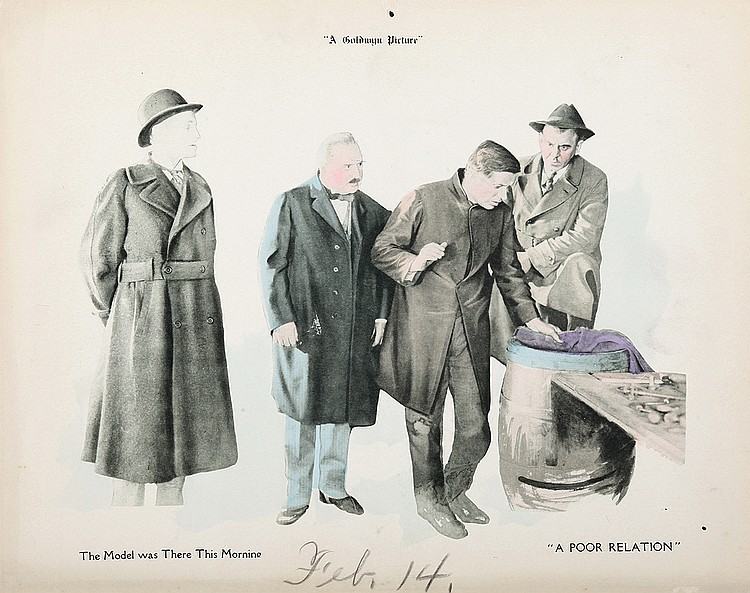
*A Poor Relation* lingers in the memory like the smolder of a half-remembered dream, its narrative cadence both urgent and elegiac. This 1925 silent film, directed with aching delicacy by Bernard McConville and Edward E. Kidder, is less a tale of invention than an ode to the quiet heroism of those who persist in the shadows of privilege. The film’s protagonist, Noah Vale (Jeanette Trebaol, in a performance that oscillates between gaunt desperation and stubborn grace), is not merely an inventor but a self-appointed guardian of the forgotten—Rip and Patch, the orphans, are his living sketches of human resilience. Their attic, a makeshift kingdom of cluttered dreams, becomes the film’s central metaphor: a space where ingenuity is both a weapon and a vulnerability.
The film’s opening scenes are masterclasses in visual economy. Vale’s invention—a clunky, unproven device that hums with the weight of unmet potential—is rendered not as a gimmick but as a character in its own right. The camera lingers on its brass joints, its wires coiled like the anxieties of its creator. Will Rogers’ portrayal of Sterrett, Fay’s partner, is a study in calculated menace, his gestures broad yet chillingly transactional. When he steals Vale’s model, the act is less a heist than a ritual of erasure, a reminder that innovation is often sacrificed at the altar of status quo. Yet Sterrett’s return of the invention, after discovering its worthlessness, is the film’s first dark joke: the powerful, it suggests, will only tolerate disruption so long as it threatens them.
Johnny Smith’s arc is the emotional core, a thread that stitches together the film’s disparate elements. Played with aching sincerity by Walter Perry, Johnny begins as a figure of misplaced ambition, his dismissal by Fay’s daughter (Molly Malone) a wound that festers in the film’s underbelly. His visit to Vale’s attic—a scene drenched in chiaroscuro lighting—marks a pivotal shift. Here, the interplay between Vale’s epigrams and Johnny’s silent despair becomes a dialogue of survival. The attic, once a symbol of isolation, transforms into a crucible of collaboration when Johnny convinces a newspaper editor (Wallace MacDonald) to publish Vale’s wit. This pivot from invention to writing is the film’s thesis: that storytelling, not machinery, is the true engine of societal change.
The film’s final act is a masterstroke of emotional payoff. Vale’s decision to abandon invention for writing is not a surrender but a reclamation of agency. His partnership with Johnny, forged in the alchemy of shared purpose, underscores the film’s belief in communal struggle. The marriage between Johnny and Miss Fay, despite her father’s objections, is not a fairy tale resolution but a pragmatic assertion of autonomy. This is where *A Poor Relation* diverges from the tropes of its era: it refuses to lionize wealth or punish idealism. Instead, it frames dignity as a practice, not a privilege. The orphans, ever present yet never sentimentalized, serve as silent witnesses to this transformation, their existence a quiet indictment of a world that demands heroes wear lab coats or top hats.
Stylistically, the film is a patchwork of contrasts. The attic scenes, with their claustrophobic framing and muted palette, clash with the opulent, almost garish interiors of Fay’s mansion. This visual dissonance mirrors the narrative tension between aspiration and reality. The score, though lost to time in many surviving prints, is reported to have featured a haunting violin motif that underscores Vale’s internal monologue. The intertitles, sparse yet poetic, are reminiscent of Dadaist wordplay, a choice that elevates the dialogue into something almost sacred. For instance, when Vale muses, "The world is not built on bricks, but on whispers," the line lingers on screen long enough to feel like a revelation.
Comparisons to contemporaries like *The Italian* and *The Two Doyles* are inevitable, yet *A Poor Relation* carves its own niche. Where *The Deep Purple* leans into melodrama for melodrama’s sake, this film tempers its drama with a sly humor. The dynamic between Vale and Scallops (Sylvia Breamer), for example, is never romanticized; their relationship is one of mutual dependence, devoid of the romantic subtext that plagues many silent films. Scallops’ periodic deliveries of food are not acts of charity but of solidarity, a reminder that survival is a collective endeavor.
The film’s pacing, while deliberate, occasionally risks inertia. The middle act, particularly the sequence involving Sterrett’s theft, drags slightly, its tension undercut by the inevitability of his return of the invention. Yet these lulls are redeemed by the film’s unflinching commitment to its themes. The climax, where Vale’s epigrams are published and his partnership with Johnny solidified, is a triumph of quiet audacity. There are no fireworks, no grandstanding—just the soft click of typewriters and the tentative smile of a man who has found a new craft.
Technically, the film is a marvel of early cinema. The use of shadows in the attic scenes is reminiscent of German Expressionism, yet it avoids the genre’s overt theatricality. The editing, though rudimentary by modern standards, is taut and purposeful. One particularly striking sequence involves a montage of Vale’s failed inventions, their shattered forms mirroring the fractured state of his resolve. This visual metaphor is as poignant today as it was a century ago—a testament to the film’s enduring relevance.
The performances, especially from Trebaol and Perry, are the film’s heartbeat. Trebaol’s Vale is a study in contradictions: his gauntness belies a steely determination, his gestures of care for Rip and Patch are tender without veering into sentimentality. Perry’s Johnny is equally compelling, his vulnerability never overshadowing his resourcefulness. The chemistry between the two actors is understated yet deeply affecting, a silent conversation that speaks volumes about the power of human connection.
In an era where silent films are often dismissed as quaint relics, *A Poor Relation* defies such reductive categorization. It is a film that demands to be seen not as a curiosity, but as a blueprint for storytelling that prioritizes substance over spectacle. Its themes of class struggle, the commodification of creativity, and the redemptive power of collaboration feel strikingly modern, a bridge between the silent era and contemporary cinema. For those willing to look past its sepia-toned veneer, the film reveals itself as a quiet masterpiece—one that whispers its wisdom in a language all its own.
For further exploration of narrative resilience in early cinema, consider *The Italian*, a tale of forbidden love against a backdrop of political upheaval, or *The Two Doyles*, which explores duality in both crime and identity. Both films, like *A Poor Relation*, offer rich ground for analyzing the interplay between individual agency and societal constraints.
IMDb —
1923
Community
Log in to comment.