Summary
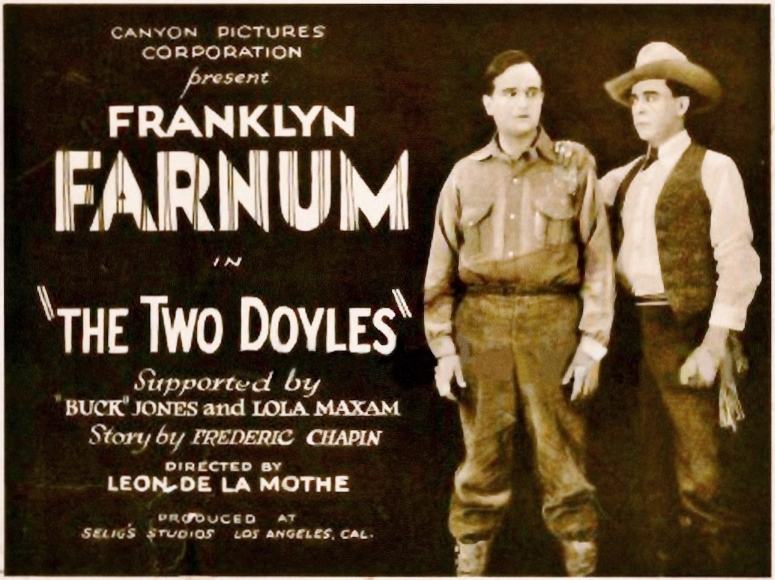
Frederick Chapin's narrative for "The Two Doyles" unfurls a compelling tapestry of fraternal discord and mistaken identity, set against the austere backdrop of the American West. At its core lies John Doyle, a figure of unimpeachable integrity, a rancher whose honest toil has earned him the respect of his community and the tender affections of Eleanor Vance (Mary Bruce). His existence, however, is violently disrupted by the spectral return of his estranged twin, James Doyle, a notorious outlaw whose shadow has long loomed over the territory. James, a master of deception, exploits their uncanny resemblance to commit a series of audacious crimes, including a brazen bank robbery and a cattle rustling scheme, all while meticulously framing John. The townsfolk, initially bewildered, begin to turn against John, their trust eroding under the weight of mounting circumstantial evidence. Even Sheriff Brody (Vester Pegg), a man of stern justice, finds himself caught in a quagmire of doubt, pressured by the cunning machinations of Silas Thorne (Franklyn Farnum), a proprietor with a vested interest in John's downfall. Eleanor, though steadfast in her belief, is plunged into an emotional maelstrom, her love tested by the pervasive suspicion. The narrative culminates in a dramatic showdown, a stark confrontation between the virtuous and the villainous, where John must not only physically subdue his malevolent doppelgänger but also metaphorically wrestle with the tarnished image his brother has cast upon his very soul, ultimately fighting to reclaim his name, his love, and his rightful place in a world teetering on the precipice of judgment.
Review Excerpt
"
Stepping back into the sepia-toned world of early cinema, one often encounters narratives that, despite their age, resonate with timeless human struggles. "The Two Doyles", a silent film from 1919, is precisely such a creation, a compelling exploration of identity, betrayal, and redemption penned by the astute Frederick Chapin. Its premise, a classic tale of mistaken identity amplified by fraternal rivalry, delivers a potent emotional punch, proving that even without spoken dialogue, the..."