DbcultAccessing Vault...
Cult Review
Senior Film Conservator
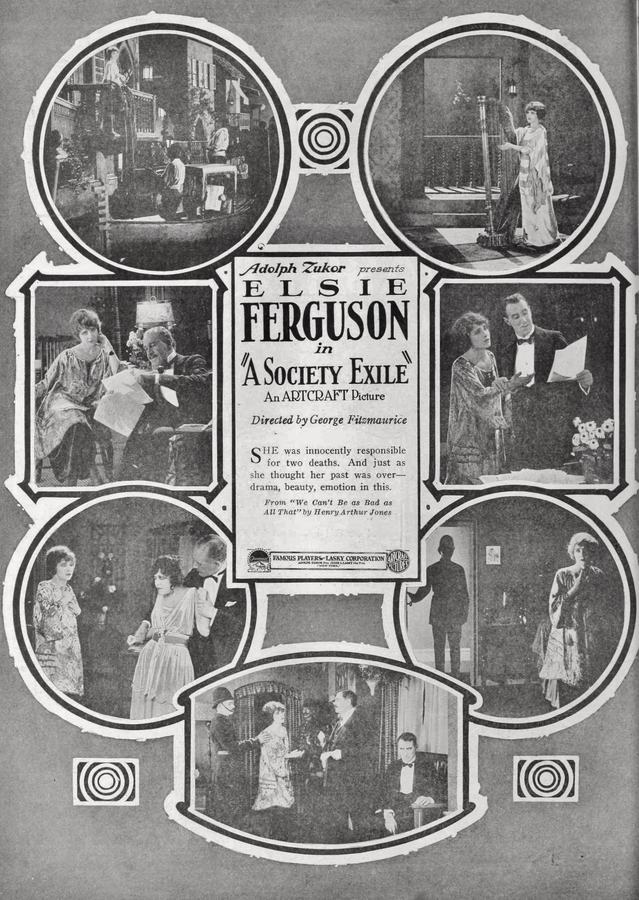
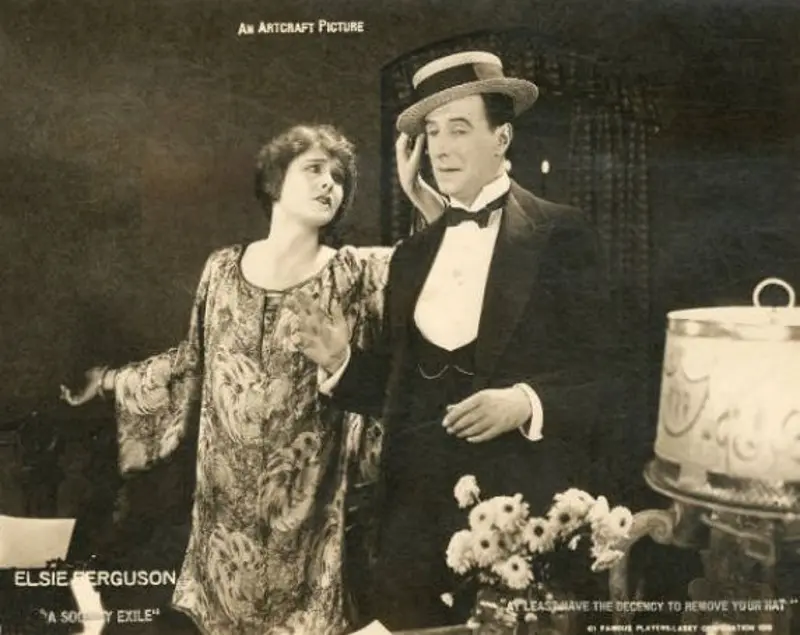
In the pantheon of silent cinema, few narratives capture the suffocating weight of social castigation with the same visceral intensity as A Society Exile. This 1919 gem, directed by George Fitzmaurice, serves as a poignant exploration of how the fragility of reputation can be shattered by the mere whisper of impropriety. Unlike the more whimsical explorations of female agency found in The Patchwork Girl of Oz, this film plunges into the murky depths of Edwardian morality and the lethal consequences of aristocratic boredom.
Elsie Ferguson, an actress of formidable poise and expressive subtlety, breathes life into Nora Shard. Nora is not the typical ingenue; she is a woman of substance, an heiress who seeks validation not through her bank account but through her pen. The tragedy begins not with a romantic transgression, but with a creative one. Her collaboration with Sir Howard Furnival is a meeting of minds, yet in a society governed by the optics of propriety, a secret room filled with manuscripts is indistinguishable from a boudoir of illicit trysts. This thematic preoccupation with the 'appearance of sin' aligns the film with the domestic tensions seen in A Doll's House, though Nora’s cage is built from the external brickwork of public opinion rather than internal marital strife.
The catalyst for the film's descent into darkness is Lord Bissett, played with a chilling, entitled sneer by Warburton Gamble. Bissett represents the toxic masculinity of the era—a man who views a woman’s refusal as a declaration of war. When Nora rejects his suit, he doesn't merely retreat; he orchestrates a symphony of destruction. His manipulation of Lady Doris (Zeffie Tilbury) is a masterclass in psychological warfare. It reminds one of the darker undercurrents in The Black Sheep of the Family, where the rot within the family tree eventually poisons every branch it touches.
After the explosive violence of the first act—a sequence of murder and suicide that remains shocking for its era—the film shifts its palette to the melancholic beauty of Venice. Here, the cinematography captures the liquid isolation of Nora’s exile. The use of Venice as a purgatory for the socially deceased is a stroke of narrative genius. It is in this city of masks that Nora meets Sir Ralph Newell, portrayed with a weary, shell-shocked grace by William P. Carleton. Their romance is built on a foundation of mutual trauma, yet it is haunted by the ghost of Doris, Ralph’s sister. This irony is thick and suffocating, much like the atmospheric tension in The Tides of Fate.
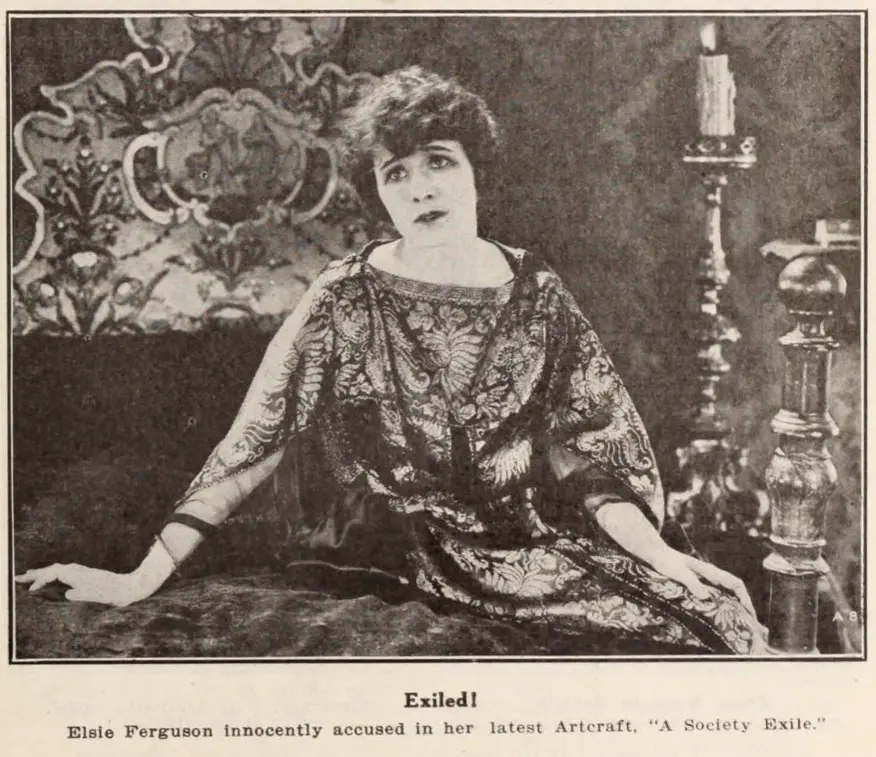
The missed letter—a classic melodramatic trope—is handled here with a devastating sense of inevitability. When Nora attempts to cleanse her soul through confession, the universe (or perhaps just the cruel hand of fate) intervenes. The fact that Ralph never receives her explanation sets the stage for a second social execution. The film brilliantly juxtaposes the internal peace Nora finds in motherhood with the external storm that gathers as Bissett reappears like a recurring fever. The narrative structure echoes the cyclical suffering found in The Desired Woman, where the protagonist's past is a predator that refuses to be outrun.
Director George Fitzmaurice utilizes the visual language of 1919 to articulate complex emotional states that dialogue would only clutter. The way the camera lingers on Ferguson’s face as she realizes the depth of Bissett’s treachery is a testament to the power of the silent medium. There is a specific cadence to her movements—a transition from the confident strides of an heiress to the guarded, peripheral existence of an outcast. This physical transformation is as vital to the storytelling as the intertitles themselves. It brings to mind the nuanced character studies in Kammerpigen, where the domestic sphere becomes a theater of silent desperation.
The production design deserves significant praise. The contrast between the rigid, opulent interiors of English estates and the decaying, romantic grandeur of the Italian villas mirrors Nora’s internal journey. While The Selfish Woman deals with the narcissism of the wealthy, A Society Exile interrogates the cruelty of the collective. The 'Society' in the title is not just a setting; it is the antagonist. It is an unthinking, unfeeling beast that consumes the innocent to maintain its own veneer of purity.
At its core, the film is a meditation on the instability of truth. Nora’s life is dismantled by a lie, and her attempt to rebuild it is predicated on a silence that she believes she has broken. The lost letter is more than a plot device; it is a symbol of the disconnect between human intention and social reality. In Pieces of Silver: A Story of Hearts and Souls, we see a similar struggle with the transactional nature of human relationships, but here, the currency is not silver, but reputation.
The resolution of the film, while satisfying the era’s demand for a 'happy ending,' carries a bittersweet residue. Sir Ralph’s eventual extraction of the truth from Bissett feels less like a triumph and more like a weary acknowledgement of a life unnecessarily wasted. The reunion in Italy, framed by the presence of their son, suggests a future, but one that will always be shadowed by the Furnival tragedy. This nuanced ending separates the film from the more straightforward moralism of The End of the Rainbow or the satirical bite of Sunnyside.
When placed alongside contemporary works like Homunculus, 1. Teil, which explores the artificiality of the human soul, A Society Exile feels deeply grounded in the visceral realities of the female experience. It shares a certain DNA with The Wife He Bought in its examination of women as commodities or pawns in male power games. However, Fitzmaurice’s film elevates the material through its sophisticated pacing and the refusal to let Nora become a mere victim. Even in her exile, she maintains a quiet dignity that borders on the revolutionary for the time.
The film also touches upon the political climate of the era, albeit subtly. Sir Ralph is a veteran, and his physical and psychological wounds are a reminder of a world in flux. This element of post-war recovery adds a layer of gravity that distinguishes the film from the lighter social dramas like Kærlighedsspekulanten. The struggle for personal truth in a world governed by corrupt 'ballots' of social opinion finds a strange parallel in the themes of The Battle of Ballots, though the arena here is the drawing room rather than the polling station.
A Society Exile is a haunting reminder of the power of narrative—not just the ones we write in books, but the ones others write about us. It is a film of exquisite pain and hard-won redemption. For the modern viewer, it offers a fascinating window into a world where a woman’s intellectual life was a dangerous secret and where a single man’s spite could dismantle a life with the surgical precision of a guillotine. It stands as a superior example of the silent melodrama, far surpassing the often-clichéd structures of films like Confesión trágica.
The legacy of Elsie Ferguson’s performance in this film cannot be overstated. She navigates the treacherous waters of Nora’s life with a performance that is both ethereal and grounded. In an era often characterized by over-the-top theatricality, her restraint is a breath of fresh air. A Society Exile is not merely a historical curiosity; it is a vital, breathing piece of cinema that speaks to the enduring human struggle against the tyranny of the 'they say.' It is a story of a woman who was exiled by society, only to find a truer version of herself in the silence of her own heart.
“Truth is the only exile from which there is no return, yet it is the only home worth finding.”
IMDb —
1928
Community
Log in to comment.