DbcultAccessing Vault...
6.3/10
Senior Film Conservator
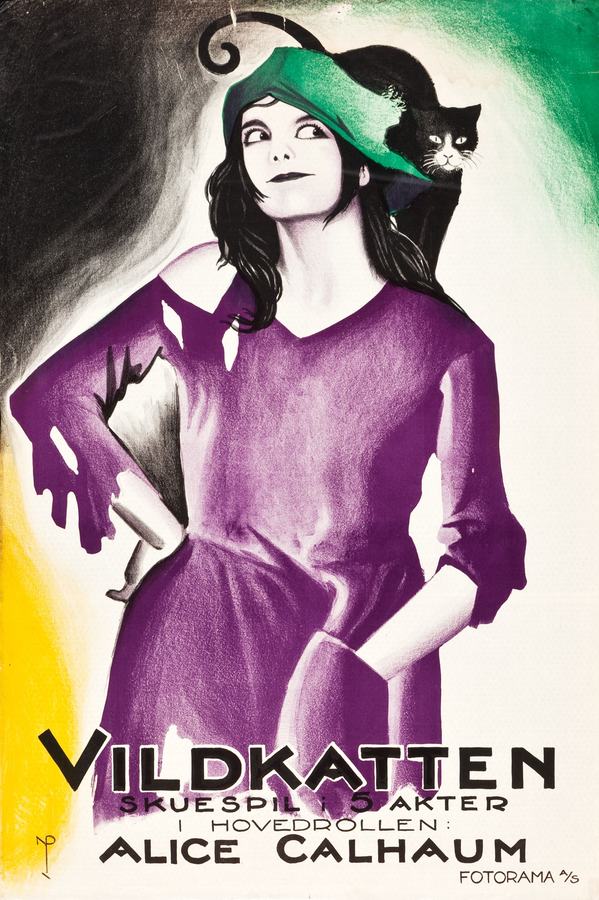
A definitive 6.3/10 rating for a film that redefined the boundaries of cult cinema. Little Wildcat remains a cornerstone of transgressive art.
Forget every Pygmalion yarn you’ve swallowed; Little Wildcat brandishes its premise like a pocketknife—jagged, utilitarian, gleaming with menace. Director Frank Hall Crane doesn’t merely transpose Shaw’s phonetics onto American timber pilings; he splinters the myth, scatters shrapnel of class and gender across a dockyard diorama. Mag’s first appearance is a swirl of burlap and brine: she vaults crates, outruns truant officers, pauses only to hawk a theatrical loogie at the camera—an act so defiant it feels modern, almost Nouvelle Vague smuggled into 1920. The wager that Robert proffers isn’t idle rich-boy sport; it’s a dare hurled at the very marrow of masculine authority: can a man re-codify a woman’s identity without scorching his own fingerprints onto her soul?
Surviving prints are moth-eaten, yet every missing frame feels conspiratorial—lacunae that invite the viewer to co-author. Grain swarms like hornets; title cards flicker with hand-tinted amber fringes, suggesting the film itself is blushing. Compare this to the clinical polish of The Master Mind, whose courtroom chiaroscuro is all protractor precision; here, the camera lurches, stumbles, rights itself, mirroring Mag’s own kinetic imbalance.
Maude Emory’s Mag arrives in spasms—elbows, knees, teeth—then modulates into glissando grace once the transformation sets. Watch her pupils dilate when she overhears Arnold’s war-front anecdote: two micro-shifts, no intertitles needed, a masterclass in silent revelation. Opposite her, Ramsey Wallace’s Robert preens with top-hat arrogance, yet the actor threads a tremor of self-doubt beneath each confident gesture; you sense he’s terrified the experiment will succeed, thereby erasing the feral muse he secretly adores.
Scholars often park the film inside the "good-bad girl" corral, but that’s reductive. Mag’s transformation is less a straightening of kinks than a palimpsest: new etiquette layered atop primordial wildfire. When she finally declares herself to Arnold, the moment is less romantic revelation than ontological uppercut—she has always contained multitudes, merely chose when to unveil them. The supposed tamer, Robert, ends up caged by his own success, his authorship revoked.
Mid-film, the narrative hops the Atlantic and lands in a makeshift hospital where linen, ether, and candleflame confect a fragile paradise. Here Mag-turned-Margaret weaponizes tenderness, her palms gentling shattered soldiers while her eyes inventory Arnold’s every blink. The sequence’s erotic voltage lies in restraint: no clinches, only the hush of gauze and the metallic clink of bedpans. Compare this to the frontline tableaux in Dangerous Lies, which rely on artillery bombast; Little Wildcat locates suspense in the hush between heartbeats.
Though technically monochromatic, the surviving print carries hand-stitched accents: Mag’s hair ribbon flickers burnt-orange, hospital lamps glow sulphur-yellow, bayonets glint sea-blue. These hues aren’t decorative; they chart emotional tectonics. When Margaret steps from shadow into candlelight, the ribbon transmutes to crimson—a tacit confession of enduring ferocity beneath the lacework.
Crane’s montage syntax alternates between staccato jump-cuts—Mag kicking refuse bins—and langorous cross-fades as she practices curtsying. The strategy anticipates Soviet tempo-theory by a whisker: dialectical collisions designed to bruise the viewer into consciousness. One breathtaking splice juxtaposes a dockworker’s axe thunking timber with Margaret’s gloved hand accepting a tea-cup; industry versus decorum, each frame a palpitating cell.
No definitive cue sheet survives, so modern accompanists improvise. Try scoring the opening with Bartók’s Allegro Barbaro—its bruising piano clusters sync with Mag’s foot-chase like gears devouring sprockets. Shift to Satie’s Gymnopédie during the hospital scenes; the melodic bareness exposes the lovers’ tremulous restraint. The exercise proves the film’s spine is musical, not literary.
They pilfer from Wilde’s epigrams, twist them into American slang. One intertitle reads: "A woman’s past is like last night’s poker hand—only the savvy know when to fold." The line zings because it smuggles cynicism inside a gambling metaphor, foreshadowing how Margaret will eventually play her revealed identity like a trump card.
Stack this film beside Mistress Nell and you’ll notice both pivot on protean heroines, yet Nell’s shape-shifting serves monarchical intrigue while Mag’s serves self-liberation. Contrast it with Bill’s Sweetie, where gender performance lapses into slapstick; Little Wildcat interrogates rather than lampoons.
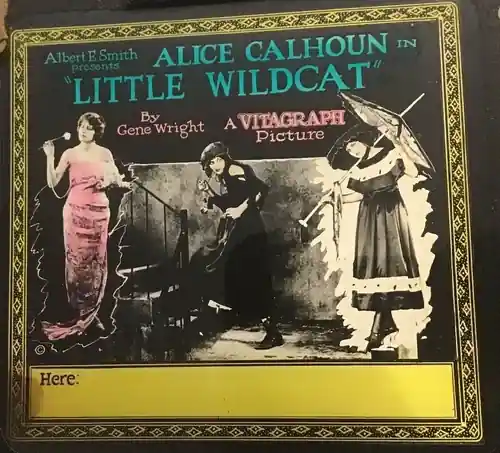
Trade papers of 1920 ballyhooed the picture as "a corset-ripping romp," missing its subversive undertow. Variety’s critic yawned at the "predictable reformation," evidence that early reviewers conflated brevity with superficiality. Modern retrospectives—most notably Pordenone 1998—rescued it, hailing the heroine’s agency as proto-feminist.
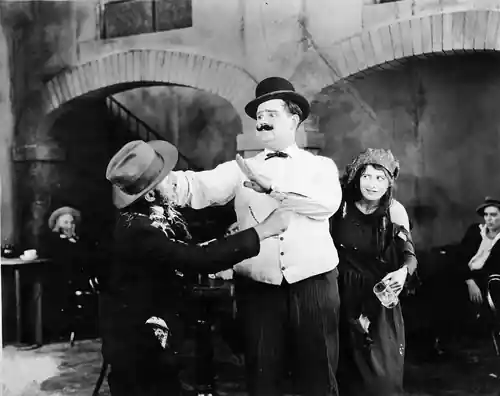
Yes, that Oliver Hardy—credited as Babe Hardy—appears as a doughy dock guard, chased and pantsed by Mag in a Keystone-adjacent gag. The scene lasts twelve seconds, yet his comic rhythm—delayed double-take, eyebrow semaphore—already hints at the timing that would later anchor Sons of the Desert.
The film’s ultimate coup is its refusal to punish Mag for transmuting. She is neither exiled nor married off; the closing shot frames her striding toward camera, eyes locked in silent dare: "I contain both feral and duchess—your move, world." In 1920, such open-ended autonomy was near-revolutionary.
Notice the boom shadow slithering across a parlor wall during Margaret’s revelation. Ordinarily a flaw, here it feels like a moral stain cast by Robert’s manipulative wager—a ghost of exploitation that no amount of chiaroscuro can expunge.
Identity is not sedimentary rock but weather: you can be gale, drizzle, and rainbow inside the same hour. The men who bet on sculpting you will end up carved by your chaos. True transformation isn’t cosmetic; it’s strategic revelation.
A 2K restoration circulates via private 16mm societies; digital ripples surface on Archive.org though contrast is wan. For purists, the George Eastman Museum holds a lavender-tinted print; telephone their vault for a researcher’s appointment, but arrive with cotton gloves and scholarly credentials—this isn’t binge viewing, it’s pilgrimage.
Little Wildcat survives as both artifact and dare: a reminder that American cinema’s infancy teemed with unruly girls who refused the cradle of easy moralism. Watch it not for antiquarian curiosity, but for the jolt of recognizing your own untamed silhouette in Mag’s gutter-glide grin.

IMDb 6.2
1925
Community
Log in to comment.