DbcultAccessing Vault...
Cult Review
Senior Film Conservator
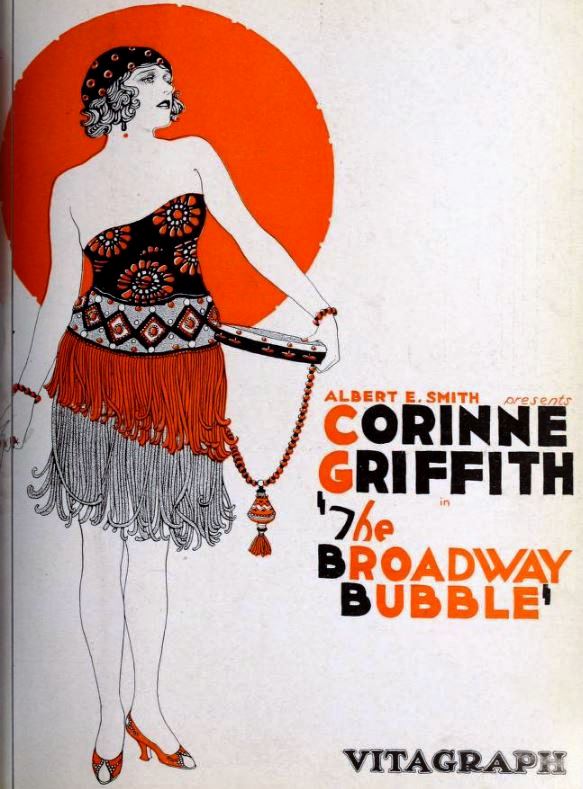
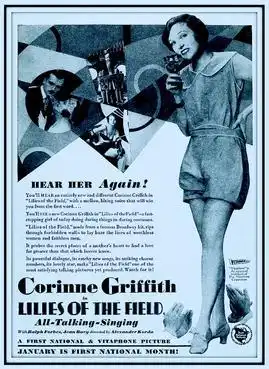
There is a moment—early in The Broadway Bubble, before the plot’s gears begin to screech—when Adrienne Landreth stands at her boudoir window, the chill Manhattan dawn reflecting off her pearls like a string of tiny moons. Corinne Griffith lets the camera linger on the back of her neck: a tiny, defiant patch of skin that suddenly looks claustrophobic inside all that couture. In that hush you sense the entire film’s thesis: luxury can smother as efficiently as poverty, and the human spirit will risk annihilation to escape either cage.
What follows is less a narrative than a fever chart: a society wife barters identity with a starving sibling, swaps marble hallways for rehearsal lofts reeking of sweat and rosin, and discovers that the stage—far from being a democratic paradise—merely installs newer, shinier shackles. The picture is essentially a diptych of mirrors: every surface reflects duplicity; every embrace is negotiated; every spotlight casts a blackout behind it.
Writers Leigh Gordon Giltner, C. Graham Baker, and Harry Dittmar treat the story like a three-card monte dealt inside a champagne flute: Adrienne’s Faustian bargain is introduced as breezy comedy, pivots into adulterous suspense, then detonates as grand guignol. Rather than cross-cut between the twins, director George L. Sargent prefers rhyming compositions—one frame shows Drina kneading dough in a tenement while the symmetrical next shot finds Adrienne kneading her own face in cold cream. The visual echo warns us that social distance is only skin deep.
Fred Corliss—the cigar-chomping impresario—doesn’t merely offer stardom; he dangles the specter of autonomy. In 1920 parlance, a married woman signing a production contract was tantamount to declaring legal war on her husband; thus the clandestine swap becomes not whimsy but necessity. The film quietly indicts a culture that forces women into espionage just to earn a paycheque.
Griffith’s Adrienne is all porcelain arrogance—chin elevated, syllables crisp as celery. As Drina, she retracts every muscle, letting the eyes carry the scene: a timid flicker that begs permission to exist. Yet the genius lies in leakage: Adrienne’s hauteur occasionally bleeds into Drina’s performance, especially when she must impersonate the wife she never was. A tremor of guilt surfaces—half smile, half rictus—reminding the viewer that identity is not wardrobe; it’s scar tissue.
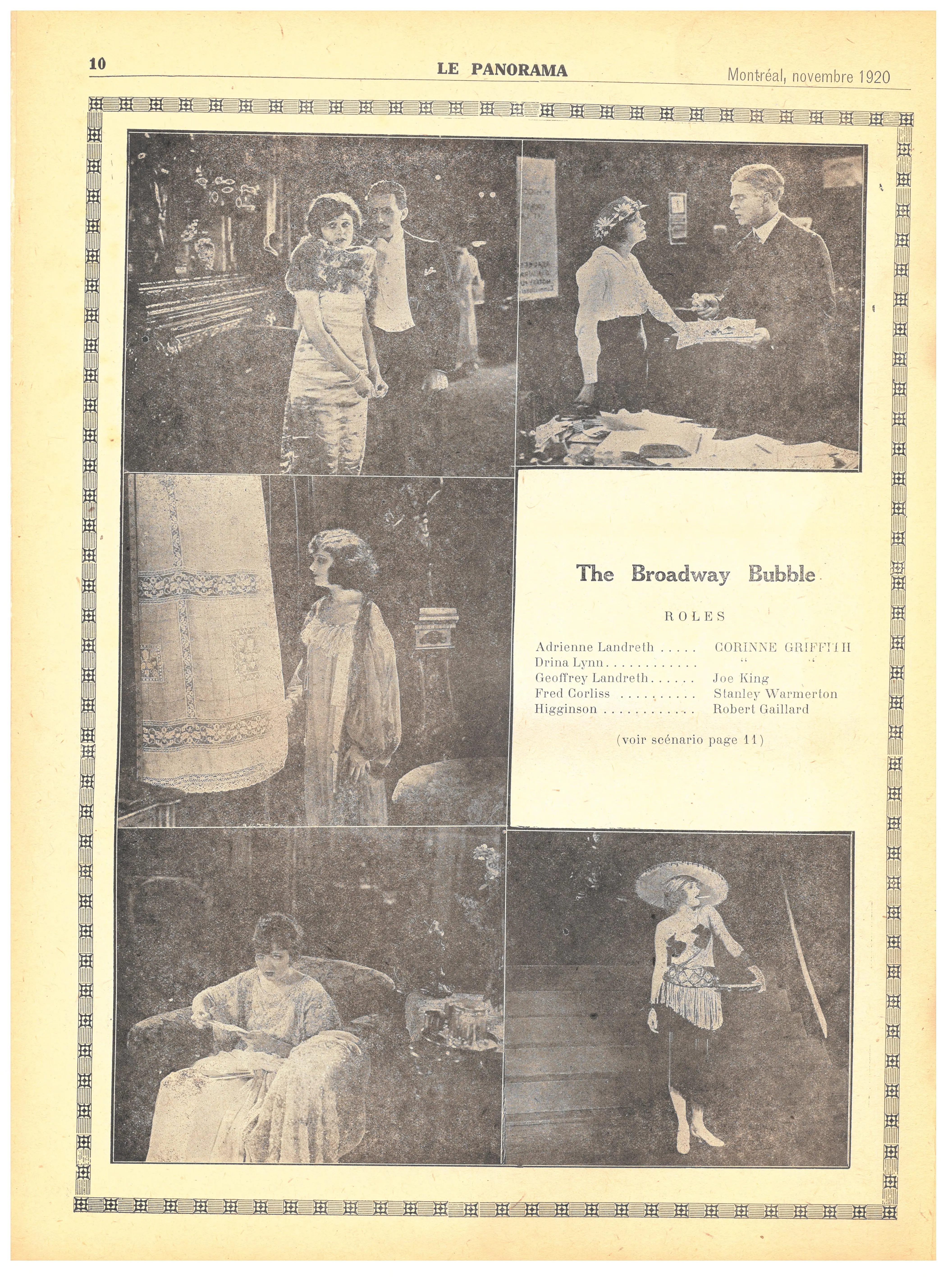
Silent-era audiences, starved for dialogue, became connoisseurs of micro-gesture. Notice how Griffith’s left eyebrow performs an almost imperceptible hitch when Geoffrey praises “his wife’s” newfound kindness: a semaphore of panic that the husband misreads as bashfulness. The body speaks where intertitles can’t.
Joe King sculpts Geoffrey as neither villain nor hero but as a ledger of privileges suddenly audited. Accustomed to a spouse who functioned like an art object, he finds the replacement version alarmingly sentient. The screenplay grants him two choices: interrogate the miracle or savor it. He chooses the latter, and the film refuses to condemn him outright; after all, he, too, is a product of social scaffolding that equates interrogation with ingratitude.
When he finally twigs that the woman dying in the dressing room is the authentic Adrienne, King’s face cycles through recognition, grief, and mortified relief—a triptych impossible to fake without the crutch of spoken language. The camera holds on him until the audience feels complicit: haven’t we also reveled in the charade?
The Landreth townhouse—an Art Deco sarcophagus—was erected inside a Brooklyn warehouse. Art director Wilfred O. White lacquered the walls so severely that every footstep ricochets like a ghostly metronome, underscoring Adrienne’s isolation. Conversely, Corliss’ Alhambra Theater is rendered as a Byzantine hive: catwalks criss-cross the negative space, ropes dangle like nooses, and a single frayed sandbag looms above the stage—a Chekhovian promise that something will drop.
Costumer Edith s. Hall drapes Adrienne in molten lamé that photographs like liquid mercury under carbon-arc lights, whereas Drina’s wardrobe is stitched from muslin stiff with poverty. Yet in the masquerade sequences, the fabrics subtly converge—Drina’s dress gains a silk trim, Adrienne’s loses its fringe—hinting that economic identity is tailored, not ordained.
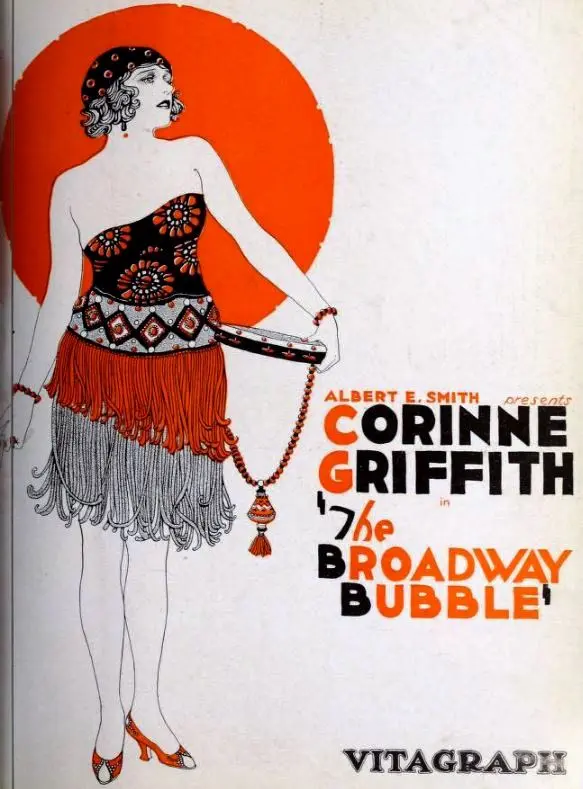
Cinematographer Frank G. Kunkel paints with gradients rather than chiaroscuro. Characters who uphold lies bask in over-exposed glare—a visual equivalent of interrogation lamps—while moments of confession occur in half-shadow, as though morality itself were embarrassed to watch. When Adrienne teeters atop the stair unit, Kunkel floods the frame with white halation until the actress becomes a photographic eclipse, her body vanishing just before the plummet.
Original 1920 screenings featured a compiled score of Rubinstein and Herbert. For recent 4K restorations, composer Gillian Anderson (no, not that one) devised a chamber suite dominated by pizzicato strings that mimic a racing pulse during backstage sequences, switching to glass-harmonica arpeggios for domestic scenes—an auditory reminder that home, not the stage, is the truly fragile set.
Academic discourse loves to cite Judith Butler; The Broadway Bubble embodies her thesis before semiotics had a name. The wife is an actress, the actress a wife; the producer is pimp and patriarch; the husband becomes audience, then mourner, then bridegroom to a replacement. Every transaction is performative, every costume change a renegotiation of power.
Yet the film also anticipates post-recession anxieties about precarious labor. Adrienne’s contract is riddled with escape clauses; Drina’s substitute-marriage pays room and board but demands 24-hour emotional availability. Both women hustle gig-economy versions of themselves, foreshadowing today’s content creators who monetize personality until the platform—like gravity—claims its fee.
Place The Broadway Bubble beside Love and the Woman and you’ll notice diametric philosophies: the latter insists love conquers all; the former retorts that love is merely collateral damage in the war for self-definition. Pair it with Her Sister’s Rival and you’ll see Griffith predating the “evil twin” trope by rendering both siblings sympathetic, a nuance later photocopied in Going Straight but stripped of class critique.
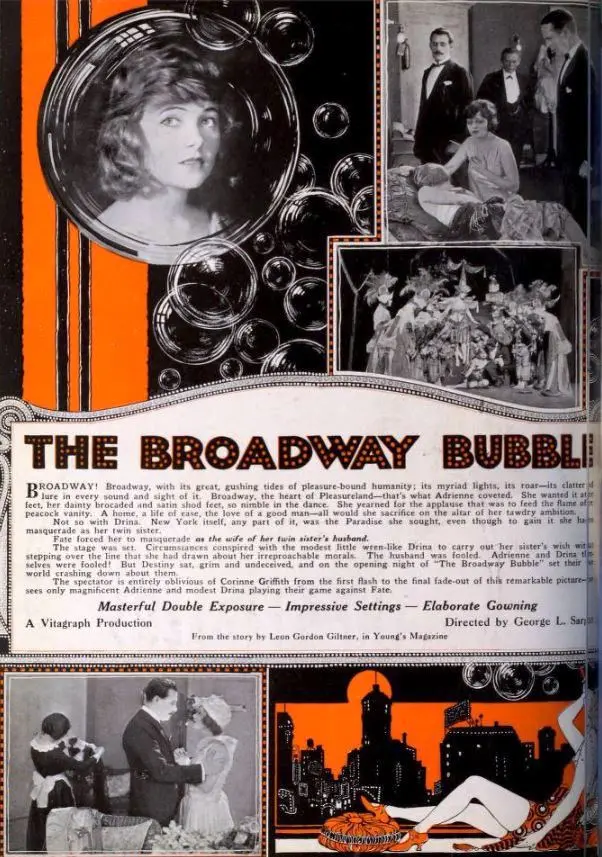
If Gloria’s Romance is a valentine to youthful optimism, Bubble is its poison-pen letter—sent registered mail, return address marked void.
For decades the picture slumbered in a Portuguese archive, a single nitrate print riddled with vinegar syndrome. A 2022 Kickstarter spearheaded by Indigenous Film Collective financed a 4K wet-gate restoration; the resultant DCP premiered at MoMA, accompanied by a mezzo-soprano rendition of the original cue sheets. Alas, no Blu-ray yet exists—streaming rights are tangled in the estate of producer Albert A. Kaufman, who perished aboard a 1937 Zeppelin excursion. Cinephiles must content themselves with festival appearances or gray-market rips of varying luminosity.
1921 trade papers praised Griffith’s “limpid pathos” but recoiled from the “morbid finale”. The New York Telegraph carped that “a woman’s place is not among the rafters.” Modern retrospectives—most notably the 2018 Pordenone Silent Festival—have re-christened it a proto-feminist masterpiece. Blogger Kira M. Collins quipped: “It’s All About Eve minus the witty repartee plus a mortality rate.”
The Broadway Bubble is more than a curio; it is a prophecy encoded in silver halide. Swap the lamé for spandex and you have Black Swan; swap the stair-topple for a Twitter cancellation and you have contemporary influencer culture. The picture insists that identity is currency, that every stage—proscenium or digital—demands its pound of flesh, and that the fall, when it comes, is never an accident but the final bow of a contract signed in secret.
"To watch Griffith die on that staircase is to watch every dreamer who ever bartered soul for spotlight plummet into the orchestra pit of history."
Seek it out, if only to witness how silently a century-old scream can echo.
IMDb 6
1925
Community
Log in to comment.