DbcultAccessing Vault...
Cult Review
Senior Film Conservator
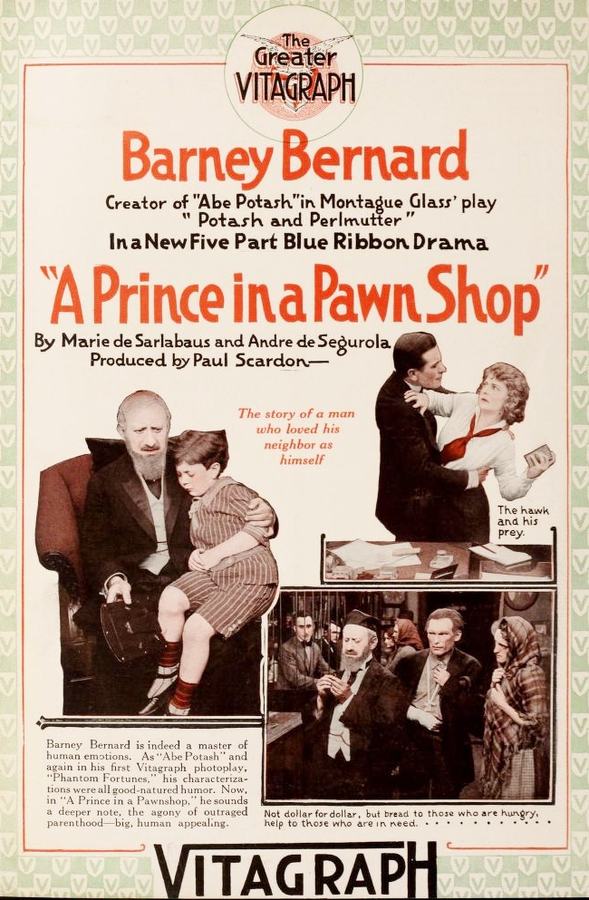
Stepping into the cinematic world of 'A Prince in a Pawnshop' feels like unearthing a forgotten gem, a narrative tapestry woven with the stark contrasts of human nature and societal strata. This isn't merely a tale; it's a profound exploration of an individual's dual existence, a moral tightrope walk that challenges conventional perceptions of wealth and benevolence. At its heart lies David Solomon, a character of such captivating paradox that he instantly elevates the film beyond a simple melodrama. His ruthlessness in the opulent boardrooms of high finance, where he deftly extracts the highest interest from his affluent clientele, stands in stark opposition to his profound, almost saintly, compassion for the downtrodden. This isn't merely charity; it's a systemic, deeply personal commitment, manifested most vividly in his unique pawnshop nestled within the Ghetto. Here, the traditional metrics of value are inverted; loans are dispensed not according to the worth of the collateral, but according to the desperate needs of the supplicant. It’s a fascinating inversion of capitalist principles, a quiet rebellion against the very system that fuels his primary fortune.
The film masterfully sets up this dichotomy, painting David as a man burdened by the moral complexities of his own making. Yet, his internal equilibrium is constantly tested by the external forces of his family. His son, Maurice, embodies the very antithesis of his father's philanthropic spirit. Maurice's life is a whirlwind of self-indulgence and high living, a stark reminder of the corrupting influence of unearned privilege. The father's quiet anguish over his son's profligacy is palpable, a poignant counterpoint to his public acts of kindness. Conversely, his daughter, Ethel, emerges as a beacon of familial solace, a kindred spirit who actively champions her father's charitable endeavors by maintaining a day nursery for the children of the impoverished. Her unwavering dedication offers a glimmer of hope, suggesting that David's moral legacy might yet find a worthy inheritor. This familial dynamic—the disappointed patriarch, the prodigal son, and the altruistic daughter—forms a robust emotional core, enriching the narrative with layers of personal struggle and intergenerational conflict.
The narrative takes a pivotal turn with the introduction of Mary, a character whose tragic circumstances ignite the central conflict of the film. David's chance encounter with her, collapsing from exhaustion on the street, is portrayed with a raw, unvarnished empathy that defines his character. His subsequent decision to take her under his wing, to personally oversee her recovery and secure her future, is a testament to his boundless compassion. He finds her a position as a model in his friend Silver's dress house, a seemingly innocuous act of kindness that inadvertently sets the stage for a devastating chain of events. It is here, amidst the shimmering fabrics and elegant designs, that Maurice, accompanying Ethel on a shopping excursion, encounters Mary for the second time. Having previously noticed her on the street, Maurice, a man accustomed to having his desires met, engineers a clandestine meeting, initiating a courtship under a false identity. His pursuit is relentless, cloaked in an illusion of genuine affection, and Mary, vulnerable and yearning for stability, succumbs to his charm. She gives him everything, her trust, her devotion, her future, without demanding the conventional assurances of a wedding ring. This period, though fleeting, offers Mary a taste of profound happiness, a brief respite from her arduous existence.
However, the fragile edifice of her joy is brutally shattered by the reappearance of Stevins, a malevolent figure from her past. Stevins, a man Mary once worked for, had hounded her from every honest position, maliciously branding her a thief because she refused his unwanted advances. His visit to the dress house, ostensibly to procure gowns for "The Bunch of Flowers"—a group of women frequently in Maurice's dubious company—is a darkly ironic twist of fate. He recognizes Mary, and with a venomous glee, reiterates his false accusations, leading to her immediate dismissal. Disgraced and unemployed, Mary returns to the modest flat Maurice provides, narrating her ordeal to a lover whose interest has already begun to wane. Maurice, easily swayed and weary of responsibility, seeks out Stevins, who, with calculated deception, spins a plausible, albeit false, tale. Believing Stevins, Maurice abandons Mary, leaving her a cold, dismissive letter. What he doesn't know, what he couldn't possibly fathom in his self-absorbed world, is the profound consequence of his actions: Mary is pregnant.
Six arduous years pass, and the film presents Mary and her young son living in abject poverty, a stark testament to Maurice's betrayal and society's indifference. Yet again, David Solomon, the ever-present force of benevolent intervention, re-enters her life. His visit to a "deserving case" next door, a paralytic Mrs. Payne (ironically, the very landlady who once drove Mary from her door), brings him once more into Mary's orbit. In a moment of raw vulnerability, Mary recounts her harrowing story, producing the damning letter from her lover. The handwriting is unmistakably Maurice's. This revelation strikes David with the force of a physical blow, transforming his philanthropic mission into a deeply personal quest for justice. He takes his grandson home, a silent reproach to Maurice's conscience. The sight of the child, a living embodiment of his past transgressions, finally ignites a flicker of remorse in Maurice, prompting a frantic search for Mary.
The threads of the narrative begin to converge as Stevins, the architect of Mary's past misfortunes, approaches David for an extension on his loan. But David, now armed with the full knowledge of Stevins's depravity and his role in Mary's suffering, acts with decisive, righteous fury. He forces Stevins to the wall, financially ruining him, a stark demonstration that his benevolence has its limits when confronted with unrepentant malice. Simultaneously, Goldstein, David's faithful secretary, a man who silently harbors a deep love for Ethel but refrains from declaring it due to his humble means, resigns, planning to leave for other parts. David, however, a keen observer of human hearts, has long discerned the unspoken affection between Ethel and Goldstein. In a gesture of profound paternal wisdom and generosity, he provides Goldstein with a substantial check, more than enough to embark on a new life and, implicitly, a honeymoon with Ethel. This act secures his daughter's happiness and demonstrates David's holistic approach to charity, extending beyond mere financial aid to encompass emotional well-being and future prosperity.
The climax sees David orchestrating the final act of reconciliation. He dispatches an anonymous telegram to Maurice, revealing Mary's whereabouts. Then, taking his grandson, he goes to Mary, preparing the ground for Maurice's arrival. The film culminates in Maurice's long-overdue appearance, a moment charged with the weight of past wrongs and the fragile hope of future atonement. His marriage to Mary is not just a societal reparation; it's a symbolic embrace of responsibility, a hard-won redemption forged through suffering and guided by the unwavering moral compass of a father who, despite his own flaws, ultimately champions justice and compassion. The film concludes on a note of cautious optimism, suggesting that even the most wayward hearts can be guided back to the path of righteousness through the enduring power of love, family, and a profound sense of accountability.
In the annals of early cinema, certain films emerge not just as artifacts of their time, but as enduring commentaries on the human spirit. 'A Prince in a Pawnshop' stands as one such compelling example, a narrative that, despite its vintage, resonates with a surprising contemporary relevance. It’s a meticulously crafted story that delves into the intricate dance between wealth and poverty, virtue and vice, and the often-convoluted path to personal redemption. From its very opening frames, the film establishes a world of stark contrasts, a dichotomy embodied most powerfully by its central figure, David Solomon.
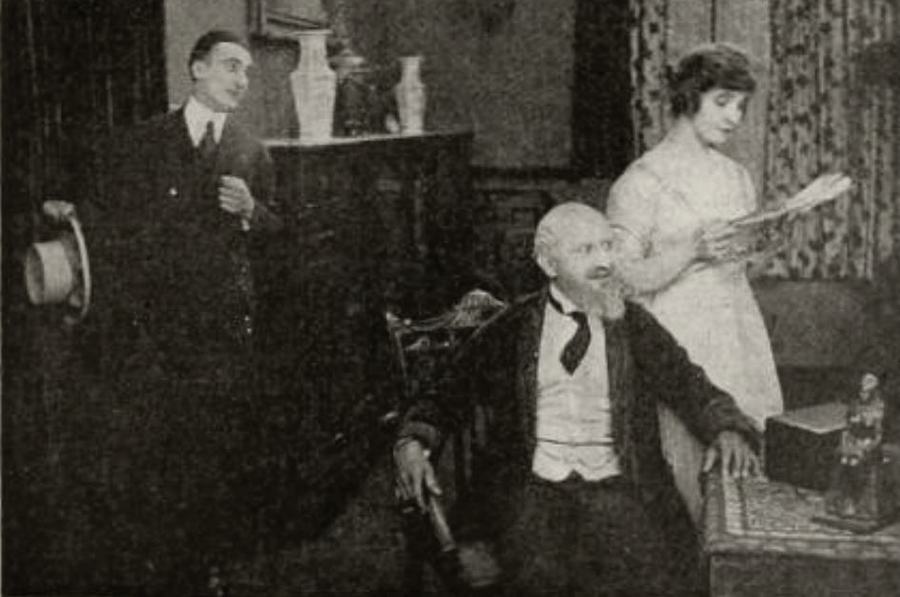
David Solomon, brought to life with a nuanced intensity by Barney Bernard, is a character of profound complexity. He’s a financial titan, a ruthless operator in the high-stakes world of banking, where he extracts the highest rates of interest from his affluent clients. Yet, this very same man operates a unique pawnshop in the Ghetto, a sanctuary where loans are granted not based on collateral, but on genuine need. This isn't a mere plot device; it's a profound philosophical statement, an inversion of capitalist logic that speaks volumes about David's moral compass. He is a man who understands the mechanisms of wealth, but also the crushing weight of destitution, choosing to mitigate the latter even as he profits from the former. This duality is the beating heart of the film, forcing audiences to confront the uncomfortable truths about societal structures and individual responsibility. His character, in its paradoxical nature, offers a more compelling exploration of social conscience than many overtly didactic films of the era, such as The Devil's Daughter, which often presented morality in starker, less ambiguous terms.
The familial dynamics within the Solomon household serve as a microcosm of the broader societal conflicts the film explores. David's anguish over his son, Maurice, portrayed with a believable blend of youthful arrogance and eventual remorse by Lester Bernard, is deeply affecting. Maurice epitomizes the unchecked privilege that can blind one to the suffering of others, a stark foil to his father's benevolent spirit. His hedonistic lifestyle and casual disregard for consequences set the stage for the film's central tragedy. Conversely, Ethel, played by Charlotte Ives, emerges as a beacon of inherited virtue. Her tireless work in maintaining a day nursery for impoverished children reflects her father's philanthropic zeal, offering a comforting assurance that David's legacy of compassion will endure. This interplay between the principled patriarch, the dissolute son, and the empathetic daughter adds significant emotional depth, grounding the grander themes in intimate, relatable human drama.
The narrative truly ignites with the introduction of Mary, a character whose journey from vulnerability to resilience forms the emotional backbone of the story. Edna Hunter imbues Mary with a quiet dignity and an understated strength that makes her plight all the more poignant. Her initial encounter with David, collapsing from exhaustion, is a powerful visual metaphor for the systemic failures that push individuals to the brink. David's decision to care for her, to secure her employment at his friend Silver's dress house, is an act of pure, unadulterated kindness. Yet, this very act inadvertently sets in motion the tragic romance between Mary and Maurice. The film meticulously charts Maurice's deceptive courtship, highlighting Mary's desperate yearning for love and security, which ultimately blinds her to his true nature. Her willingness to give him "all, not stopping to count the cost, nor to demand the wedding ring," speaks volumes about her trust and vulnerability, making her subsequent betrayal all the more heartbreaking. It’s a narrative arc reminiscent of the trials faced by female protagonists in films like Moths, where societal pressures and male deceit often converge to dictate a woman's fate.
The malevolent figure of Stevins, expertly played by Brinsley Shaw, is crucial to the escalating drama. Stevins is not merely an antagonist; he is the embodiment of petty cruelty and social malice, a man who weaponizes reputation and wields accusations with devastating effect. His reappearance at the dress house, leading to Mary's unjust dismissal, is a moment of chilling injustice. The film doesn't shy away from depicting the devastating impact of such slander on a vulnerable woman's life and livelihood. Maurice's subsequent abandonment of Mary, fueled by Stevins's lies and his own moral cowardice, is a turning point that propels the narrative into its most emotionally charged phase. The revelation of Mary's pregnancy, hidden from Maurice, adds a layer of profound tragedy, transforming a story of personal betrayal into a saga of profound societal consequence. This element of unexpected motherhood and its subsequent struggles for the protagonist echoes themes explored in The Miracle of Life, albeit with a focus here on the social stigma and hardship rather than the biological marvel.
The passage of six years, depicted with a stark simplicity, underscores the enduring hardship faced by Mary and her son, Bobby Connelly, whose innocent presence serves as a constant, silent accusation against Maurice's past actions. It is David Solomon who, once again, becomes the deus ex machina, his continued philanthropic endeavors inadvertently leading him back to Mary's doorstep. The irony of him aiding Mrs. Payne, the very landlady who once cast Mary out, is a subtle but powerful touch, highlighting the interconnectedness of lives within the Ghetto and David's pervasive influence. The moment Mary reveals Maurice's letter, and David recognizes his son's handwriting, is a dramatic crescendo. Barney Bernard's portrayal of David's shock, anger, and profound disappointment is masterfully understated, conveying a maelstrom of emotions without resorting to histrionics. This discovery transforms David's mission from general benevolence to a deeply personal quest for justice and familial redemption.
The film’s resolution is not a sudden, convenient turn of events, but a carefully orchestrated sequence of actions driven by David’s unwavering moral compass. His decisive action against Stevins, financially ruining the man who had relentlessly hounded Mary, is a moment of righteous retribution that feels earned. It demonstrates that David's kindness is not weakness; it is a force to be reckoned with when confronted by unrepentant malice. Simultaneously, the subplot involving Goldstein, David's loyal secretary (Garry McGarry), and his unspoken love for Ethel, provides a heartwarming counterpoint to the central drama. David's discernment of their mutual affection and his generous provision for their future speaks volumes about his holistic approach to human welfare. He doesn't just alleviate poverty; he fosters happiness and enables love, demonstrating a profound understanding of human needs beyond the material. This paternal guidance and intervention for his children's happiness is a recurring motif in family dramas, perhaps even seen in a different light in films like Hans Faders Ære, where paternal honor and influence are central.
The climax of 'A Prince in a Pawnshop' is a study in quiet reconciliation rather than explosive confrontation. David’s anonymous telegram to Maurice, followed by his presence with the young grandson at Mary’s side, is a subtle yet powerful act of paternal guidance. It forces Maurice to confront the consequences of his actions, not through coercion, but through the undeniable presence of his child and the unspoken judgment of his father. Maurice’s eventual marriage to Mary is presented not as a romantic triumph, but as an act of atonement, a hard-won step towards responsibility and redemption. It’s a testament to the film's nuanced writing (Garfield Thompson, Andrés de Segurola, Jean Bart) that this resolution feels earned, rather than contrived. The film understands that true redemption is a process, not a singular event, and that the path back from moral transgression is often paved with humility and sacrifice.
Visually, the film, even in its classic form, would have utilized the stark contrasts between the opulence of David’s banking world and the grittiness of the Ghetto pawnshop to underscore its thematic concerns. The use of light and shadow could have been particularly effective in highlighting the moral ambiguities of the characters and their environments. The direction would have emphasized the emotional weight of each scene, allowing the subtle performances of the cast to convey the depth of their characters’ struggles and triumphs. One can imagine the close-ups on David's face as he grapples with his son's betrayal, or Mary's quiet despair, conveying profound emotion without the need for extensive dialogue, a common strength of silent era storytelling.
In conclusion, 'A Prince in a Pawnshop' transcends its genre confines to deliver a powerful, thought-provoking cinematic experience. It is a film that dares to explore the complexities of human morality, demonstrating that virtue can reside in unexpected places, and that even the most privileged can be called to account. The journey of David Solomon, from a paradoxical financier to a righteous patriarch, is a compelling testament to the enduring power of compassion and the arduous, yet ultimately rewarding, pursuit of justice and familial harmony. It's a narrative that reminds us that true wealth lies not in accumulation, but in the capacity for empathy and the courage to right a wrong. This film, with its rich characterizations and profound thematic explorations, secures its place as a significant contribution to early cinema, offering insights that remain relevant to our understanding of human nature and society’s enduring challenges. Its exploration of moral awakening and societal responsibility makes it a timeless watch, inviting viewers to ponder the true cost of indifference and the profound beauty of redemption.

IMDb 7.8
1931
Community
Log in to comment.