DbcultAccessing Vault...
Cult Review
Senior Film Conservator
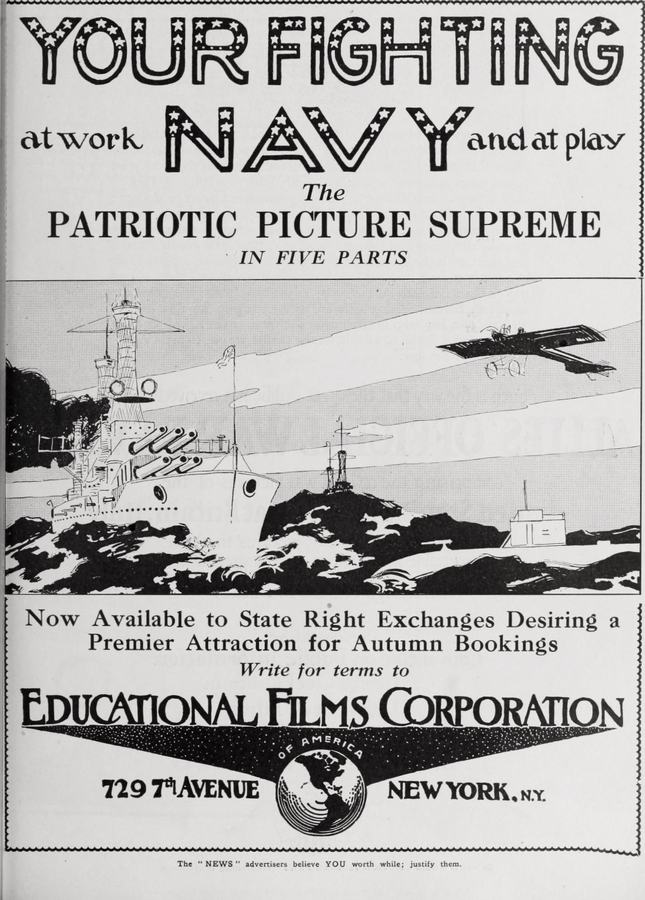
Your Fighting Navy at Work and at Play arrives as a relic of a bygone cinematic language, where the absence of synchronized dialogue did not hinder the conveyance of complex emotional and thematic terrain. This 1920s production, helmed by the enigmatic Henry Reuterdahl, is less a mere documentary of naval routine than a lyrical ode to the duality of human existence—the interplay between structure and spontaneity. The film’s title, a dichotomy in itself, encapsulates its core thesis: that the same individuals who execute maneuvers with the precision of clockwork are the same who, when given respite, erupt into unbridled mirth. The result is a tapestry of contrasts, rendered with the visual economy of silent cinema at its zenith.
Set against the backdrop of early 20th-century maritime history, the film functions as a socio-political artifact. While overtly celebrating naval prowess, it subtly interrogates the human cost of such devotion. Unlike the stark, propagandistic tone of The Battle of the Ancre and the Advance of the Tanks, which fixates on mechanized warfare, this film adopts a more humanistic lens. The camera lingers on the sweat-streaked faces of crewmen, the camaraderie of shared cigarettes, and the fleeting solitude of a watchman against the vast horizon. These moments, framed with the meticulous care of a painter, suggest that the Navy’s strength lies not in its ships but in the bonds forged between its personnel.
The film’s visual grammar is a masterclass in silent storytelling. Rapid cuts between the clamor of cargo unloading and the serenity of a moonlit debarkation create a rhythmic counterpoint, echoing the heartbeat of the ocean itself. The use of negative space—vast, empty decks juxtaposed with the cacophony of a crowded tavern—is both poetic and deliberate. The director’s affinity for low-angle shots, particularly during scenes of authority (a captain barking orders, a drill sergeant inspecting ranks), evokes the godlike perspective of institutions, while the frequent close-ups of sailors’ grins or weary eyes humanize the collective into individuals.
Central to the film’s narrative is the tension between order and chaos. On the workfront, the Navy is depicted as a machine, each sailor a cog in a system where precision is survival. Yet, in moments of leisure, this order dissolves into anarchy—a sailor’s dance, a raucous card game, a spontaneous swim in the harbor. This duality mirrors other works of the era, such as Masked Ball, which similarly juxtaposes social constraints with moments of liberation. However, Your Fighting Navy avoids the moralizing of films like The Folly of Sin, instead embracing a more nuanced view of human nature.
Though unnamed in credits, the sailors themselves are the film’s lead actors. Their performances—naturalistic, unpolished, yet deeply affecting—lend authenticity to the narrative. A particularly memorable sequence features a group of recruits playing tug-of-war, their collective strain and eventual victory a microcosm of the Navy’s ethos. The ensemble chemistry is reminiscent of the camaraderie in Souls Enchained, though here the stakes are lighter, the atmosphere more buoyant. Even in the film’s most solemn moments—such as a funeral at sea—there is an undercurrent of resilience, a testament to the bonds that transcend loss.
While the absence of spoken dialogue is the medium’s defining feature, the film’s score (or lack thereof in its original release) is a character in itself. The ambient sounds of creaking wood, crashing waves, and distant gulls punctuate the visual narrative, creating a soundscape that is both immersive and minimal. This approach, devoid of the overwrought sentimentality that plagues later talkies, allows the audience to project their own emotional responses onto the imagery. It is a technique that anticipates the modernist avant-garde, where silence becomes a narrative device.
Decades after its release, Your Fighting Navy at Work and at Play holds up not merely as a historical curiosity but as a cinematic achievement. Its influence can be traced in the stark realism of The Black Night and the social commentary of Envy, yet it remains unique in its celebration of everyday heroism. Unlike the melodramatic excesses of Wild Women, this film’s power lies in its restraint. It is a work that honors the mundane as much as the monumental, a rare balance in any era of cinema.
In an age saturated with hyper-stylized narratives, Your Fighting Navy at Work and at Play offers a refreshing return to simplicity. It is a film that does not merely depict the Navy but distills its essence into a series of luminous moments—both laborious and joyous. The work is a reminder that humanity’s greatest achievements are born not from the absence of leisure but from the harmony between duty and delight. For those seeking to understand the silent film’s capacity to move without a single word, this is a masterclass in visual poetics.
"The Navy, in its duality of order and mirth, mirrors the human condition itself—where discipline and joy are not adversaries but partners in the dance of existence."
Community
Log in to comment.