DbcultAccessing Vault...
Cult Review
Senior Film Conservator
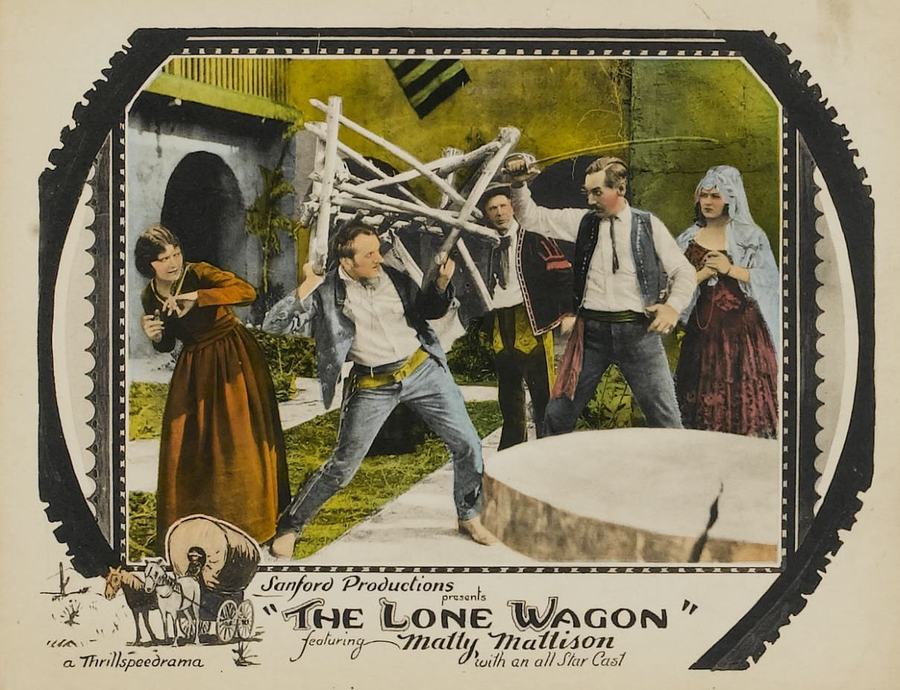
Stepping back into the nascent days of cinematic storytelling, The Lone Wagon emerges not merely as a relic of a bygone era, but as a fascinating artifact reflecting the cultural anxieties and burgeoning mythologies of early 20th-century America. Penned by Frank S. Mattison, this silent film, while perhaps less frequently lauded than some of its contemporaries, offers a compelling glimpse into the foundational tropes of the Western genre, imbued with a distinctly human drama that transcends its simple premise. It’s a narrative that, despite its age, resonates with timeless themes of prejudice, forbidden love, and the arduous path to redemption amidst the untamed wilderness. The film serves as a crucial historical document, illustrating how early cinema grappled with complex social dynamics and the construction of heroic archetypes.
The narrative introduces us to a world on the cusp of significant change, where the untamed frontier is slowly yielding to the relentless march of civilization, personified by the wagon train. This isn't just a journey across geographical expanses; it's a societal microcosm, laden with its own rigid hierarchies and preconceived notions of race and class. At the heart of this mobile community is a native Californian guide, portrayed with earnest intensity by Gene Crosby. Crosby’s character is a man deeply connected to the land, possessing an innate understanding of its rhythms and dangers, a wisdom often overlooked or actively disdained by the settlers who rely on his expertise. His quiet dignity and competency are immediately apparent, setting him apart from the often-blustering, self-important figures of authority that populate such narratives. This portrayal, while perhaps still constrained by the conventions of its time, attempts to imbue the 'othered' character with agency and profound capability.
The precipitating conflict, a classic narrative device, ignites when the guide dares to transgress an unspoken, yet fiercely enforced, social boundary. He falls deeply in love with the daughter of the wagon train’s leader, a role filled with stern authority by Frank S. Mattison. Mattison’s portrayal of the patriarchal figure is archetypal, embodying the rigid moral codes and racial prejudices prevalent in that historical context. The guide’s affection for the daughter, played by the captivating Vivian Rich, is not merely a romantic dalliance but an audacious challenge to the established order. Rich imbues her character with a quiet strength and a burgeoning independence, suggesting a spirit that yearns for more than the constricted roles society offers her. Her reciprocation, however subtle, hints at a deeper understanding and acceptance that stands in stark contrast to her father’s unyielding stance. This forbidden love, a potent narrative engine, echoes similar themes explored in films like The Right to Love, where societal expectations often clash violently with personal desires, often leading to tragic or dramatic consequences for those who dare to defy convention.
The leader’s reaction is swift and uncompromising: the guide is summarily discharged, cast out into the very wilderness he was hired to navigate. This act of banishment is more than just a severance of employment; it’s a symbolic expulsion from the nascent 'civilized' world that the wagon train represents. It underscores the racial and social stratification of the era, where a native man, regardless of his skill or character, is deemed unworthy of aspiring to a connection with a white woman of a certain standing. Earl Metcalfe, likely playing a secondary antagonist or a loyal henchman, probably reinforces the leader’s prejudiced views, adding another layer of societal pressure against the guide. This expulsion is a stark demonstration of the power dynamics at play, where perceived racial purity and social standing trump merit and even the practical necessities of survival on the unforgiving frontier. It’s a moment designed to elicit audience sympathy for the wronged hero, setting the stage for his eventual vindication.
The narrative then takes a turn towards the classic Western trope of the outcast hero, forced to prove his worth through deeds rather than birthright or societal acceptance. This period of isolation for the guide is crucial; it allows for a simmering sense of injustice to build, while simultaneously preparing him for his inevitable return. It’s a common arc, seen in many Westerns, where the protagonist, often misunderstood or wrongly accused, must navigate the harsh realities of the frontier alone, honing his skills and resolve. One might draw parallels to the solitary journeys depicted in films such as Lone Hand Wilson, where individual fortitude is paramount against overwhelming odds. The wilderness, in this context, becomes both a place of exile and a crucible for transformation, stripping away societal artifice and revealing the true essence of character. The guide's solitary existence sharpens his senses and reinforces his connection to the land, skills that will prove indispensable.
The dramatic re-entry of the guide into the lives of the wagon train is orchestrated with an almost mythological precision. Fate, or perhaps the inexorable pull of destiny, brings him back just as the group faces a dire threat: an attack by indigenous peoples. This moment is pivotal, flipping the script on the earlier dismissal. The very people who cast him out now find themselves in desperate need of the skills and knowledge they once scorned. The irony is palpable, a silent indictment of their earlier prejudice. The portrayal of the indigenous attack, while undoubtedly reflecting the cultural biases and simplistic 'Indian threat' narratives common in early Westerns, serves primarily as a catalyst for the guide's heroic intervention. It forces the prejudiced characters to confront their erroneous judgments, highlighting the practical consequences of their intolerance. This trope, while problematic, was a common device to underscore the 'savior' role of the protagonist.
It is in this crucible of conflict that Gene Crosby’s character truly shines. His heroism is not born of a desire for revenge, but from an unwavering devotion to Vivian Rich’s character. He becomes the unlikely savior, the one figure capable of navigating the chaos and protecting the woman he loves. This act of selfless courage is the ultimate vindication, dismantling the prejudices that led to his initial expulsion. It’s a powerful statement, albeit one delivered through the lens of a genre often criticized for its stereotypical representations. Lafe McKee, a prolific character actor of the era, likely plays a supporting role within the wagon train, perhaps a voice of reason or another settler caught in the unfolding drama, adding texture to the ensemble. The climactic rescue sequence would have been designed for maximum dramatic impact, relying on rapid editing and dynamic staging to convey the urgency and danger, a testament to early filmmaking's ingenuity.
From a stylistic perspective, The Lone Wagon, as a silent film, relies heavily on visual storytelling, exaggerated expressions, and intertitles to convey emotion and plot. The cinematography, even in its early form, would have aimed to capture the vastness and rugged beauty of the Californian landscape, using wide shots to emphasize the isolation of the wagon train and close-ups to highlight the characters’ emotional turmoil. The pacing, characteristic of silent-era films, might feel deliberate to modern audiences, but it allowed for a deeper immersion into the unfolding drama, often punctuated by moments of intense action. One can imagine the use of dramatic lighting to heighten suspense during the Indian attack sequence, a common technique for building tension in the absence of spoken dialogue. The actors' ability to convey complex emotions through physical performance alone was paramount, a skill that defined the craft of silent era stars.
The film’s thematic concerns extend beyond mere romance and adventure. It delves into the complexities of identity and belonging in a rapidly changing world. The native Californian guide represents a bridge between two worlds: the ancient, indigenous understanding of the land and the encroaching, often ignorant, European-American expansion. His struggle is not just personal; it's emblematic of a broader cultural clash. The resolution, where his heroism forces a re-evaluation of his worth, speaks to a nascent desire, however imperfectly realized, for a more equitable understanding across racial lines. This grappling with identity and societal perception is a thread that runs through many films of the period, from melodramas like Reputation to more action-oriented Westerns, all attempting to explore the boundaries of social acceptance and personal honor. Frank S. Mattison's script, even in its simplicity, manages to touch upon these profound societal fissures.
The performances, particularly from Gene Crosby and Vivian Rich, would have been critical in conveying the emotional depth of the story without dialogue. Crosby, with his stoic demeanor and expressive eyes, would have needed to articulate his character’s inner turmoil, his love, and his resolve through physical presence alone. Rich, in turn, would have had to convey her character’s fear, her burgeoning affection, and her eventual relief and gratitude with similar skill. The success of such a film hinges on the actors’ ability to project these complex emotions, making the audience connect with their plight. Frank S. Mattison, as the stern father, would have relied on strong, authoritative gestures and facial expressions to embody his character’s unyielding nature. The challenge of silent acting meant that every gesture, every tilt of the head, every glance carried immense narrative weight, requiring a mastery of non-verbal communication.
While the portrayal of indigenous characters and the 'Indian attack' trope are problematic through a contemporary lens, it's essential to view The Lone Wagon within its historical context. These narratives were deeply ingrained in the popular culture of the time, serving often as a convenient external threat to drive the plot and highlight the heroism of the protagonists. However, even within this framework, the film manages to subvert expectations by placing a native Californian at the center of the heroic act, challenging the very prejudices that initially sidelined him. This subtle subversion, perhaps unintentional in its full implications for modern audiences, still offers a point of discussion regarding the evolving representations of race and heroism in cinema. It subtly pushes against the monolithic 'white savior' narrative by empowering a native character, even if within the confines of a problematic framework.
The film's enduring appeal lies in its fundamental human story. It’s about more than just a chase or a rescue; it’s about proving one's worth, overcoming adversity, and the transformative power of love. The raw beauty of the Western landscape, captured through the lens of early cinema, adds another layer of grandeur to this personal drama. One can almost feel the dust, hear the creak of the wagon wheels, and sense the vast, unforgiving expanse of the frontier. This immersive quality, achieved through meticulous set design, location shooting, and the actors' commitment, was a hallmark of successful silent films. The visual storytelling techniques of the era, including the use of natural light and expansive outdoor sets, contributed significantly to the film's atmospheric authenticity, transporting viewers directly into the heart of the American West.
Comparing The Lone Wagon to other films of the era illuminates its place in the cinematic landscape. While it shares the frontier setting with films like Heart o' the Hills, its specific focus on racial prejudice and a native hero offers a slightly different perspective, leaning into a more direct challenge of societal norms. It may not possess the grand scale of some epic Westerns, but its intimate focus on character and moral conflict gives it a distinct charm. The simple yet effective narrative structure, moving from conflict to banishment to heroic return, is a blueprint that would be refined and revisited countless times in subsequent decades of filmmaking, influencing how stories of justice and redemption were told. It stands as an early example of a narrative arc that continues to captivate audiences, proving the timelessness of certain human struggles.
Ultimately, The Lone Wagon stands as a testament to the power of early cinema to tell compelling stories with
IMDb 5.6
1935
Community
Log in to comment.