DbcultAccessing Vault...
Cult Review
Senior Film Conservator
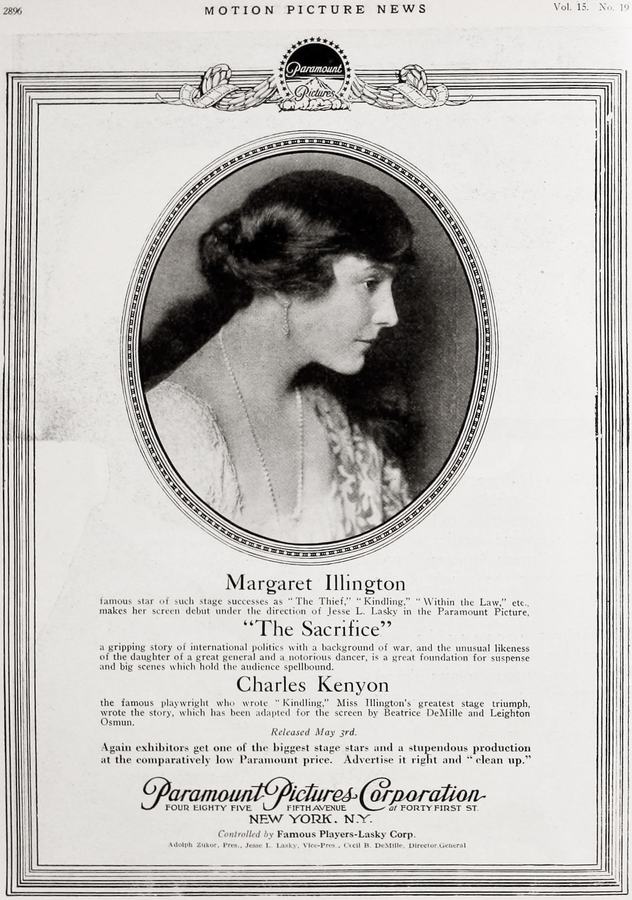
In the annals of early cinema, few narratives encapsulate the raw emotional power and intricate moral quandaries of wartime as profoundly as Sacrifice. This 1917 silent masterpiece, a forgotten gem, transcends its temporal constraints to deliver a story as relevant today as it was over a century ago. It’s a tapestry woven with threads of espionage, forbidden romance, and the profound, often agonizing, choices demanded by loyalty—be it to nation, family, or heart. As a critic, one is often tasked with dissecting the mechanics of a film, but with Sacrifice, the experience is less about deconstruction and more about immersion into a meticulously crafted melodrama that dares to explore the darkest corners of human nature alongside its most luminous virtues.
The film plunges us headfirst into a Europe (or a fictionalized analogue) teetering on the precipice of war, where the lines between friend and foe are as blurred as the battlefront itself. We are introduced to Stephen Stephani, portrayed with a stoic gravitas by Noah Beery, a Nordhoffian agent whose patriotic duty compels him to undertake a perilous mission into Zandria, a hostile nation. His objective: to pilfer vital war plans, the very blueprints of national security. This act of infiltration is not merely a plot device; it serves as the catalyst for a cascade of events that will irrevocably alter the lives of all involved. Stephani's decision to bring his daughter, Mary, into this volatile environment is a narrative choice that immediately raises the stakes, transforming a conventional spy thriller into a deeply personal drama. It’s a decision that, while perhaps strategically unsound, emphasizes the desperate measures undertaken during wartime, where even family becomes a potential asset or a tragic casualty.
The espionage subplot, while central, is less about the intricacies of spycraft and more about its human cost. Unlike the more overt and often glamorous portrayals found in later spy thrillers, Sacrifice grounds its clandestine activities in a stark reality. The theft of plans, the covert operations, are merely the backdrop against which the characters’ moral compasses are tested. This approach allows the film to delve into the psychological toll of such undertakings, echoing the tense political maneuvering seen in films like The Puppet Crown, where national secrets and personal loyalties frequently collide with devastating consequences. Here, the espionage isn't a game; it's a life-or-death struggle where every move carries the weight of a nation's fate, and the invisible ink on a petticoat becomes a symbol of the profound vulnerability inherent in such high-stakes endeavors.
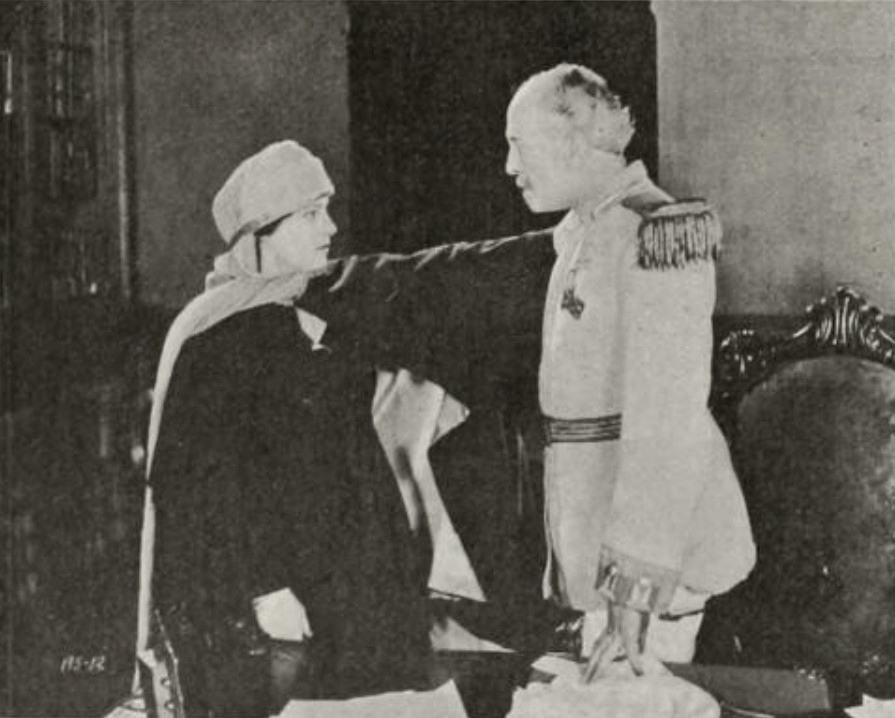
It is amidst this volatile backdrop that Mary Stephani, brought to life with luminous innocence by Margaret Illington, encounters Paul Ekald, a Zandrian captain portrayed by the formidable Jack Holt. Their meeting is depicted not as a gradual blossoming, but as an instantaneous combustion of souls—a love-at-first-sight trope that, in the hands of this film's creators, feels less contrived and more like an inevitable force of destiny. The very notion of love between citizens of warring nations is inherently tragic, a theme explored in countless narratives, yet Sacrifice imbues it with a particular poignancy. Mary's decision to remain in Zandria, tethered by this newfound affection even as her father retreats to Nordhoff, speaks volumes about the power of personal connection to override geopolitical boundaries. It’s a testament to the human spirit's capacity for hope and attachment, even when surrounded by the machinery of hatred and conflict.
This forbidden romance forms the emotional core of the film, providing a stark contrast to the cold calculations of war. It challenges the audience to consider whether love can truly conquer all, even the deepest-seated animosities between nations. The silent film era, with its reliance on exaggerated gestures and emotive intertitles, was particularly adept at conveying such grand passions. Illington and Holt, through their expressive performances, articulate a connection that transcends dialogue, making their yearning palpable. Their story resonates with the timeless appeal of narratives like Kärleken segrar (Love Conquers), underscoring the universal belief that affection, however imperiled, possesses a singular power to bridge divides. The promise of their eventual reunion, though hard-won, serves as the film's ultimate beacon of hope, a reminder that peace, when it comes, brings not just an end to fighting, but a chance for personal restoration. This narrative thread, while seemingly conventional, gains profound depth against the backdrop of espionage and familial betrayal, making their eventual solace all the more impactful.
The narrative takes a darker, more complex turn with the introduction of Vesta, Mary's illegitimate half-sister. Vesta is a character forged in the crucible of societal marginalization, her very existence a testament to the unforgiving social structures of the time. Her struggle, perhaps echoing the plight of characters in Oliver Twist who are born into disadvantage, fuels her desperate actions. Her desperation drives her to an act of extreme consequence: the acquisition of crucial war plans from Count Wenzel, an act that culminates in his death. This is not merely a theft; it is a violent transgression that immediately positions Vesta in a morally ambiguous space. She is neither villain nor hero in the traditional sense, but a product of her circumstances, forced into unthinkable actions by a combination of patriotic fervor and personal exigency. Her character arc is perhaps the most compelling and nuanced in the film, challenging viewers to empathize with someone who commits a heinous act for what she perceives as a greater good. This portrayal of a character driven to extreme measures by societal pressures and personal desperation finds echoes in the grim realities depicted in social dramas such as Germinal; or, The Toll of Labor, where the harshness of life often pushes individuals beyond conventional morality.
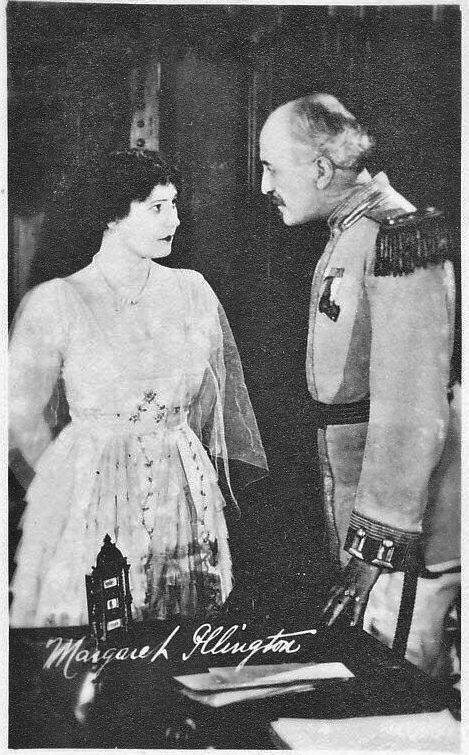
The pivotal moment arrives at the border, a liminal space where national identities are scrutinized and fates are sealed. Here, Vesta, now a fugitive laden with stolen secrets, encounters Mary, innocently awaiting passage. The ensuing exchange of passports, orchestrated by Vesta's shrewd manipulation, is a stroke of narrative genius. It weaponizes Mary's innocence against her, transforming her into an unwitting accomplice and an eventual scapegoat. The image of the war plans, meticulously drawn in invisible ink on Vesta's petticoat, is a wonderfully cinematic detail—a tangible representation of the hidden dangers and covert operations underpinning the entire conflict. This act of deception, however, sets in motion Mary's tragic arrest and subsequent condemnation, casting a long shadow over Vesta's 'successful' mission. It’s a moment that asks profound questions about the true cost of victory and the ethics of sacrificing one individual for the perceived benefit of many. The film brilliantly uses this plot point to explore the theme of entrapment and moral compromise, reminiscent of the dilemmas faced by characters in The World's Great Snare, where protagonists often find themselves caught in inescapable webs of consequence. Vesta’s internal turmoil, though unspoken, is powerfully conveyed through the silent film actors’ reliance on heightened facial expressions and body language, making her desperation and cunning palpable to the audience.
The title, Sacrifice, is not a singular declaration but a multi-faceted exploration of the concept. Initially, it might seem to refer to Mary's impending execution, her innocent life offered up for Vesta's crime. Her stoicism in the face of death, a powerful testament to her unwavering spirit and perhaps a subtle defiance, elevates her beyond mere victimhood. However, the film meticulously peels back layers, revealing that nearly every major character makes a profound sacrifice. Stephen Stephani sacrifices his daughter's safety for national duty. Mary sacrifices her freedom, and almost her life, for an act she didn't commit, and potentially her love for Paul. But it is Vesta's journey that truly embodies the film's title. She sacrifices her moral purity by taking a life, then her peace of mind by allowing her sister to suffer under false accusation. Her ultimate act of redemption, returning to the border to reverse the passport swap and save Mary, is perhaps the most significant sacrifice of all. It’s a sacrifice of her own hard-won freedom, her safety, and potentially her life, for the sake of familial love and a profound sense of guilt. This act elevates Vesta from a desperate operative to a tragic heroine, her actions driven by a complex interplay of duty, regret, and sisterly affection, culminating in a powerful, unspoken plea for forgiveness.
The film’s genius lies in presenting these sacrifices not as simple heroic acts, but as agonizing choices laden with moral ambiguity. The silent era, with its reliance on visual storytelling and character archetypes, often excelled at conveying such grand, sweeping emotional arcs. The performances, particularly Illington's portrayal of Mary's stoic acceptance of her fate and Vesta's tormented decision-making, are deeply affecting. They communicate a depth of human experience that transcends the lack of spoken dialogue, relying instead on the universal language of gesture, expression, and the evocative power of the score (which, though lost to time, we can imagine would have swelled with dramatic intensity). The film forces us to ponder the very nature of heroism: Is it the soldier on the battlefield, the spy behind enemy lines, or the individual who chooses compassion over self-preservation in the face of insurmountable odds? The narrative does not offer easy answers, instead inviting the audience to grapple with the profound moral weight of each character's choices.
Directed by Beatrice DeMille, Sacrifice stands as a testament to the sophisticated narrative capabilities of early cinema. DeMille, working with writers Beatrice DeMille (sharing the name, likely a relative or herself credited differently), Charles Kenyon, and Leighton Osmun, crafted a narrative that is both expansive in its scope and intimate in its emotional focus. The pacing, typical of silent melodramas, builds suspense effectively, drawing the audience deeper into Mary's plight and Vesta's internal conflict. The cinematography, though perhaps rudimentary by today's standards, would have been cutting-edge for its time, employing evocative framing and lighting to enhance the dramatic tension. The use of intertitles is particularly skillful, not merely conveying dialogue but also providing crucial insights into the characters' thoughts and the broader geopolitical context, acting as a narrative voice that guides the viewer through the unfolding drama. DeMille's role as a female director in this nascent period of filmmaking is itself noteworthy, suggesting a unique perspective that might have subtly shaped the nuanced portrayals of female characters, giving them agency and complex motivations beyond simple damsels or villains.
The film's ultimate resolution—the declaration of peace and Mary’s reunion with Paul—provides a poignant sense of closure, a hard-earned victory not just for the characters, but for the enduring power of hope. It suggests that even after the deepest betrayals and the most profound sacrifices, the human capacity for love and forgiveness can prevail. Sacrifice is more than just a historical artifact; it is a powerful reminder of the cyclical nature of conflict and resolution, and the timeless struggle between duty and desire. Its themes of war, love, loyalty, and redemption remain as potent and thought-provoking today as they were in 1917, making it a compelling watch for anyone interested in the foundational narratives of cinema and the enduring complexities of the human condition. This film, though perhaps overshadowed by more famous contemporaries, deserves to be rediscovered and appreciated for its bold storytelling and its unflinching look at the sacrifices demanded by a world at war. It's a testament to the fact that even without spoken words, cinema can articulate the deepest truths of the human heart, leaving an indelible mark on the viewer long after the final frame has flickered into darkness.
IMDb —
1925
Community
Log in to comment.