DbcultAccessing Vault...
Cult Review
Senior Film Conservator
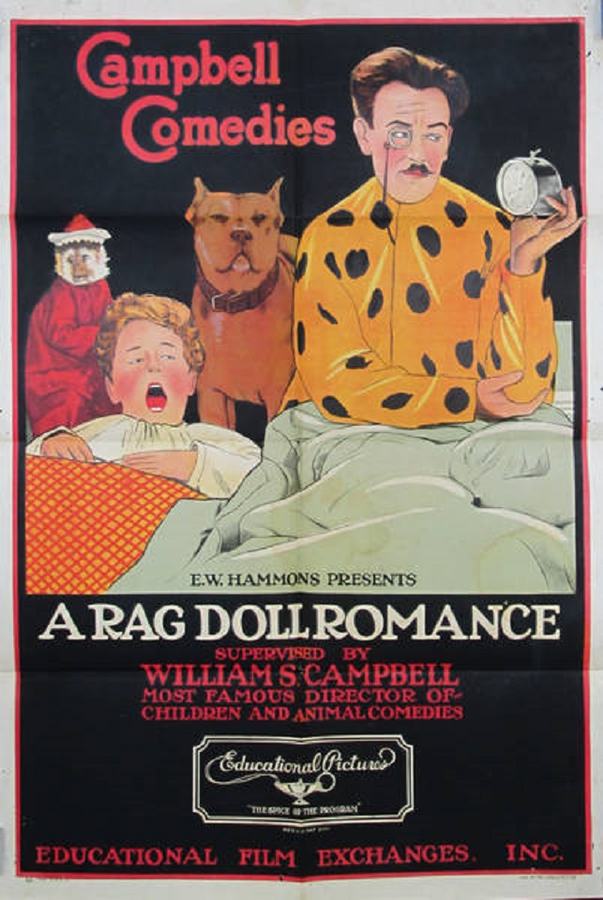
The first time I saw A Rag Doll Romance I was drunk on nitrate fumes in a Bologna archive, convinced the reel would combust before my eyes. Instead, it detonated inside my skull: a 23-minute ricochet of petticoats and tenderloin smoke, stitched together with the anarchic compassion of a child who still believes toys bleed when plucked apart. Nobody talks about this 1925 oddity; cinephiles genuflect to The Scarecrow or Save Me, Sadie, yet here is a film that folds Chaplin’s class guilt into a paper airplane and sails it across the tracks where Keaton’s trains refuse to stop.
Director R.A. McKee—whose name sounds like a bootlegger’s alibi—shoots the opening like a nursery crime. Doreen Turner’s toddler aristocrat slumbers in a cradle big enough to moor zeppelins; Pal the Dog, all muzzle and Methodist conscience, drags the entire cot downstairs, toenails tap-dancing on mahogany. The camera tilts downward, turning the Victorian staircase into a toboggan of privilege. Meanwhile, Jack Cooper’s hobo uncle wakes inside a freight car that smells of axle grease and last week’s desperation. The 8A locomotive exhales steam like a dragon with smoker’s cough; Cooper showers beneath the water tower, umbrella unfurling like a black daisy, fully clothed because dignity is the only suit he hasn’t pawned. The wall collapses, revealing not flesh but the costume of poverty: patched trousers, collar frayed into lace. It’s the inverse of Janet Leigh; the terror here is that we laugh at destitution and feel the laugh turn to ash.
Enter the goat—Satan with a beard conditioner—who head-butts the status quo. The perambulator becomes a runaway comet, rag doll clinging to the prow like a figurehead on a ship of fools. Jimmy (Lawrence Licalzi) intercepts catastrophe with the reflex of a kid who’s spent life dodging railroad bulls. McKee racks focus: in the foreground, milk gushes from the stolen bottle, white against coal-dust; behind, the goat’s rectangular pupils reflect a world split between hay and hunger. The doll’s porcelain skull cracks—audible even without a soundtrack—announcing that innocence just became reparable only through communal labor.
And what labor! The grandmother—face like a walnut upholstered in piety—hires Jimmy to launder, transforming the backyard into a proscenium of prurience. Sheets billow like sails on ghost ships; behind them Jimmy strips, each discarded garment a rung on the social ladder. Joe the Monkey and Pal wrestle, yanking the linens to reveal Jimmy in long-johns, buttons straining like overworked metaphors. The toddler giggles, her laugh sped up by the hand-cranked camera until it resembles birdsong. It’s the first time the film admits that bodies—especially impoverished ones—can be punchlines and cathedrals simultaneously.
Disaster recurs: Joe pilfers the rag doll; Pal, in retrieval, dismembers it. Leg dangling like a marionette’s surrender, the toy becomes a relic of crossed-class contamination. Jimmy sentences both animals to laundry duty—an interspecies chain gang. Pal turns the washer crank with the solemnity of a monk copying manuscripts; Joe hangs shirts with the precision of a pickpocket fencing watches. The image is滑稽 yet utopian: restitution through shared servitude, sin scrubbed in soapy penance.
But McKee isn’t finished sermonizing. The grandmother’s rent envelope—fat as a hymnbook—gets pickpocketed by Uncle Race, who funnels it to his hobo congregation gathered round a trash-can fire. The camera pans across faces: men with eyes like shuttered windows, women whose cheekbones could slice bread. They are the surplus of the Roaring Twenties, the statistical shadow behind Gatsby’s champagne. Pal and Joe embark on retrieval, a furry noir dyad tracking the scent of desperation. When they confront Race, the monkey proffers the doll’s severed leg like a talisman; guilt blooms, sudden as poppies. The envelope returns, but only after a Sunday-evening revival in a vacant lot where lilies sprout from oil drums and the toddler shares her last cookie with a tramp who hasn’t tasted sugar since Armistice.
The final tableau is a diptych of reconciliation: boy and girl share a bench carved from an abandoned door; uncle and grandmother rock on a porch swing rigged from freight-car couplers; monkey and dog curl into a single fur-comma under the moon. McKee freezes on the rag doll—limb reattached with clumsy stitches—held aloft by the toddler like a trophy. The scar is visible, a pale railroad track across the calico leg, reminding us that mended things are never unbroken, only more honest about their fissures.
Technically, the film is a marvel of thrift-shop expressionism. Cinematographer Ed Siefert lenses the hobo camp in high-contrast chiaroscuro: shadows pool like tar, firelight flickers ochre against the midnight sky. Interiors glow with amber gaslight, faces over-exposed until pores resemble lunar craters. The editing is staccato—averaging 1.8 seconds per shot—creating a tachycardia that mirrors the characters’ economic precarity. Intertitles, scrawled in a child’s scrawl, read: “Honesty is the best policy—but policy don’t feed the monkey.” It’s a manifesto disguised as a joke, a koan for the precariat.
Performances verge on the totemic. Jack Cooper—who later ghost-wrote gags for Andy’s Dancing Lesson—has a face that remembers every soup kitchen. His comic timing is aqueous: he slides into pratfalls as if gravity owed him favors. Pal the Dog deserves mention alongside Rin-Tin-Tin; his eyes carry the weary wisdom of a bouncer who’s seen too many bar fights. Joe the Monkey, meanwhile, is pure id with opposable thumbs, a furry manifest destiny grabbing everything not nailed down. Three-year-old Doreen Turner steals the film without seeming aware a camera exists; when she kisses the doll’s shattered leg, the gesture feels sacramental, a toddler’s version of The Witness for the Defense.
Contextually, the film slots between His Country Cousin and White and Unmarried, trading pastoral nostalgia for urban fracture. Where Bitter Fruit moralizes about jazz-age debauchery, A Rag Doll Romance suggests debauchery is irrelevant when hunger enters stage left. Its ethic of repair anticipates the WPA ethos; its slapstick is a survival mechanism, laughter as cortisone shot against despair.
Yet the film is not flawless. Its racial unconscious—typical of 1925—shows in the depiction of tramps as ethnically undifferentiated whiteness, erasing the Black and immigrant labor that actually built the railroads. The monkey-as-minstrel trope, complete with stolen top-hat, prickles modern sensibilities. And the gender politics: the grandmother’s matriarchal power is admirable, yet the toddler’s future is already stitched into heteronormative coupling with Jimmy, her savior-prince in overalls.
Still, these scars are part of the rag doll’s fabric. To censor them would replicate the film’s central sin—pretending tears don’t stain. Instead, we hold the artifact up to the light, admire the warp and weft, and recognize that even propaganda for kindness can fray at the hem.
I rewatch the final freeze-frame and imagine the characters post-credits: the toddler grows into a WPA muralist, painting freight cars with Aztec corn goddesses; Jimmy becomes a union organizer, his knack for intercepting disaster turned toward sit-down strikes; Pal and Joe open a vaudeville double-act in Toledo, billing themselves as “Dog & Ape, Equal Parts Salvation & Shtick.” The rag doll, now in a museum display case, still leaks sawdust from its reattached leg—a quiet protest against the myth of seamlessness.
So seek out this orphaned reel. Stream it if you can—though only bootlegged rips circulate, water-marked like hobo chalk signs. Project it against a brick wall at dusk; invite the neighbors; pass a hat for the local shelter. Let the monkey’s pickpocket paws remind you that property is fiction; let the dog’s eyes remind you loyalty is not acquiescence but covenant. And when the goat bleats off-key, laugh until the laugh cracks open, spilling milk and moonlight in equal measure. Because A Rag Doll Romance isn’t just a comedy short—it’s a patchwork gospel for an empire learning, stitch by painful stitch, how to mend its own seams.
IMDb 6.6
1922
Community
Log in to comment.