DbcultAccessing Vault...
Cult Review
Senior Film Conservator
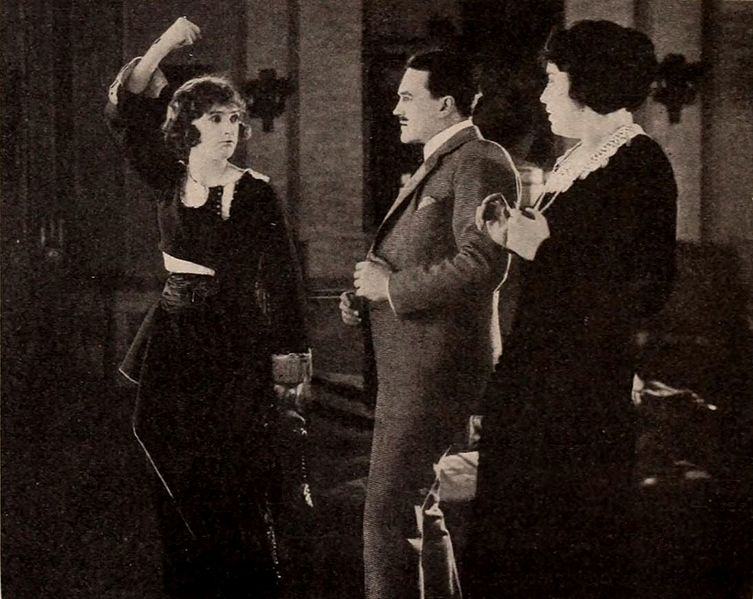
Georgiana Chadbourne—played by Constance Talmadge with the kinetic sparkle of a firecracker held too close to the fuse—opens the film already bored of eternity. Her husband’s death is announced via a title card that dissolves into a shot of a half-eaten breakfast grapefruit: domesticity, rotting in real time. The camera tilts up to reveal Talmadge’s face, a porcelain plate of mischief, and in that tilt In Search of a Sinner declares its manifesto: grief is less interesting than what you decide to do once grief clocks out.
Director John Emerson, armed with Anita Loos’s whip-smart intertitles, yanks us from drawing-room solemnity to a speakeasy that looks like Beardsley and Bauhaus had a fever dream. Cigarette smoke coils around chandeliers; ukuleles plink out a syncopated plea for sin. Georgiana stalks the room in a gown the color of arterial blood, hunting for a man whose soul bears the patina of corroded virtue. She finds two: Rockliffe Fellowes’s swaggering braggart “Duke” Rutherford—whose moustache seems perpetually amused by its own duplicity—and William Boshell’s Reverend Cary, moonlighting as a cabaret magician under the nom de guerre “The Black Dove.”
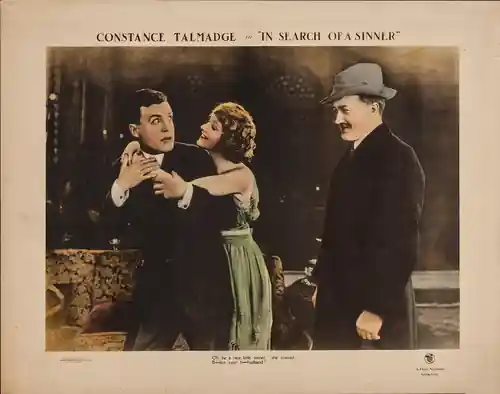
“A woman may forgive a crime, but she never forgets a masquerade.” —title card, tinted sea-blue
The plot pirouettes on a case of mistaken identity so deliciously implausible that only silent cinema could sell it: Georgiana believes she is romancing a bank-embezzling rake; in reality she is courting an undercover missionary compiling dossiers on vice. Meanwhile the actual embezzler—Ned Sparks in a career-defining turn of twitchy moral exhaustion—believes Georgiana is the clandestine liaison who can launder his loot. Each character clutches the wrong mask, and the film’s tension vibrates like a violin string tuned by irony.
Emerson’s visual grammar is a cocktail of iris-ins, split-screens, and double-exposures that prefigure Hitchcock’s Vertigo dream sequences. When Georgiana first kisses the man she thinks is a sinner, the image overprints her face with a flickering montage of previous lovers—each dissolving into steam—while the tinting shifts from amber to sulfurous yellow. It’s as if the film itself blushes, then bruises.
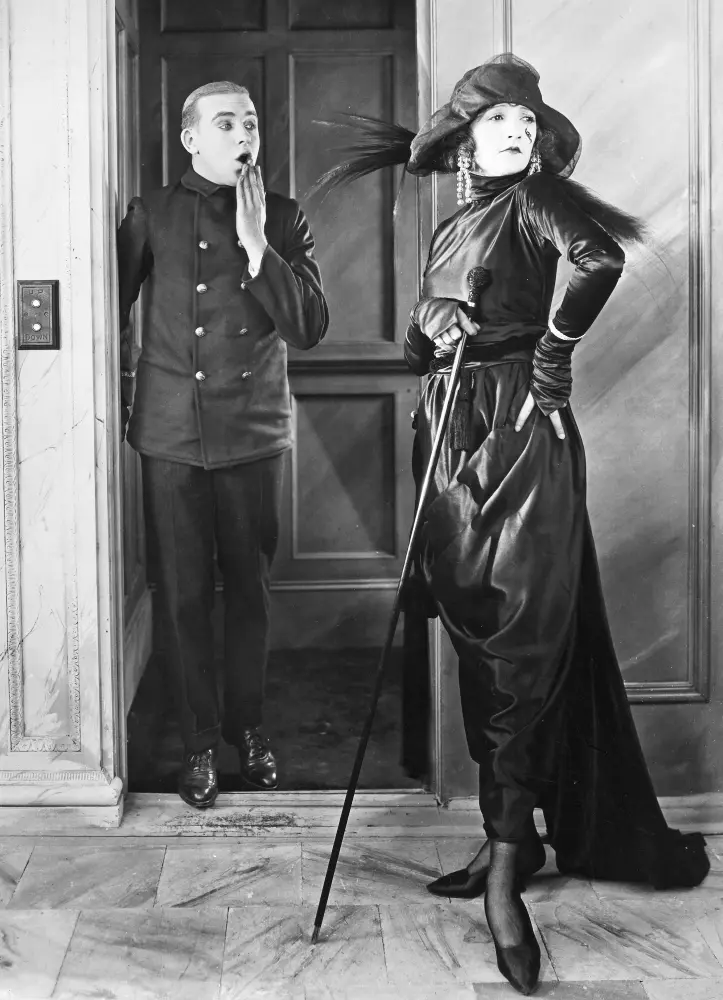
Constance Talmadge moves through the picture like a champagne bubble that refuses to pop. Watch the way she collapses grief into a shrug in the first reel, then inflates anticipation into a balloon that lifts her entire body. There is a moment—wordless—where she applies rouge in a cabaret mirror; the camera holds on her reflection as the smile drains from her eyes. Without a title card she telegraphs the epiphany that sin, as a destination, is travel-weary.
Rockliffe Fellowes counterbalances with a languid menace, every hand-in-pocket stance suggesting a switchblade yawn. The real revelation, however, is Ralph Bunker as the timid accountant who masquerades as a racketeer; his body language is a study in repression—knees pressed together as if sewn—until the climax, when the mask slips and he unleashes a single, guttural laugh that feels like a pane of glass shattering.
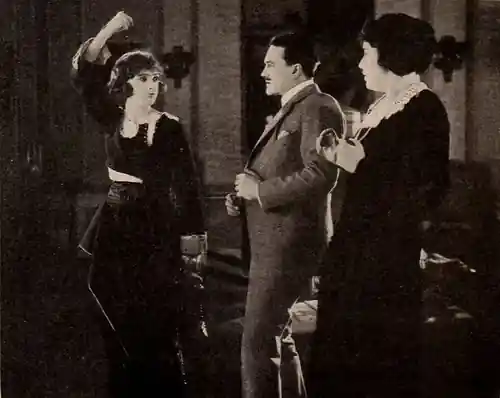
Though marketed as black-and-white, surviving prints reveal a sophisticated tinting strategy: cobalt for night exteriors, rose for boudoir intrigue, and a lurid tangerine for the climactic Chinatown sequence. The art-deco sets—designed by a young William Cameron Menzies—use forced perspective to make alleyways yawn like cavernous moral choices. One staircase ascends into darkness so dense it feels like a portal to 19th-century Gothic, recalling the expressionist corridors of Shadows of the Moulin Rouge but flecked with the syncopated jazz of Way Out West.
The intertitles crackle with Loos’s trademark epigrammatic flair. When Georgiana’s confidante (Marjorie Milton) warns her against courting scandal, the card reads: “Virtue is like perfume—lovely until it suffocates.” Another card, superimposed over a shot of a revolving door, quips: “Reputations entered here, exit as origami.” The humor is so razor-fine it could split atoms, yet beneath the levity runs a melancholy thread about women negotiating freedom in a corseted world—an echo of Flame of Youth and Viviette, but with a cynicism that feels modern.
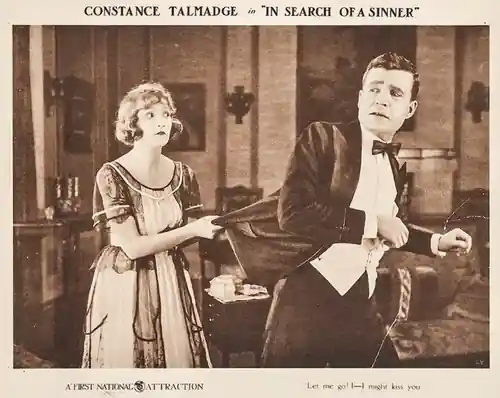
The original score—performed live in 1920—has been reconstructed by the Munich Film Museum using cue sheets and vintage recordings. Syncopated xylophones underscore farce scenes, while full orchestral swells accompany Georgiana’s moment of self-recognition. The restoration inserts a muted trumpet motif whenever deception rears its head; it’s a sonic signature that imprints the narrative on your pulse.
Against contemporaries like The Love Hunger or Oh, Susie, Be Careful, In Search of a Sinner is less melodrama than moral vaudeville. While The Winning of Beatrice moralizes about female virtue and The Dance of Death wallows in nihilism, Emerson’s film pirouettes between both poles, landing on a wink. Its closest cousin is A Daughter of the City, yet where that film treats urban corruption as tragedy, here it’s a champagne flimflam.
A century on, the film’s gender politics remain slippery. Georgiana’s agency is exhilarating, yet her quest is framed as a search for a man—albeit a delinquent one. Still, Talmadge’s performance transcends the premise; she doesn’t merely want a sinner, she wants the idea of sin as a crucible for self-creation. In that sense, the picture anticipates the flapper heroines of mid-1920s cinema and, arguably, the post-war femme fatales.
Technically, the restored 4K print breathes phosphorescent life into shadow. Scratches have been erased, yet the grain—that cinematic fingerprint—persists, thank heavens. The new Blu-ray from Kino Lorber pairs the film with an audio essay on Loos’s career and a 1919 short, Finishing Mary, providing context on Talmadge’s comedic evolution.
Verdict: 9/10 — A effervescent time-capsule that still pops its cork. Seek it for the laughs, re-watch it for the visual sorcery, treasure it for Talmadge’s incandescent reminder that the most intoxicating sinner we ever chase is the reflection we once promised to outrun.
IMDb 6.4
1933
Community
Log in to comment.