A definitive 5.4/10 rating for a film that redefined the boundaries of cult cinema. A Regular Fellow remains a cornerstone of transgressive art.
A Regular Fellow Review: A Royal Romp That Still Charms?
Is A Regular Fellow (1925) a film worth watching today? Short answer: yes, but with a significant caveat. This delightful silent comedy, starring the often-overlooked Raymond Griffith, offers a charming, if somewhat predictable, escape into a bygone era of cinematic storytelling, making it a perfect watch for silent film enthusiasts and those curious about the roots of romantic comedy, but likely a challenging commitment for viewers unaccustomed to the nuances of early cinema.
It's a curious little picture, a testament to the enduring appeal of a simple narrative executed with panache, even if its pacing occasionally falters for modern sensibilities. While not a groundbreaking work, its historical context and the unique performance of its lead make it a worthwhile experience for a specific audience.
This film works because: Raymond Griffith's distinctive comedic style, combining dapper elegance with subtle physical humor, elevates a familiar 'prince seeks freedom' narrative into something genuinely engaging.
This film fails because: Its reliance on silent film tropes and a somewhat underdeveloped supporting cast prevents it from achieving a deeper emotional resonance or truly memorable comedic peaks.
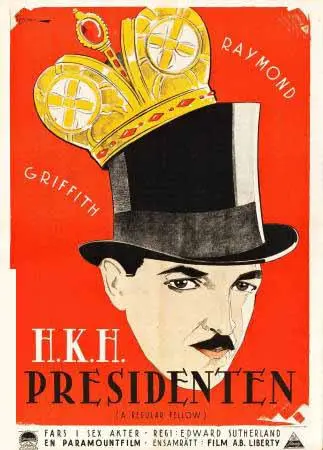
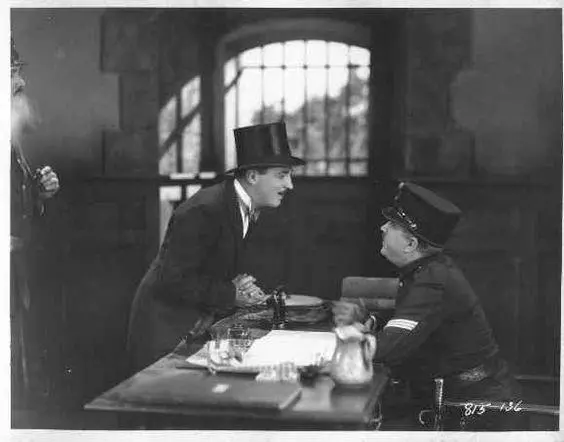
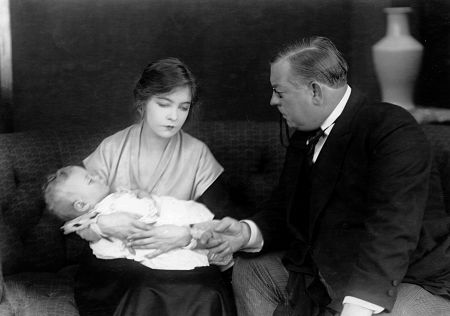
Scene from A Regular Fellow
Cinematic perspective: Exploring the visual vocabulary of A Regular Fellow (1925) through its definitive frames.
You should watch it if: You appreciate the artistry of silent cinema, are a fan of early romantic comedies, or are interested in the career of a unique comedic talent like Raymond Griffith.
The Burden of the Crown: A Refined Plot Recap
At its core, A Regular Fellow explores the universal conflict between duty and personal desire, cloaked in royal garb. Prince Alexis, heir to a quaint European throne, finds his days consumed by trivial yet endless ceremonial obligations. His life is a gilded cage, managed by a cadre of stuffy royal advisors who prioritize protocol above all else. This rigid existence offers little room for personal fulfillment, a fact that becomes acutely painful when he encounters a vibrant young woman and falls instantly in love.
Their budding romance is immediately stifled by the ever-present advisors, who deem such dalliances inappropriate and distracting from his princely duties. The situation escalates dramatically with the sudden death of his father, thrusting Alexis onto the throne as the new king. The crown, instead of offering power, becomes a heavier burden, further separating him from the woman he loves. Desperate to reconcile his heart's yearning with the unyielding demands of his new position, Alexis concocts a daring, unconventional plan to reclaim his personal freedom without abandoning his royal responsibilities entirely. It's a classic setup, but one that relies heavily on the charisma of its lead to carry the audience through its familiar beats.
Raymond Griffith: The Dapper Comedian's Unique Charm
The undeniable heart of A Regular Fellow is Raymond Griffith. Often overshadowed by his more famous contemporaries like Keaton or Chaplin, Griffith carved out a niche as the 'Dapper Comedian,' a man whose humor stemmed from an elegant, almost detached bemusement at the absurdities of life. He wasn't one for slapstick; his comedy was in the raised eyebrow, the subtle shrug, the impeccable tailoring that never quite creased, even in the face of chaos.
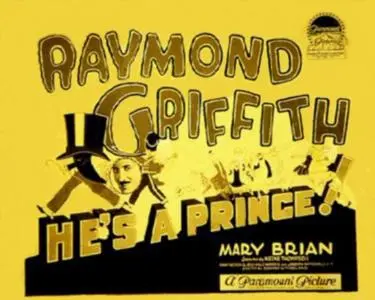
Scene from A Regular Fellow
Cinematic perspective: Exploring the visual vocabulary of A Regular Fellow (1925) through its definitive frames.
In the role of Prince Alexis, Griffith shines. He embodies the prince's frustration with a quiet dignity, rather than overt rebellion. Consider the scene where his advisors are droning on about some obscure royal decree; Griffith doesn't roll his eyes dramatically. Instead, he maintains a polite, almost bored expression, occasionally glancing at the ceiling or subtly adjusting his cuff, conveying volumes about his internal dissent without a single broad gesture. This understated approach is his superpower, making Alexis relatable despite his royal trappings.
His chemistry with Mary Brian, who plays the unnamed love interest, is also crucial. While Brian's role is somewhat underwritten, Griffith's reactions to her—a softening of his usually composed demeanor, a genuine smile that breaks through the princely facade—lend their romance a believable sweetness. It's a testament to his performance that even when the plot mechanics feel a little clunky, Griffith's presence keeps the narrative afloat. He doesn't just play a prince; he plays a man stifled by royalty, yearning for something simpler, and does so with a captivating grace that is uniquely his own. This film is a prime example of why Griffith deserves more recognition in the pantheon of silent comedy stars; his comedic timing is often impeccable, relying on reaction and subtle subversion rather than overt gags, a style that feels surprisingly fresh even today.
Clarence G. Badger's Direction and the Pacing of Silent Comedy
Director Clarence G. Badger, a prolific filmmaker of the era, helms A Regular Fellow with a competent, if not revolutionary, hand. Badger was known for his ability to handle both comedies and dramas, and here he leans into the comedic potential of the royal setting. His direction is straightforward, prioritizing clear storytelling and allowing Griffith's performance to take center stage.
The pacing, typical of many silent comedies, can feel a little slow by modern standards, particularly in the initial setup scenes establishing Alexis's monotonous life. There are moments where a contemporary director might have tightened the editing, but Badger allows scenes to breathe, giving the audience time to absorb the visual gags and character reactions. For instance, the extended sequence detailing the various trivial duties Alexis must perform—signing documents, attending ceremonies, inspecting guards—effectively establishes his predicament, even if it feels a touch drawn out. This deliberate pacing is part of the charm, however, inviting the viewer to slow down and immerse themselves in the rhythm of 1925 cinema.
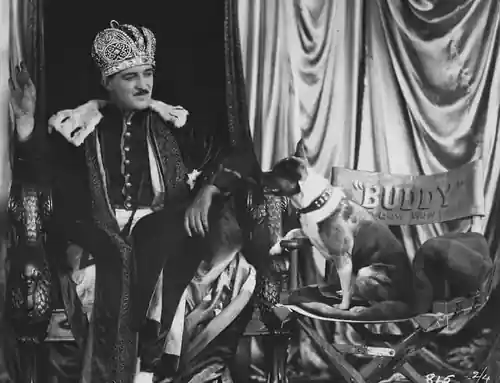
Scene from A Regular Fellow
Cinematic perspective: Exploring the visual vocabulary of A Regular Fellow (1925) through its definitive frames.
Badger's strength lies in his ability to frame Griffith to maximize his unique comedic presence. He understands that Griffith's humor isn't about rapid-fire cuts or frenetic action, but about sustained observation of his reactions. The close-ups on Griffith's face, capturing a flicker of exasperation or a fleeting moment of joy, are particularly effective. While not as visually experimental as a Murnau or as dynamic as a DeMille, Badger provides a solid foundation for the story and its star, crafting a film that is consistently pleasant, if rarely soaring to unexpected heights. It’s a film that understands its star and lets him perform.
Thematic Resonance: Duty, Love, and the Quest for Authenticity
Beyond the lighthearted romance, A Regular Fellow touches upon themes that remain remarkably pertinent. The central conflict between personal freedom and the expectations of one's station is a timeless struggle. Prince Alexis isn't merely rebelling against dull duties; he's yearning for an authentic life, a chance to be 'a regular fellow' rather than a symbol. This desire for authenticity resonates deeply even in our modern, less monarchical world, where societal pressures and professional obligations often clash with individual aspirations.
The film subtly critiques the absurdity of unthinking tradition. The royal advisors, steadfast in their adherence to protocol, represent an ossified system that prioritizes form over substance, effectively stifling human connection and happiness. Their insistence on preventing Alexis from pursuing his love interest, simply because it deviates from 'duty,' highlights the often-ridiculous nature of rigid social constructs. This isn't a hard-hitting social commentary, but rather a gentle poke at the establishment, delivered with a comedic wink.
The love story itself, while archetypal, serves as the catalyst for Alexis's transformation. It's not just about finding a partner; it's about finding a reason to challenge the status quo, to seek a life defined by personal choice rather than inherited obligation. The film suggests that true happiness lies not in the trappings of power, but in the freedom to pursue genuine connection. This simple message, delivered without heavy-handedness, is perhaps the film's most enduring quality, making it more than just a period piece but a story with a heart that still beats.
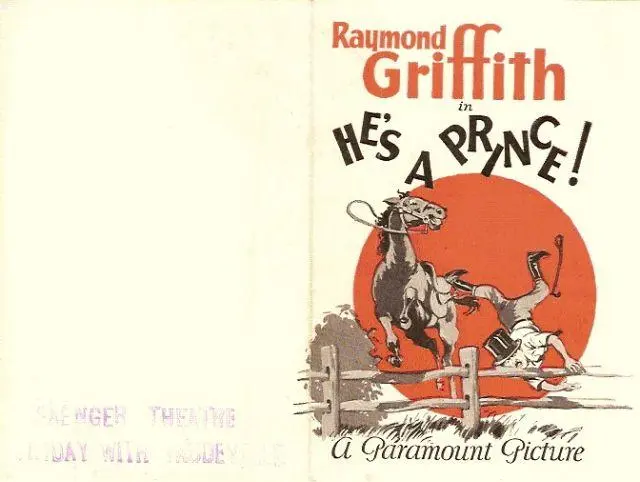
Scene from A Regular Fellow
Cinematic perspective: Exploring the visual vocabulary of A Regular Fellow (1925) through its definitive frames.
Cinematography and Production Design in a Silent Era
As a product of 1925, A Regular Fellow showcases the burgeoning sophistication of silent film production. The cinematography, while not groundbreaking, is clean and functional, effectively conveying the opulence of the royal court and the more intimate moments between Alexis and his love interest. The use of natural light, where possible, adds a layer of realism to the indoor scenes, a common technique in this era before elaborate lighting setups became standard.
The production design, overseen by the art department, is particularly noteworthy. The royal palace sets, while perhaps not as grand as those seen in epic historical dramas, are convincing enough to establish the princely environment. Details like the ornate furniture, the formal attire of the courtiers, and the various props used in the royal ceremonies contribute to the film's immersive quality. There's a particular attention to the uniforms and costumes worn by the cast, which helps to delineate their roles and status within the fictional kingdom. For instance, the contrast between Alexis's elaborate royal attire and the simpler, more contemporary dress of his love interest visually underscores their differing worlds.
One surprising observation is the effective use of a relatively small budget to create an impression of grandeur. Through clever framing and selective set dressing, the film manages to evoke a sense of a functioning, if small, European principality without needing vast, sprawling sets. This efficiency in design is a hallmark of many successful silent films, demonstrating that imagination and careful planning could often compensate for limited resources, a lesson that still holds true in filmmaking today.
Is This Film Worth Watching Today?
Absolutely, for the right viewer. A Regular Fellow is a charming piece of cinematic history that offers a window into the romantic comedies of the silent era. It's a gentle, enjoyable film that doesn't demand too much from its audience, beyond an open mind for its particular style of storytelling.
Scene from A Regular Fellow
Cinematic perspective: Exploring the visual vocabulary of A Regular Fellow (1925) through its definitive frames.
Its primary value lies in its historical significance and the unique performance of Raymond Griffith. If you're a student of film, a silent movie aficionado, or simply curious about the evolution of comedy, this film provides genuine insight and entertainment. It’s a pleasant way to spend an evening, a quiet escape into a simpler time.
However, if your cinematic palate leans exclusively towards modern blockbusters, fast-paced dialogue, or complex narratives, this might be a challenging watch. The lack of spoken dialogue, the slower rhythm, and the reliance on visual storytelling require a different kind of engagement. It's not a film for everyone, but for those it's made for, it delivers a quiet satisfaction.
Pros and Cons
Pros:
Raymond Griffith's captivating, understated performance.
A charming and timeless 'duty vs. love' narrative.
Competent direction that showcases its star.
Good example of silent era romantic comedy.
Appealing production design for its period.
Moments of genuine, subtle humor.
Cons:
Pacing can feel slow for modern audiences.
Supporting characters are largely underdeveloped.
Plot is somewhat predictable.
Not as innovative or visually stunning as some other silent classics.
Lacks truly memorable 'big' comedic moments.
Limited emotional depth beyond the central romance.
Key Takeaways
Best for: Silent film enthusiasts, fans of classic romantic comedies, and those interested in underrated comedic talents.
Not for: Viewers who dislike silent films, prefer fast-paced narratives, or require complex character development.
Standout element: Raymond Griffith's uniquely dapper and subtly humorous portrayal of Prince Alexis.
Biggest flaw: A somewhat languid pace and a reliance on formulaic plot progression that limits its overall impact.
Verdict
A Regular Fellow (1925) is more than just a historical curiosity; it’s a perfectly pleasant, if unchallenging, romantic comedy elevated by the singular charm of Raymond Griffith. While it may not rewrite the rules of cinema, it expertly plays by the rules of its era, delivering a story that is both familiar and endearing. It works. But it’s flawed. Its gentle humor and Griffith's magnetic screen presence make it a worthwhile watch for those willing to engage with the language of silent film.
It reminds us that sometimes, the simple act of a prince yearning for a normal life, a desire to be ‘just a regular fellow,’ is enough to carry a film. It’s a delightful journey back in time, offering a glimpse into a star who deserved more spotlight. Seek it out if you appreciate the quiet artistry of a bygone cinematic age; you might just find yourself charmed by its unassuming elegance.