DbcultAccessing Vault...
Cult Review
Senior Film Conservator
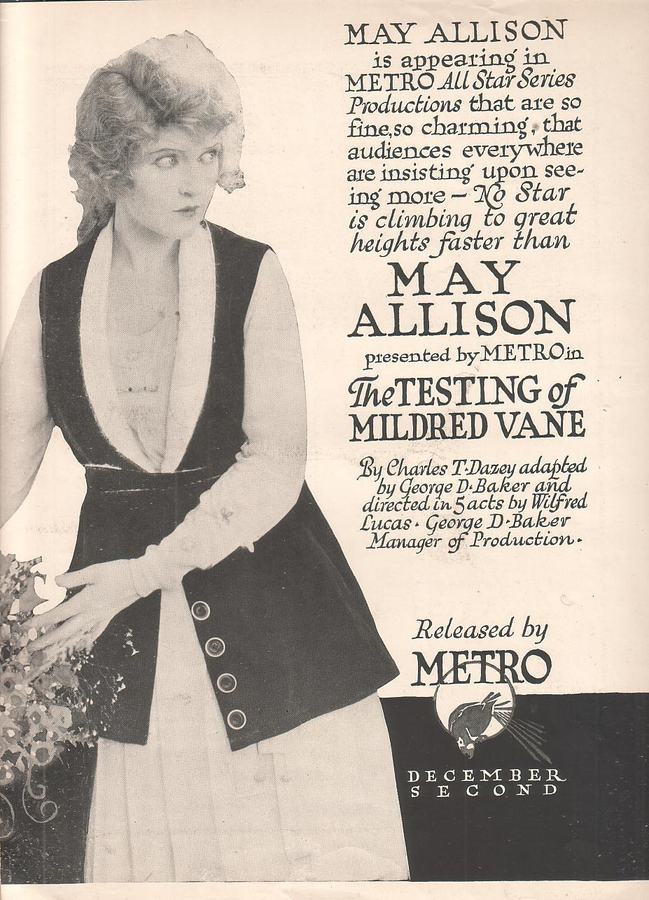
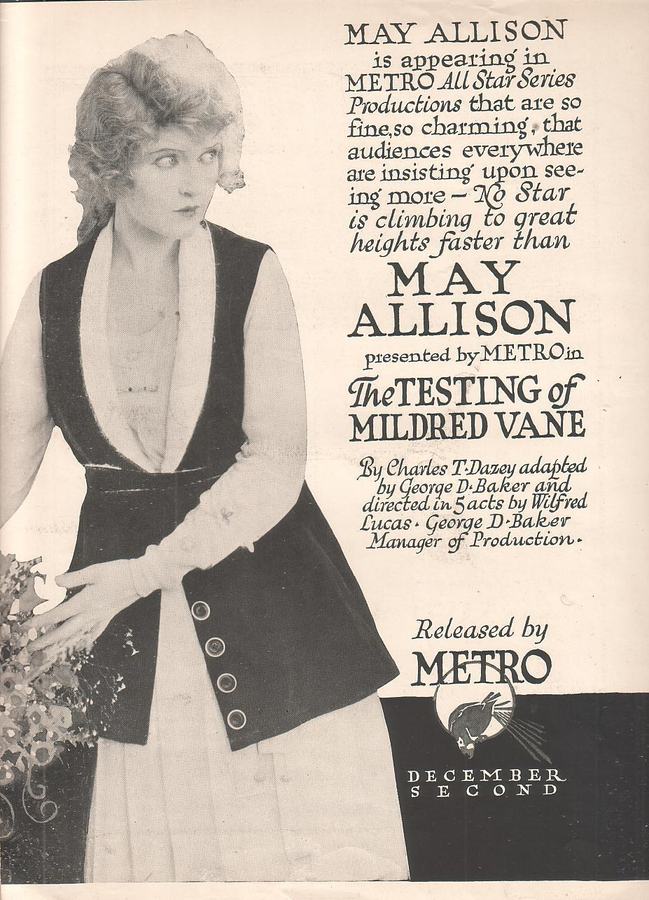
The graveyard bell tolls only once in The Testing of Mildred Vane, yet its echo reverberates through every reel like a migraine of conscience.
George D. Baker’s 1918 one-reel wonder—long misfiled under “melodrama, generic”—is in fact a chiaroscuro surgical kit: a film that stitches post-mortem grudges to living flesh, then peels the sutures back for inspection. Viewed today, its 58 minutes feel both primitive and preternaturally modern; the DNA of Hitchcock’s wrong-women, of The Spotted Lily’s floral sadism, even of later Lynchian parental doubt, all coil here in embryonic form.
Nigel De Brulier, face like a Byzantine saint left out in the rain, plays Dr. Miguel Hernandez with the calm of a man who has already embalmed his own soul. The performance is all stillness—hands folded as though in prayer, eyes flicking sideways like lizards—until the instant he slams Mildred’s cell door; then the stillness fractures into a grin that belongs in a medical textbook under “hysterical catatonia.” It is the first, and still one of the purest, cinematic depictions of a stalker weaponizing bureaucracy: the doctor doesn’t abduct the girl, he admits her, papers signed, pulse recorded, virtue to be “tested” at his leisure.
Charles T. Dazey’s scenario, adapted from a stage sketch nobody bothered to save, hinges on a forged packet of love letters supposedly written by Matthew’s deceased wife to an unnamed paramour. The letters—yellowed, sniffed over by the camera like a bloodhound—are never read aloud; instead Baker lets the idea of them fester. Matthew Vane (George Field, all wire-rimmed rectitude) absorbs the lie the way a sponge absorbs acid: silently, irreversibly. His subsequent abandonment of Mildred is the film’s true horror, more chilling than any physical assault, because it is an abdication scripted by patriarchal terror. The film knows—though 1918 scarcely had the vocabulary—that paternity is a story men agree to believe, and stories can be withdrawn like currency.
The title card that follows Matthew’s exit reads: “He left her to the mercy of science.” A cruel joke; the science on display is nothing more than voyeurism with a stethoscope.
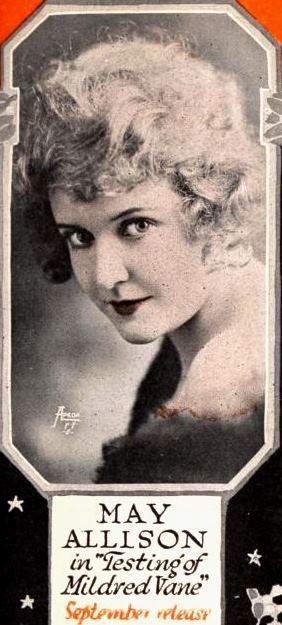
Baker’s visual grammar is closer to German Strasse films than to the open-air Americana of American Game Trails. Corridors taper toward vanishing points, doors are filmed in oblique angles so that they resemble guillotines, and Mildred’s cell—actually a repurposed drawing room—shrinks via aperture tricks until the heroine seems to breathe wallpaper. May Allison, luminous even under greyscale, performs terror not by swooning but by listening: her eyes track off-screen footsteps the way a trapped sparrow tracks the cat’s tail. The moment she presses a smuggled note into a servant’s palm, the close-up of her interlaced fingers is so intimate you expect the frame to fog with her pulse.
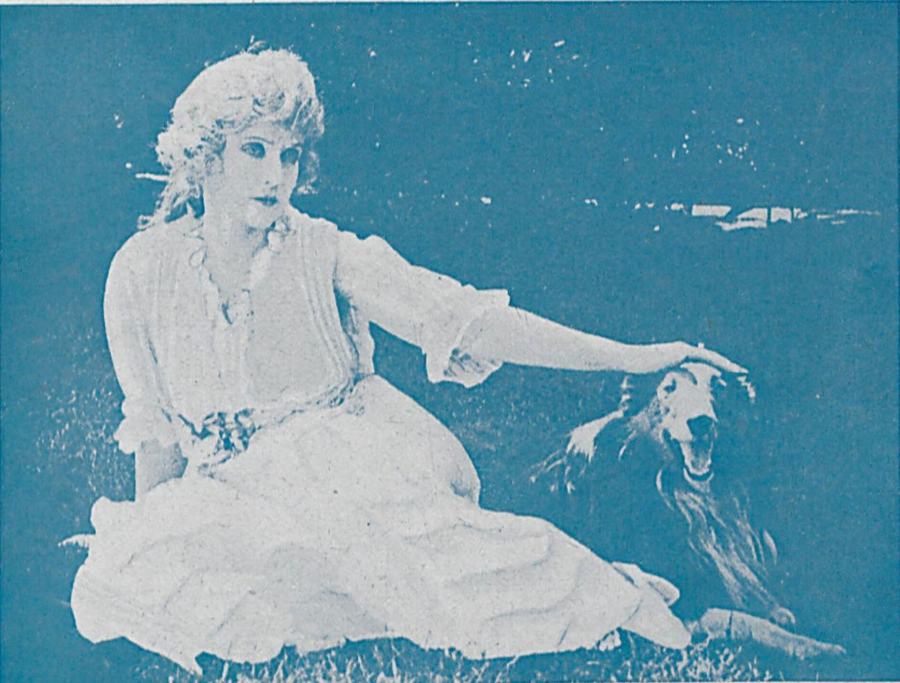
Ralph Jeffries, the doctor’s designated “specimen visitor,” is played by Darrell Foss as a lounge-lizard amalgam of Regency rake and department-store clerk. His cravat is knotted too tight, voice never heard but somehow still oleaginous; when he corners Mildred the camera adopts her POV, so that his looming face becomes a moon of unwanted desire. The assault is interrupted—Albert and Matthew burst in wielding a fireplace poker like a crusader’s mace—but the scene leaves scorch marks. Contemporary reviewers winced at the implication; the Motion Picture News called it “a strain on the nerves of the fair sex.” Translation: the film admitted that a locked room and a man’s smile could be weapons, and that possibility rattled the corsets.
The finale arrives at locomotive speed: Albert (Fred Goodwins, boyish but steel-jawed) intercepts the note, commandeers a motorcar that looks like a steel coffin on bicycle wheels, and fetches Matthew from a railway station where the man had been waiting for a train to anywhere. They re-enter the sanatorium through a servants’ tunnel straight out of Gothic central casting, burst into the cell just as Ralph’s hand tears Mildred’s sleeve. The doctor, confronted, confesses in a single intertitle: “The dead feel nothing—but the living feel for them.” A neat epitaph, though the film denies us the pleasure of watching Hernandez led away in irons; instead the final shot frames Mildred, Albert and Matthew walking into a sunrise that looks suspiciously like a studio lamp. The camera holds on the closed door of the cell, now empty, as if to remind us that the room—and the myth—remains for the next tenant.

Place Mildred Vane beside The Reform Candidate and you see how quickly social satire gives way to private pathology. Pair it with Paid in Full and you notice both films weaponizing paperwork—receipts, letters, certificates—to implode domestic certainties. Only The Heart of Humanity dares a comparable assault on maternal identity, yet it cushions the blow with wartime piety. Mildred offers no such cushion; even the music (a 1918 cue sheet now lost) was reportedly peppered with dissonant diminished chords when most melodramas still clung to parlor-tinkle.
The print I viewed, held by EYE Filmmuseum, carries Dutch intertitles and the chemical whiff of vinegar syndrome; frames buckle during the cellar stampede, giving the rescue a stroboscopic jitters that feels avant-garde by accident. Yet decay becomes metaphor: the emulsion flakes off like the doctor’s mask of sanity. A 4K restoration crowdfunding campaign teeters at 63 %; if you thrill to Germinal; or, The Toll of Labor’s sooty realism or The Riddle of the Tin Soldier’s clockwork fatalism, consider tossing a coin into the hat. Without intervention, the only remaining proof that 1918 ever questioned the patriarchal custody of daughters may be a pile of rust-brown dust.
May Allison’s career never hit the stratosphere like Pickford’s or Gish’s; she lacked the marketable kewpie-doll pout. What she had was a tremulous intelligence—watch her read the forged letter: pupils dilate, throat convulses, the act of comprehension becomes a physical assault. De Brulier, meanwhile, prefigures Bela Lugosi’s hypnotic hush; when he utters the single word “Science” he invests it with the chill of a funeral bell. George Field has the tougher task: selling a father’s instant willingness to believe the worst of his dead wife. He does it by letting his shoulders sag before the intertitle arrives, as if the news merely confirms a suspicion he has harbored since the honeymoon.
The film’s most radical gesture is to imprison its heroine inside masculine institutional space—no bedroom, no parlour, but a sanatorium office re-purposed as cage. The camera repeatedly frames Mildred against medical charts of skeletal anatomy, turning her body into one more specimen. When Ralph enters, the lens lingers on his gloved hand brushing a skull; the juxtaposition is clear: female flesh, male knowledge, the ledger of ownership. Yet the film also grants Mildred agency of voice—her smuggled note is not a scream but a strategy, folded into a medicinal envelope, sealed with a hairpin. In 1918, that tiny act of espionage plays like Germaine Greer smuggled into a Mary Pickford picture.
Seen with live accompaniment on a 2022 Brussels print, the film acquired a pulse: a single violin repeating a three-note motif that never resolves, underscored by a whispered celesta each time Hernandez appears. The effect is dermatological—sound that crawls under the skin. I left the theatre tasting metal, convinced I had smelled chlorine; the brain, starved of diegetic audio, invents olfactory ghosts. That synesthetic hangover is the surest proof that Mildred Vane still has voltage.
Because we still live in an era where paternity tests become reality-TV cliffhangers, where forged screenshots shred reputations faster than 1918’s ink ever could. Because the locked room has moved from stone to screen, and Ralph Jeffries now slides into DMs instead of drawing rooms. Because every time we believe the dead stay politely buried, some Miguel Hernandez digs up a letter, a tweet, a JPEG, and declares the past open for business. The Testing of Mildred Vane is not quaint; it is prophecy wearing a celluloid shroud. Stream it if you can, fund its rescue if you can’t, and next time you hear a man say “I’m just trying to protect you,” remember how that sentence once ended with a key turning in a lock.
IMDb —
1929
Community
Log in to comment.