DbcultAccessing Vault...
Cult Review
Senior Film Conservator
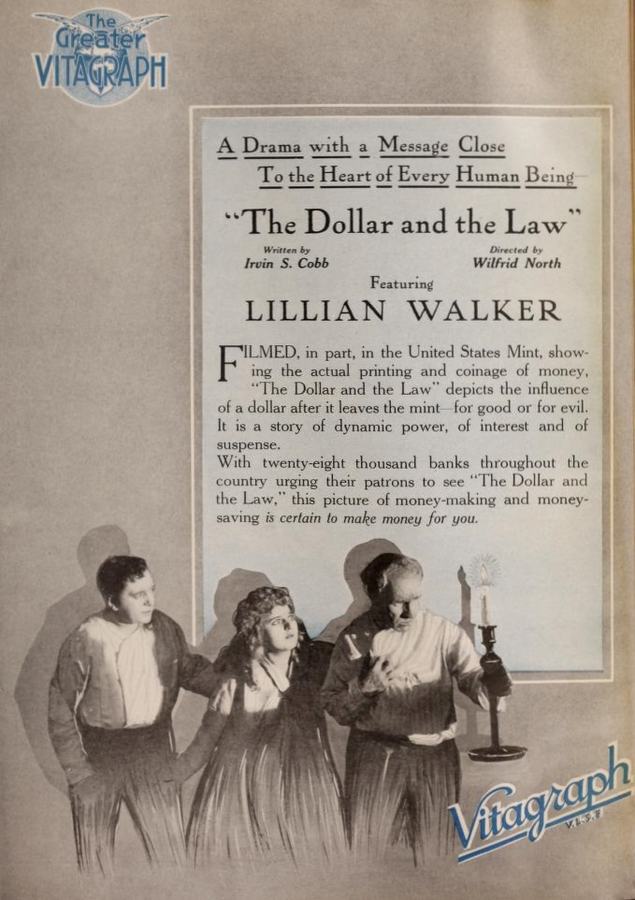
In the annals of early cinema, where moral fables often held sway and human nature was dissected with a keen, if sometimes melodramatic, eye, *The Dollar and the Law* emerges as a particularly potent exploration of avarice, romantic idealism, and the precipitous fall from grace. This cinematic endeavor, penned by the ingenious minds of Irvin S. Cobb and Garfield Thompson, doesn't merely present a narrative; it constructs a compelling argument about the corrupting influence of wealth and the redemptive power of genuine affection, all wrapped in a dramatic package that resonates even today. It’s a film that asks us to ponder the true cost of a dollar and the immutable weight of the law, both societal and moral.
At its core, the film introduces us to Amos Brandt, portrayed with a compelling blend of austerity and latent vulnerability by Arnold Storrer. Brandt is a man shrouded in a self-imposed aura of penury, a miserly façade meticulously maintained to conceal a staggering personal fortune. This central deception acts as the narrative’s gravitational center, pulling every character and plot point into its orbit. Storrer’s performance, even within the constraints of silent film acting, conveys the deep-seated motivations behind Brandt’s secretive existence – a complex cocktail of prudence, perhaps a touch of paranoia, and an ultimately misguided attempt to shield his wealth. It’s a testament to the era's acting prowess that such nuanced characterizations could be communicated through gesture and expression alone, making Storrer’s Brandt a memorable figure, a predecessor to many cinematic misers who would follow.
The dramatic tension escalates through the plight of Brandt’s daughter, Lola, brought to life by the expressive Josephine Earle. Lola finds herself at a crucial juncture, a romantic dilemma that, while seemingly straightforward, carries profound implications for all involved. She is courted by two vastly different suitors: the affluent and ostensibly respectable Richard Denton, and the earnest, though financially modest, George Gray. Earle’s portrayal of Lola is imbued with a quiet strength, a character who, despite her father’s eccentricities, possesses a clear moral compass. Her decision to choose love over lucre, to accept Gray’s proposal despite Denton’s superior financial standing, is not merely a plot point but a thematic declaration. It champions the enduring value of integrity and genuine connection over the superficial allure of material wealth. This choice echoes sentiments found in other romantic dramas of the period, such as The Road to Love, where similar moral quandaries often defined the heroines' journeys.
Lola's steadfastness stands in stark contrast to the rapidly deteriorating moral landscape inhabited by Richard Denton. Hugh Wynn, in the role of Denton, masterfully depicts a man whose initial charm rapidly gives way to desperation and ethical decay. Denton's character arc is a cautionary tale, a descent into the maelstrom of his own making. Already entangled in a fraudulent investment scheme that ultimately defrauds the public and brings him to the brink of criminal indictment and financial ruin, Denton represents the darker side of ambition untethered by principle. His plight is a stark reminder of the consequences of unchecked greed, a theme powerfully explored in films like The Pit, which similarly dissected the perilous world of financial speculation and its human cost.
The revelation of Amos Brandt’s secret wealth acts as the catalyst for Denton’s final, desperate gamble. Learning of the miser’s hidden fortune, Denton, facing the inevitable collapse of his illicit empire, conceives a brazen plan to rob Brandt. This pivotal moment underscores the film’s central conflict: the collision of an individual’s desperate actions with the unyielding forces of fate and justice. The beauty of the narrative lies in its refusal to allow Denton’s scheme to unfold as planned. The 'things don't go quite the way he planned' element is where the true dramatic ingenuity of Cobb and Thompson shines, introducing unforeseen complications and twists that elevate the plot beyond a simple crime story. It’s a narrative technique that keeps the audience engaged, constantly shifting expectations and demonstrating the unpredictable nature of human endeavor when driven by extreme desperation.
The supporting cast, though perhaps with less screen time, contributes significantly to the film's overall texture. Mrs. West, Mary Maurice, Thomas R. Mills, Edward Elkas, Victor Norman, Harry Fisher, Vera Norman, Mrs. Ashley, Lillian Walker, and Walter McGrail each play their part in populating this world of moral ambiguities and stark choices. Their performances, often relying on exaggerated facial expressions and gestures characteristic of the silent era, serve to amplify the emotional stakes and underline the societal pressures at play. For instance, the reactions of townspeople or minor characters to Brandt's perceived poverty versus Denton's perceived affluence subtly reinforce the film's commentary on appearances versus reality. This collective effort ensures that the world of *The Dollar and the Law* feels richly textured and believable, despite its heightened dramatic premise.
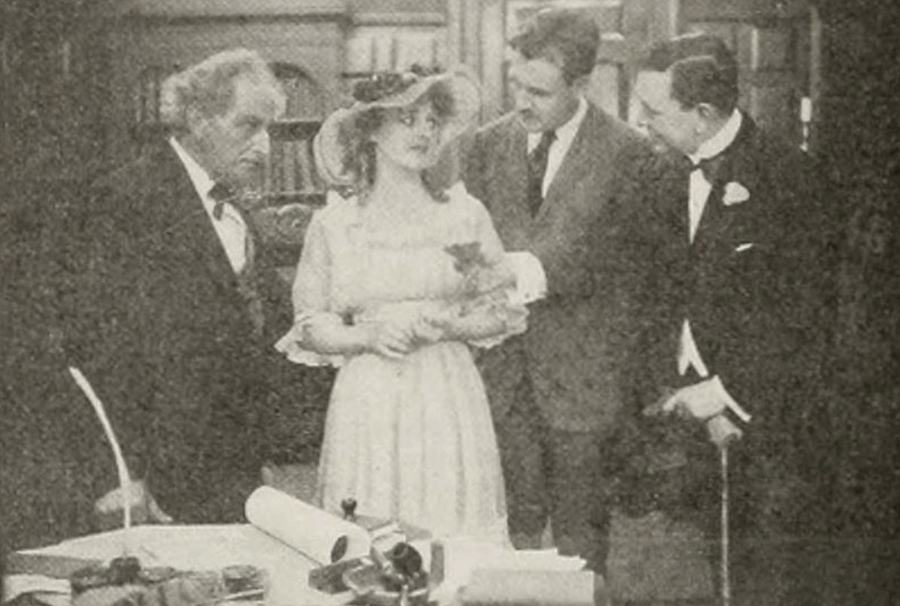
Beyond the compelling plot, the film’s strength lies in its command of visual storytelling, a hallmark of effective silent cinema. Directors of this era had to rely entirely on imagery, acting, and intertitles to convey complex emotions and intricate plot developments. The staging of scenes, the use of light and shadow, and the expressive physicality of the actors become paramount. Consider the stark contrast between the dimly lit, seemingly humble abode of Amos Brandt and the more opulent, yet ultimately hollow, settings associated with Richard Denton’s initial facade. These visual cues are not merely aesthetic choices; they are integral to the narrative, silently reinforcing the film’s thematic concerns about appearance versus reality and the true nature of wealth.
The performances, as mentioned, are a masterclass in non-verbal communication. Arnold Storrer’s portrayal of Brandt, for example, would have required a delicate balance. To convey miserliness without revealing the underlying wealth too soon, and then to express the shock and danger during the attempted robbery, demands a sophisticated understanding of cinematic timing and physical expression. Similarly, Hugh Wynn’s transformation from confident suitor to desperate criminal is conveyed through subtle shifts in posture, gaze, and the increasing tension in his movements. These are not merely actors playing roles; they are storytellers translating intricate psychological states into a universally understood visual language. This meticulous attention to visual detail and expressive acting is what separates enduring silent films from mere historical curiosities, allowing them to communicate across generations, much like the timeless narratives found in The Immigrant, where Chaplin's genius lay in his ability to articulate profound human experiences without uttering a single word.
What makes *The Dollar and the Law* particularly compelling for contemporary audiences is its timeless exploration of moral dilemmas. The struggle between love and money, integrity and deceit, is a narrative thread woven throughout human history. Lola’s choice remains as relevant today as it was a century ago, challenging viewers to consider their own priorities. Denton’s spiraling descent into crime, fueled by a combination of ambition and desperation, serves as a stark warning about the corrupting influence of unchecked desire. These themes are not bound by the specific social mores or economic conditions of the early 20th century; they are universal human experiences. One can draw parallels to films across eras, from the straightforward moral lessons of A Message from Mars to the more complex societal critiques found in Sodoms Ende, all of which grapple with the consequences of human failings.
The craftsmanship of Irvin S. Cobb and Garfield Thompson is evident in the tightly wound plot and the clear character motivations. They understood how to build suspense and deliver a satisfying, if morally complex, resolution. The script avoids easy answers, instead presenting a world where choices have tangible, often irreversible, consequences. This narrative sophistication elevates the film beyond mere entertainment, positioning it as a piece of early cinematic art that aimed to provoke thought and reflect societal values. It is a story told with conviction, presenting a clear moral compass without being overtly preachy.
In conclusion, *The Dollar and the Law* is more than just a relic from the silent film era; it is a vibrant, engaging drama that continues to speak volumes about the human condition. Its exploration of hidden wealth, the choices between love and money, and the consequences of desperation are themes that remain perpetually relevant. The performances by Arnold Storrer, Josephine Earle, and Hugh Wynn, alongside the skillful narrative construction by Cobb and Thompson, coalesce to create a memorable cinematic experience. It serves as a powerful reminder that while the technology of filmmaking has evolved dramatically, the fundamental stories of human ambition, love, and the pursuit of justice remain constant, anchoring us to the shared tapestry of our collective experience. This film, like many of its contemporaries, laid the groundwork for the rich tradition of cinematic storytelling that continues to captivate audiences worldwide, proving that a compelling narrative, well told, transcends the limitations of its time and medium.
It urges us to look beyond the surface, to question perceived realities, and to reflect on the true value of what we hold dear. In a world often preoccupied with material gain, Lola’s decision and Denton’s ultimate fate serve as powerful, contrasting lessons. The film stands as a testament to the fact that even in its nascent stages, cinema was capable of delivering profound social commentary wrapped in engrossing drama. Its legacy is not just in its historical significance but in its continued ability to provoke thought and stimulate discussion about the timeless interplay between wealth, morality, and the law.
The narrative’s strength also lies in its subversion of expectations. While the audience might anticipate a straightforward robbery, the 'things don't go quite the way he planned' element introduces a layer of unpredictable chaos that heightens the stakes. This narrative choice prevents the film from becoming a predictable morality play, instead infusing it with a dynamic energy that keeps viewers on edge. It's a clever move by the writers, demonstrating an understanding of dramatic pacing and audience engagement that was sophisticated for its time. The film, in its quiet intensity, manages to critique the superficiality of wealth worship without resorting to heavy-handed didacticism, allowing the characters' actions and their consequences to speak for themselves. This approach is similar to how other early films, like A Yoke of Gold, explored the binding nature of material possessions and societal expectations, albeit through different narrative lenses. The intricate dance between fate, free will, and the repercussions of one's choices is masterfully orchestrated, making *The Dollar and the Law* a compelling watch that continues to invite reflection on the enduring human struggle between virtue and vice.
IMDb 8.1
1928
Community
Log in to comment.