DbcultAccessing Vault...
Cult Review
Senior Film Conservator
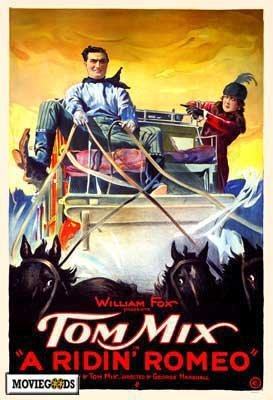
The silver screen of the early 20th century was a vast, untamed prairie, much like the landscapes it often depicted. In this nascent cinematic era, a particular genre galloped ahead, capturing the hearts and imaginations of audiences: the Western. And at the very zenith of this genre, a figure stood tall, astride his magnificent horse, Tony, embodying the quintessential cowboy hero: Tom Mix. His films, often a blend of breathtaking stunts, earnest romance, and a healthy dose of comedic relief, set the standard for what a Western could be. Among his extensive filmography, the 1921 feature, 'A Ridin' Romeo', emerges not just as another entry, but as a vibrant, if convoluted, testament to Mix's enduring appeal and the genre's boundless potential. It's a film that, despite its century-old vintage, still offers a fascinating glimpse into the narrative intricacies and performance styles that captivated millions.
At its core, 'A Ridin' Romeo' is a masterclass in narrative escalation, an intricate dance of misunderstandings, familial opposition, and unexpected heroism. The plot, penned by the collaborative genius of George Marshall, Tom Mix himself, and Ralph Spence, begins with King Brentwood, a rancher of considerable standing but questionable temperament, embroiled in a breach of promise lawsuit. This legal quagmire, initiated by a local widow, casts a shadow over his already cantankerous demeanor. Brentwood's personal life is further complicated by his staunch disapproval of Jim Rose, the charming, albeit persistent, suitor to his daughter, Mabel. Jim's aspirations for Mabel's hand are met with an unwavering banishment from the Brentwood ranch, setting the stage for a classic tale of forbidden love against a backdrop of frontier justice.
The narrative truly ignites when Brentwood, desperate to extricate himself from the widow's legal clutches, concocts a rather audacious plan. Learning of her impending visit via stagecoach, he instructs his men to stage a 'hold-up,' hoping the terrifying experience will scare her away, thereby nullifying her claim. This is where Jim Rose, our titular 'Ridin' Romeo,' makes his grand, if ill-fated, entrance. Unaware of the ruse, Jim, embodying the quintessential cowboy protector, bravely intervenes, rescuing the widow from what he perceives as genuine peril. His reward for this act of unsolicited heroism? Not Brentwood's approval, but a brutal beating, a harsh reminder of the rancher's unyielding animosity. It's a pivotal moment, highlighting the often-thankless nature of true heroism when it clashes with deeply entrenched prejudice.
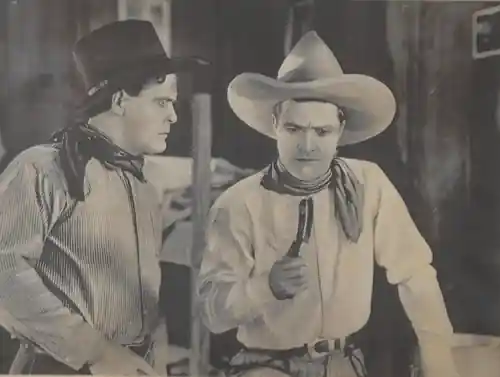
Just when the audience might feel they've grasped the central conflict, the plot takes an unexpected, almost surreal, turn. Jim discovers a baby, seemingly abandoned, and in a moment of compassionate impulse, takes the infant into his care. This act of kindness is, predictably, misinterpreted by the ever-vigilant authorities, leading to his arrest on charges of abduction. The irony is palpable: a man repeatedly attempting to do good is consistently met with misunderstanding and punitive measures. This particular subplot, while adding a layer of farcical drama, also serves to emphasize Jim's inherently good nature, even when faced with overwhelming adversity. The resolution, however, arrives from an unexpected quarter: the very widow whose initial lawsuit set this convoluted chain of events in motion. Through a combination of shrewd diplomacy and perhaps a newfound appreciation for Jim's character, she manages to soften Brentwood's hardened heart, ultimately securing his consent for Jim and Mabel's union. It's a neat, if somewhat convenient, tying of loose ends, characteristic of the era's desire for satisfying, morally clear conclusions.
To speak of 'A Ridin' Romeo' without extensively discussing Tom Mix would be akin to reviewing a silent film without mentioning its score. Mix was not merely an actor; he was a phenomenon, a living legend who defined the cowboy archetype for generations. In Jim Rose, we see all the facets of Mix's persona shine through: his unparalleled horsemanship, his athletic prowess, his charming grin, and his innate ability to convey both earnestness and a touch of playful mischief. Mix performed his own stunts, a fact that lent an undeniable authenticity and thrill to his action sequences. The raw physicality of his performances, particularly in scenes involving chases or fisticuffs, was a stark contrast to the often more theatrical acting styles of the period. His command of Tony, his magnificent horse, was legendary, and their partnership was as much a draw as Mix himself. The bond between man and beast was a recurring motif in Mix's films, elevating the horse from a mere prop to a genuine co-star.
Mix's appeal lay not just in his daredevil antics but also in his inherent decency. Jim Rose, despite being rough-and-tumble, is fundamentally a good man, driven by love and a strong sense of justice. He’s willing to risk life and limb for what he believes is right, even when it means facing the wrath of the powerful or the misunderstanding of the law. This moral compass, coupled with his charismatic screen presence, made him an aspirational figure for audiences. One could draw parallels to his role in Lawless Love, where his portrayal as a fearless lawman fighting injustice further solidified his heroic image. Mix's characters were often underdogs, battling against entrenched corruption or misguided authority, and his eventual triumph was always met with a collective sigh of relief and cheer from the audience.
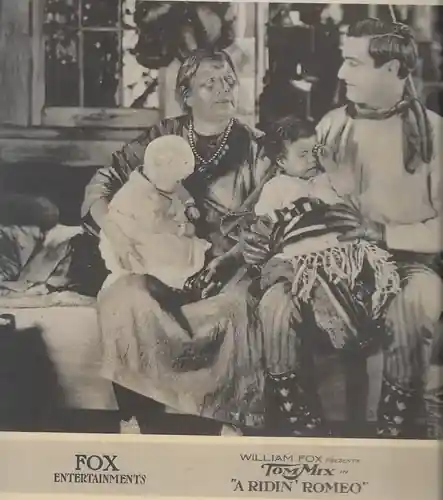
While Mix undoubtedly dominates the screen, the supporting cast plays crucial roles in propelling the narrative. Minnie Devereaux as Mabel brings the necessary romantic interest, her character often caught between her father's dictates and her heart's desires. Pat Chrisman, as King Brentwood, embodies the stubborn, prejudiced patriarch with convincing gravitas, his eventual softening a testament to the narrative's redemptive arc. Eugenie Forde, as the influential widow, delivers a performance that transforms her from an initial antagonist (from Brentwood's perspective) into a surprising deus ex machina, her pragmatism ultimately saving the day. The interplay between these characters, though often exaggerated for dramatic effect, provides the emotional scaffolding for the film's many twists and turns.
Thematic elements abound in 'A Ridin' Romeo'. Love, in its purest, most defiant form, is a central pillar, as Jim and Mabel strive to overcome societal and parental barriers. The concept of justice, both legal and moral, is constantly explored, often highlighting the disparity between the two. Brentwood's attempts to manipulate the law for his personal gain are contrasted with Jim's instinctive acts of righteousness. There's also a subtle critique of perceived authority and the ease with which appearances can deceive, particularly evident in Jim's arrest for abduction. The film, like many silent Westerns, champions the individual's spirit against the constraints of a developing, often imperfect, society.
George Marshall's direction, while perhaps not as celebrated as some of his contemporaries, demonstrates a clear understanding of the silent film medium. He orchestrates the action sequences with a kinetic energy that keeps the audience engaged, particularly during the stagecoach rescue and subsequent chase scenes. The pacing, though occasionally deliberate, builds tension effectively, punctuated by moments of lightheartedness. The visual storytelling, crucial in an era devoid of spoken dialogue, relies heavily on expressive performances and well-composed shots. Intertitles are used judiciously, providing necessary exposition without bogging down the narrative flow. The screenplay, a collaborative effort, is undeniably ambitious in its complexity. It juggles multiple plotlines – the breach of promise, the forbidden romance, the staged ambush, and the baby abduction – often weaving them together in surprisingly cohesive ways, even if some elements strain credulity. This kind of multi-layered narrative was not uncommon in silent films, which often had to rely on intricate plots to maintain viewer interest, much like some theatrical melodramas. One might compare the narrative complexity, though not necessarily thematic depth, to films like Alias Jimmy Valentine, which also relied on a series of elaborate setups and reveals to drive its plot.
The contributions of Mix himself to the screenplay are significant. As a seasoned cowboy and performer, he brought an authentic understanding of the Western milieu and the mechanics of action. His input likely shaped the realism of the stunts and the dynamic portrayal of his character. Ralph Spence, known for his comedic writing, undoubtedly injected much of the film's lighter moments and farcical elements, particularly around the 'abduction' of the baby. This blend of action, drama, and comedy was a hallmark of Mix's films, ensuring broad appeal.
'A Ridin' Romeo' stands as a vibrant artifact of the silent film era, a testament to the power of pure visual storytelling. It encapsulates the spirit of the early Western, a genre that was not just about cowboys and indians, but about the forging of identity, the struggle between wilderness and civilization, and the eternal quest for justice and love. Tom Mix, with his unparalleled charisma and daring, was the perfect avatar for this burgeoning mythology. His films were more than mere entertainment; they were cultural touchstones, shaping the perception of the American West for millions around the globe. The influence of Mix, and films like 'A Ridin' Romeo', can be seen reverberating through the decades, inspiring countless future Westerns and action heroes.
While modern audiences might find some of the narrative conventions quaint or the pacing occasionally deliberate, the film's energy, its commitment to thrilling action, and Mix's magnetic performance remain undimmed. It reminds us that even in an era before synchronized sound, cinema possessed an incredible capacity to transport, to excite, and to tell compelling stories. The visual language of silent film, with its reliance on gesture, expression, and dynamic cinematography, forced filmmakers to be incredibly inventive. This inventiveness is on full display in 'A Ridin' Romeo', from the carefully choreographed fight scenes to the expansive landscape shots that lend a sense of grandeur to the proceedings. The film, like its protagonist, embodies a certain rugged charm and an unwavering spirit, making it a valuable piece of cinematic history and a delightful watch for enthusiasts of classic Westerns and the silent era.
In a world where narrative complexity is often equated with moral ambiguity, 'A Ridin' Romeo' offers a refreshingly straightforward, if circuitous, journey to a happy ending. It celebrates the virtues of courage, perseverance, and genuine affection, even when faced with the most formidable of obstacles. It's a film that, despite its age, continues to charm and entertain, proving that a well-told story, especially one featuring a charismatic cowboy and his trusty steed, truly is timeless. For those seeking to understand the foundational elements of the Western genre, or simply to enjoy a rollicking good adventure, 'A Ridin' Romeo' remains an essential viewing experience, a testament to the enduring magic of the silent screen and the inimitable legacy of Tom Mix.
IMDb —
1926
Community
Log in to comment.