DbcultAccessing Vault...
Cult Review
Senior Film Conservator
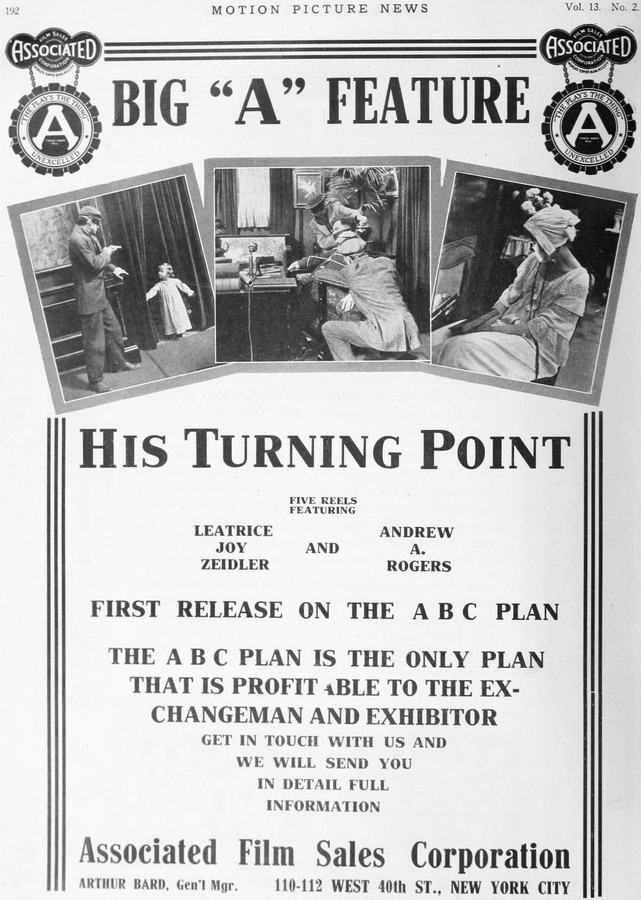
A chandeliered salon, thick with cigar smoke and the brittle laughter of the moneyed, becomes the crucible for a casual vow that will later ricochet through bloodlines.
Mr. Carey—rail-road baron, collector of porcelain reputations—swears he would annul any marriage tainted by the merest whiff of larceny in the bride’s family tree. The next night, while Carey is off counting rolling-stock dividends, memory slips its leash. His wife, once the pampered daughter of a merchant prince, reclines in a cone of lamplight and rewinds the reel of her undoing: a father’s ledger inked crimson, a brother’s descent from velveteen heir to window-smashing prowler, her own frantic leap from gentility into the arms of a suitor who knows nothing of the stain she carries.
Reverie snaps when a masked silhouette jimmies the French doors, hunting documents that could sink Carey’s empire.
The intruder is the brother she has buried beneath years of embroidery and small-talk; the pistol he levels wavers when a sleepy child toddles in, thumb in mouth, trust incandescent. In the breath it takes for a toddler to discover the trigger, destinies pivot: the thief pivots into protector, the mother into conspirator, the husband into unwitting marksman who fires through glass and hears his own verdict shatter.
Director Edward José—Uruguay-born, Paris-trained, Hollywood-bruised—approaches this one-reel morality play like a jeweler turning a flawed opal: every flicker of light catches a new fracture. The film’s tenement flashbacks, rendered in bruised sepia, feel lifted from Jacob Riis stills; the Carey mansion, all Corinthian columns and tiger-skin rugs, gleams with the icy phosphorescence of newly minted wealth. When the narrative loops back on itself—memory inside burglary inside confession—the structure becomes a Möbius strip of guilt, a trick Hitchcock would spend decades perfecting.
Notice how the camera never blinks during the child-and-gun tableau. In 1915 most filmmakers would cut to a horrified adult reaction shot; José holds the frame, forcing us to calculate the microseconds between innocence and annihilation. That suspense is not melodrama—it is moral physics.
At nineteen, Leatrice Joy already possessed the profile of a Gibson girl who has read too much Schopenhauer. Watch her eyes in the reverie sequence: they do not merely well up—they retract, as though the retina itself is recoiling from the image of a brother being levered into a police wagon. She performs the film’s most impossible volte-face—shifting from terrified accomplice to commanding strategist—without a single intertitle to telegraph the switch. When she hisses “Go—never come back,” the line arrives on a title card, yet her mouth in the preceding close-up seems still to be shaping the sentence, ghosting syllables into the gutter between frames.
As the brother, Andrew A. Rogers carries the languid gait of someone who once ordered champagne by the case and now measures whisky by the finger he can still afford. His burglary is choreographed like a ballet: gloved fingers testing the sash, toe balanced on the window ledge, body folding through moonlight. When the mask comes off, the reveal is less plot twist than ontological catastrophe—he is not merely a criminal; he is the living indictment of the gilded class that spawned him. Rogers lets us glimpse the moment shame calcifies into resolve: the slight straightening of the spine when he decides to race the runaway buggy, a gesture that says “If I cannot be legitimate, I will at least be consequential.”
Micheline Ragep, barely four during filming, delivers the silent era’s most unnerving performance simply by treating a revolver like a teething ring. The scene is blocked so that the gun’s muzzle points straight at the lens—an audacious breach of the fourth wall that turns every spectator into an accessory. When her tiny thumb finds the trigger, the film’s entire moral universe teeters. José withholds a cutaway to the mother; instead we get a slow iris-in on the barrel, a black void that swallows the screen. In that aperture lies every parental dread condensed to a pinprick.
Place His Turning Point beside its blood cousins and watch the chromosomes rearrange:
Though shot in monochrome, the film’s tinting strategy functions like a synesthetic score. Interiors flicker amber—empire at dusk. Exterior night scenes are drenched in nocturnal blue that borders on ultraviolet, the spectrum of police lanterns and bruised conscience. The final gangplank farewell is bathed in a sickly yellow, the shade of old newspaper clippings announcing bankruptcies. These hues are not decorative; they are barometric readings of a universe whose atmosphere is composed entirely of culpability.
What makes His Turning Point radical for 1915 is its refusal of the era’s favorite escape hatch—“Forgive and forget.” The brother’s exile is not redemption; it is quarantine. The marriage survives not because truth sets it free, but because silence keeps it afloat. Carey’s parting shot—“Never return, never write”—is the silent ancestor of the witness-protection program, a legalistic absolution that purchases domestic peace with geographical amputation.
Viewed today, the film plays less like antique melodrama than like a prophecy of Instagram façades and generational trauma threads on Reddit. Its twenty-four-minute runtime compresses the entire arc of American social mobility—from Gilded Age opulence through Progressive-Era precarity into the modern surveillance state where one leaked bloodline could sink an empire built on quarterly reports.
Restoration prints occasionally screen at MoMA and Pordenone; if you catch one, sit close enough to see the grain swim like iron filings aligning to a magnetic field of secrets. When the lights rise you will find yourself checking the pedigree of your own respectability, counting the windows you’ve left unlatched against the past.
—a film that ends not with a kiss but with the slow dissolve of a ship’s smokestack on the horizon, a reminder that every family portrait has a negative space where the black sheep was airbrushed out.
IMDb —
1936
Community
Log in to comment.