DbcultAccessing Vault...
Cult Review
Senior Film Conservator
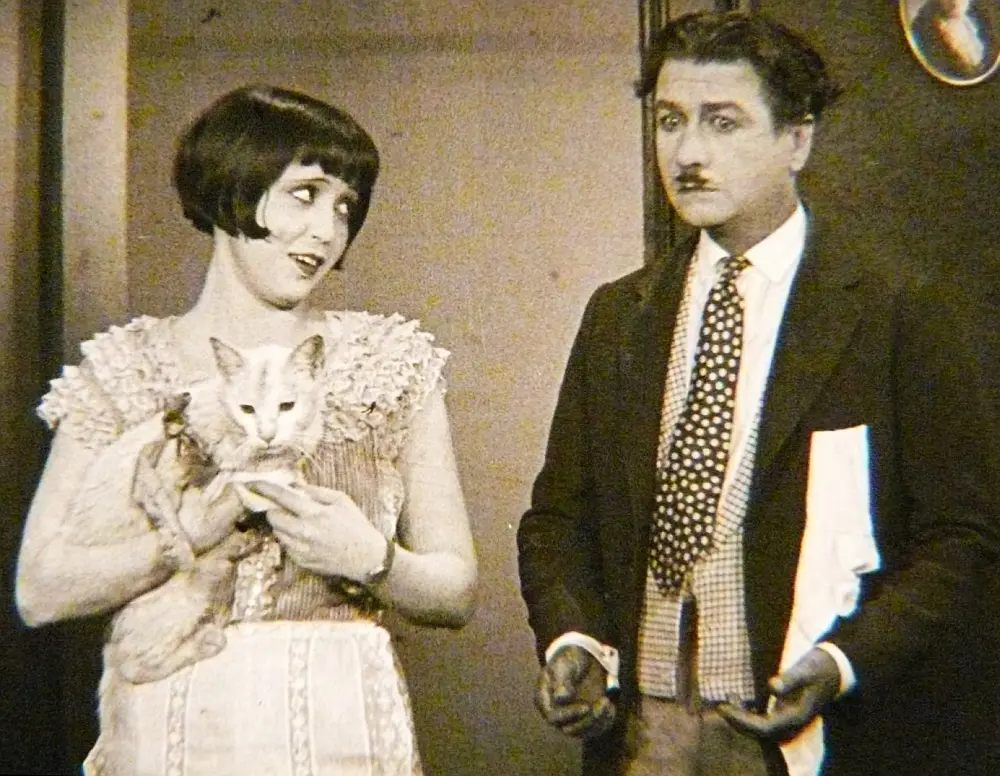
Is 'The Cat's Whiskers' a film that still holds its charm today? Short answer: Yes, but with significant caveats that demand a particular kind of viewer. This charming, if somewhat dated, silent-era comedy is an absolute must-watch for aficionados of early cinema and those seeking a gentle, whimsical escape, but it will likely test the patience of anyone accustomed to modern narrative pacing and production values.
It's a curious little film, one that whispers of a bygone era with a unique narrative conceit. For those willing to adjust their expectations and appreciate film history, there's a quiet delight to be found. However, if you're looking for fast-paced action or complex psychological drama, this isn't it. It's a film designed for a different rhythm, a different kind of engagement.
"The Cat's Whiskers" arrives as a delightful, if often overlooked, artifact from the golden age of silent cinema. Directed by an uncredited hand, but brought to life by the pen of Richard Smith, this film is a testament to the ingenuity and charm that characterized early storytelling. It's a whimsical tale that leans into the period's fascination with quirky characters and lighthearted romance, all filtered through the unexpected lens of a highly intelligent feline.
The film centers on Penelope Plum, portrayed with an endearing blend of vulnerability and nascent strength by Thelma Hill. Her inheritance of a crumbling estate, complete with a mysterious cat named Whiskers, sets the stage for a classic narrative of discovery and burgeoning affection. It’s a premise that, while simple, allows for a surprising amount of character development and comedic interplay.
Martin Kinney, as the initially duplicitous but ultimately charming Arthur Finch, provides the perfect foil. His portrayal balances the roguish intent with a growing sincerity, making his character arc genuinely engaging. Neely Edwards, in a supporting role that often provides much of the film's physical comedy, adds another layer of delightful eccentricity to the proceedings.
Let's get straight to the heart of it. Does this film earn its place in the pantheon of watchable classics?
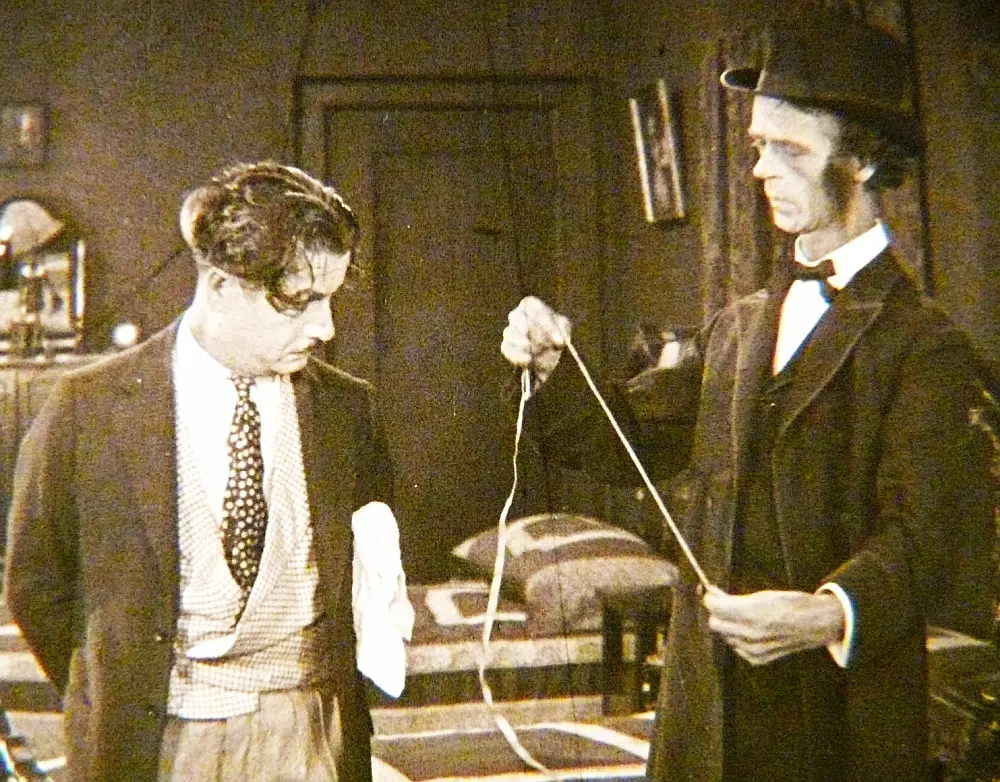
This film works because of its undeniable charm, the surprisingly effective central performances, and its unique, whimsical premise that allows for gentle humor and genuine warmth. It's a film that knows exactly what it wants to be: a pleasant diversion.
This film fails because its pacing can feel glacially slow to modern audiences, and some of its comedic beats, while charming for the era, don't always land with the same impact today. The plot, while unique, sometimes feels stretched thin.
You should watch it if you have an appreciation for silent films, enjoy character-driven light comedies, or are simply curious about the cinematic storytelling of the early 20th century. It’s a perfect film for a quiet Sunday afternoon, perhaps with a literal cat on your lap.
The true triumph of "The Cat's Whiskers" lies in its ability to tell a story through gesture, expression, and the subtle interplay of its cast. Silent films demand a particular kind of acting, one that can convey complex emotions without a single spoken word. Here, the cast largely rises to the occasion, particularly Thelma Hill.
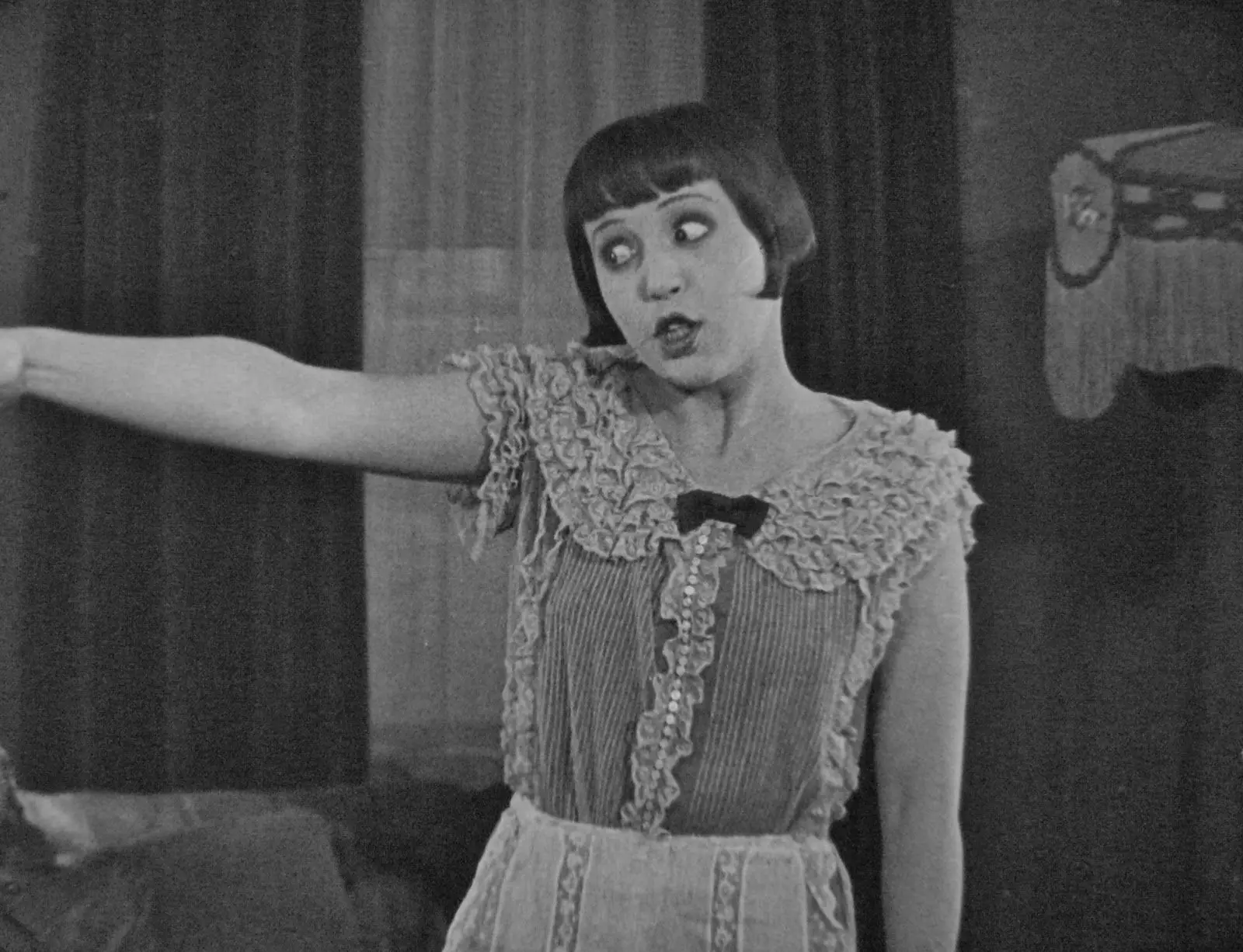
Hill’s Penelope Plum is a revelation. She navigates the emotional landscape of her character with a grace that feels both natural and period-appropriate. Observe her expressions during the scene where she first discovers the dilapidated state of her inheritance; the subtle shift from hopeful anticipation to weary resignation is palpable, a masterclass in silent emoting. Her interaction with the titular Whiskers also feels remarkably genuine, fostering a believable bond that drives much of the narrative.
Martin Kinney, as Arthur Finch, brings a delightful physicality to his role. His initial entrance, a slick, almost predatory swagger, slowly gives way to a more earnest demeanor as Penelope and Whiskers begin to thaw his cynical exterior. The moment he attempts to covertly search for clues while pretending to admire a dusty antique is a highlight, a perfectly executed piece of physical comedy that speaks volumes about his character’s initial intentions. His performance prevents Arthur from becoming a one-note villain, instead crafting a flawed but ultimately redeemable romantic lead.
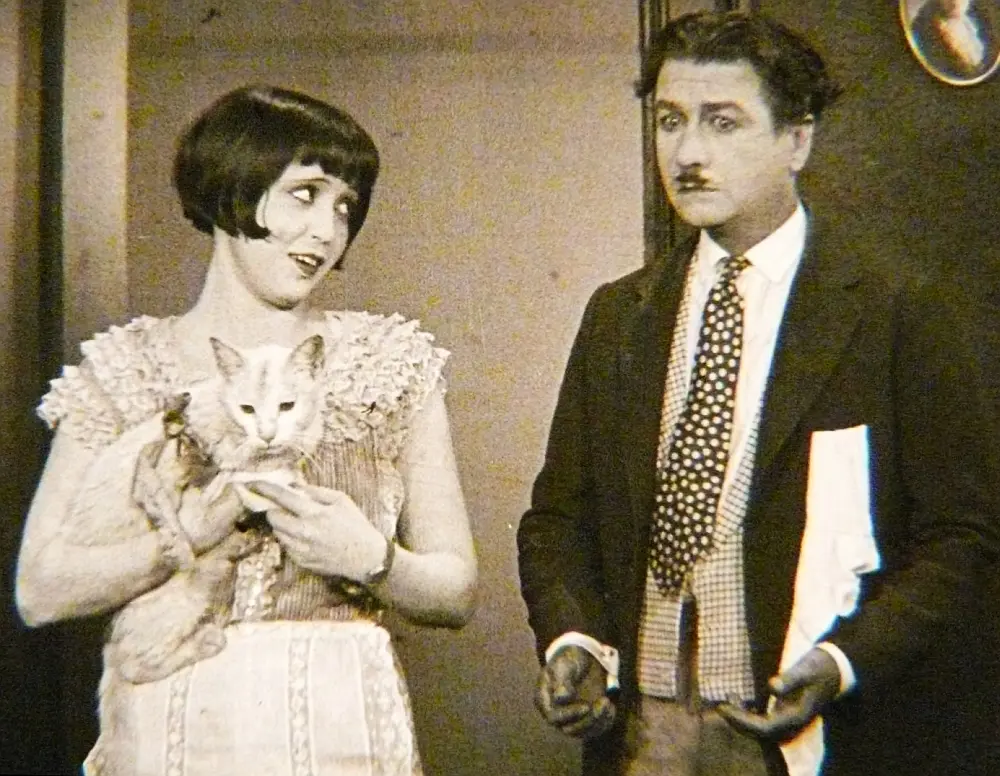
Neely Edwards, though in a smaller role, provides much of the film's broader comedic strokes. His character, a bumbling handyman or rival suitor, offers moments of pure slapstick joy that break up the more dramatic tension. While perhaps less nuanced than Hill or Kinney, Edwards's presence is a welcome injection of energy, particularly in the film's more chaotic sequences, such as the infamous 'kitchen chase' scene where Whiskers leads him on a merry, destructive dance.
The direction, though uncredited, demonstrates a clear understanding of silent film aesthetics. The use of intertitles is judicious, never overwhelming the visual storytelling. There’s a commendable focus on blocking and framing that allows the actors’ expressions and actions to take center stage. For instance, the recurring close-ups on Whiskers's seemingly knowing gaze are surprisingly effective, lending the cat an almost human-like intelligence that is crucial to the film's fantastical element.
The cinematography, while not groundbreaking, is competent and often quite beautiful. The film utilizes natural light effectively, particularly in the outdoor scenes showcasing the estate's overgrown gardens. There's a particular shot of Penelope silhouetted against a setting sun, gazing out at her new, uncertain future, that is quite striking. It's a reminder that even in an era of technical limitations, filmmakers could achieve moments of genuine visual poetry. The camera work, while static by today's standards, allows the viewer to absorb the details of the sets and costumes, immersing them in the period.
At its heart, "The Cat's Whiskers" is a romantic comedy with a strong undercurrent of whimsical mystery. The tone is consistently light and charming, even when dealing with Penelope's financial woes or Arthur's initial duplicity. There's a gentle humor that pervades the film, often stemming from Whiskers's mischievous yet purposeful actions. This levity is a key factor in its enduring appeal; it never takes itself too seriously, allowing the audience to simply enjoy the ride.
One of the most surprising observations about this film is its subtle exploration of the nature of intuition versus intellect. Whiskers, the cat, often 'knows' things or guides the characters in ways that defy rational explanation, forcing the more intellectual Arthur to confront the limits of his own reasoning. This theme, while lightly touched upon, adds a layer of depth that elevates the film beyond a mere animal-centric caper. It posits that sometimes, the most profound truths are revealed not through logic, but through instinct and connection.
The film also subtly critiques societal expectations and appearances. Arthur initially judges Penelope based on her circumstances, and his own motivations are driven by materialistic desires. Whiskers, however, seems to see beyond these superficialities, guiding the characters towards genuine connection. This makes the cat more than just a plot device; it becomes a moral compass, a silent arbiter of character.
Another debatable opinion: the film's greatest strength is also its biggest weakness. Its unwavering commitment to its whimsical, almost fairytale-like tone, while endearing, can occasionally feel a little too saccharine. There are moments where a touch more dramatic tension or a sharper edge could have elevated the stakes, making the eventual resolution feel even more earned. However, one could argue that this consistent gentleness is precisely its charm, a deliberate choice to offer pure escapism.
"The Cat's Whiskers" comfortably sits alongside other charming, character-driven silent comedies of its era. It shares a certain DNA with films like Before Breakfast in its focus on domestic comedy and the interplay between strong personalities, albeit with a more fantastical element. One might also draw parallels to the lighter moments of romantic dramas such as Reputation, in its exploration of how external circumstances shape internal character, though "Whiskers" maintains a far more optimistic outlook.
Its legacy is perhaps not as grand as some of its contemporaries, but it remains a delightful example of how simple premises, strong performances, and clever direction could create engaging cinema without the need for grand spectacles. It's a quiet film that rewards patient viewing and an appreciation for the subtle artistry of the silent screen.
"The Cat's Whiskers" is not a film that will shatter your perceptions of cinema, nor will it leave you breathless with its narrative twists. What it offers, instead, is a quiet, unassuming pleasure. It's a film that purrs rather than roars, a gentle reminder of the simple joys that early cinema could deliver. For those willing to settle into its unhurried pace and appreciate the artistry of its performers, it is a deeply satisfying experience.
It stands as a testament to the enduring power of charm and character, proving that sometimes, the most effective storytelling doesn't need grand pronouncements or spectacular effects, but merely a compelling premise and a cast capable of conveying a world of emotion with a glance. It’s a delightful oddity, well worth seeking out if you have a soft spot for the silent era and a love for the unexpected. Don't expect a modern blockbuster; expect a warm, comforting embrace from a bygone cinematic age. You might just find yourself utterly charmed by its peculiar, undeniable magic.
IMDb —
1919
Community
Log in to comment.