DbcultAccessing Vault...
Cult Review
Senior Film Conservator
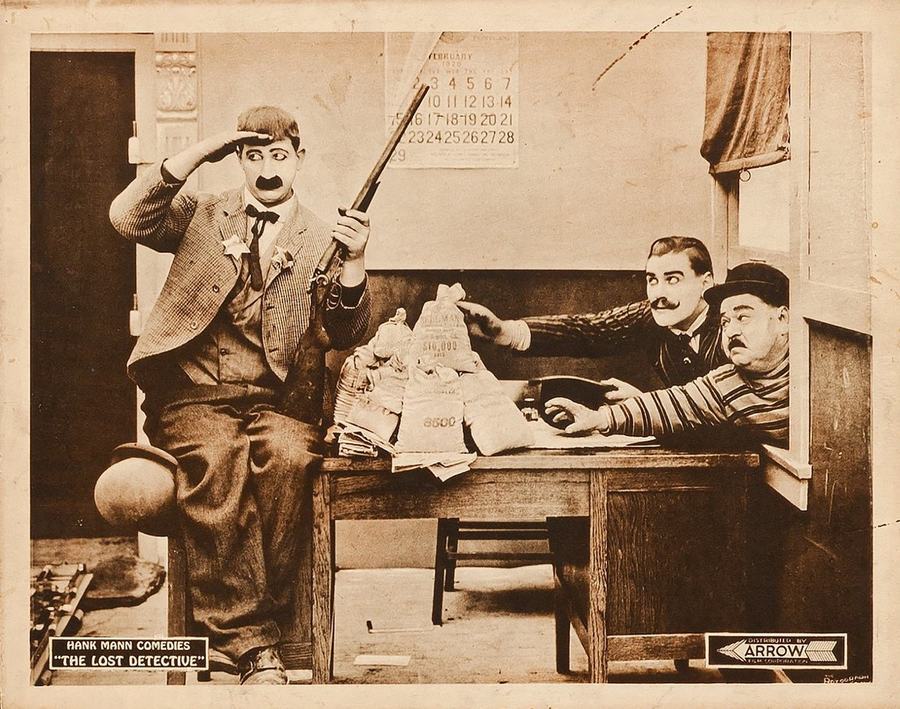
The Lost Detective never deigns to name its metropolis; it simply exhales soot and inhales pedestrians. Cinematographer Hal Mohr (uncredited, but cinephiles will recognize his chiaroscuro fingerprints from The City) renders every cobblestone as a vertebra in some colossal, slumbering beast. Streetlamps bloom like phosphorus fungi, and the sewer grates sigh steam that smells, almost subliminally, of iodine and violets. In this context, Hank Mann’s detective is less a protagonist than a slow-healing wound, limping through arteries of tungsten and shadow.
Compare this to the village hysteria in El último malón, where landscape becomes a moral tribunal; here, morality has already been cannibalized. The detective’s moral compass spins, clicks, and finally shatters—its needle used by the killer to pick a lock.
Silent-era comedians often weaponized pathos, but Mann weaponizes amnesia. His brows are black quotation marks bracketing nothing, and when he smiles—only once—it looks like a crack in a porcelain plate. The film’s genius lies in refusing him close-ups until the halfway mark; when the lens finally lunges toward his iris, we discover the camera itself reflected there, a voyeur caught peeping. The moment lasts eight frames, yet it detonates the fourth wall so quietly you’ll miss the shrapnel.
Film historians lazily label Mann a “second-tier Keaton,” but Keaton’s stone-face hinged on self-possession; Mann’s is the vacancy of a man who has misplaced his soul and keeps searching because the act itself is the only habit left intact.
Editors in 1929 were still shackled to the tyranny of continuity, yet Ann McKnight (allegedly poached from Soviet montage circles) slices time like taffy. Watch the sequence where the detective interrogates a blind newsboy: every third frame is excised, causing the kid’s cigarette to elongate into a molten exclamation point while his chalkboard scrawls rearrange themselves into a confession that hasn’t happened yet. The effect predates Last Year at Marienbad by three decades, but without the velvet pretension; it’s gutter-grade surrealism, bruised and nicotine-stained.
The missing chorus girl, billed only as “Her,” is glimpsed in fragments: a garter snapping like a broken violin string, a sequin that flickers Morse under a streetlamp, a cigarette burn on a lobby card. She is never whole, yet her absence weighs more than any presence onscreen. In a subversive twist, every male character eventually dons a piece of her wardrobe— a feather boa, a diamanté buckle—suggesting that identity in this universe is not binary but a residue you try on until it poisons you.
Contrast this with the femme fatale solidity in Her Shattered Idol; there, the woman is an icon to be smashed. Here, she is vapor you inhale and spend the rest of the film coughing up.
Though technically silent, the picture pulsates with sonic ghosts. Intertitles appear scrawled on unspeakable surfaces—fingernails, tram tickets, the inside of a morgue drawer—each in a different typographic voice. One reads simply “Listen,” white letters quivering against pure black, held for 47 seconds while the projector’s mechanical whir becomes, by hallucinatory suggestion, the buzz of flies laying eggs in your inner ear. The audience supplies the scream track themselves.
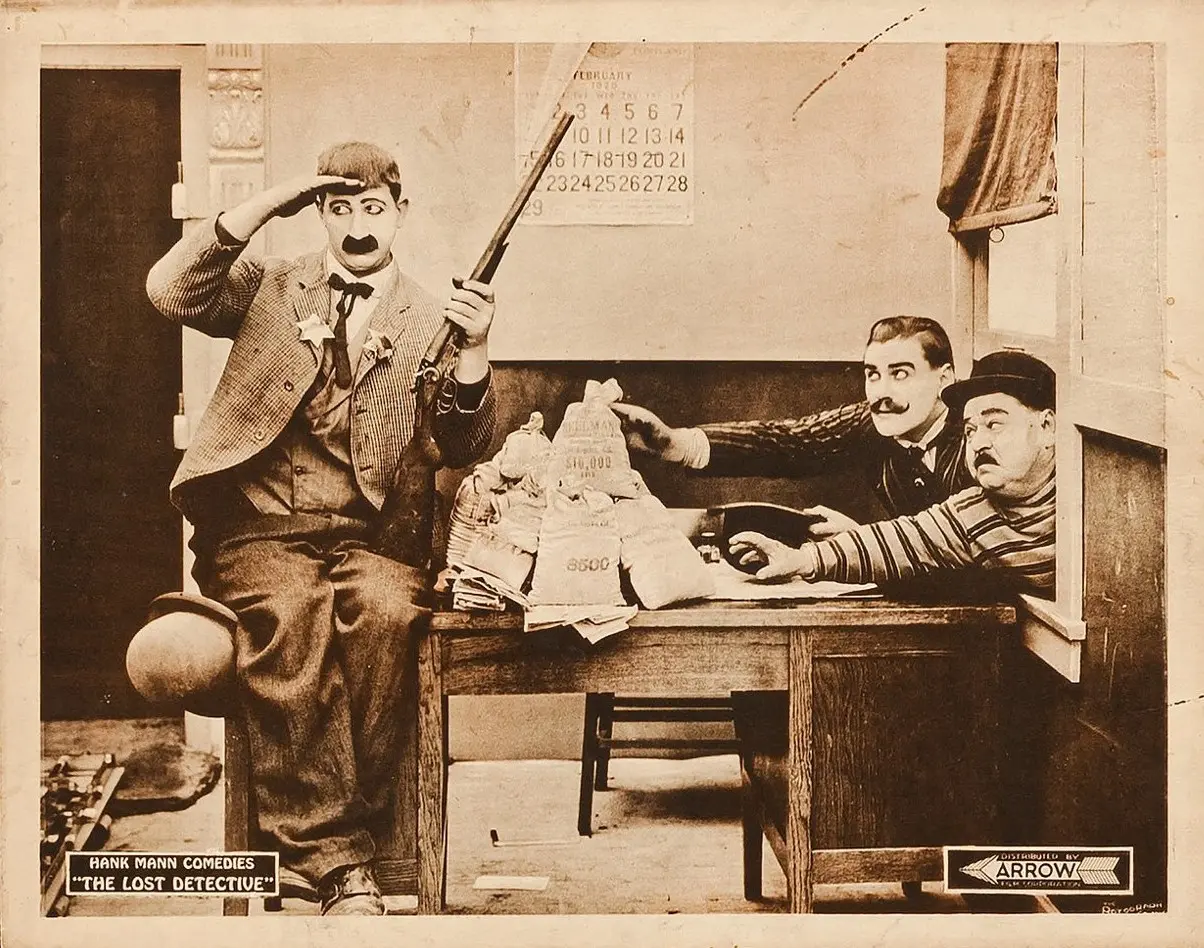
In a forgotten chapel turned into a dime-a-dance hall, the detective finds the corpse of a priest wrapped in filmstrip instead of vestments. The celluloid unspools to reveal frames from an early Passion play; the crucifixion imagery loops until the sprocket holes resemble stigmata. Mann’s character pockets a single frame—Christ’s eye in extreme close-up—later using it as a monocle to interrogate a street preacher. The sacred and profane copulate so feverishly that blasphemy itself becomes a confessional.
Critics quick to pigeonhole the film as “Caligari-lite” overlook its sardonic punchlines. Where Dr. Caligari traps its twist inside a madman’s frame, The Lost Detective refuses the comfort of insanity; the world itself is the asylum, and the exit door leads back to the ward. Likewise, The Destroying Angel externalizes guilt through Mormon paranoia, but here guilt is a currency spent nightly by faceless bankers who tally sins on abacuses of finger bones.
Meanwhile, the slapstick DNA Mann carried from Call for Mr. Caveman mutates into something far nastier: pratfalls that end in compound fractures, custard pies laced with ground glass. The laugh dies in your throat, then resurrects as hiccupping sobs.
Recent 4K restorations reveal that entire scenes were painted over with black enamel during the Hays Code panic of ’34. Infrared scans show a subplot involving a drag detective (played by Mann himself) tailing the primary detective, creating a Möbius strip of pursuit. The censorship office deemed the sequence “an incitement to sexual bewilderment,” and so it was obliterated. Yet the ghost double lingers; if you brighten the shadows during the alley confrontation, you can glimpse Mann’s alter-ego smirking behind a fire escape like a negative that refuses to stay undeveloped.
Streaming-era viewers, numbed by algorithmic plots, will find themselves rewinding repeatedly, convinced they’ve missed a clue. They haven’t; the film is designed to make missing the point the point. In an age where every frame is screenshot-able, The Lost Detective weaponizes illegibility. Its most salient prophecy lies not in narrative but in texture: the way nitrate decay resembles digital glitch, how compression artifacts echo chemical stains. The future of cinema is already rotting in its past.
Is it a detective story? A metaphysical prank? A suicide note to the medium itself? Yes, and none. To watch it is to be pick-pocketed of certainties, left standing in the rain with your pocket linings turned inside out, wondering if the rain is falling upward. Yet the experience is oddly euphoric—like finally remembering a dream you’ve been having since childhood, only to realize the dream was remembering you.
Seek it out in any form you can—bootlegged VHS, tattered 16mm, or the new 2K restoration that premiered at Bologna’s Il Cinema Ritrovato. Just don’t expect to leave the theater with your sense of time, self, or narrative intact. The Lost Detective doesn’t conclude; it vanishes, leaving you holding a matchbox that rattles with the teeth you lost while grinning.
“The city is a crime scene with no perimeter tape; to enter the frame is to sign your own evidence tag.” — Program note, 1929 Berlin premiere
Re-watch tip: Screen it back-to-back with Dodging a Million at 3 a.m., volume muted, replaced by Coltrane’s Interstellar Space. The sync-ups will make you believe jazz was invented for a movie that couldn’t afford sound.
IMDb 7
1925
Community
Log in to comment.