DbcultAccessing Vault...
6.6/10
Senior Film Conservator
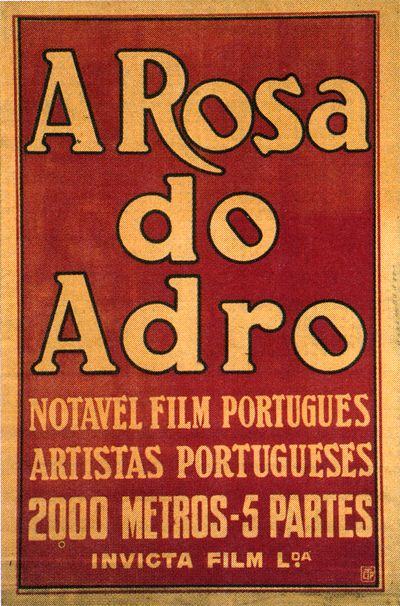
A definitive 6.6/10 rating for a film that redefined the boundaries of cult cinema. A Rosa do Adro remains a cornerstone of transgressive art.
The annals of Portuguese cinema hold many treasures, but few resonate with the quiet, persistent ache of forbidden love quite like A Rosa do Adro. This cinematic endeavor, a poignant exploration of human emotion set against the rustic backdrop of a Minho village, transcends mere storytelling to become a meditation on societal strictures, personal desire, and the enduring power of a love deemed inappropriate. Penned by the insightful minds of Henrique Alegria, George Pallu, and Manuel Maria Rodrigues, the film crafts a narrative that is both deeply specific to its cultural milieu and universally relatable in its depiction of hearts yearning for connection despite insurmountable obstacles.
At its core, A Rosa do Adro unravels the delicate, yet ultimately doomed, romance between Rosa and Fernando. Rosa, portrayed with a compelling blend of innocence and quiet strength by a collective of actresses including Maria Cristina, Maria de Oliveira, Etelvina Serra, and Georgina Gonçalves, embodies the quintessential 'minhota' beauty – a natural elegance rooted in the land and its traditions. She is a woman of her village, her life seemingly predestined by its rhythms and expectations. Fernando, on the other hand, brought to life by the nuanced performances of Erico Braga, Manuel Dos Santos Oliveira, Joaquina Gonçalves, Duarte Silva, and Carlos Santos, represents a different world entirely. A student of medicine in the bustling city of Porto, he is imbued with a certain intellectual restlessness, a volubility that sets him apart from the more grounded inhabitants of the rural community. His presence during holidays acts as a disruptive, yet undeniably alluring, force in Rosa’s carefully ordered existence.
The narrative arc is a familiar one, yet rendered with such specificity and emotional depth that it feels fresh and immediate. Their love blossoms under the watchful, often disapproving, eyes of the village elders and the prevailing societal norms. It is a love that dares to transgress, to challenge the unspoken rules of class, education, and social standing. The beauty of A Rosa do Adro lies in its meticulous portrayal of this transgression, not as an act of rebellion for rebellion’s sake, but as an organic, inevitable consequence of two souls finding an undeniable resonance with one another. The film doesn't preach; it observes, allowing the audience to witness the gradual erosion of boundaries and the burgeoning of an affection that feels both exhilarating and terrifyingly vulnerable.
One cannot discuss A Rosa do Adro without acknowledging the profound impact of its setting. The Minho region, with its verdant landscapes, its ancient stone houses, and its deeply ingrained customs, is not merely a backdrop; it is an active participant in the drama. The village itself functions as a character, its collective consciousness shaping the destinies of its inhabitants. The film masterfully captures the essence of this rural existence, where gossip travels faster than any messenger, and reputation is a currency more valuable than gold. This stark contrast between the vibrant, modernizing world that Fernando represents and the steadfast, traditional world of Rosa's village is a central thematic pillar. It’s a clash that reverberates through their every interaction, lending a palpable tension to their stolen glances and whispered promises.
The performances, particularly considering the ensemble nature of the cast for both lead roles, are remarkably cohesive. Each actor contributes to a layered portrayal of Rosa and Fernando, ensuring that the characters feel consistent and deeply human despite the shifts. Maria Cristina, for instance, might imbue Rosa with a particular wistfulness, while Etelvina Serra might emphasize her quiet defiance. Similarly, Erico Braga’s Fernando might showcase a youthful impetuousness, contrasted with Manuel Dos Santos Oliveira’s more contemplative rendition. This collective interpretation adds a fascinating dimension, suggesting that the characters themselves are archetypes, embodying a larger cultural struggle rather than merely individual plights. Their interactions are imbued with a delicate chemistry, a sense of longing that is almost palpable, even in the most restrained moments.
The directorial choices made by Henrique Alegria and George Pallu, alongside the foundational script, are crucial in establishing the film’s melancholic yet hopeful tone. The pacing allows for a gradual unfolding of the emotional landscape, permitting the audience to fully immerse themselves in the characters’ internal struggles. The cinematography, even in its historical context, manages to convey the beauty of the Minho region while simultaneously highlighting the confining aspects of village life. The camera often lingers on faces, capturing the subtle shifts in emotion, the unspoken desires, and the burdens carried by these individuals. This visual storytelling amplifies the dramatic tension, making every stolen moment between Rosa and Fernando feel precious and precarious.
Comparing A Rosa do Adro to other cinematic explorations of forbidden love reveals its unique strengths. While films like The Lily and the Rose might explore similar themes of ill-fated romance and societal barriers, A Rosa do Adro distinguishes itself through its specific cultural lens and its nuanced portrayal of rural Portuguese life. It’s less about grand, sweeping gestures and more about the quiet, internal battles fought within the confines of a close-knit community. The film doesn't rely on overt melodrama, but rather on the cumulative weight of societal expectation and personal sacrifice. It presents a love that is not only forbidden by external forces but also, to some extent, by the characters’ own ingrained sense of duty and place.
The contrast between Fernando's 'voluble', city-educated nature and Rosa's traditional 'minhota' identity also brings to mind the clash of worlds seen in films like Modern Love, which often explores the complexities arising from differing social strata or lifestyles. However, A Rosa do Adro grounds this conflict not in urban sophistication, but in the very soil of a specific region, making the stakes feel more personal and deeply rooted. Fernando’s education in Porto isn't just a biographical detail; it’s a symbol of the broader world encroaching upon the insular one, creating an almost insurmountable chasm between him and Rosa, despite their profound emotional connection.
The narrative’s strength also lies in its exploration of the roles of supporting characters, who, though not always foregrounded, contribute significantly to the oppressive atmosphere. The village elders, the gossiping neighbors, and even the natural elements of the landscape subtly reinforce the idea that this love is an anomaly, a deviation from the established order. This collective presence acts as a constant, almost unseen, antagonist, making the lovers' journey all the more arduous. Their struggle is not against a single villain, but against the very fabric of their world.
The enduring legacy of A Rosa do Adro lies in its ability to transcend its immediate setting and time. It speaks to universal truths about human desire, the pain of unfulfilled love, and the often-crushing weight of societal expectations. It's a film that asks profound questions about choice, fate, and the true cost of happiness when it comes at the expense of tradition. The film doesn't offer easy answers, nor does it shy away from the inherent sorrow of its premise. Instead, it invites reflection, prompting viewers to consider the various forces that shape our lives and the courage it takes to pursue one's heart, even when the odds are stacked against it.
In an era where rapid social change and globalization often blur cultural distinctions, A Rosa do Adro serves as a powerful reminder of the richness and complexity of regional identities. It celebrates the unique charm of the Minho while simultaneously critiquing its more rigid aspects. The film’s continued relevance stems from its timeless themes: the tension between individual longing and communal duty, the allure of the unknown versus the comfort of the familiar, and the eternal struggle to define one's own path in a world that often seeks to define it for us. It’s a testament to the power of storytelling that a film from this period can still evoke such deep empathy and understanding in contemporary audiences.
The writers, Henrique Alegria, George Pallu, and Manuel Maria Rodrigues, deserve immense credit for crafting a narrative that is both emotionally resonant and culturally significant. Their understanding of the human condition, coupled with their intimate knowledge of Portuguese society, allows A Rosa do Adro to rise above a simple romance to become a compelling social commentary. The dialogue, though perhaps presented in a style reflective of its era, carries the weight of genuine emotion and societal expectation, revealing character through subtle exchanges rather than overt declarations.
Ultimately, A Rosa do Adro is more than just a film; it is a cultural touchstone, a cinematic poem dedicated to the enduring spirit of love in the face of adversity. It is a work that invites repeated viewings, each time revealing new layers of meaning, new nuances in its intricate tapestry of human relationships and societal pressures. The quiet dignity of Rosa, the conflicted passion of Fernando, and the unyielding presence of the Minho village combine to create an unforgettable cinematic experience. It stands as a powerful testament to the fact that some stories, like some loves, are simply too profound to ever truly fade away, continuing to echo through the corridors of time with their poignant, resonant message.
The film’s exploration of the ‘voluble’ nature of Fernando, a young man exposed to the broader world, also draws interesting parallels with narratives where characters are caught between differing societal expectations or personal ambitions. For instance, the internal conflict of a character like Fernando, torn between the allure of a traditional love and the intellectual pull of his urban education, might find echoes in the dilemmas faced by protagonists in films like The Street of Seven Stars or The Grand Passion, where individual desires often clash with external circumstances or deep-seated societal roles. Fernando’s struggle is not just about love, but about identity and belonging, a common thread in many classic narratives.
Moreover, the inherent tragedy of a love that cannot flourish due to external constraints resonates with the powerful, often heartbreaking, narratives of films that depict characters trapped by circumstance, such as The Woman in the Web. While the web in ‘A Rosa do Adro’ is spun from social convention and expectation rather than direct villainy, its constricting power is no less potent. The film masterfully builds this sense of inevitable doom, making the audience acutely aware of the forces at play, even as they root for the impossible union of Rosa and Fernando. This subtle, yet pervasive, sense of impending sorrow elevates the romance beyond mere sentimentality, imbuing it with a profound, almost classical, tragic dimension.
In its entirety, A Rosa do Adro remains a compelling piece of cinematic history, a mirror reflecting the intricate dance between tradition and modernity, individual desire and communal expectation. It's a film that, despite its age, continues to speak volumes about the human heart, its capacity for love, and the often-painful realities that temper its purest expressions. A true gem of Portuguese cinema, it deserves to be rediscovered and celebrated for its timeless narrative and its deeply felt emotional core.

IMDb 5.5
1931
Community
Log in to comment.