DbcultAccessing Vault...
Cult Review
Senior Film Conservator
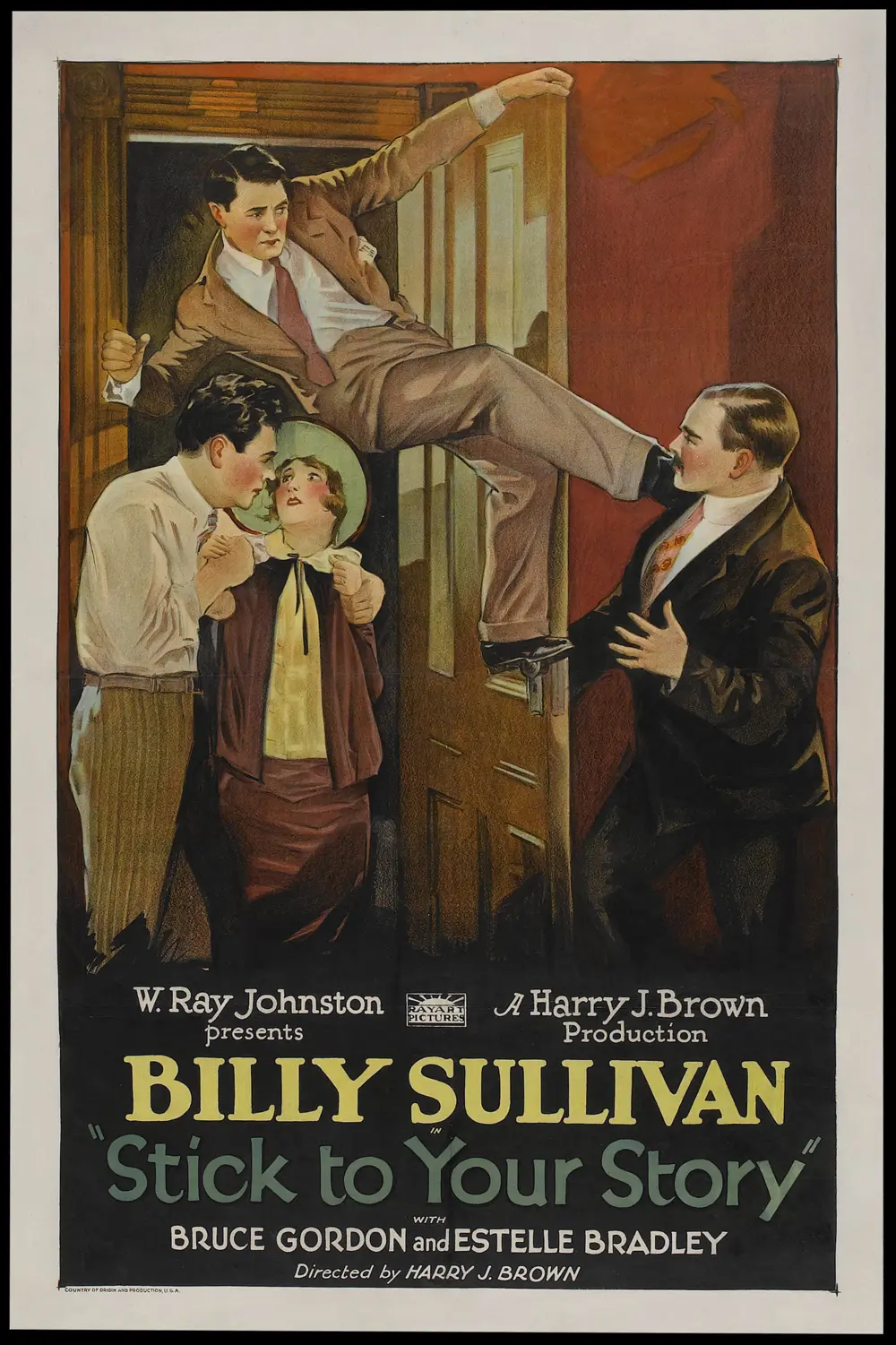
So, is 'Stick to Your Story' worth watching today? Short answer: yes, but with a significant caveat. This isn't a film for casual viewing; it's a historical artifact that still manages to resonate, albeit quietly, with its core thematic concerns.
This film, a product of its time, speaks to those with a keen interest in cinematic history, the evolution of narrative tension, and the early performances of actors like Melbourne MacDowell and Estelle Bradley. It's decidedly not for viewers seeking modern pacing, elaborate special effects, or a neatly resolved, unambiguous plot.
'Stick to Your Story,' penned by Ralph O. Murphy, Henry Roberts Symonds, and Arthur Q. Hagerman, is a fascinating artifact that, despite its age, grapples with themes eternally relevant. At its heart, it’s a study of truth, fabrication, and the sheer nerve required to maintain a meticulously constructed lie under duress. The film, while not a grand spectacle, zeroes in on the psychological toll of such a predicament, making it a surprisingly intimate experience for its era.
The strength of its premise lies in its simplicity: a character, cornered by circumstances, must adhere to a pre-determined narrative, no matter the internal conflict or external pressure. This allows for a deep dive into character psychology, a rare treat in early cinema often preoccupied with broader strokes.
This film works because it commits to its central premise with unwavering focus, leveraging strong character performances to convey internal struggle. It fails because its pacing can feel alien to modern audiences, demanding a specific kind of patience. You should watch it if you appreciate the foundational elements of dramatic storytelling and the historical context of early Hollywood.
The ensemble cast of 'Stick to Your Story' is tasked with selling a concept that relies heavily on subtle cues and internal turmoil. Melbourne MacDowell, likely the anchor of the piece, delivers a performance that feels both restrained and deeply felt. There’s a quiet desperation in his eyes, a flicker of panic that occasionally breaks through his character's carefully constructed composure. It’s in these moments, such as a prolonged close-up during a tense interrogation scene where the camera holds on his face, that MacDowell truly shines, conveying volumes without uttering a word. His portrayal elevates the material beyond mere melodrama, hinting at the profound human cost of deceit.
Estelle Bradley, as a key supporting figure, offers a necessary counterpoint. Her emotional range, often expressed through subtle shifts in posture or a hesitant glance, provides a crucial anchor for the audience. She embodies the moral compass, or perhaps the victim, of the central deception, her reactions serving as a barometer for the escalating tension. Her presence in scenes with MacDowell creates a palpable dynamic, a silent battle of wills and ethics that drives much of the film's dramatic weight.
Bruce Gordon and Richard Lewis, while perhaps in more archetypal roles, contribute significantly to the film's fabric. Gordon, often cast in roles demanding authority or suspicion, likely provides the external pressure that forces our protagonist to 'stick to their story.' His stern demeanor and piercing gaze would have been instrumental in establishing the stakes. Lewis, on the other hand, might offer moments of levity or further complication, his interactions serving to either ease or intensify the narrative's grip.
The direction, while certainly a product of early cinematic techniques, demonstrates a clear understanding of how to build suspense. There's a noticeable reliance on static shots and deliberate camera movements, allowing the performances to command attention. Director Arthur Q. Hagerman, working within the technological constraints of the era, masterfully uses composition to isolate characters, emphasizing their internal struggles. For instance, a scene where the protagonist is framed alone in a vast, empty room, the shadows stretching long behind them, effectively communicates their isolation and the burden of their secret.
The editing, a crucial component in any suspense film, is methodical. It doesn't rush, allowing scenes to breathe and the tension to slowly percolate. This deliberate pacing might feel slow to contemporary viewers accustomed to rapid-fire cuts, but it was a conscious choice that served the narrative's psychological depth. It’s a testament to the filmmakers' confidence in their story and their actors that they allowed these moments of quiet intensity to play out.
The pacing of 'Stick to Your Story' is a slow, deliberate burn. It eschews the frantic energy of some contemporary thrillers, opting instead for a methodical unfolding of events. This isn't a flaw; it's a stylistic choice that allows the audience to fully absorb the weight of the protagonist's dilemma. Each scene builds upon the last, incrementally increasing the pressure, rather than relying on sudden shocks or twists. The narrative structure is linear, a straightforward progression from initial fabrication to the inevitable climax where the truth, or the lie, must finally be confronted.
The tone is predominantly serious, tinged with a pervasive sense of anxiety. There are few moments of genuine levity, as the stakes are consistently high for the central character. This sustained tension is a testament to the writers' ability to craft a believable scenario of entrapment. It’s a film that asks its audience to lean in, to pay attention to the subtle shifts in expression and the unspoken fears that animate the characters.
One particularly effective structural choice is the gradual introduction of characters who challenge the protagonist's narrative. Each new face, each probing question, serves to tighten the noose, transforming what might initially seem like a simple lie into a complex web of deceit. This echoes the slow, agonizing unraveling seen in later legal dramas, demonstrating a foundational understanding of dramatic tension.
Compared to a film like The Forbidden City, which might prioritize grander spectacle or romantic drama, 'Stick to Your Story' is decidedly more intimate and psychological. It’s a chamber piece of sorts, where the drama unfolds less through external action and more through internal struggle. This approach gives it a unique flavor, distinguishing it from many of its contemporaries that often leaned into broader, more theatrical performances.
Yes, 'Stick to Your Story' is worth watching, particularly for specific audiences. It offers a valuable window into early cinematic storytelling and character-driven drama. If you're a film student, a historian, or simply curious about the roots of psychological thrillers, this film provides fertile ground for study and appreciation.
It’s a film that asks for patience and a willingness to engage with its historical context. It’s not a film that will bombard you with instant gratification, but it rewards careful viewing with a nuanced exploration of human nature under pressure.
It works. But it’s flawed. Its pacing can be a challenge. Its technical limitations are evident. Yet, its core story resonates. It’s a quiet triumph for its era.
'Stick to Your Story' stands as a surprisingly potent, if somewhat forgotten, piece of early cinema. It’s not a film that screams for attention with flashy visuals or breakneck action. Instead, it whispers its drama, inviting the audience into the quiet, agonizing world of a character forced to live a lie. While its age is undeniable, and its pacing demands a certain level of patience, the film's core exploration of truth, deception, and the human psyche remains remarkably compelling. For those willing to engage with its historical context and appreciate its understated power, 'Stick to Your Story' is a rewarding experience, a testament to the enduring strength of a well-told, character-focused narrative. It’s a film that reminds us that some stories, no matter how old, continue to resonate because they tap into universal human anxieties. It's a solid recommendation for the discerning cinephile, but certainly not for everyone.
IMDb 7.3
1934
Community
Log in to comment.