DbcultAccessing Vault...
Cult Review
Senior Film Conservator
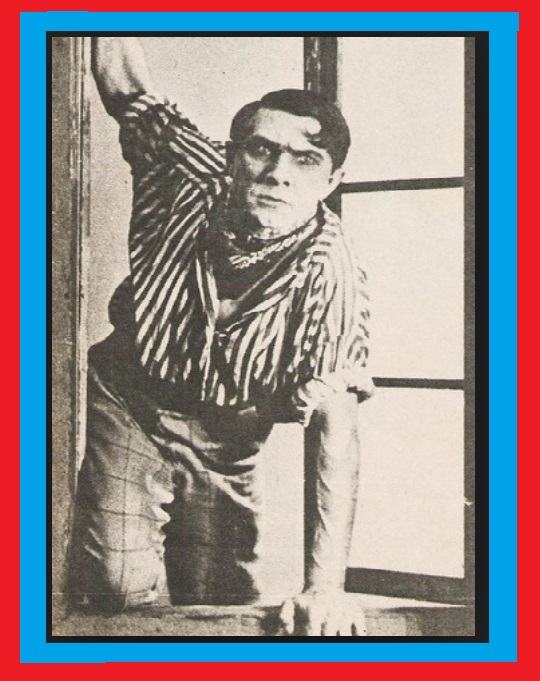
The first time you see Das ganze Sein ist flammend Leid you swear the celluloid itself is fevered: nitrate veins pulse under a sepia rash, as though the film were developed in the sweat of a morphine withdrawal. Forget the tidy angles of Caligari; here the camera staggers like a drunk cantor, reeling through ghetto lanes where laundry hangs like flayed parchment inscribed with unreadable psalms. It is 1920 but also 1492 but also the year the last star will collapse—history is a palimpsest and Prague merely the ink that refuses to dry.
Bela Lugosi, still four years away from immortalizing the Transylvanian count, embodies Rabbi Yom Tov Lipa, cabalist and reluctant exorcist. His face—half lit by tallow, half swallowed by brimstone—possesses the erotic melancholy of a man who has tasted the Ein Sof and found it salted with carrion. Watch the way he removes his gauntlets: slow, almost carnal, as if skin itself were a heresy. When he pronounces the Tetragrammaton the splice between frames quivers; for a heartbeat the screen births a subliminal hexagram that scorches the retina long after the reel ends. Critics lament that Lugosi’s early European work is lost—yet here he is, smuggled through a title no algorithm can spell, burning holes where projectors once stood.
Director Alfred Schirokauer, better known for society farces, here channels the apocalyptic chutzpah of Gustav Meyrink’s Golem but strips away the populist jaundice. Instead of a lumbering clay colossus we encounter language itself as monster: every intertitle drips mercury, letters rearranging into names of angels who never bothered to rescue Europe. The city’s synagogues are shot from below, vaults yawning like whale bellies, their chandeliers frozen mid-shatter. In one prolonged iris shot the camera circles the medieval clock: instead of apostles, skeletal houris emerge, their hourglasses filled with crematory ash. This is not symbolism; it is a seance conducted on sprockets.
Carl Sick’s astronomer, Dr. Thaddäus Halbasch, provides the film’s sole through-line of rational inquiry. Yet each time he lifts his telescope the lens reveals the opposite of cosmos—close-ups of Alice Matay’s consumptive lungs fluttering like moth-wings under glass. Science and mysticism copulate grotesquely; Halbasch’s star-charts morph into genealogies of pogroms, inked by a trembling quill that once signed death sentences. The performance is all cheekbone and terror, a silent scream that feels louder than any talkie shriek. Compare his skeletal erudition to the hearty flappers of Gloria’s Romance and you grasp how Germanic expressionism metabolized despair into anti-body.
Alice Matay, billed simply as die Näherin, glides through the narrative like frayed silk. Her tuberculosis is not ailment but aesthetic—every cough a stanza of late Rilke, every blood fleck a punctuation mark in a suicide note addressed to the Kaiser. In a bravura sequence she dances a solitary waltz in the sewing-room, mannequins for partners, their porcelain heads replaced by pomegranates that burst open to release swarms of letters—Hebrew, Yiddish, illegible Esperanto of grief. The choreography predates Montmartre’s cabaret modernity by two years yet feels centuries older, as though filmed in the marrow of a Grimm tale.
Ruth von Maers, as the Mirror-Woman, never speaks—her role is to reflect, but reflections rebel. In one of cinema’s earliest double-exposure feats, her silhouette detaches from the body and crawls into a looking-glass labyrinth where each corridor ends with a pogrom etching. She caresses these atrocities, yearning to step inside and die with ancestors she never met. The metaphor of cinema itself—images that cannot return our gaze—has seldom been so bloodily literal. Contrast this with the comedic narcissism of The Bearded Lady and you see how Weimar Germany could oscillate between slapstick and metaphysics within months.
There exists no known score; hence every screening becomes improvisation. I project it with Górecki’s Third Symphony, the sorrow of which syncs uncannily—when Lugosi lifts the prism the soprano’s glissando seems to fracture light itself. Others prefer doom-jazz or field recordings of crumbling plaster. This mutability is the film’s genius: like the Kabbalah it dramatizes, meaning blooms only through interpretation. Note the tinting: night scenes bathe in arsenic green, daylit ghetto alleys in bile yellow. The palette anticipates the lurid Mexico of Barbarous Mexico yet retains the sooty authenticity of Mittel-Europa.
The intertitles deserve their own monograph. Schirokauer inscribes them backwards, forcing the viewer to read in mirrors stationed at the theatre’s sides. Thus you confront your own visage superimposed over declarations like: “Alle Lichter sind nur Wunden im Schleier des Unendlichen.” The effect is humbling—cinema indicts its spectator, something Netflix’s algorithmic cosiness has long anesthetized. Imagine inserting such a provocation into the feel-good matrimonial froth of Tell Your Wife Everything and you grasp how radical this gesture was.
Halfway through, plot dissolves like communion wafer on a paranoiac tongue. Characters pursue quests that evaporate—Halbasch seeks a comet predicted to extinguish shame; the seamstress hunts a spool of thread spun from her mother’s hair; Rabbi Lipa hunts redemption but settles for spectacle. The golem, when it appears, is not clay but incandescent magnesium, a stick figure whose limbs are sundials. It stalks the ghetto, setting clocks correct yet incinerating anyone who dares thank it. The political reading is unavoidable: a Europe that invents monsters to police its minorities, then feigns surprise when the monster learns to read Torah.
Compare this to the tidy narrative closure of Anna Boleyn where history bends to heterosexual destiny. Here history is a Möbius strip: the final shot repeats the first, but the repeat is inverted, colours bled, Lugosi’s eyes scratched out by some future censor—perhaps the same regime that will burn reels a decade later. The strip of nitrate survives as scar, as memory, as insult.
Lugosi’s physiognomy—those uplifted brows, that prow of nose—renders close-ups unbearably intimate. In a scene destined for GIF immortality (should the film ever escape academic bootlegs), he lifts the Sephirothic prism towards camera; the lens flare obliterates his face save for the eyes, which hover disembodied like twin black suns. It prefigures the star-child gaze of 2001 but locates the cosmic within the shtetl. Contrast this with the puppy-eyed hijinks of His Jonah Day and you comprehend how horror can be a moral stance, not merely a genre.
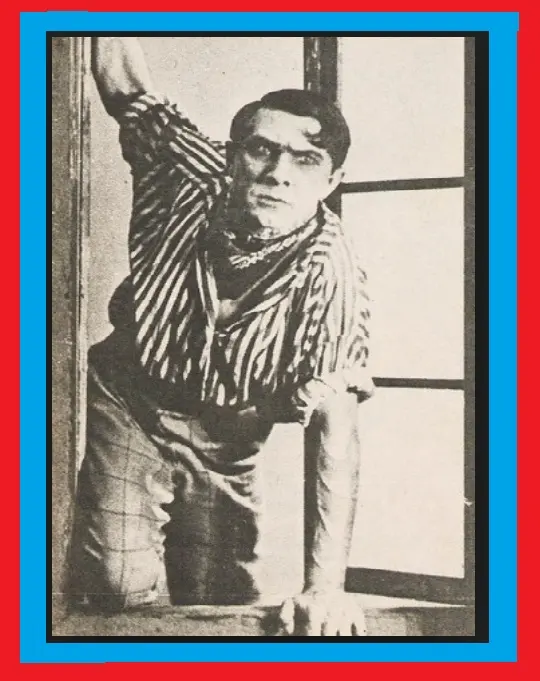
Carl Sick, primarily a stage tragedian, modulates between febrile intellect and catatonic awe. His hands—long, neurasthenic—perform a silent symphony: fingers splay to indicate epiphany, clench to suggest ontological dread. It is acting distilled to gesture, worthy of Bresson’s later pick-pocketing models yet drenched in expressionist hyperbole.
Alice Matay’s consumptive seamstress never begs pity. She meets her haemoptysis with the resignation of someone correcting a typo in the book of life. In close-up her pupils dilate until iris vanishes—an effect achieved by the cinematographer shining candlelight directly into her eyes between takes. The result is a gaze that swallows, a black hole in lace collar. Compare her fatalist serenity to the plucky Tomboy heroines of Jess of the Mountain Country and you see how illness, when filmed without moralism, becomes metaphysics.
Cinematographer Ewald Daub—uncredited due to studio politics—crafts chiaroscuro so dense it seems sculpted. Streetlamps become planetary bodies, their coronas brushing gables like illicit lovers. Windows burn from within, suggesting pogroms both past and premonitory. He employs a proto-unsharp mask: gauze smeared with petroleum jelly streaked by chicken-bone scratches, producing halation that feels like memory degrading. Such tactile decay would influence later horror, from Vampyr to Lake Mungo, yet here it serves no mere atmospherics—it is theology. Light itself is suspect, a rabbi’s whisper that might be revelation or snare.
The camera also performs theological inquiry. In a 360-degree pan around the synagogue interior, continuity is disrupted: congregants swap seats, Torah scrolls multiply, shadows point in contradictory directions. Daub thereby visualizes Talmudic argument—every perspective valid, none sufficient. Compare this intellectual vertigo to the staid proscenium style of Cowardice Court where camera movement is a narrative taboo.
Writers Schirokauer and Meyrink splice Kabbalah with gutter-slang. One intertitle reads: “When the candle argues with the wick, who will mourn the tallow?”—a riddle worthy of Kafka, who incidentally lived blocks from the set. Dialogue cards appear out of order; only by rearranging them via gematria does a subplot emerge concerning a lost book that contains every name of God deleted by censors. Such ludic literariness courts pretension yet lands at prophetic urgency: how does a civilization speak when its language is on trial?
The script’s political valency is masked by mysticism, allowing it to escape the censor’s scissors that snipped Manya, die Türkin into incoherence. Yet the allegory is legible: the golem of light, invented to protect, becomes the pogrom’s torchbearer. A warning to nations that deploy technology to manage minorities—relevant in an age of predictive policing.
Premiered as a midnight curiosity at Vienna’s Reinhardt Kinemathek, the film reportedly drove two critics to fainting. One swore the screen bled; the other spent decades cataloguing every hidden star of David. In Berlin, the censor board—alarmed by reports of mass walkouts—condemned it as „judisch-mystische Selbstgeißelung“ and ordered prints destroyed. Only a single 35mm negative, salted away in a Moravian monastery, survived. Even today public screenings require a waiver warning of „existenzielle Desorientierung“. Such notoriety places the film alongside The Bad Boy which also faced cuts, albeit for sexual rather than metaphysical transgressions.
In 2021 a 4K scan leaked onto an invite-only torrent site; within hours Reddit threads dissected every glyph. TikTokers layered the golem’s magnesium flare over footage of wildfires, soundtracked by slowed-nightcore klezmer. Thus a film that once risked annihilation now proliferates as meme, a ghost that haunts cloud servers instead of ghettos. Yet each compression, each GIF loop, shears context, reducing Holocaust prophecy to aesthetic chill. The film’s own narrative—about language escaping its author—recurs as techno-irony.
Still, when watched in proper darkness, with live musicians translating silence into lamentation, the movie restores what digital atomization erodes: the tremor of awe. It cautions that every technological marvel—whether magnesium golem or neural network—risks becoming the very pogrom it was built to avert. In that sense Das ganze Sein ist flammend Leid is not relic but prophecy, a burning bush that speaks in bandwidth and buffer.
Masterpiece is too tepid; heresy too theological. Call it a wound that enjoys being looked at. The film marries the cerebral chill of Her American Husband’s marital alienation to the visceral punch of Nosferatu, yet emerges singular, untranslatable. It demands you leave behind the algorithmic cradle of comfort-viewing and step into a Prague where every cobblestone remembers your name before you do.
Seek it not for entertainment but for contrition. Seek it to remember that cinema once aspired to be more than content; it wished to be conscience, burning. Seek it because the golem of light is still abroad, shaping algorithms and militaries, and only by watching its birth in a Moravian monastery basement might we learn the syllables that unmake it. Seek it because, as Rabbi Lipa intones without words, “All being is flaming suffering”—and yet the flame, if stared at long enough, reveals the face we had before the world was made.

IMDb —
1931
Community
Log in to comment.