DbcultAccessing Vault...
Cult Review
Senior Film Conservator
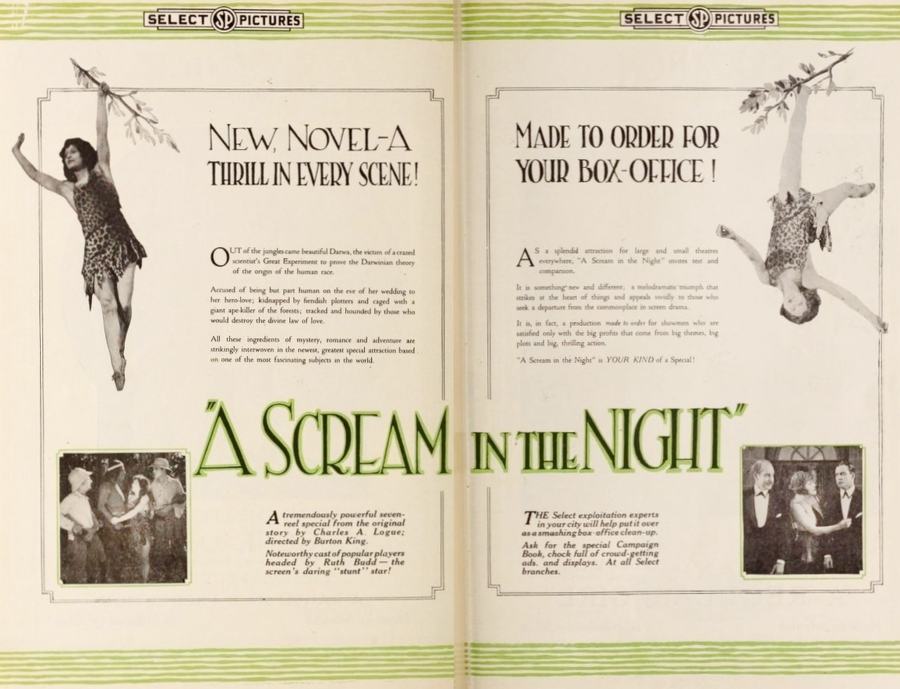
To traverse the landscape of 1919’s A Scream in the Night is to embark upon a journey through the fractured psyche of a post-Victorian world obsessed with the burgeoning tenets of evolutionary biology and the terrifying malleability of the human form. This is not merely a relic of the silent era; it is a transgressive cinematic artifact that interrogates the very essence of the soul. Directed with a palpable sense of atmospheric dread, the film functions as a precursor to the 'mad scientist' subgenre, yet it distinguishes itself through a sophisticated, albeit unsettling, exploration of the Darwinian struggle. Unlike the more conventional melodramas of its time, such as the social critiques found in The Path Forbidden, this work dives headlong into the abyss of biological essentialism.
The narrative engine is driven by the hubris of the Professor, a character rendered with a chilling intellectual detachment by the cast. His pursuit is not one of enlightenment, but of dominance over the natural order. By bringing Darwa from the jungle into the drawing rooms of the elite, he orchestrates a grand performance of social Darwinism. The Professor’s laboratory is a site of ontological violence, where the boundaries between species are blurred with a cavalier disregard for the sanctity of life. This thematic preoccupation with hidden identities and scientific overreach mirrors the claustrophobic tension found in The House of Silence, though here the stakes are elevated from mere mystery to a fundamental questioning of human identity.
The Professor’s success in integrating Darwa into society serves as a scathing indictment of the aristocracy. If a creature half-human and half-beast can seamlessly navigate the nuances of high-born etiquette, what does that suggest about the inherent vapidity of social status? The young aristocrat who falls in love with Darwa becomes a symbol of civilization's myopia. He is enamored with the reflection of his own desires, unable to perceive the feral undercurrents that surge beneath the silk and lace. This dynamic provides a stark contrast to the more grounded romantic entanglements seen in Romance and Arabella, where social mores are navigated with wit rather than biological subterfuge.
Edna Britton’s performance as Darwa is nothing short of revolutionary for the period. Her ability to transition from the twitchy, hyper-vigilant movements of a jungle predator to the languid, curated gestures of a socialite is a masterclass in physical acting. She inhabits the 'uncanny valley' long before the term was codified, creating a character that is simultaneously sympathetic and terrifying. Britton’s Darwa is a tragic figure, a sentient being trapped between two worlds, belonging to neither. The pathos she evokes is far more visceral than the heightened emotions of A Hungry Heart, reaching a level of existential despair that is rare in early cinema.
The cinematography utilizes the interplay of light and shadow to emphasize Darwa’s dual nature. In the jungle sequences, the lighting is harsh and dappled, reflecting the chaotic unpredictability of the wild. Once in civilization, the lighting becomes softer, more diffused, yet it often casts long, distorted shadows that betray the truth of Darwa’s origin. This visual storytelling is far more evocative than the straightforward presentation in The Chauffeur, showcasing a sophisticated understanding of how film can communicate internal conflict without the need for intertitles.
The climax of the film—the confrontation between Darwa and the wild ape—is a sequence of unparalleled intensity. It is here that the Professor’s experiment is stripped of its intellectual pretension. The battle is not merely physical; it is a spiritual confrontation. Darwa is forced to choose between the conditioning of her 'civilized' life and the dormant instincts that define her biology. The brutality of this scene serves as a jarring wake-up call to the audience, shattering the romantic illusions built up in the previous acts. It lacks the comedic levity of Trouble Makers, opting instead for a grim, uncompromising realism that anticipates the horror cinema of the decades to follow.
This final test raises profound questions about the nature of nurture versus nature. Does the Professor’s declaration of success hold weight if his creation can only survive by reverting to savagery? The film leaves this question hanging in the air, refusing to provide the easy moral resolutions found in Partners Three or Red, White and Blue Blood. Instead, it suggests that civilization is a fragile mask, easily discarded when the primitive self is provoked.
Reflecting on A Scream in the Night today, one cannot help but be struck by its prescience. In an era where genetic engineering and AI are blurring the lines of what it means to be human, the Professor’s experiment feels uncomfortably modern. The film’s exploration of the 'other'—the being that looks like us but is fundamentally different—taps into a deep-seated atavistic fear. This thematic depth elevates it above contemporaries like Dan or The Wooing of Riley, which, while charming, lack the philosophical weight of Charles Logue’s writing here.
The supporting cast, including Edward Roseman and Stephen Grattan, provide a solid foundation for the central drama. Their performances ground the more fantastical elements of the plot, ensuring that the film never descends into mere spectacle. There is a gravity to the production that reminds one of the somber tones in Wedlock or the high-stakes moral dilemmas in Paying the Price. Even compared to international efforts like La secta de los misteriosos, this film stands out for its focused, character-driven approach to the macabre.
The production design, particularly the contrast between the lush, untamed jungle and the sterile, ornate interiors of the city, serves as a visual metaphor for the film’s central conflict. The jungle is depicted not as a paradise, but as a crucible—a place where only the strongest survive. This unsentimental view of nature is a far cry from the exoticized landscapes of The Garden of Allah, providing a more grounded, albeit darker, perspective on the world outside the city gates. The isolation Darwa feels in the city is palpable, echoing the themes of displacement explored in Stranded.
Ultimately, A Scream in the Night is a haunting meditation on the limits of science and the persistence of instinct. It challenges the viewer to look past the veneer of civilization and confront the beast within. The film’s title is perfectly evocative; it is a primal cry that pierces the silence of the night, a reminder that no matter how much we attempt to domesticate the spirit, the wild remains ever-present, waiting for the right moment to reclaim its own. Charles Logue has crafted a narrative that is both a product of its time and a timeless warning against the arrogance of those who seek to play God.
For the modern cinephile, this film offers a rare opportunity to see the seeds of the horror and sci-fi genres being sown. It is a work of significant intellectual ambition, executed with a level of technical proficiency that remains impressive over a century later. The visceral power of Britton’s performance, combined with the film’s uncompromising thematic exploration, ensures that A Scream in the Night will continue to resonate with anyone who dares to look into the mirror of Darwa’s eyes and wonder what part of themselves is truly human and what part is merely a well-rehearsed act.
IMDb 7.4
1931
Community
Log in to comment.