DbcultAccessing Vault...
Cult Review
Senior Film Conservator
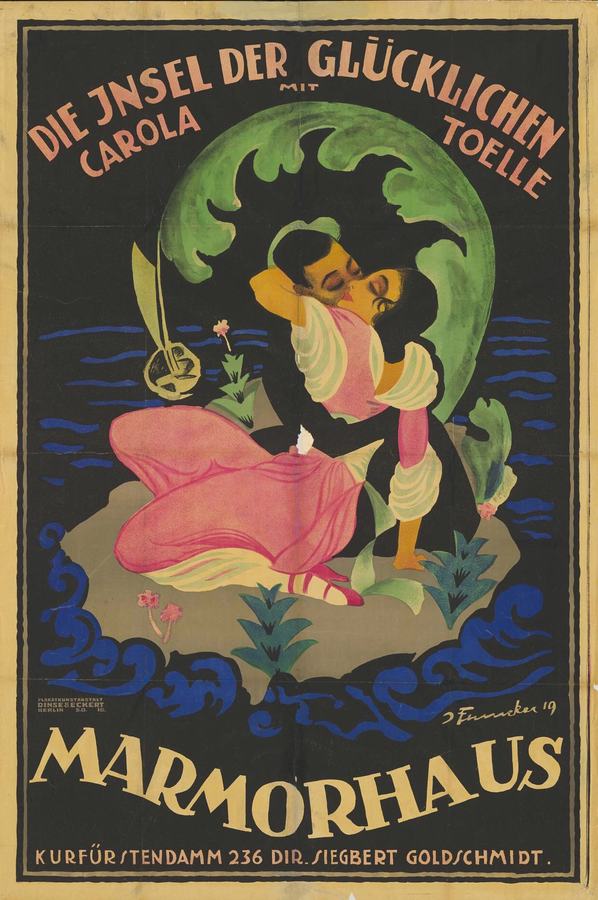
Stepping back into the hallowed halls of silent cinema often feels like a journey through time, a rediscovery of foundational storytelling where gesture, expression, and the sheer power of visual narrative carried the weight of an entire world. Wolfgang Geiger's 'Die Insel der Glücklichen' (The Island of the Happy Ones), a film that, despite its relative obscurity in the grand tapestry of cinematic history, offers a remarkably prescient and emotionally resonant exploration of themes that continue to plague and inspire humanity. It's a film that, even a century later, speaks to the eternal human yearning for paradise, the inevitable corruption of innocence, and the complex interplay between societal constructs and individual desires.
From its very premise, 'Die Insel der Glücklichen' sets a grand stage. We are introduced to Dr. Erich von Hagen, portrayed with a brooding intensity by Paul Otto, a man clearly burdened by the weight of modern civilization. Otto, known for his nuanced performances in films like A Stormy Knight, brings a palpable sense of intellectual weariness to Erich, making his radical decision to abandon the known world entirely believable. His disillusionment with the industrial age, its relentless pursuit of material gain over spiritual fulfillment, resonates deeply even now. This isn't merely an escape; it's a philosophical quest, an almost desperate search for an uncorrupted ideal. The film's early sequences, depicting Erich's arduous journey, are masterfully shot, conveying both the vastness of the ocean and the internal turmoil of a man shedding his past.
The titular island, when finally revealed, is nothing short of breathtaking. Geiger's direction, even through the lens of a century-old print, conjures an Edenic vision – lush foliage, pristine waters, and a community living in apparent blissful harmony. This is where the film's central conceit truly takes hold: the concept of a 'happy island,' a sanctuary from the perceived ills of the outside world. The islanders, living in a seemingly egalitarian society, are depicted with a grace and simplicity that borders on the mythical. Their leader, Elder Kael, brought to life by the legendary Werner Krauss, is a performance for the ages. Krauss, a master of expressionistic acting whose range spanned from the terrifying Dr. Caligari to the nuanced roles in films like The Apostle of Vengeance, imbues Kael with a profound quiet dignity and an almost ethereal wisdom. His eyes, even through the heavy makeup and silent film conventions, convey a wealth of experience and a deep understanding of the delicate balance of life, making his eventual despair all the more tragic. He is the anchor of the island's soul.
Into this idyllic setting steps Lyra, the island maiden, played with captivating innocence and nascent strength by Ressel Orla. Orla, a prominent figure of early German cinema, excels in portraying Lyra's initial curiosity and eventual awakening. Her chemistry with Paul Otto's Erich is palpable, a silent ballet of longing and understanding that transcends cultural barriers. Their romance isn't merely a plot device; it's the heart of the film, symbolizing the potential for connection and purity that Erich so desperately seeks. The early scenes of their courtship, devoid of dialogue yet rich with shared glances and subtle gestures, are a testament to the power of silent film acting. It's a love story that feels both timeless and fragile, a beacon of hope against the encroaching shadow.
The narrative takes a darker, more complex turn with the arrival of Herr Gruber, portrayed by the formidable Fred Goebel, and his cynical associate, played by Magnus Stifter. Their presence immediately introduces a jarring discord. Goebel's Gruber is the embodiment of unchecked capitalist ambition, a man whose gaze sees only resources where others see a vibrant culture. Stifter's character, equally compelling, serves as the pragmatic, often cruel, enforcer of Gruber's will. Their arrival isn't just a plot point; it's a thematic clash – civilization, in its most rapacious form, confronting pure, untainted nature. This conflict echoes similar narratives of colonial intrusion and the destruction of indigenous cultures, a theme explored with varying degrees of success in contemporary films like The Capture of a Sea Elephant and Hunting Wild Game in the South Pacific Islands, albeit with a more documentary lens there. Here, it’s a dramatic confrontation with profound moral implications.
The film meticulously charts the slow, insidious corruption of the island. Simple bartering turns into exploitation, trust erodes into suspicion, and the islanders' harmonious existence is shattered by introduced vices and the lure of foreign trinkets. Gertrud Wolle, as a wise woman of the tribe, offers a poignant counterpoint to the encroaching chaos, her expressions conveying a silent lament for a fading way of life. Viktor Senger, as Lyra's jilted suitor, adds another layer of internal conflict, his jealousy manipulated by the outsiders, further fracturing the community. Hanna Wisser and Carola Toelle, in their supporting roles, contribute to the tapestry of the island's inhabitants, each face reflecting the evolving drama and moral decay.
Wolfgang Geiger's screenplay, while adhering to the conventions of silent film melodrama, is remarkably sophisticated in its thematic depth. It's not a simplistic good-versus-evil tale. Instead, it explores the complexities of human nature, showing how even the purest of intentions (Erich's desire for a better world) can be powerless against the juggernaut of greed and the inherent flaws within humanity itself. The 'happy island' is not merely a geographical location; it's a state of mind, a fragile ideal that is constantly under siege, both from external forces and from the internal struggles of its inhabitants. The film subtly suggests that paradise, once discovered, is inherently vulnerable to the very human desire to possess or alter it.
Cinematographically, 'Die Insel der Glücklichen' is a marvel for its time. The use of natural light, the sweeping vistas of the island, and the intimate close-ups of the actors' faces create a rich visual language. The film's pacing, while deliberate, allows for moments of profound emotional impact. The intertitles, often poetic, guide the audience through the narrative, but it's the performances that truly convey the story's emotional core. Krauss, in particular, delivers a masterclass in non-verbal communication, his every gesture and glance loaded with meaning. His portrayal of Kael's growing despair, his silent pleas for understanding, and his ultimate resignation are heartbreaking. One might draw parallels to the powerful emotional resonance found in The Truant Soul or the dramatic tension of Vengeance, where the internal struggles of characters are paramount.
The film's climax is a powerful, if melancholic, resolution. Erich is forced to confront the harsh reality that his utopian dream cannot be sustained in the face of human avarice and discord. The island, once a symbol of hope, becomes a stark reminder of humanity's destructive potential. His ultimate decision, and Lyra's fate, are rendered with a tragic inevitability that lingers long after the final frame. It’s a moment that echoes the profound choices faced by characters in films like For Better, for Worse, where personal sacrifice defines the narrative arc.
'Die Insel der Glücklichen' serves as a profound meditation on the nature of happiness itself. Is it a state that can be found externally, or is it an internal construct, perpetually vulnerable to the forces of the world? The film suggests the latter, positing that true happiness is not about escaping reality but about confronting it, understanding its complexities, and striving for connection amidst the chaos. It's a far cry from the more straightforward adventures of Aladdin and the Wonderful Lamp, offering instead a nuanced psychological drama.
The legacy of 'Die Insel der Glücklichen' lies not just in its compelling narrative or its stellar performances, particularly from Krauss and Orla, but in its enduring relevance. In an age where the pursuit of 'perfect' lives, whether through technology or escapism, continues unabated, Geiger's film offers a sober, yet compassionate, warning. It reminds us that paradise, once found, is rarely preserved, and that the greatest battles are often fought within the human heart. It's a testament to the power of silent film to convey complex ideas with eloquent simplicity, a cinematic achievement that deserves a wider audience and deeper appreciation. Its exploration of moral dilemmas and the human condition places it alongside other thoughtful dramas of its time, such as The Stain in the Blood or The Battle of Hearts, which also delved into the intricacies of human relationships and societal pressures. The film, in its quiet intensity, leaves an indelible mark, prompting reflection on our own definitions of happiness and the price we are willing to pay for it. The narrative's careful construction, attributed to Wolfgang Geiger, ensures that every character, every interaction, contributes to this overarching philosophical inquiry, making it a truly enriching experience for those willing to immerse themselves in its silent depths.
In conclusion, 'Die Insel der Glücklichen' is more than just a historical curiosity; it is a vibrant, profound piece of filmmaking that transcends its era. Its exploration of idealism, corruption, and the search for meaning remains as potent and thought-provoking today as it was upon its initial release. The artistry of its cast, the vision of its director, and the timelessness of its themes combine to create a cinematic experience that is both beautiful and heartbreaking. It stands as a powerful reminder of the rich storytelling tradition of the silent era and its capacity to engage with the most fundamental questions of human existence. It's a film that, much like the elusive island itself, invites discovery and rewards contemplation, a true gem in the vast ocean of cinema history. Its nuanced portrayal of human nature, both its capacity for beauty and its propensity for destruction, solidifies its place as a significant work that merits renewed attention and study, offering a compelling counterpoint to more overtly dramatic narratives like Riders of the Purple Sage or the romantic entanglements of Sunshine Nan. It is a quiet triumph, a film that speaks volumes without uttering a single word.

IMDb —
1935
Community
Log in to comment.