DbcultAccessing Vault...
Cult Review
Senior Film Conservator
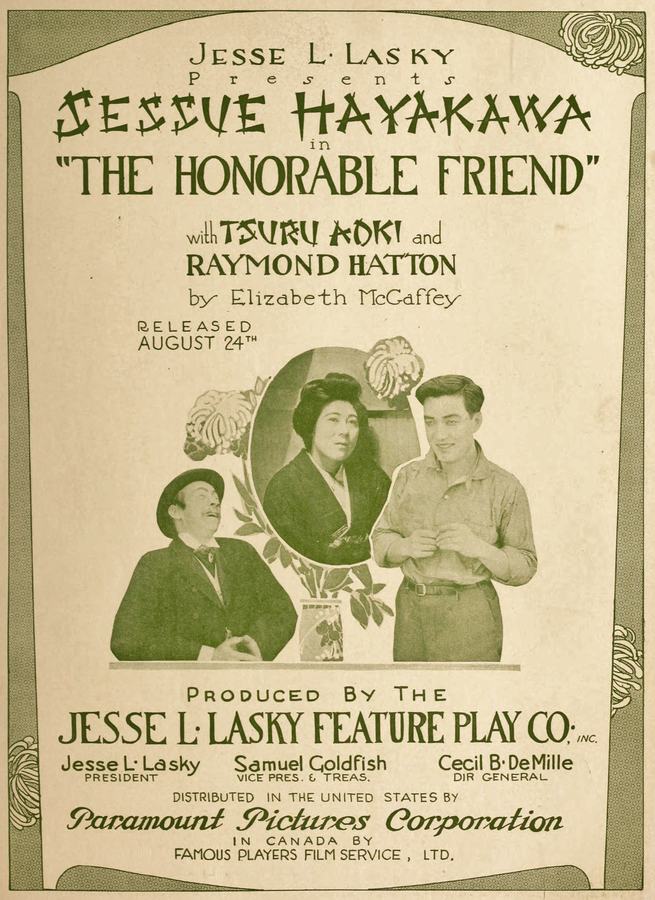
Ah, the silent era! A time when emotions were writ large on faces, stories unfolded through gestures, and the power of the visual reigned supreme. It was a period of burgeoning cinematic language, where every flicker of expression, every carefully composed frame, had to convey the weight of a thousand words. And amidst this rich tapestry of early filmmaking, certain luminaries shone with an unparalleled brilliance, none more so than Sessue Hayakawa. To revisit a film like 'The Honorable Friend' is not merely to watch a relic; it is to engage with a powerful, often overlooked, chapter in cinematic history, a narrative steeped in cultural nuance, human frailty, and the timeless themes of love, betrayal, and the relentless pursuit of honor. This is not just a film; it is a meticulously crafted artifact, reflecting the social anxieties and cultural representations of its time, while simultaneously transcending them through sheer dramatic force.
At its core, 'The Honorable Friend' spins a web of intricate human relationships, set against the backdrop of a Japanese curio dealership operating in the bustling, often unforgiving, landscape of America. The narrative introduces us to Makino, portrayed with a quiet dignity that belies his inner turmoil. Makino is a man of unwavering loyalty, his dedication to his employer, Kayosho, forming the bedrock of his existence. Kayosho, a figure of significant influence and subtle cunning, decides to reward Makino's steadfast service with a gesture that initially appears benevolent: he arranges for Toki-ye, a picture bride, to journey from Japan to America, destined to become Makino's wife. The arrival of Toki-ye, brought to life with a delicate yet resilient grace by Tsuru Aoki, marks a turning point. Her civil marriage to Makino is a moment of fragile joy, a promise of a new life blossoming in a foreign land. However, this delicate bloom is swiftly overshadowed by Kayosho's true, darker intentions.
The film masterfully builds tension as Kayosho's façade of generosity crumbles, revealing a predatory desire to claim Toki-ye for himself. This isn't just a simple change of heart; it's a calculated act of appropriation, a violation of trust that reverberates through the lives of all involved. The complexity of Kayosho's character, subtly conveyed by an actor whose name is unfortunately lost to the sands of time but whose performance speaks volumes, lies in his ability to mask his self-interest under the guise of benevolence. This betrayal is not merely a personal slight against Makino; it's a profound dishonor that extends its tendrils to Goto, another employee, whose simmering anger is fueled by a past injustice. We learn that Kayosho had once been betrothed to Goto's niece, Hana, a commitment he callously abandoned, leaving a scar of familial shame. The film brilliantly uses these intertwined grievances to escalate the dramatic stakes, transforming what might have been a simple love triangle into a multi-layered exploration of honor, duty, and vengeance. The narrative's climax, the discovery of Kayosho's lifeless body in a pool, is not just a plot point; it's the inevitable, tragic consequence of a society where honor is paramount and its violation carries deadly repercussions.
One cannot discuss 'The Honorable Friend' without lauding the extraordinary performances that breathe life into its silent frames. Sessue Hayakawa, a star of unparalleled magnetism in his era, delivers a performance that is both nuanced and profoundly impactful. While the specific role he embodies in this film isn't explicitly detailed in the provided synopsis, one can infer from his typical roles and the film's dramatic intensity that he likely portrays a character grappling with immense internal conflict, perhaps Goto, the avenging party, or even Kayosho, the architect of deceit, imbuing either with a depth that transcends mere villainy or heroism. Hayakawa's command of physical expression, his piercing gaze, and his ability to convey complex emotional states without a single spoken word were legendary. He was an actor who could communicate a lifetime of longing, anger, or despair with a subtle tilt of his head or a tightening of his jaw. His presence alone elevates the film, anchoring its emotional core with a gravitas that few contemporaries could match. In an era where many actors relied on broad, theatrical gestures, Hayakawa's understated power was revolutionary.
Tsuru Aoki, Hayakawa's real-life wife and frequent screen partner, is equally captivating as Toki-ye. Her portrayal of the picture bride, caught in a web of others' desires, is imbued with a quiet resilience. Aoki masterfully conveys the vulnerability of a woman navigating a new culture and a treacherous emotional landscape, while also hinting at an inner strength that allows her to endure. Her expressions, ranging from hopeful anticipation to profound sorrow, are exquisitely rendered, drawing the audience deep into Toki-ye's plight. The chemistry between Aoki and her male counterparts, particularly if she shares significant screen time with Hayakawa, would have been a palpable force, adding layers of emotional authenticity to the unfolding drama. Their on-screen partnership often explored themes of cross-cultural romance and societal prejudice, making their collaborations particularly poignant.
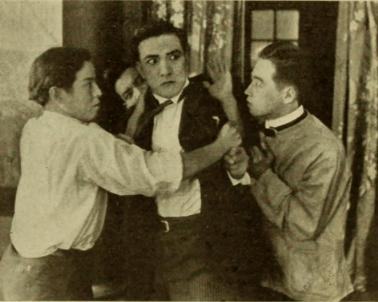
The supporting cast, including M. Matsumato, Goro Kino, Raymond Hatton, and William Elmer, contribute to the film's rich tapestry, each bringing their own distinct energy to the narrative. While specific character details for each are scarce, in silent cinema, even minor roles often required a strong visual presence and the ability to convey character through appearance and gesture. Goro Kino, for instance, likely brings a grounded realism to his role, perhaps as Makino, the initially devoted employee, or Goto, the wronged relative. Raymond Hatton and William Elmer, seasoned character actors of the period, would have provided solid performances, often specializing in roles that added texture or comic relief, though in a drama of this intensity, their contributions would lean more towards building the narrative's dramatic tension. The ensemble's ability to communicate the intricacies of their relationships and motivations without dialogue is a testament to the directorial vision and the inherent power of visual storytelling.
The success of 'The Honorable Friend' lies not only in its compelling plot and powerful performances but also in the astute craftsmanship behind the camera. While the director is not specified in the provided information, the film's thematic depth and emotional resonance point to a strong directorial hand that understood the nuances of silent storytelling. The visual language of the film would have been paramount: the strategic use of close-ups to emphasize emotional turmoil, the long shots to establish setting and power dynamics, and the careful staging of scenes to convey unspoken tensions. Imagine the scene where Kayosho's true intentions towards Toki-ye are revealed – a subtle shift in his gaze, a possessive gesture, a moment of profound realization on Toki-ye's face, all communicated through the silent ballet of the camera and the actors. The setting of the curio shop itself, filled with exotic artifacts, would have offered rich visual opportunities, perhaps symbolizing the characters' own status as 'other' in America, or serving as a metaphor for hidden desires and valuable, yet vulnerable, possessions.
The screenplay, penned by Eve Unsell and Elizabeth McGaffey, is a testament to their skill in crafting a narrative that is both culturally specific and universally resonant. Writing for the silent screen required a unique understanding of pacing, character development through action, and the judicious use of intertitles to advance the plot and convey dialogue. Unsell and McGaffey likely structured the story to maximize dramatic irony and emotional impact, ensuring that each scene built inexorably towards the tragic climax. Their ability to weave together themes of cultural assimilation, personal honor, and the destructive power of unbridled desire within the constraints of silent film is commendable. The 'picture bride' phenomenon itself was a rich vein of social commentary, highlighting the unique challenges and vulnerabilities faced by Japanese immigrants in America during this period. The writers would have had to navigate these sensitive issues with care, providing both dramatic conflict and a degree of social realism.
'The Honorable Friend' is more than just a melodrama; it's a fascinating document of its time, reflecting the complex cultural dynamics of early 20th-century America. The portrayal of Japanese characters, particularly through the lens of figures like Sessue Hayakawa and Tsuru Aoki, was often groundbreaking, challenging prevailing stereotypes while simultaneously navigating the limitations of a predominantly white Hollywood. Hayakawa, in particular, was one of the few non-white actors to achieve superstardom in the silent era, often playing complex, morally ambiguous, and highly desirable characters, which was a significant departure from the more simplistic caricatures common at the time. His roles frequently explored themes of cultural clash, often portraying men of honor caught between two worlds.
The film delves into universal themes that resonate far beyond its specific cultural setting. At its heart, it's a story of betrayal – the betrayal of trust, of love, and of honor. Kayosho's actions are a stark reminder of how power can corrupt and how unchecked desire can lead to ruin. The concept of honor, so central to Japanese culture, becomes a driving force in the narrative, particularly for Goto. His anger stems not just from personal slight but from the perceived stain on his family's name, illustrating the profound weight of reputation and dignity. This contrasts sharply with the often more individualistic notions of justice prevalent in Western narratives, adding a layer of cross-cultural tension to the dramatic conflict.
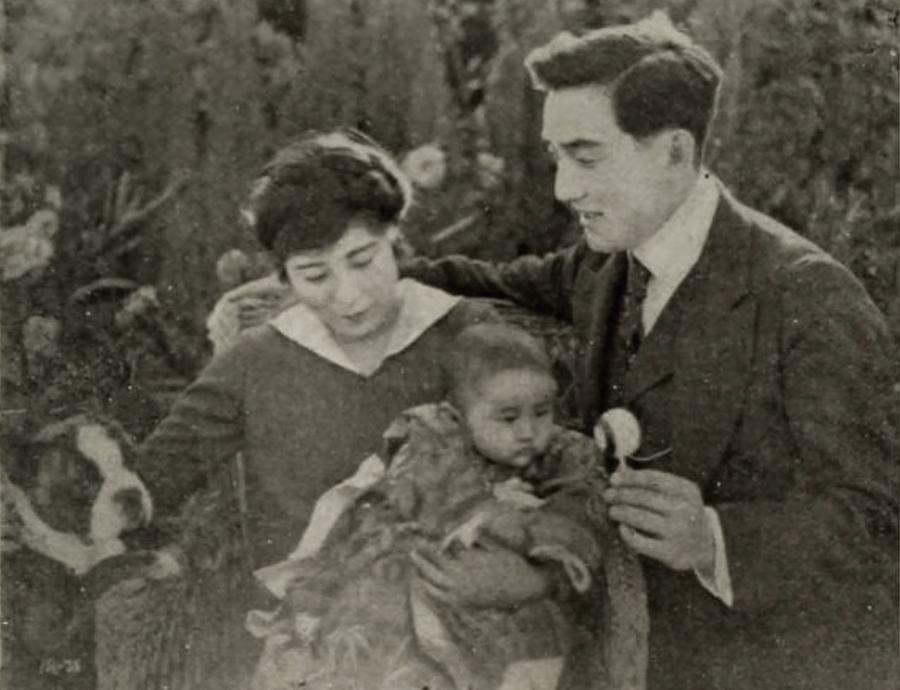
The film also subtly explores the immigrant experience. Toki-ye's journey as a picture bride, arriving in a new country to marry a man she barely knows, speaks to the hopes, fears, and vulnerabilities of those seeking a new life. Her situation is compounded by Kayosho's machinations, making her a symbol of innocence caught in a web of deceit. This aspect of the narrative could draw parallels with other films exploring the immigrant journey, even if from different cultural perspectives. The film’s exploration of jealousy and revenge, culminating in Kayosho's death, taps into primal human emotions, demonstrating the destructive consequences of unchecked passions. It’s a stark reminder that even in a 'civilized' setting, the raw forces of human nature can erupt with devastating results.
While 'The Honorable Friend' stands on its own merits, placing it within the broader context of silent cinema allows for a richer appreciation of its craft and themes. The intense emotional drama and focus on moral dilemmas might invite comparisons to films like The Crisis, which often explored societal upheavals and personal struggles against grand backdrops. The intricate plotting and the element of mystery surrounding Kayosho's death could be reminiscent of contemporary suspenseful narratives, perhaps even touching upon the early forms of the 'whodunit' genre, though here the focus is more on the 'why' than the 'who' in a traditional sense. The film's exploration of honor and societal expectations, particularly within a specific cultural framework, could be seen as a precursor to later, more explicit cultural dramas.
The 'picture bride' narrative, while specific to Japanese immigration, echoes the broader theme of arranged marriages and women's agency seen in various forms across different cultures and cinematic periods. While not a direct comparison in plot, one could consider how films like A Prince of India or The Dancer and the King might have explored exoticism, power dynamics, and romantic entanglements in their respective contexts, offering a contrast in how 'otherness' and desire were portrayed. The tragic romantic elements, tinged with betrayal, could also find distant echoes in films like Cinderella, though with a decidedly darker, more realistic edge, eschewing the fairytale for a starker reality. The underlying tension and dramatic build-up could also be viewed alongside films like A London Flat Mystery, not for genre, but for the way suspense is meticulously crafted, even if the stakes here are purely emotional and existential rather than purely criminal.
The sophisticated characterizations, especially if Hayakawa embodies a role of complex moral ambiguity, elevate it beyond simple melodrama. This nuanced approach to character might distinguish it from more straightforward adventure tales like A Motorcycle Adventure or even some of the more fantastical narratives of the era. Instead, it aligns more closely with psychological dramas that sought to explore the inner lives of their characters. The film's exploration of the consequences of broken promises and the pursuit of justice, albeit a personal and violent one, also gives it a timeless quality, allowing it to resonate with audiences who appreciate intricate human drama over spectacle. It's a testament to the enduring power of well-told stories, regardless of the era or the technological limitations.
In the grand tapestry of silent cinema, 'The Honorable Friend' occupies a significant, albeit perhaps under-celebrated, space. It serves as a potent reminder of the artistic ambition and emotional depth that characterized the era. The film's ability to tackle complex themes—honor, betrayal, cultural identity, and the destructive nature of desire—without relying on spoken dialogue is a remarkable feat. It underscores the universal power of visual storytelling and the profound impact of compelling performances, particularly from stars like Sessue Hayakawa and Tsuru Aoki, who transcended cultural barriers to become global icons. Their contributions, alongside the meticulous crafting by writers Eve Unsell and Elizabeth McGaffey, ensure that 'The Honorable Friend' remains a compelling watch for anyone interested in the evolution of cinema or the rich cultural history of the silent film period.
Beyond its historical significance, the film offers a powerful human drama that continues to resonate. The tragedy of Toki-ye, the righteous anger of Goto, and the fatal hubris of Kayosho create a narrative that is as emotionally charged today as it was a century ago. It’s a testament to the enduring power of stories that delve into the darker corners of the human heart, exploring the consequences when personal desires clash with societal expectations and the sacred bonds of honor. 'The Honorable Friend' is not just a film to be studied; it is a film to be experienced, a silent symphony of human emotion that speaks volumes without uttering a single word. Its legacy lies in its eloquent portrayal of universal human struggles, demonstrating that the profound depths of the human condition can be conveyed with compelling force through the artistry of silent cinema.
IMDb 4
1928
Community
Log in to comment.