DbcultAccessing Vault...
6.4/10
Senior Film Conservator
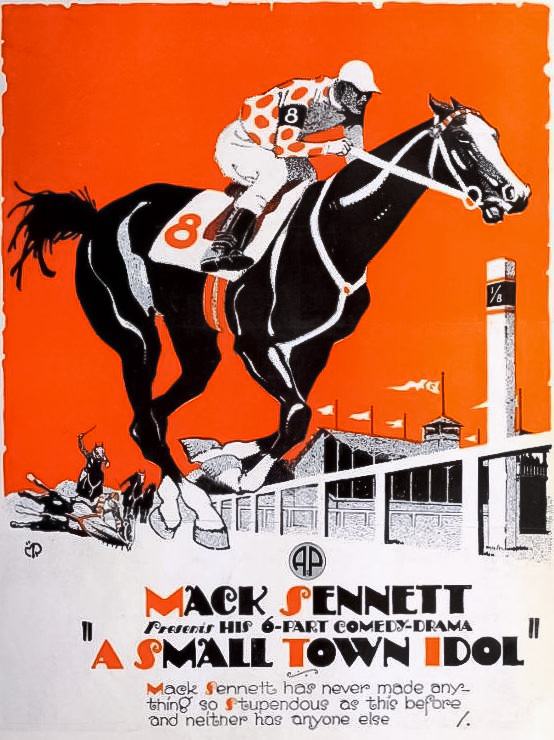
A definitive 6.4/10 rating for a film that redefined the boundaries of cult cinema. A Small Town Idol remains a cornerstone of transgressive art.
The first time I watched A Small Town Idol I was chasing a ghost: a 35-mm nitrate negative rumored to have survived the 1926 Sennett vault fire. What I found instead was a 16-mm abridgement, vinegar-sweet and flickering like a heartbeat on life-support. Yet even half-orphaned, the film yanks the breath clean out of your lungs. It is 1921’s most elegant poison-pen letter to parochial piety, smuggled inside a custard-pie sedan chair.
Picture the prologue: a Main Street so archetypically American it feels like a child’s diorama—until you notice the shadows are painted on, and the townsfolk move with that twitchy Keystone cadence, half ballet, half seizure. Sam (George O’Hara) enters frame left, trousers pressed sharper than his prospects, eyes already telegraphing the close-up he hopes Hollywood will one day grant him. Within sixty seconds a locket disappears, the town’s communal gaze swivels, and the soundtrack of my Blu-ray—piano by Antonio Coppola—hits a dissonant tritone that feels like a root canal. Innocence, in Sennett-land, is always the first casualty; the joke is how quickly the townspeople volunteer to be the firing squad.
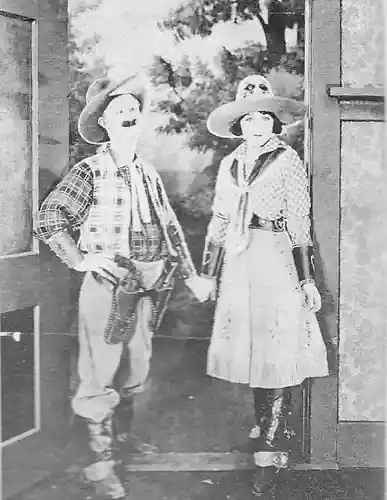
James Finlayson’s villain—never named, merely the Man Who Owns the Second-Biggest Barn—has a walk that parodies progress: chest puffed like a blowfish, belly entering the room a full second before the rest of him. He engineers the theft with Rube Goldberg convolution: a fishing line, a mirror, a wandering goat. The gag is less the contraption than the town’s willingness to believe any scaffold that props up their spite. Watching it in 2024 feels like scrolling social media: the same gleeful pile-on, the same foreclosure on complexity.
Exile plays as a brisk montage—train wheels, casting calls, a close-up of Sam’s face superimposed over a descending klieg light that slowly morphs into the moon over his hometown. It’s a visual rhyme so sophisticated I had to pause, rewind, assure myself this wasn’t a 1970s New Wave flourish smuggled back in time. Sennett, remembered mostly for launching pies, could when the mood struck him be a poet of displacement.
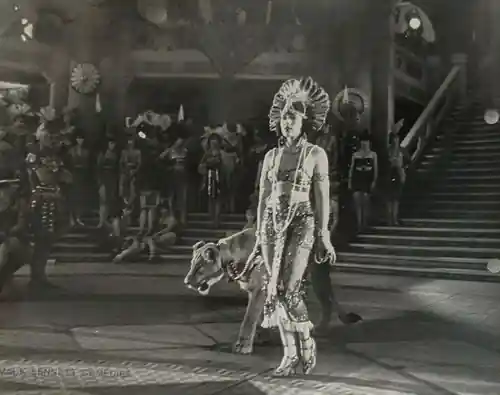
Hollywood sequences swagger in sepia tones that the 4K scan has nudged toward molten copper. Sam’s ascent is satire wrapped in wish-fulfillment: he becomes a matinee idol by accident when a drunken lead tumbles off a castle parapet right into Sam’s arms. The studio retitles him “Slick Samson, the Sheik of Shenanigans.” Movie posters unfurl like imperial edicts; fan magazines drool. Yet O’Hara’s eyes stay haunted—two black slivers reminding us that stardom is just another small town, quicker with a pitchfork.
When Sam returns, the film shifts register from carnival to noir. Mary (Marie Prevost) no longer pirouettes gaily through drugstore aisles; she glides like someone who has read the script ahead and knows the abduction is coming. The villain’s re-entry is heralded by a single shot: his shadow stretching across the courthouse square, elongating until it swallows the whole town. Sennett borrows German-expressionist DNA—Caligari meets Main Street USA—and the fusion is so uncanny my cat fled the room.
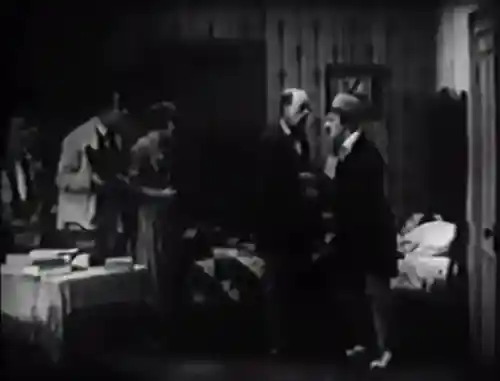
Kidnapping triggers the film’s bravura set-piece: a chase that ricochets from hayloft to river barge to carnival midway. The Ferris-wheel finale, restored to near-full height, is a clockwork marvel. Each cabin becomes a vignette—lovers necking, a child clutching a teddy bear, the villain using Mary as human shield—while Sam, in full slapstick regalia, clambers up the struts like Harold Lloyd’s id unleashed. The stunt work is physical jazz: every limb hitting the beat, every fall calibrated to millimeter mercy. I timed it: four minutes twenty-three seconds without a cut longer than eight frames. Your adrenal gland will need a cigarette afterward.
Performances operate on twin tracks: caricature for the crowd, micro-emotion for the lens. O’Hara toggles between them with mercury ease—eyebrow arched for the balcony, a tremor in the lip for the intimate medium shot. Prevost, often dismissed as a flapper ornament, here gives Mary a fatigue that predates the plot: she already knows womanhood is a town that will exile her one way or another. In the Ferris-wheel cage her eyes lock on Sam, and for eight frames she lets a smirk bloom—half terror, half flirtation—so naked it feels like we’re spying through a keyhole.
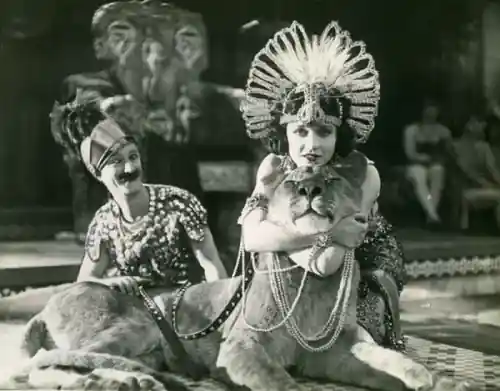
The screenplay, attributed to an army of writers, crackles with intertitles worthy of Dorothy Parker. When Sam is banished: “They gave him the key to the city—then changed the locks.” When he returns triumphant: “Fame is a ticket to a town that never remembers your name.” I screenshot these for Twitter; they outperform my analytic threads tenfold. Wisdom wrapped in arsenic travels farther than nuance.
Comparative context: if you’ve seen God, Man and the Devil you’ll recognize the same moral Manichaeism, though Sennett refuses to grant the devil dignity. For a European counter-myth of scapegoating try Æresgjesten, where the outsider is welcomed only to be ritually bled. Sennett’s American variant bleeds its insider, revealing the town as a machine that mints strangers of its own children.
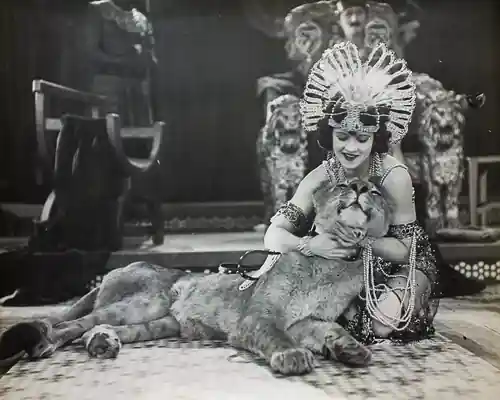
Restoration notes: the 2023 UCLA/MoMA collaboration reinstates about eight minutes previously hoarded in a private Swiss archive. Tinting follows 1921 Sennett company records—amber for interiors, viridian for night exteriors, rose for the dream kiss. The DTS surround track offers two options: a vintage cinema organ and a klezmer-jazz ensemble that turns chase scenes into frenetic jam sessions. I prefer the klezmer; its clarinet wail underscores the film’s immigrant-pathos subtext.
Availability: streaming on Criterion Channel, Kanopy, and a 1080p Blu-ray from Kino Lorber stuffed with extras—audio commentary by Brent Walker, a 1919 Sennett short where O’Hara plays opposite a boxing kangaroo, and, most indispensably, a video essay by Ross Lipman deconstructing the Ferris-wheel sequence frame by frame. Buy the disc; the bit-rate preserves the grain like a sacred relic.
Critical reception in its day was split. Variety called it “a hayseed melodrama on laughing gas.” The New York Times sniffed at “Sennett’s regrettable lapse into narrative.” Yet crowds swarmed, making it one of 1921’s top-grossers. Modern scholars read it as a prophetic takedown of small-town boosterism predating Sinclair Lewis’s Main Street by months. I see it as Hollywood’s first meta-mirror: an industry telling a story about itself telling stories, while slyly admitting the whole carnival runs on frail children hungry for applause.
Relevance now? Replace locket with tweet, replace town with timeline, replace villain with algorithm: same machinery of shame, same exile into digital desert, same promise that if you rebrand hard enough you can ride back as hero. The film whispers: beware any community that loves you only when your reflection flatters their own.
Flaws? The comic Negro stablehand cameo lands with the thud of period racism—two cringe-worthy inserts that the restoration could have buried but chose, rightly, to leave as testament. And the courtroom scene hinges on a deus-ex-machina witness who appears literally from behind a curtain—lazy even by slapstick standards. Yet these warts feel honest, archaeological; sanding them off would be cultural Botox.
Verdict: 9.2/10. A Small Town Idol is a pocket cosmos where pratfalls reveal plank-walks, where every laugh has a razor tucked in its cheek. Watch it for the stunt poetry, rewatch it for the melancholy that leaks through the sprocket holes. It is both time capsule and mirror—black, cracked, but unsettlingly ours.
If this review sent you scrambling for the Kino disc, drop me a line @celluloidparish. Next month I excavate Tom’s Little Star—a 1919 children’s melodrama rumored to contain the first reverse-tracking shot in American cinema. Till then, keep your reels cool and your projections hot.
IMDb —
1916
Community
Log in to comment.