DbcultAccessing Vault...
Cult Review
Senior Film Conservator
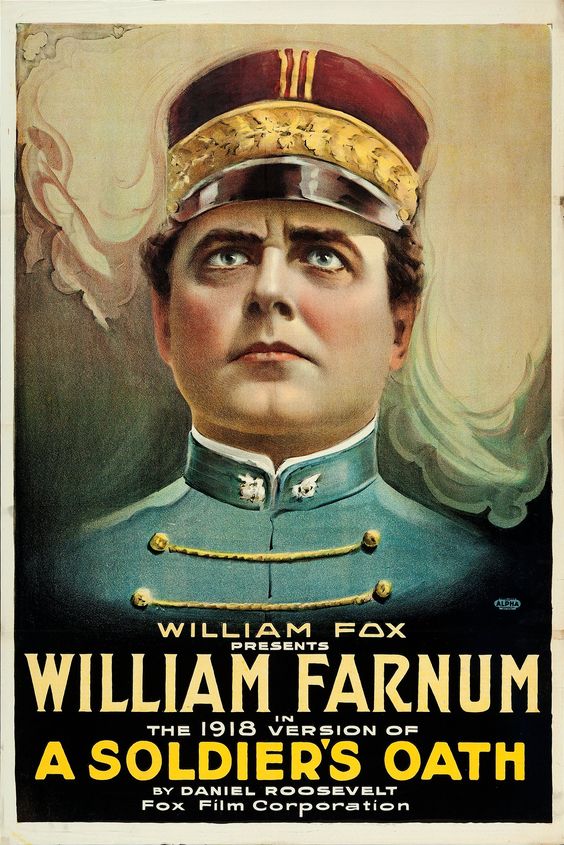
In the annals of early cinema, few narratives unfurl with the intricate tapestry of fate, injustice, and relentless pursuit quite like Oscar Apfel's 1915 silent drama, A Soldier's Oath. This isn't merely a film; it's a meticulously crafted emotional labyrinth, challenging its audience to navigate the moral ambiguities of a world scarred by conflict and riddled with deception. Through the expressive, often melancholic, visages of its cast, particularly the compelling Henry Hebert as Pierre Duval, the film transcends the limitations of its silent medium, delivering a powerful saga that resonates with timeless themes of sacrifice, identity, and the enduring human quest for truth. It's a testament to the era's storytelling prowess, where grand gestures and nuanced pantomime converged to create an immersive experience, proving that the most profound stories often need no dialogue to speak volumes.
The narrative thrust of A Soldier's Oath begins amidst the grim pageantry of war, a setting that immediately imbues the subsequent events with a sense of high stakes and existential peril. Pierre Duval, a French soldier, finds himself not on the front lines of a glorious charge, but in a moment of intimate human tragedy: the discovery of the mortally wounded Count de Morave. This chance encounter, a whisper of a dying man's final wish, sets in motion a chain of events so catastrophic that it beggars belief, yet feels tragically inevitable within the film's dramatic framework. The Count's plea to deliver family jewels and critical papers to the Vicomte Raoul de Reyntiens is more than a simple request; it's a burden of honor, a sacred trust that Pierre accepts with the solemnity of his military creed. This initial act of compassion, however, becomes the very genesis of his undoing, a cruel twist of fate that transforms a selfless deed into an instrument of profound personal devastation.
Upon his return to domestic bliss, a fleeting respite from the horrors of war, Pierre unknowingly seals his tragic destiny. The decision to secure the Count's entrusted valuables within a box already containing Margot’s cherished necklace—a token of affection from the distinguished Duke D'Auberg—is a moment steeped in dramatic irony. The audience, privy to the lurking danger, watches with a sense of dread as the pieces align for the impending catastrophe. Enter Lazare, a shadowy war correspondent who, having witnessed Pierre’s poignant scene with the dying Count, has meticulously plotted his villainy. Lazare isn't merely a thief; he is a predator, his actions driven by avarice and a chilling opportunism. His brutal home invasion, culminating in the senseless murder of Margot and the theft of both the Count's jewels and the Duke's necklace, is a shocking pivot point, plunging the narrative into an abyss of despair. The subsequent false accusation and Pierre’s wrongful conviction for a crime he did not commit echo the profound injustices explored in other cinematic dramas of the era, where the protagonist is often pitted against an unforgiving legal system. One might draw thematic parallels to films like The Fugitive, where wrongful accusation drives the entire narrative, though A Soldier's Oath adds the layer of a meticulously constructed frame-up by a known antagonist, rather than a mere circumstantial error.
Pierre’s sentencing to life imprisonment is not just a legal verdict; it's a symbolic burial, a stripping away of his identity and dignity. Hebert’s portrayal of Pierre during this period is particularly poignant, conveying the crushing weight of despair and the gnawing agony of a man unjustly condemned. Yet, even in the depths of incarceration, the embers of his inherent heroism refuse to be extinguished. A dangerous jailhouse rescue, a moment of selfless bravery amidst hardened criminals, becomes his unlikely path to salvation. This act, perhaps a desperate bid for meaning in a meaningless existence, catches the eye of authority, leading to his pardon. It’s a dramatic contrivance, certainly, but one that serves the narrative's overarching theme of redemption, suggesting that even in the darkest corners, virtue can find a way to shine and alter destiny. This period of the film, while brief, is crucial for establishing Pierre's resilient character, transforming him from a victim of circumstance into a man capable of fighting for his rightful place in the world.
Years pass, and the narrative elegantly bridges the temporal gap, introducing us to a new chapter of Pierre’s fractured legacy. His daughter, Mavis, adopted by the benevolent Duke D'Auberg, has blossomed into a young woman, unaware of the profound tragedy that shaped her early life. Her burgeoning romance with the impoverished but honorable Vicomte Raoul de Reyntiens introduces a delicate thread of hope and genuine affection into a story otherwise steeped in sorrow. This subplot serves as a vital counterpoint to the central conflict, highlighting the innocent beauty that can still thrive despite the shadows of the past. However, the respite is short-lived, for the specter of villainy, Lazare, resurfaces with audacious cunning. Now masquerading as the very Count de Morave whose identity he has effectively erased, Lazare embodies the ultimate opportunist. His calculated courtship of Mavis is a chilling display of his Machiavellian tendencies, a perverse echo of his earlier crimes. He is not merely seeking love; he is seeking legitimacy, a final consolidation of his stolen identity and ill-gotten gains. The audacity of his deception is breathtaking, positioning him as a truly formidable antagonist whose intelligence matches his depravity. This intricate web of deceit and mistaken identity can be seen as a precursor to complex thrillers, where the villain's elaborate scheme is as central as the hero's quest for justice, perhaps even reminiscent of the intricate plotting found in The Master Mind, albeit with a more personal, vengeful core.
The climax of A Soldier's Oath is a masterclass in dramatic tension, meticulously building towards the inevitable moment of revelation. Lazare, in a move of arrogant overconfidence, attempts to solidify his fraudulent courtship by presenting Mavis with some of the very jewels he stole years ago, including the distinctive necklace that once belonged to Margot. It is this specific heirloom, a tangible link to Pierre’s shattered past, that becomes the crucial piece of the puzzle. When Pierre, now free and searching for meaning, encounters Mavis and spots the necklace, a flood of repressed memories and agonizing recognition washes over him. The film handles this moment with a powerful visual economy, relying on Hebert’s expressive face to convey the instantaneous shift from quiet observation to searing realization. This isn't just about identifying a thief; it's about reclaiming a stolen life, avenging a murdered love, and restoring a tarnished honor. The subsequent confrontation, where Pierre dramatically exposes Lazare, is the cathartic release the audience has been yearning for. It's a moment of profound retribution, not merely for the crime of theft, but for the years of suffering, the stolen identity, and the shattered family. The resolution, while satisfying, leaves a lingering sense of the indelible scars left by such profound injustice, a nuanced understanding that even justice, when long delayed, comes at a heavy cost.
The success of A Soldier's Oath hinges almost entirely on the nuanced performances of its ensemble, particularly Henry Hebert. As Pierre Duval, Hebert delivers a masterclass in silent acting, his every gesture, every flicker of emotion across his features, conveying a depth of feeling that transcends the absence of spoken dialogue. His portrayal of grief, despair, stoicism, and ultimately, righteous fury, is utterly captivating. Hebert doesn't just act; he embodies Pierre's arduous journey, making the audience feel every injustice, every fleeting hope. Alma Frederic, though her screen time as Margot is tragically brief, leaves an indelible impression, her warmth and innocence serving as a stark contrast to the violence that befalls her. Louis V. Hart's Lazare is a chilling study in villainy. He is not a caricature but a cunning, calculating antagonist whose charm masks a ruthless ambition. His ability to project both a veneer of respectability and an undercurrent of menace is crucial to the film's dramatic tension. The supporting cast, including Will Lois as the noble Vicomte and the dual portrayal of Mavis by Kittens Reichert and Ruth Findlay, contribute effectively to the emotional landscape, grounding the more melodramatic elements in believable human interactions. Oscar Apfel's direction, coupled with Mary Murillo's astute screenplay, guides these performances with a confident hand, ensuring that the narrative remains clear and emotionally resonant despite its complex twists. The film's ability to maintain a consistent tone and compelling pace is a testament to Apfel's directorial vision, making it stand out among the crowded field of early 20th-century dramas.
Beyond the performances, A Soldier's Oath is a fascinating artifact of early cinematic technique. Apfel employs a visual language that, while perhaps rudimentary by today's standards, was sophisticated for its time. The use of intertitles is judicious, serving to clarify plot points rather than over-explain emotions, allowing the actors' expressions and the film's carefully composed frames to carry the emotional weight. The cinematography, though lacking the elaborate camera movements of later eras, effectively utilizes close-ups to emphasize character reactions and wide shots to establish setting, particularly the contrasting environments of the battlefield, the domestic home, and the stark prison. The film's pacing is deliberate, building suspense gradually, allowing the audience to fully absorb the gravity of each development. This measured approach ensures that the eventual climactic revelation feels earned and impactful. It’s a masterclass in how to tell a complex story with limited technological means, relying on fundamental principles of visual narrative. In an era where films like Sealed Valley and The Fifth Commandment were also exploring dramatic human conflicts, A Soldier's Oath distinguished itself with its particular blend of wartime drama, domestic tragedy, and a compelling quest for justice, showcasing the versatility of silent storytelling. The film's ability to evoke strong emotional responses without a single spoken word is a powerful reminder of the universal nature of human experience and the enduring power of visual artistry.
More than a century after its release, A Soldier's Oath remains a compelling watch, not just as a historical curiosity, but as a potent piece of dramatic filmmaking. Its themes of wrongful conviction, stolen identity, and the relentless pursuit of justice are evergreen, resonating with audiences across generations. The film serves as a powerful reminder of the fragility of truth and the devastating consequences of deceit. It also highlights the transformative power of a single object – Margot's necklace – to unravel years of carefully constructed lies, a narrative device that continues to be employed in contemporary cinema. For enthusiasts of silent film, it offers a rich example of the era's sophisticated narrative structures and the profound emotional depth achievable through purely visual means. For newcomers, it’s an accessible entry point into the world of early cinema, demonstrating that compelling storytelling is not bound by technological advancements. The film’s intricate plot, while occasionally leaning into melodrama, is consistently engaging, offering a satisfying arc of suffering and eventual triumph. Its legacy lies in its demonstration that even without the spoken word, a film can articulate the deepest human emotions and explore the most complex moral dilemmas with unwavering clarity and impact. It’s a testament to the fact that a soldier's oath, even when tragically misdirected, can ultimately lead to a profound and hard-won redemption.
In conclusion, A Soldier's Oath is far more than a period piece; it is a timeless narrative of human resilience in the face of overwhelming adversity. It invites us to reflect on the nature of justice, the burden of a promise, and the often circuitous path to truth. Its quiet power, delivered through the expressive artistry of its cast and the thoughtful direction of Apfel, ensures its place as a significant, albeit often overlooked, achievement of the silent film era. It stands as a vibrant example of how early filmmakers, unencumbered by the complexities of sound, mastered the art of visual storytelling to craft narratives that continue to captivate and move us today.

IMDb 6.5
1931
Community
Log in to comment.