DbcultAccessing Vault...
Cult Review
Senior Film Conservator
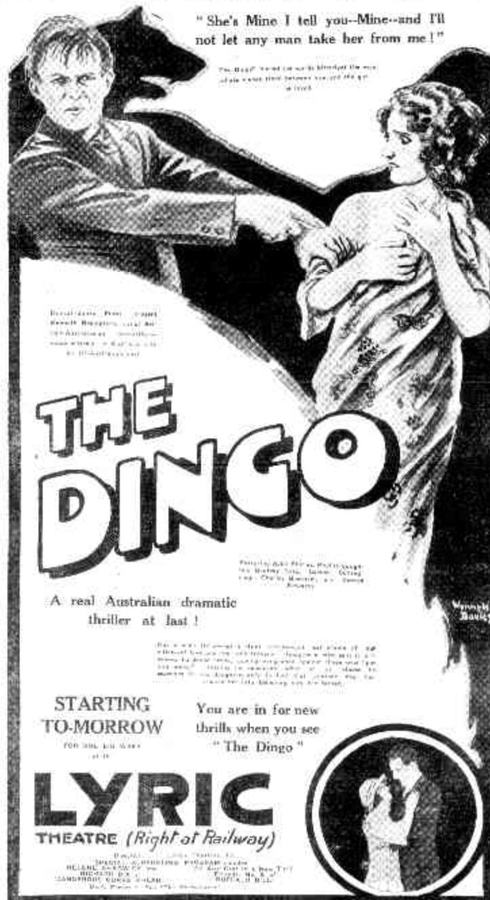
The year 1923 remains a watershed moment for the nascent Australian film industry, a period where the celluloid medium struggled to carve out a distinct national identity amidst the encroaching shadows of Hollywood’s burgeoning empire. Standing tall within this historical landscape is The Dingo, a production that defies the simplistic tropes of the 'bushranger' genre to offer something far more psychologically complex. Directed by Kenneth Brampton, this film is not merely a relic of a bygone era; it is a visceral, haunting exploration of the human condition stripped bare by the isolation of the outback.
At the heart of this cinematic endeavor lies the performance of George Edwards. His portrayal of the 'Dingo' is a masterclass in silent-era physicality. Unlike the polished heroes found in contemporary American imports like The Gun Fighter, Edwards imbues his character with a jagged, nervous energy that suggests a man more at home with the dingoes of the scrub than the denizens of the parlor. There is a haunting quality to his gaze, a sense of a man who has looked into the sun for too long and seen the void staring back. This isn't the romanticized ruggedness of a frontier myth; it is the weary resilience of a man who has been spat out by civilization.
The narrative architecture, meticulously crafted by Brampton and Phyllis Coughlan, utilizes the vastness of the Australian landscape not just as a backdrop, but as an active participant in the drama. The cinematography—reconstructed through the lens of historical accounts and surviving fragments—captures a world where the light is both a blessing and a curse. Where films like The District Attorney focused on the claustrophobic interiors of legal power, The Dingo breathes in the open air, finding terror in the horizon's infinite reach.
Phyllis Coughlan’s contribution cannot be overstated. As both a writer and the female lead, she brings a nuanced perspective to the 'damsel' trope. Her character is no mere prize to be won; she is the moral compass of a story spinning toward chaos. In the 1920s, female screenwriters often infused their work with a domestic sensitivity, yet Coughlan’s work here shares more DNA with the grit of The Third Degree than the whimsicality of All of a Sudden Peggy. She understands the stakes of the frontier—the way a single bad harvest or a misinterpreted glance can lead to ruin.
The dynamic between Coughlan and Godfrey Cass is particularly electric. Cass, playing the manipulative overseer, represents the rot within the colonial machine. While the Dingo is an honest beast, Cass’s character is a serpent in a three-piece suit. This juxtaposition serves as a scathing critique of the 'civilized' world. It suggests that the true predators are not those who howl in the night, but those who sign deeds and foreclose on dreams in the light of day. This thematic depth elevates the film far beyond the reach of simple Saturday afternoon matinees like Perils of Thunder Mountain.
From a technical standpoint, The Dingo showcases an impressive command of visual storytelling. Brampton employs a series of wide shots that emphasize the insignificance of the human figures against the monolithic gum trees and rocky outcrops. This isn't the lush, curated beauty seen in Golden Dreams; this is a landscape that feels indifferent to human suffering. The editing, though primitive by modern standards, creates a rhythmic tension during the film’s climactic chase sequence that rivals the best work of D.W. Griffith.
Consider the scene where the Dingo is cornered near a dry creek bed. The use of natural light creates long, distorted shadows that mirror the character’s internal fracturing. This visual metaphor for the 'split self'—the man versus the animal—is a sophisticated touch that one might expect from European imports like Du skal ære, yet here it is, flourishing in the Australian scrub. It challenges the notion that early Antipodean cinema was merely a derivative of foreign styles.
The film also engages in a fascinating dialogue with the social mores of its time. While Everywoman dealt with the allegorical struggles of virtue in a modern city, The Dingo asks what happens to virtue when the city is a thousand miles away. Is morality an inherent trait, or is it a luxury afforded only to those within the safety of the town walls? This question is explored through the character of William Coulter’s town constable, a man caught between his duty to the law and his burgeoning respect for the Dingo’s rough-hewn code of honor.
The inclusion of Sybil Shirley adds a layer of domestic pathos that grounds the high-stakes drama. Her performance provides a counterpoint to the masculine violence that dominates the film’s second act. In many ways, the film mirrors the structural complexity of The Governor, where personal vendettas are inextricably linked to the broader political and social climate. However, Brampton keeps the focus intimate, ensuring that the emotional stakes never get lost in the grandiosity of the setting.
To watch The Dingo today is to witness the birth of what we might now call 'Outback Noir.' It possesses a cynicism that was rare for 1923, a refusal to provide easy answers to the questions it poses. Even as the film reaches its resolution, there is no sense of a permanent 'happily ever after.' The Dingo may have found a temporary peace, but the wilderness remains, and the scars of his exclusion will never fully heal. This lack of sentimentality is what makes the film feel so startlingly modern.
When compared to the lighthearted matrimonial comedies of the era, such as Pick Out Your Husband or the breezy charm of The Downy Girl, The Dingo feels like a thunderclap. It is a work of significant ambition that attempted to synthesize the harsh realities of Australian life with the expressive power of the silent screen. Even the minor characters, often relegated to comic relief in films like Women's Weapons, are here given a sense of history and purpose. Every face in the crowd feels like it has been carved out of the very sandstone of the Blue Mountains.
Ultimately, Kenneth Brampton’s masterpiece serves as a vital link in the chain of Australian cultural history. It asks the perennial question: Are They Born or Made? regarding the nature of the criminal and the hero. Is the Dingo a product of his environment, or was he always destined to howl at the edges of the world? By refusing to provide a definitive answer, the film invites the audience to look inward, to examine their own prejudices and the structures of power they uphold.
The film's pacing is deliberate, eschewing the frantic energy of spy thrillers like Inside the Lines for a slow-burn intensity that builds to a crescendo of dust and desperation. It is a testament to the power of visual storytelling that, even a century later, the image of George Edwards standing alone against the vast, empty horizon remains etched in the mind. The Dingo is not just a movie; it is a haunting, beautiful, and deeply necessary piece of cinematic art that deserves its place in the pantheon of great silent dramas.
A seminal work of early Australian grit, 'The Dingo' is a mandatory watch for any serious student of film history or anyone who has ever felt the pull of the wild places.
IMDb —
1928
Community
Log in to comment.