DbcultAccessing Vault...
Cult Review
Senior Film Conservator
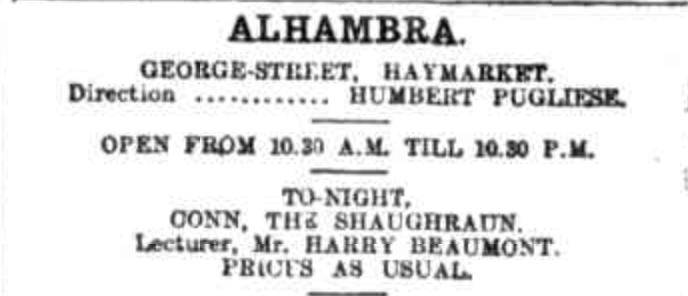
The curtain rises, or perhaps more aptly, the flicker begins, on "Conn, the Shaughraun," a cinematic endeavor that transports us back to an era when the moving picture was still finding its voice, its rhythms, and its profound capacity for storytelling. Derived from Dion Boucicault’s celebrated stage play, this film, even in its nascent form, promised audiences a stirring drama steeped in Irish sentiment, an adventurous narrative of injustice, escape, and ultimate redemption. It’s a testament to the enduring power of certain universal themes that a plot so straightforward could captivate then, and still resonate with a historical curiosity now.
At its core, "Conn, the Shaughraun" is a quintessential melodrama, a genre that thrived in early cinema, offering audiences grand emotions, clear-cut villains, and heroes whose moral compass never wavered. We are introduced to Robert Ffolliott, a young Irish gentleman, whose idyllic existence is shattered by the insidious machinations of the avaricious Kinchella. This villain, a master of deceit, orchestrates a series of false accusations, culminating in Ffolliott’s unjust conviction and subsequent transportation to a penal colony in far-off Australia. This premise alone sets the stage for a narrative brimming with pathos and the promise of dramatic intervention, a common thread in many narratives of the period, much like the plight of characters in Oliver Twist or the societal critique inherent in Les misérables, though perhaps with a distinctly Irish flavor here. The malevolent Kinchella stands as a stark antagonist, his greed the catalyst for Ffolliott's profound suffering.
The despair of Robert Ffolliott, however, is not destined to linger indefinitely. Hope, in the form of the titular Conn the Shaughraun, emerges from the shadows. The very name "Shaughraun" evokes a sense of the free-spirited, the charming rogue, the loyal wanderer who operates outside the rigid confines of societal law, yet adheres to a higher moral code. Conn is the archetypal folk hero, a character imbued with courage, wit, and an unwavering commitment to justice, especially when it concerns a wronged countryman. His entry into the narrative transforms a tale of victimhood into an exhilarating saga of resistance and liberation. He represents the unyielding spirit of the Irish people, a beacon against tyranny.
The decision to send Ffolliott to an Australian penal colony is not merely a plot device; it’s a historically resonant detail that speaks volumes about the harsh realities of the British judicial system and its impact on Ireland. For countless Irish men and women, transportation to Australia represented a living death, a severance from home, family, and identity. Thus, Conn’s intervention is not just a personal rescue; it carries a symbolic weight, representing a defiance against an oppressive system. The audacity required to orchestrate an escape from a prison ship, a veritable floating fortress, would have been a spectacle in itself for early cinema audiences. One can imagine the tension building as Conn, with meticulous planning and daring execution, breaches the security, navigating the perilous waters of bureaucracy and physical barriers to secure Ffolliott's freedom. This kind of high-stakes escape narrative is a thrilling subgenre, seen in various forms from the dramatic boxing contests like The Corbett-Fitzsimmons Fight (where physical prowess is key to 'escape' victory) to other tales of survival against overwhelming odds. It's a testament to the resourcefulness and bravery that define such heroes.
With Ffolliott liberated, the narrative shifts its focus to the perilous journey back to Ireland. This return is not merely geographical; it is a spiritual and emotional homecoming, a reclamation of identity and belonging. The dangers faced during this clandestine voyage, the constant threat of recapture, the yearning for familiar shores – these elements would have been powerfully conveyed through the visual storytelling of the era. The Irish landscape, often romanticized in Boucicault's works, would have served as a poignant backdrop, a visual metaphor for the protagonist's longing and the film's underlying themes of national pride. The emerald isle's embrace awaits.
And then, the reunion. The narrative culminates in Ffolliott’s heartfelt embrace with his sweetheart. This is the emotional payoff, the moment where all the trials, tribulations, and daring acts of heroism find their ultimate justification. The power of love to transcend separation, injustice, and even the vast expanse of an ocean is a timeless motif, one that resonated deeply with audiences then, and continues to do so. Louise Lovely, a prominent figure in early Australian and American cinema, would have brought a compelling presence to the role of the sweetheart. Though details of her specific performance in "Conn, the Shaughraun" are scarce, her known talent for conveying emotion and charm would undoubtedly have elevated these poignant scenes, making the reunion feel genuinely earned and deeply moving. Her presence alone speaks to the film's ambition to connect with broader audiences, much like the international appeal of stars in films such as Cleopatra or Les amours de la reine Élisabeth. It’s a moment of pure, unadulterated joy, the kind that anchors the most memorable melodramas.
To fully appreciate "Conn, the Shaughraun," we must place it within its historical cinematic context. This was a period of rapid innovation, where filmmakers were experimenting with narrative techniques, editing, and the very language of cinema. While the surviving prints of such early films are often incomplete or in varying states of preservation, the ambition to adapt popular stage plays like Boucicault's was a common and shrewd move. Boucicault, a prolific and highly successful playwright, understood the pulse of his audiences, crafting narratives that were both entertaining and often subtly political. His plays, including "The Shaughraun," "The Colleen Bawn" (The Colleen Bawn), and "Arrah-Na-Pogue" (Arrah-Na-Pogue), were celebrated for their vibrant characters, intricate plots, and their heartfelt portrayal of Irish life and struggles. Translating this theatricality to the silent screen presented unique challenges and opportunities.
Filmmakers had to find visual equivalents for Boucicault’s witty dialogue, his dramatic monologues, and the emotional nuances conveyed through live performance. This often meant relying heavily on exaggerated gestures, expressive facial movements, and the strategic use of intertitles to convey dialogue and exposition. The visual spectacle, particularly the prison escape and the journey, would have been paramount. Imagine the thrill of seeing a ship at sea, perhaps even miniature effects or carefully constructed sets, all designed to transport the audience into the heart of the adventure. The film, therefore, acts as a fascinating bridge between the theatrical tradition and the burgeoning art form of cinema, demonstrating how early directors sought to leverage existing popular narratives for the new medium. This transition was a pivotal moment in cinematic history.
The enduring appeal of "Conn, the Shaughraun" lies in its masterful deployment of melodramatic tropes. The clear distinction between good and evil, the high stakes, the emotional intensity, and the ultimate triumph of virtue – these elements provide a cathartic experience for the viewer. In a world that was, much like ours, complex and often unjust, the clarity of melodrama offered a comforting, if sometimes simplistic, moral universe. The film tapped into a deep well of human emotion, offering a narrative where courage is rewarded, villainy is punished, and love conquers all. The triumph of righteousness over malevolence is a timeless draw.
Furthermore, the film's engagement with Irish themes speaks to a broader fascination with national identity and cultural heritage in early cinema. Just as films like The Independence of Romania or The Scottish Covenanters explored their respective national narratives, "Conn, the Shaughraun" offered a glimpse into Irish resilience and defiance. It celebrated the spirit of a people who, despite historical oppression, maintained a vibrant cultural identity and a fierce loyalty to their homeland. This aspect would have resonated powerfully with Irish diaspora communities, offering a cinematic connection to their roots and a celebration of their heritage. The portrayal of the Shaughraun himself, a character often seen as an embodiment of Irish charm, wit, and rebellious spirit, would have been particularly potent. He is not just a rescuer; he is a symbol of hope and self-determination.
While the film’s titular character and the wronged hero drive much of the plot, the presence of Louise Lovely in the cast is a significant draw. Lovely, born Louise Carbasse in Australia, was a star who achieved considerable fame in both her home country and Hollywood. Her career trajectory, moving from early Australian productions to a successful stint in American silent films, speaks to her talent and screen presence. In "Conn, the Shaughraun," she would have been tasked with embodying the unwavering loyalty and profound love of Ffolliott's sweetheart. In silent cinema, an actor's ability to convey complex emotions through facial expressions, body language, and subtle gestures was paramount. Lovely’s known capacity for emoting and her striking screen presence would have made her a compelling figure, particularly in the emotional climax of the reunion.
Her performance, like that of many silent film actors, would have been a masterclass in non-verbal communication. Every glance, every sigh, every desperate plea or joyful embrace had to be legible to an audience without the aid of spoken dialogue. This required a heightened, yet nuanced, style of acting that is a fascinating study in itself. The impact of a star like Lovely would have been crucial in drawing audiences and investing them emotionally in the narrative. Her presence is a reminder that even in these early films, the magnetic pull of charismatic performers was a vital ingredient in their success, much like the drawing power of performers in early cinematic depictions of historical figures or theatrical adaptations such as Hamlet, Prince of Denmark or The Life and Death of King Richard III. She embodies the steadfast devotion that forms the emotional core of the narrative.
Dion Boucicault’s original play, "The Shaughraun," premiered in 1874 and was an immense success, running for hundreds of performances and touring extensively. It was a play that perfectly captured the zeitgeist, blending romance, adventure, political intrigue, and comedic elements. The adaptation to film would have inevitably involved certain transformations. The fluidity of cinema allowed for a greater scope in depicting the action – the prison ship, the Australian setting (even if simulated), the Irish countryside – in ways that even the most elaborate stage sets could only hint at. This transition from stage to screen was a defining characteristic of early narrative cinema. Filmmakers were learning how to tell stories not just through tableau shots, but through editing, close-ups, and camera movement, slowly evolving a distinct cinematic grammar.
While "Conn, the Shaughraun" may appear simplistic by modern standards, it represents a crucial step in this evolutionary process. It demonstrates the early industry's eagerness to translate proven popular narratives into the new medium, harnessing the power of a well-loved story to attract audiences. It also highlights the enduring appeal of certain narrative archetypes – the noble hero, the dastardly villain, the loyal helper, and the steadfast beloved. These archetypes form the bedrock of storytelling across various media, from ancient myths to contemporary blockbusters. The film, therefore, is not merely a historical curiosity but a significant artifact in understanding the development of narrative cinema and its continuous dialogue with its theatrical antecedents. It's a fascinating glimpse into the genesis of cinematic narrative.
The film also inadvertently touches upon a fascinating cross-cultural cinematic connection between Ireland and Australia. While Robert Ffolliott is sent to Australia as a convict, many early Australian films, like The Story of the Kelly Gang or Robbery Under Arms, explored the lives of bushrangers and convicts within Australia itself. These films often depicted figures who, much like Conn the Shaughraun, operated outside the law but were seen by some as folk heroes or champions against perceived injustice. There's a shared thematic resonance here: a rebellious spirit, a challenge to authority, and a romanticization of those who defy the system for what they believe is right. Conn’s daring rescue of Ffolliott from the penal colony effectively reverses the typical "convict narrative" of Australian cinema, bringing the wronged man back to his homeland rather than detailing his life in exile. This unique twist gives "Conn, the Shaughraun" a particular flavor within the broader context of early adventure films.
The sheer ambition of depicting such a journey – from Ireland to Australia and back – in an early silent film is remarkable. It speaks to a desire to transcend geographical limitations and bring epic scope to the screen. Even if accomplished through clever editing, intertitles, and perhaps stock footage or painted backdrops, the narrative's reach across continents would have been an impressive feat for its time. It’s a reminder that even in its infancy, cinema was already dreaming big, pushing the boundaries of what was possible in visual storytelling. This grand ambition is palpable throughout.
In the absence of spoken dialogue, the visual elements of "Conn, the Shaughraun" would have been paramount. The expressions of fear, defiance, love, and joy had to be writ large on the actors' faces and bodies. The contrasting settings – the oppressive confines of the prison ship versus the lush, welcoming landscapes of Ireland – would have been used to evoke strong emotional responses. The very act of Ffolliott's return to Ireland, seeing the familiar green hills and reuniting with his love, would be imbued with powerful symbolism. It's a testament to the fundamental human desire for home, for justice, and for connection. The film, through its visual grammar, aimed to tap into these primal emotions, creating a shared experience for the audience. The visual poetry of early cinema truly shines here.
The use of specific props, costumes, and set designs would also contribute significantly to the film's atmosphere and storytelling. From the uniforms of the prison guards to the traditional Irish attire, every detail would have been carefully considered to enhance the narrative and immerse the audience in its world. The dramatic tension of the escape, the quiet desperation of Ffolliott's imprisonment, and the joyous relief of the reunion would all be communicated through these visual cues, culminating in a powerful emotional crescendo that defines the best of early melodramatic cinema. It's a film that, even from a distance of over a century, invites us to consider the foundational elements of cinematic storytelling and the timeless appeal of a hero's journey against formidable odds. The themes of loyalty, injustice, and the yearning for home are as potent today as they were when this film first graced the flickering screens, a vivid reminder of cinema's enduring power.
IMDb 6.5
1934
Community
Log in to comment.