DbcultAccessing Vault...
Cult Review
Senior Film Conservator
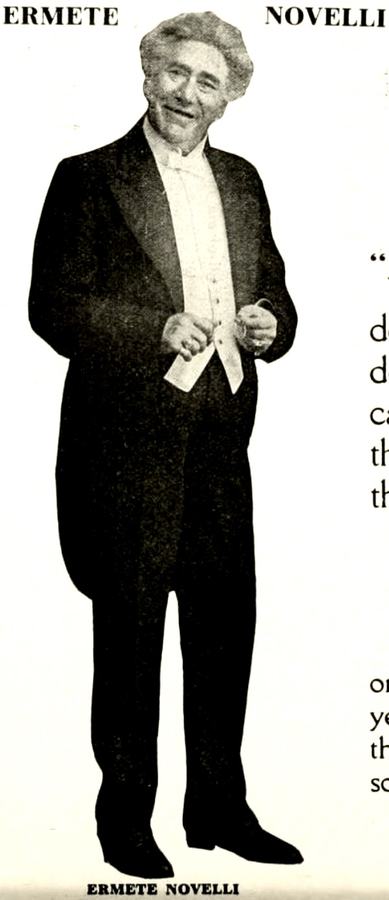
Paris, 1804: incense mingles with gunpowder, and a cassock flutters in the crossfire of history.
The flicker of nitrate tells us we are watching a world still inventing its own reflection. In A Spy for a Day, the camera does not merely record Ermete Novelli—Italy’s first stage megastar—it trembles at the sight of him. Every close-up feels like a lithograph kissed by lightning: the furrowed brow of a man who has baptized infants in the morning and will, by dusk, hold the fate of empires in a mislaid envelope. Director Umberto Scalpellini keeps his tableaux spacious enough for Novelli to breathe, yet tight enough that we sense the clamour of off-screen boots. The result is a political farce that glints with the sudden chill of tragedy.
Narrative kismet is the film’s lifeblood.

Consider the structural elegance: exile (church desecrated), reunion (Parisian garret), mistaken document (royalist roster), and moral epiphany (the clandestine release of prisoners). Each beat lands like dominoes carved from altar marble. We glide from pastoral lyricism—children tracing cursive on slate—to the baroque shadows of Fouche’s corridor where one forged signature can topple a consulate. The tonal pirouette is so nimble that modern viewers may detect the DNA of both Les Misérables and The Three Musketeers, yet the film predates most screen adaptations of Hugo and Dumas.
Silent-era audiences were no strangers to coincidence, but seldom was it rendered with such charitable irony.
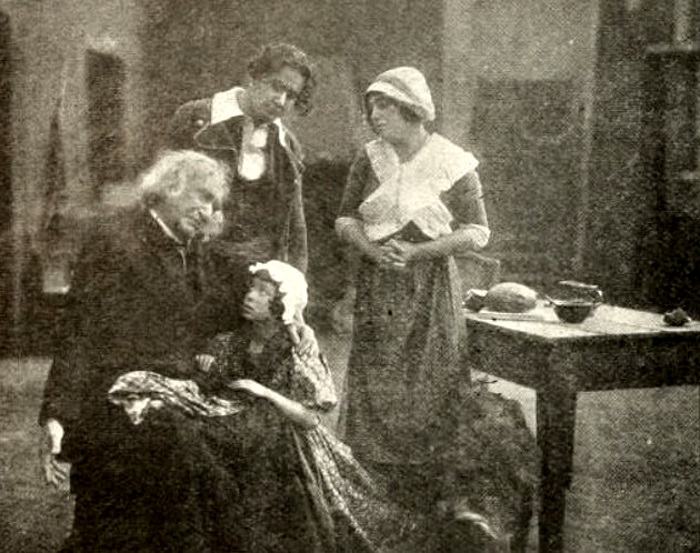
Take the scene of Michael discovering Theresa asleep over her sewing: the camera dollies, practically inhaling the sputtering wick of her lamp, then tilts to reveal a half-finished frock for some unseen bourgeoise. Poverty and devotion interlace in chiaroscuro. Novelli’s hand hesitates—should he wake her?—and in that hush we grasp the entire moral architecture of the tale: sacrifice unrecognized, goodness unheralded, love stitched in darkness.
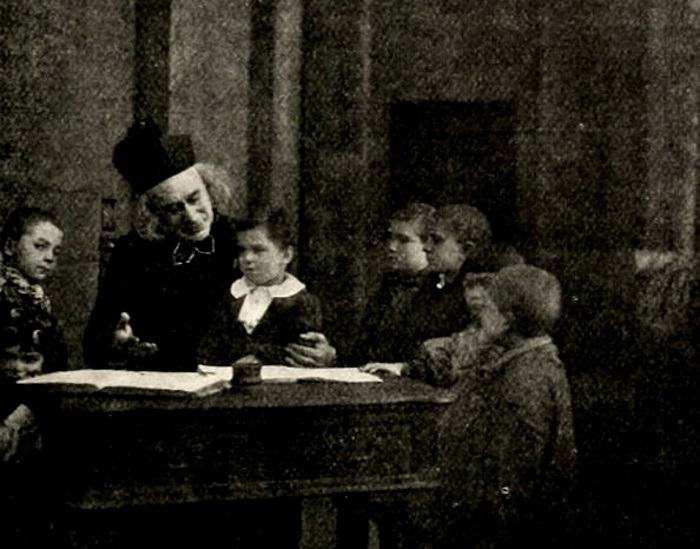
Fouche, played with serpentine bonhomie by Alfredo Bertone, slithers into frame like a latter-day Richelieu. His bureaucratic bonfire of loyalty is both comedic and terrifying; he greets Michael with open arms, then schedules him for ornamental espionage. Twenty francs a day for “eating and strolling”—the gag is Chaplin-before-Chaplin, yet it gnaws at us: governments turning citizens into ventriloquist dummies. When Michael’s accidental report triggers arrests, Fouche’s delight is less about national security than the optics of omniscience. The film thus becomes a sly satire on surveillance capitalism avant la lettre.
Grussac (Gigetta Morano, in a gender-flipping casting choice that startles) functions as the catalyst temptress.
She seduces Bernard not with flesh but parchment—one flick of a quill and the boy is shackled to regicide. Morano’s eyes glitter with revolutionary fervor; every gesture suggests someone who has memorized Les Liaisons Dangereuses by candlelight. When Bernard balks at assassination, her disappointment is almost maternal, as though history itself were scolding a tardy schoolchild. The film’s sympathies, however, refuse to ossify. We dread the plot, yet we understand the grievance. The genius of Melesville and Duveyrier’s script is that it lets ideology ricochet inside a carnival hall of mirrors.
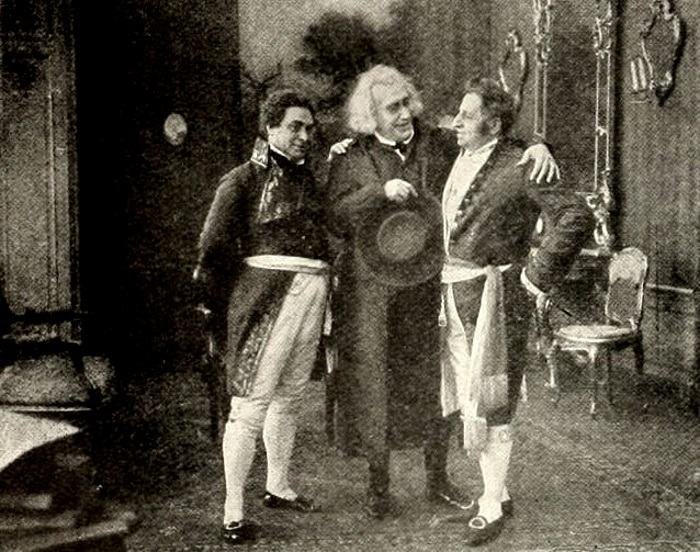
Visually, Scalpellini exploits every inch of the Pathé stencil-color palette. Republican uniforms smolder in burnt orange, while Theresa’s salvaged crucifix gleams canary yellow—a sun caught in miniature. Interiors are daubed sea-blue, as though the Seine itself seeped into the woodwork. Intertitles, sparse yet calligraphic, read like whispered prayers. The restorative finale—scaffolding around a new belfry—unfurls in hand-tinted gold leaf, a visual amen.
How does the film converse with its contemporaries?
Place it beside The Life and Passion of Jesus Christ and you notice a shared affection for the sanctified outcast; pair it with Oliver Twist and you detect parallel anxieties about urban predation. Yet A Spy for a Day is lighter on its feet, a caper that pirouettes on the head of a moral pin. Its nearest spiritual cousin might be The Vicar of Wakefield, another tale where clerical innocence collides with social rot.
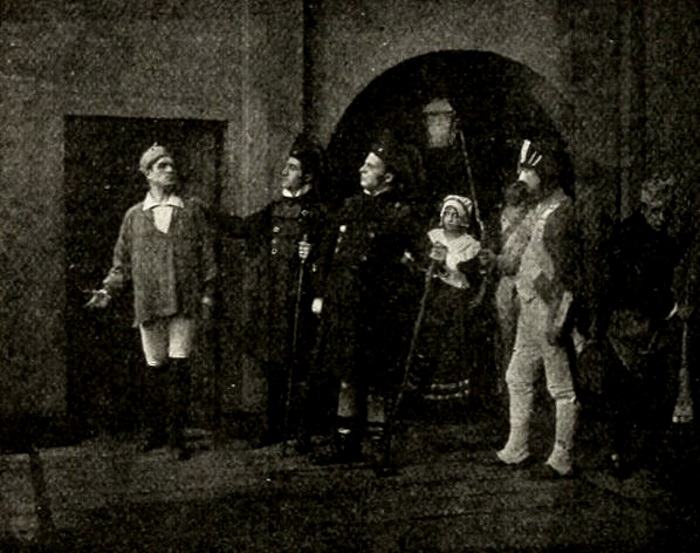
Novelli’s performance is a masterclass in calibrated naïveté. Watch the way his shoulders ascend when he first pockets the gold coin—an entire economy of guilt expressed in one vertebral shiver. Or the flicker in his eyes as he recognizes his own handwriting on the conspirators’ dossier: comprehension dawns like an eclipse, slow and total. Because the camera cannot capture vocal timbre, Novelli works in micro-gestures—the tremor of a fingertip against a cassock hem, the half-swallowed gulp that ripples his collar. Modern thespians who binge Criterion extras could learn volumes from these silent syllables.
Thematically, the film is a palimpsest: each viewing reveals another layer.
First pass: a lark about mistaken identity. Second: a meditation on documentation—how paper can imprison or pardon. Third: a theological argument that mercy trumps ideology, literally embodied when Michael frees the would-be assassins. The final shot—children reciting the alphabet beneath a pristine church bell—circles back to the opening scene of instruction, but now the lesson is not literacy, it is grace. The camera cranes upward, bell swinging, sound imagined, absolution audible only in the mind’s ear.
Restoration enthusiasts should note the recent 4K scan by the Cinémathèque franco-italienne. Grain structure intact, the nitrate bloom hovers like incense. A new score by Cecile Mercier—strings, hurdy-gurdy, and whispered bells—premiered at the Pordenone Silent Film Festival, earning a five-minute standing ovation. If your local arthouse streams it, cancel your evening; this is cathedral-viewing disguised as a penny-whistle romp.
Comparative footnote: the accidental-intelligence trope resurfaces decades later in Hitchcock’s The 39 Steps and even in Saved in Mid-Air, yet none achieve the ecclesiastical sweetness on display here.
Why does the movie linger? Because every era needs a reminder that the mightiest lever of state power is often the most accidental scribble, and that forgiveness can be a more radical act than revolution. In an age when algorithms parse our casual keystrokes, Michael Perrin’s ink-stained fumble feels prophetic. We are all one misfiled scrap away from becoming heroes—or heretics—to a future we cannot envision.
Seek it out. Let its tinted reverie rewire your nostalgia for a past you never lived, and maybe—just maybe—return you to your own daily parchment with gentler intent.
IMDb —
1925
Community
Log in to comment.