DbcultAccessing Vault...
Cult Review
Senior Film Conservator
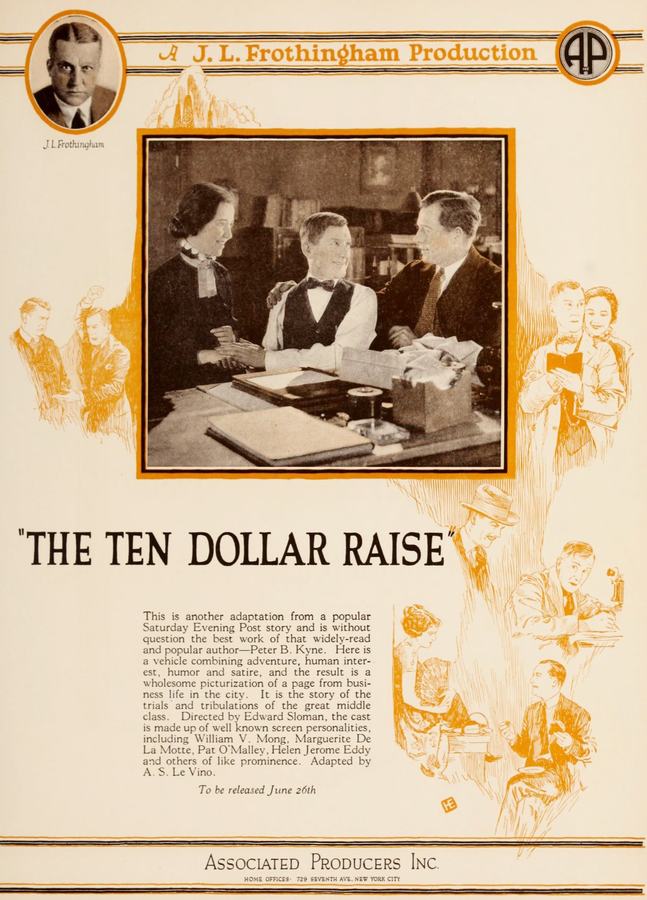
The 1921 cinematic landscape was often dominated by sprawling epics or slapstick frivolity, yet The Ten Dollar Raise, directed by Edward Sloman, carves out a niche of profound sociological resonance. It is a film that speaks directly to the soul of the white-collar worker, a demographic that, even a century ago, felt the suffocating squeeze of the industrial machine. At its core, the film is a character study of Wilkins, a man whose spine has been curved by the weight of other men's ledgers. William V. Mong delivers a performance of such nuanced pathos that it transcends the typical pantomime of the silent era, offering instead a grounded, visceral portrait of quiet desperation.
The opening sequences of the film establish a claustrophobic atmosphere that rivals the most oppressive urban dramas. We see Wilkins in his natural habitat: a cramped, ink-stained office where time is measured not by accomplishments, but by the ticking of a clock that seems to mock his stagnation. The writers, Albert S. Le Vino and Peter B. Kyne, masterfully construct a hierarchy of misery. Unlike the more whimsical struggles depicted in The Love Girl, the hardships here are rooted in the mundane cruelty of a missed promotion and the indignity of a stagnant wage. The boss, played with a sneering, bloated arrogance by Lincoln Plumer, represents the worst impulses of unrestrained capitalism—a figure of pure, unadulterated avarice.
The visual language of these early scenes is stark. Sloman utilizes tight framing to emphasize Wilkins' entrapment. The stacks of paper on his desk act as physical barriers, separating him from the world of the living. This isn't just a job; it's a slow-motion execution of the spirit. We see the toll it takes on his domestic life and his relationship with the luminous Helen Jerome Eddy, whose presence provides the film’s only warmth. Their interactions are tinged with the melancholy of 'what could have been' if only the economic scales were balanced.
When examining the thematic weight of The Ten Dollar Raise, one cannot help but compare it to other contemporary works that grappled with class. While The Miracle of Manhattan leans into the transformative power of urban grace, Sloman’s work is far more cynical about the necessity of cold, hard cash. There is no divine intervention here; there is only the sudden, jarring arrival of wealth. This shift mirrors the abrupt narrative turns found in The Mysterious Mr. Tiller, though here the mystery is replaced by a satisfying, if somewhat dark, irony.
The film’s pacing is deliberate, allowing the audience to marinate in Wilkins' humiliation before the pivot occurs. This creates a psychological investment that makes the eventual reversal feel not just like a plot point, but like a personal victory for the viewer. We are not merely watching a man get rich; we are watching a man reclaim his humanity from a system that viewed him as a depreciating asset.
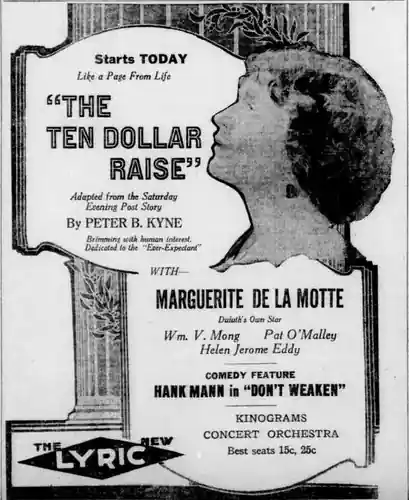
The transition from the first to the second act is handled with a deftness that avoids the pitfalls of melodrama. The discovery of Wilkins' wealth is treated with a sort of stunned silence that fits the medium perfectly. Mong’s expression—a mixture of disbelief, terror, and burgeoning predatory intent—is a masterclass in silent acting. He doesn't immediately become a hero; he becomes a strategist. The way he meticulously plans the buyout of his former employer is a beautiful mirror to the way he used to balance the books. The precision remains, but the purpose has shifted from survival to retribution.
The scenes where Wilkins finally takes his place in the corner office are some of the most cathartic in 1920s cinema. There is a specific shot where he sits in the oversized leather chair previously occupied by his tormentor. The chair, once a symbol of unapproachable authority, now seems to swallow him, highlighting the absurdity of the power dynamic itself. It suggests that the position makes the man, rather than the man making the position—a scathing critique of corporate hierarchy that remains relevant today.
Marguerite De La Motte and Hallam Cooley provide excellent support, fleshing out a world that feels inhabited and complex. Cooley, in particular, manages to navigate the tonal shifts of the film with ease, providing a counterpoint to Mong’s more internal performance. The cinematography, while constrained by the technology of the era, uses light and shadow to distinguish between the drab grayness of the clerk's existence and the vibrant, almost garish brightness of his newfound status. This visual dichotomy is far more effective than the overt moralizing found in Less Than the Dust.
Furthermore, the writing by Kyne and Le Vino avoids the trap of making Wilkins a saint. As he gains power, we see flashes of the same coldness that once oppressed him. It’s a sophisticated touch that suggests power is an inherently corruptive force, regardless of who wields it. This nuance elevates the film above a simple revenge fantasy and into the realm of a genuine social document, much like the grit found in Scarlet Days, though with a much more modern, urban sensibility.
Technically, The Ten Dollar Raise is a marvel of efficiency. The editing is crisp, moving the narrative forward without the sluggishness often associated with early features. The intertitles are used sparingly, allowing the actors' physicality to carry the emotional weight. In an era where many films were still struggling to find their visual voice—sometimes resulting in the static feel of The Sawdust Ring—Sloman’s direction feels dynamic and intentional. Every camera angle serves a purpose, whether it’s to diminish Wilkins in the eyes of his boss or to enlarge him in the eyes of his subordinates later on.
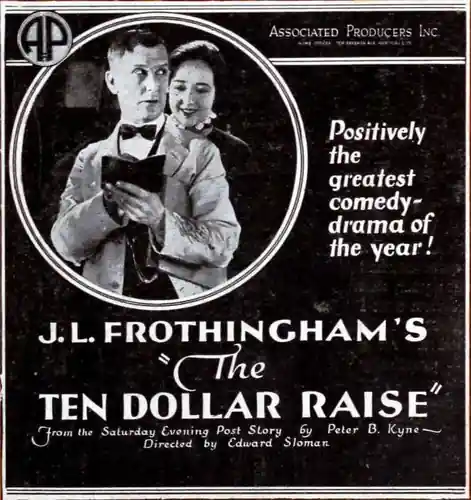
The film also serves as a fascinating time capsule of 1921 America. We see the fashion, the office technology, and the social mores of a country on the brink of the Roaring Twenties. The obsession with the 'raise'—that small, incremental increase in value—reflects a society obsessed with upward mobility but terrified of the precariousness of the middle class. It lacks the escapist fantasy of Ali Baba and the Forty Thieves, opting instead for a reality that its audience would have recognized all too well.
Why does The Ten Dollar Raise still resonate? Perhaps because the dream of turning the tables on a cruel superior is universal. But more than that, the film captures the specific dignity of the 'small' man. Wilkins isn't a superhero; he’s a man who has been beaten down by life and chooses to stand up when given the chance. His victory isn't just about the money; it's about the restoration of his name and his right to exist without fear. This theme of reclaimed identity is also explored, albeit in a vastly different setting, in The Daughter of Dawn.
The final act of the film brings the narrative full circle with a poetic symmetry that is deeply satisfying. The resolution of the romantic subplot with Helen Jerome Eddy is handled with a delicate touch, ensuring that the film ends on a note of genuine hope rather than just cynical triumph. It suggests that while money can buy power and revenge, it is only through human connection that one finds true peace. This balance is what makes the film a masterpiece of its time—it acknowledges the harsh realities of the world while still believing in the possibility of a better life.
In the broader context of silent cinema, The Ten Dollar Raise stands as a precursor to the great labor films of the later decade. It avoids the overt political messaging of Soviet montage but achieves a similar emotional impact through its focus on the individual. It is less about the movement of the masses and more about the movement of a single soul from the shadows into the light. This focus on the personal over the political makes it a more accessible and enduring work than many of its contemporaries.
Ultimately, the film is a testament to the power of storytelling to reflect and critique the world. It takes a simple premise—a raise, a windfall, a reversal—and expands it into a grand narrative of human endurance. For anyone who has ever felt overlooked or undervalued in their professional life, The Ten Dollar Raise is essential viewing. It is a reminder that the scales of justice, while often slow to move, can sometimes be tipped by the most unexpected of forces. It is a film that deserves to be remembered not just as a relic of 1921, but as a vibrant, living piece of art that continues to speak to the human condition with eloquence and wit.

IMDb —
1925
Community
Log in to comment.