DbcultAccessing Vault...
6.3/10
Senior Film Conservator
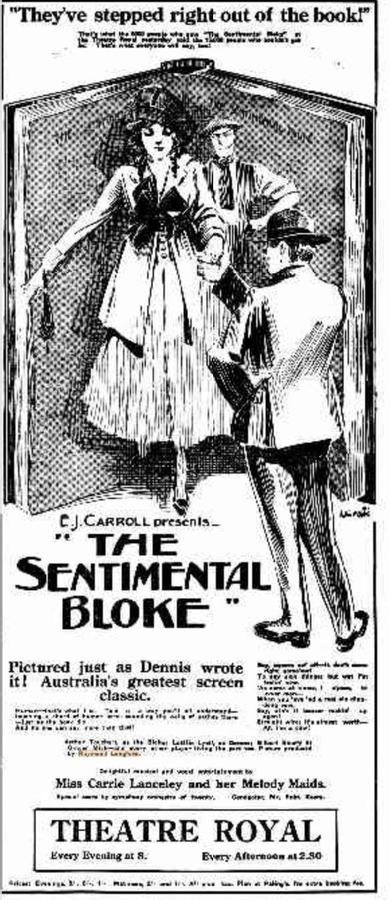
A definitive 6.3/10 rating for a film that redefined the boundaries of cult cinema. The Sentimental Bloke remains a cornerstone of transgressive art.
Raymond Longford’s 1919 watershed achievement, The Sentimental Bloke, doesn’t merely tell a love story—it immerses you in the sweat, sawdust, and sudden poetry of working-class Sydney with tactile authenticity. Based on C.J. Dennis’ verse-novel, the film transcends its silent era constraints through visual lyricism that mirrors its source material’s rhythmic vernacular. This isn’t staged romance; it’s a seismic emotional event captured in flickering silver nitrate, where a man’s soul cracks open like a geode revealing crystalline vulnerability.
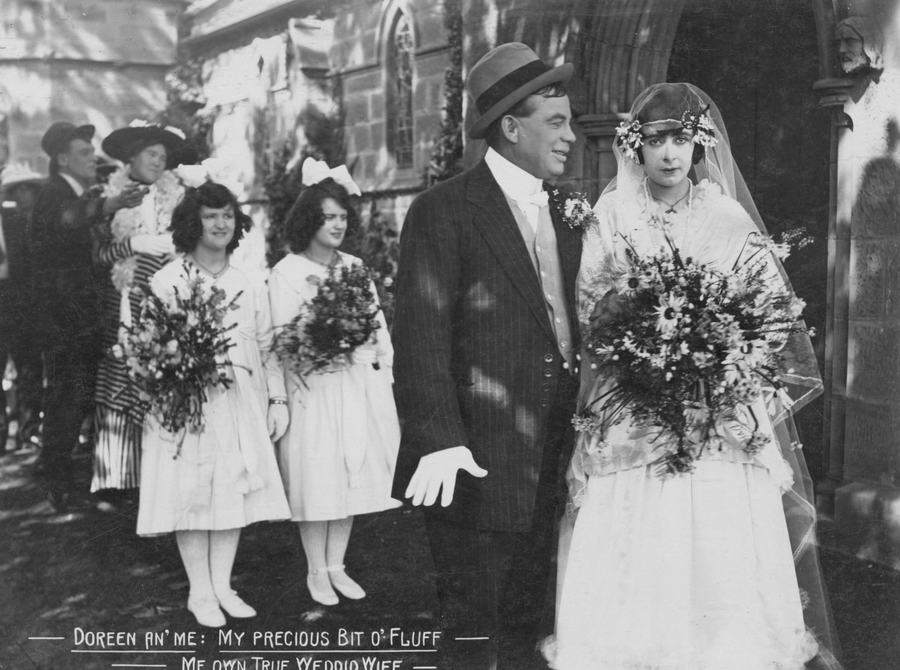
Arthur Tauchert’s Bill isn’t just a character; he’s a force of nature shackled by his own insecurities. Watch how he slouches through pushcart markets, shoulders hunched against a world he expects to betray him—until Doreen (Lottie Lyell, luminous as dawn). Lyell doesn’t play an angel; she embodies pragmatic grace. Her Doreen endures leers and hardship without martyrdom, her resilience a quiet counterpoint to Bill’s volatility. Their courtship unfolds not in ballrooms but in steamy pie shops and rain-slicked wharves, where Bill’s attempts at tenderness are painfully awkward, like a bruiser trying to cradle a butterfly.
The film’s genius lies in its tactile juxtapositions. Scenes of Bill brawling in sawdust-strewn pubs, fists flying amidst flying spittoons, dissolve into moments of shocking intimacy: his calloused hand hovering uncertainly near Doreen’s cheek, or his anguished face pressed against a fogged window when he believes he’s lost her. Longford lenses these transitions with painterly care, using chiaroscuro lighting to carve emotional depth from shadows, turning tenement stairwells into confessionals and moonlit beaches into altars.
Bill and Doreen’s orbit thrums with vibrant supporting archetypes who reject caricature. Stanley Robinson’s Ginger Mick isn’t merely comic relief—he’s the id to Bill’s emerging superego, a loyal but corrosive influence whose eventual betrayal fractures Bill’s underworld ties. Margaret Reid’s tart-tongued Rose adds grit, challenging Doreen’s idealism with streetwise skepticism. Even minor figures—the philosophical publican, the cackling pawnbroker—pulse with lived-in specificity. This isn’t a sanitized slum; it’s an ecosystem where hope battles entropy daily.
Longford’s direction turns limitations into virtues. Without dialogue, emotion erupts through gesture: Doreen nervously pleating her apron as Bill stammers an invitation; Bill crushing a telegram announcing her illness, knuckles white; their first kiss, staged behind a billowing laundry line—pure visual metaphor for barriers dissolving. Intertitles don’t explain—they sing in Dennis’ slangy cadence (“I’m up against it, fair!”), functioning as verse choruses punctuating visual stanzas.
Cinematographer Arthur Higgins renders Sydney as a character—a teeming, contradictory beast. He contrasts grimy lanes where sunlight struggles to penetrate with the expansive, liberating harbor vistas where Bill makes his trembling proposal. The iconic scene of Bill and Doreen’s beach outing—her skirts whipped by salt wind, him grinning like a boy discovering color for the first time—is pure cinematic euphoria. Higgins’ deep focus compositions allow background details to resonate: a child’s abandoned toy, a gossiping neighbor’s silhouette, amplifying the world’s constant, judging presence.
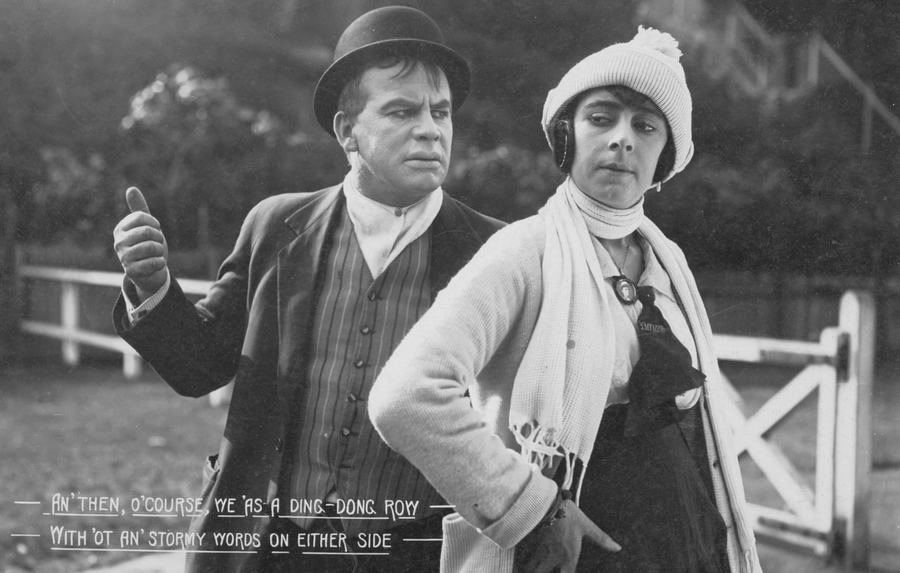
Bill’s transformation isn’t a tidy arc—it’s a visceral unraveling. Early scenes show him recoiling from tenderness as if burned. When Doreen gifts him a sprig of wattle, his confusion morphs into clumsy reverence—he tucks it behind his ear like a sacred relic. Later, confronting Ginger Mick’s treachery, his fury wars with newfound restraint. Tauchert conveys this internal earthquake through physical language: a jaw clenched against old instincts, shoulders gradually unbowed, eyes losing their defensive squint to reveal bewildered awe.
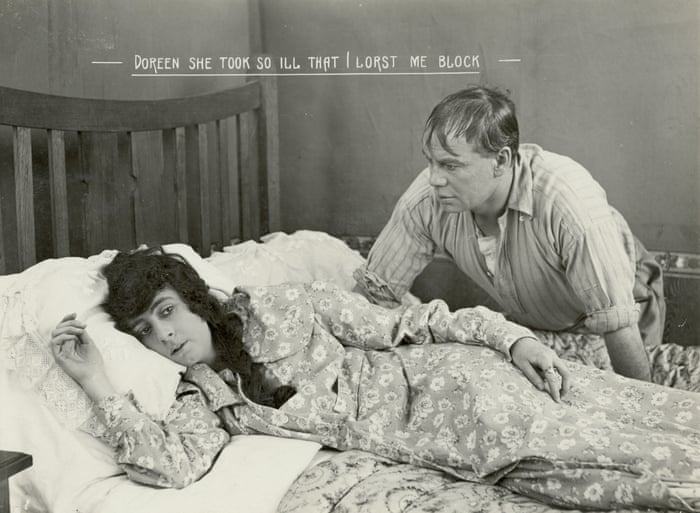
Lyell matches him beat-for-beat. Doreen’s strength isn’t passive endurance; it’s active compassion. Witness the harrowing sequence where Bill, drunk and despairing, stumbles to her door. She doesn’t scold or swoon—she guides him inside, washes his wounds, her movements radiating a fierce, unsentimental love that becomes his anchor. Their connection feels organic, built on shared struggle rather than idealized fantasy. Unlike the melodramatic sacrifices in Panthea, their bond is forged in resilience.
The Sentimental Bloke dismantles class narratives with quiet radicalism. Bill’s redemption isn’t achieved through wealth or status, but emotional intelligence hard-won through love. This distinguishes it from contemporaneous American tales like Laughing Bill Hyde, where fortune often catalyzes change. Longford elevates the working class not through patronizing nobility, but by honoring their complex inner lives—their slang, humor, and capacity for profound feeling. The film shares DNA with the poetic realism of Danish cinema (Den Sorte Varieté), yet grounds its lyricism in distinctly Australian soil.
Lottie Lyell, co-writer and star, infuses the screenplay with feminist undertones often absent in 1919. Doreen chooses Bill despite societal pressure, asserts agency in their relationship, and embodies a moral compass without piety. Her resilience echoes the frontier spirit in Medicine Bend, yet feels revolutionary in an urban context. The film’s ultimate thesis—that tenderness is strength, not weakness—feels startlingly modern, a counterpoint to the stoic masculinity dominating early cinema like Fighting Bob.

While some contemporary critics dismissed its colloquialisms as parochial, The Sentimental Bloke endures because its emotional grammar is universal. Its influence reverberates in Australian neo-realism decades later. The climactic reconciliation—Bill finding Doreen recovering in a sun-drenched hospital ward, their silent exchange conveying more than pages of dialogue—remains one of silent cinema’s most potent scenes. It avoids the gothic excess of Das Todesgeheimnis or the contrived twists of The Dead Secret, trusting pure visual emotion.
The film isn’t without melancholic shadows. Bill’s criminal past lingers like a phantom, and the couple’s hard-won happiness exists within systemic hardship. This refusal of easy sentimentality aligns it more with the bittersweet resolutions of Destiny’s Toy than the saccharine finales of The Wooing of Coffee Cake Kate. Longford acknowledges the grind of poverty even amid joy, making the luminous moments—Bill tenderly cradling their newborn, Doreen’s smile as she tends their tiny balcony garden—radiate with earned transcendence.
A century hasn’t dimmed the film’s power. Its depiction of masculinity in flux—Bill’s struggle to shed armor without losing identity—feels remarkably prescient. His journey from violence to vulnerability, guided not by moralizing but authentic connection, offers a template for redemption narratives that avoid cliché. The film’s social fabric, woven from communal pubs, cramped tenements, and the democratizing expanse of the harbor, remains a vital historical document, capturing Sydney’s soul at a pivotal moment.
The Sentimental Bloke stands as Australia’s silent symphony—a work where every frame hums with life, every gesture resonates with unspoken longing, and love emerges not as a plot device, but as a seismic force capable of reshaping a human soul. It reminds us that the most profound revolutions aren’t always waged on battlefields, but in the quiet, trembling spaces between two hearts learning to speak a new, tender language. In an era of spectacle, its enduring magic lies in its radical intimacy: the revelation that a bloke’s sentimentality might be his bravest act.
IMDb —
1924
Community
Log in to comment.