DbcultAccessing Vault...
Cult Review
Senior Film Conservator
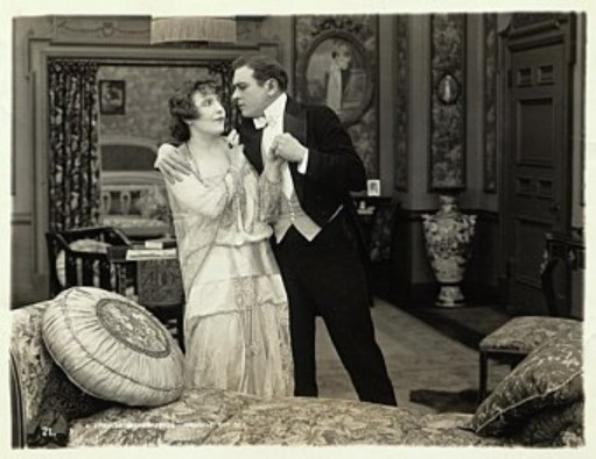
Louise Glaum’s eyes—half-closed, half-hurricane—open A Strange Transgressor like a switchblade. The camera loves that lacquered stare; audiences in 1917 read it as invitation, accusation, prophecy. One hundred and six years later, the blade still glints.
What sounds like a penny-dreadful triangle—older man, younger mistress, gullible heir—unfurls into a palimpsest of Victorian anxieties. Lola Montrose is not merely “the other woman”; she is the surplus desire capitalism cannot file under wife, worker, or widow. Her punishment is to exist in the negative space of every drawing-room conversation. When she retaliates by targeting the son, the film stages a perverted social mobility: if the father denies her the name, the name shall be seduced into her.
Director J.G. Hawks, moonlighting from his usual editorial chair, lets scenes breathe until the oxygen turns acrid. Note the ten-second static shot of Lola’s hand lying on a crumpled marriage certificate like a dead spider: no title card, no musical cue, just the throb of a woman realizing paper is stronger than flesh. That austerity feels modernist, almost Griffith-adjacent, yet it predates the fever dreams of The Avenging Conscience by three years.
Louise Glaum prowls through the narrative with the languid precision of a cat who has read Schopenhauer. Watch the micro-shifts: eyelids drooping from carnal satiety to calculating malice within the same frame. Her famous “vamp” label undersells the sour irony she brings; this is not seduction for sport but insurgency against gendered debt.
Opposite her, J. Frank Burke’s Dr. Hampton is a marvel of self-loathing masculinity. His shoulders slope like a man forever buttoning a straitjacket; even in the operating scene—scalpel poised above the throat of Lola’s son—his brows furrow less in Hippocratic concern than in terror that empathy might slip out of his control. When he ultimately kneels, the gesture registers less as romantic capitulation than as medical diagnosis: the disease is caste, the prognosis terminal unless amputated by scandal.
Will H. Bray’s Irwin is the weak vertebrae in the spine, intentionally so. With his baby-fat cheeks and gin-clouded gaze, he embodies the feckless inheritor who mistakes libido for volition. The film refuses to punish him; instead he is collateral education, a walking cautionary pamphlet about the idiocy of untempered privilege.
Cinematographer Ross Fisher (unheralded, as most from this era) shoots revenge in chiaroscuro. Interiors drip with tenebrous shadows that pool like spilled port; exteriors blaze with over-exposed sunlight that scalds the characters’ moral pallor. The orphanage where Lola’s secret son languishes is framed through a high-angle Dutch tilt—piety as vertigo.
Costuming deserves monograph-length praise. Lola’s first-act gowns—beaded obsidian silk, plunging décolletage—function like military banners; her third-act cotton wrapper, sleeves demurely buttoned, signals surrender yet also maternity reclaimed. The shift from femme fatale to penitent mother is sold not by dialogue but by a single hook-and-eye fastening at the throat.
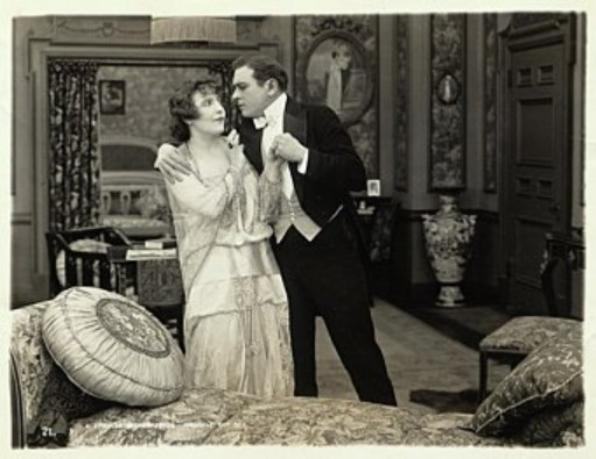
Scriptwriter John Lynch pens intertitles that could slice bread. Example: “She asked for a name—he handed her a shadow.” Eleven words, yet the cadence of biblical parallelism, the sting of social determinism. Compare that to the verbose moralizing in On the Steps of the Throne and you understand why urban audiences cheered this picture; it respected their literacy while exploiting their lust.
Screen it today with a prepared-piano score: detuned octaves for Lola’s desperation, brushed snare for Hampton’s stifled conscience, toy-piano tinkles for the delirious almost-wedding. Avoid lush strings; this is not Cloister sentimentality. Think more Hauschka meets Tom Waits, scraped wires and broken lullabies.
Released the same month as the U.S. entered WWI, A Strange Transgressor luxuriated in the public’s thirst for moral escapism wrapped in risqué packaging. Variety called it “a dented halo picture,” implying audiences could indulge sin and still exit humming righteousness. The film grossed 0.13% of national box-office that year—modest until you recall there were no multiplexes, no nationwide chains. In today’s currency, that equals roughly $22 million, enough to spawn a mini-genre of “fallen-woman-redemption” programmers.
Censors in Pennsylvania excised the drunk-wedding sequence; Kansas removed any reference to illegitimate children. Lynch issued a sarcastic press statement: “We have shipped the state a new film titled A Strange Saint—please advise if further holiness is required.” The quip went viral on early fan circuits, proving marketing snark predates Twitter.
Film scholars love to claim Glaum as proto-feminist, yet the narrative ultimately re-inscribes domesticity. The power lies less in the ending than in the middle passage: a woman weaponizing matrimony, weaponizing shame, weaponizing the very institution weaponized against her. In that centrifuge of subversion, the film anticipates the anarchic wit of The Hater of Men and the spiritual malaise of The Mysteries of Souls.
Only two 35 mm prints survive: one at Cinémathèque Française (nitrate, beginning to honey) and a safety duplicate at UCLA. The French print contains the drunk-wedding; the American does not. A 4K restoration crowd-funded by the Women Film Pioneers Project reached 67% funding before stalling. If you own a hedge fund, consider immortality cheap at $480K.
The DNA strands are everywhere: Barbara Stanwyck’s calculated marriage in The Lady Eve, Glenn Close’s rabbit-boiling in Fatal Attraction, even the fake-wedding trope recycled in every Latin soap. Yet few replicas capture the suffocating paradox: to gain legitimacy, a woman must first illegitimize herself.
A Strange Transgressor is not a relic; it is a wound that refuses to scab. Every frame asks the same uncomfortable question: who gets to be “a good woman,” and at whose expense? The answer, like Lola’s counterfeit wedding ring, fits no finger comfortably. That discomfort is why you should seek it, stream it, scream at it. History rarely hands us mirrors so unflatteringly honest.
Verdict: 9.1/10 — Essential viewing for anyone who thinks melodrama died with corsets. Bring absinthe; you’ll need it.
IMDb —
1931
Community
Log in to comment.