DbcultAccessing Vault...
6.5/10
Senior Film Conservator
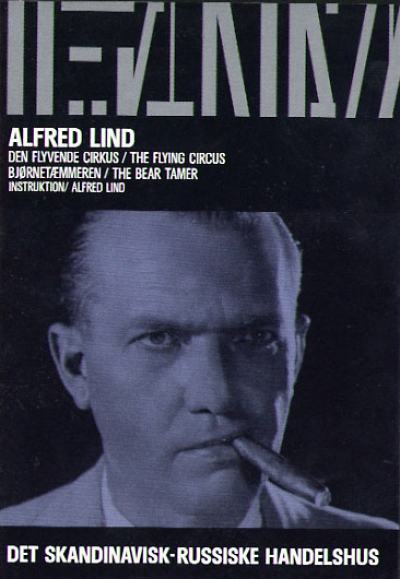
A definitive 6.5/10 rating for a film that redefined the boundaries of cult cinema. The Flying Circus remains a cornerstone of transgressive art.
Step right up, ladies and gentlemen, and prepare to be transported to an era when moving pictures were still finding their voice, yet spoke volumes through the sheer power of visual storytelling and raw emotion. Today, we’re unfurling the grand canvas of 'The Flying Circus' (the-flying-circus), a Danish silent film that, despite its vintage, pulsates with a timeless energy. This isn't just a film; it's a spectacle, a melodrama, and a poignant exploration of love, jealousy, and the intoxicating allure of the extraordinary. Directed by the visionary Alfred Lind and penned by both Lind and Carl Otto Dumreicher, this cinematic gem offers a fascinating glimpse into the dramatic sensibilities of early 20th-century European cinema, proving that some narratives transcend the limitations of spoken dialogue, speaking directly to the soul.
The narrative plunges us headfirst into the exhilarating, often perilous, existence of the country’s premier traveling artist band. The circus, a microcosm of vibrant personalities and daring feats, serves as the perfect backdrop for a tale of entangled desires. At its heart are two magnetic figures: Laurento, portrayed with an arresting blend of agility and romantic idealism by Rasmus Ottesen, and Ula Kiri, the fiercely passionate gypsy snake tamer, brought to visceral life by the formidable Lili Beck. Ula Kiri's love for Laurento is not merely affection; it's an all-consuming fire, a possessive flame that scorches everything in its path. Her unrequited passion transforms her into a figure of volatile temperament, her hasty disposition and ill-tempered outbursts hinting at a cruelty born from deep-seated insecurity and heartbreak. It’s a classic setup, yet imbued with an intensity that feels remarkably fresh, demonstrating the enduring power of these archetypal emotional struggles.
The inherent tension of this unfulfilled longing is palpable from the outset. Lili Beck, as Ula Kiri, masterfully conveys a spectrum of raw emotions through her expressive eyes and body language, a testament to the art of silent acting. Her every glance at Laurento, her every frustrated gesture, paints a vivid picture of a woman teetering on the brink of emotional collapse, her sanity held together by the fragile thread of hope and the corrosive grip of jealousy. This portrayal is a stark reminder of the dramatic weight silent film actors carried, relying solely on their physical presence to communicate the most complex psychological states. One might draw parallels to the intense, almost operatic performances found in other early melodramas like Den sorte drøm, where heightened emotion dictated the narrative's pulse.
The narrative takes a pivotal turn as the Flying Circus pitches its tents in a quaint country town, a stark contrast to the bohemian freedom of the performers. Here, Laurento encounters Erna, the mayor’s daughter, portrayed with delicate grace by Emilie Otterdahl. For Laurento, it's an instantaneous, undeniable connection – a case of love at first sight that transcends the social chasm separating a traveling artist from a pillar of provincial society. His resolve to win her heart sets the stage for the film’s central conflict, shifting the emotional dynamic from Ula Kiri’s unrequited love to Laurento’s determined pursuit of a new, pure affection. This sudden shift in focus, while potentially jarring in a modern narrative, functions perfectly within the conventions of silent melodrama, where fate and grand gestures often dictate romantic destinies.
The visual contrast between the rustic town and the flamboyant circus troupe is subtly yet effectively conveyed, even without the aid of color. One can imagine the elaborate costumes and vibrant energy of the circus clashing with the more subdued attire and conservative demeanor of the townspeople. This juxtaposition underscores the inherent tension of Laurento's new romance; it's not just a love story, but a collision of two vastly different worlds, each with its own expectations and rules. The film cleverly uses this societal divide to amplify the stakes of Laurento's quest, making his eventual success feel like a triumph not just of love, but of individual spirit against societal convention.
The dramatic centerpiece arrives with breathtaking force: a devastating fire that consumes the town, its flying embers igniting the mayor’s stately home. The townspeople's frantic, yet futile, attempts to quell the blaze paint a harrowing picture of impending doom. It's a scene designed for maximum impact, showcasing the era's burgeoning capabilities in special effects and large-scale set pieces. The mansion, seemingly destined for destruction, traps Erna, placing her in mortal peril. In this moment of profound crisis, Laurento emerges as the quintessential hero. His fearless charge through the roaring flames, his agile ascent up the burning walls, and his swift retrieval of the frantic maiden are depicted with an urgency that would have left contemporary audiences on the edge of their seats. The subsequent escape, a perilous traverse across the fragile mesh of telegraph wires, carrying his precious burden, is a feat of both physical prowess and cinematic spectacle. The frantic cheers of the populace, a silent chorus of awe and gratitude, solidify his heroic status.
This sequence is a masterclass in silent film heroism, reminiscent of other early cinema's death-defying stunts and rescues, though perhaps less overtly fantastical than something like Saved in Mid-Air. It's grounded in a relatable human drama, elevating Laurento from a mere performer to a savior. Rasmus Ottesen’s portrayal here is not just about physical agility; it’s about conveying an unwavering determination and a selfless courage that transcends personal safety. The visual storytelling of this scene, relying on dramatic framing and rapid cutting (for the time), would have been truly groundbreaking, cementing Laurento’s position in both Erna’s heart and the town’s collective memory. The mayor’s subsequent gratitude, making Laurento a welcome guest, is a natural consequence, yet it also foreshadows the deeper societal hurdles that still lie ahead for the unconventional suitor.
Even as Laurento basks in the glow of his newfound love and heroism, a shadow looms large: Ula Kiri. Her love, once merely unrequited, now curdles into a potent, destructive jealousy. Lili Beck's performance here is nothing short of captivating. She doesn't just act jealous; she embodies the very essence of a soul consumed by envy and a profound sense of loss. Her torment manifests as relentless mockery and psychological warfare, haunting Laurento even in the supposed sanctuary of his own home. This internal struggle, played out through subtle gestures and piercing gazes, adds a layer of psychological complexity to the film, elevating it beyond a simple romantic adventure. Ula Kiri is not a one-dimensional villain; she is a tragic figure, her actions driven by a pain so deep it warps her moral compass.
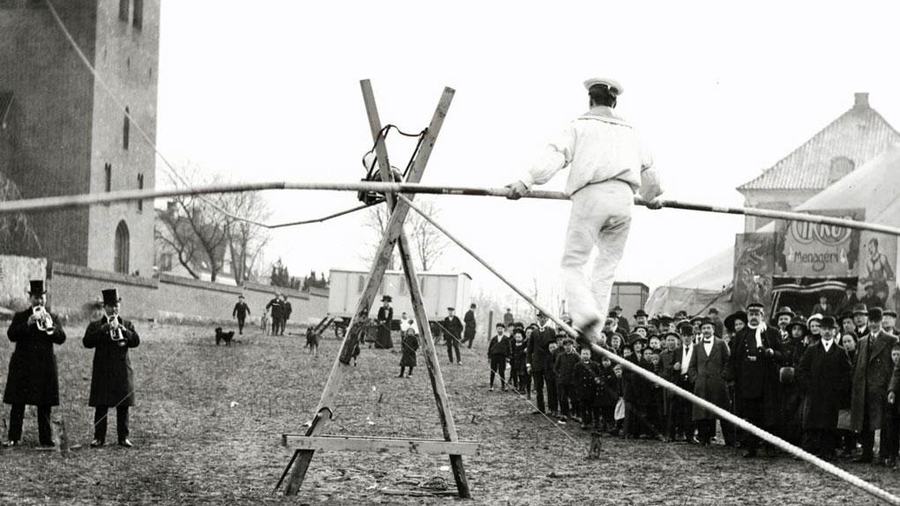
The mayor’s reluctant refusal to grant consent for the marriage, offering only a vague promise contingent on changed circumstances, further exacerbates Laurento’s anxieties. This societal barrier, a common trope in classic romances, highlights the rigid class distinctions of the era. Laurento, a mere circus performer, is deemed unworthy of a prominent family’s daughter, despite his heroism. This rejection, coupled with Ula Kiri’s ceaseless torment, pushes Laurento to conceive a desperate, audacious plan: a high-wire act to the church tower, a spectacle intended to secure the financial independence that might finally sway the mayor. The circus director, perhaps seeing the immense publicity potential, readily agrees, setting the stage for the film’s climactic sequence. It’s a testament to the character’s indomitable spirit, transforming personal anguish into a public display of courage and determination.
The day of the grand spectacle arrives, drawing the entire town to witness Laurento’s death-defying feat. As he prepares to traverse the flaccid rope towards the dizzying height of the church tower, the sorrowful eyes and pale face of Erna weigh heavily on his mind. This internal monologue, conveyed through close-ups and subtle facial expressions, ensures the audience remains deeply invested in his emotional state. However, the true peril is not just the height; it’s the insidious act of Ula Kiri. In a moment of madness, her jealousy completely overriding her professional duties and any semblance of compassion, she allows a snake to escape, its slithering body blocking the entrance to the tower. This act of sabotage is the ultimate betrayal, a desperate attempt to thwart Laurento’s happiness, even if it means endangering his life.
Erna’s frantic pleas to Ula Kiri, the only one capable of recalling the venomous reptile, fall on deaf ears. Ula Kiri, consumed by her storm of jealousy and hatred, remains unmoved, a chilling portrait of a soul lost to its darkest impulses. This scene is a powerful demonstration of the destructive nature of unchecked envy, transforming a scorned lover into an active agent of harm. Yet, it is precisely in this moment of extreme adversity that Erna’s character truly shines. Her great love for Laurento transcends fear and despair, inspiring her to an act of courage and ingenuity. She overcomes the terrifying obstacle posed by the escaped snake, her quick thinking and unwavering resolve saving her sweetheart from certain peril. Emilie Otterdahl, as Erna, delivers a performance that shifts from delicate vulnerability to fierce determination, showcasing a strength that was perhaps underestimated by both the mayor and Ula Kiri. This pivotal moment underscores the film's message that true love is not passive, but an active force capable of inspiring extraordinary bravery.
With Laurento saved and Erna’s bravery irrefutably demonstrated, the mayor can no longer withhold his consent. The barriers of class and expectation crumble before the undeniable power of their love and valor. The same evening, as the Flying Circus packs up its tents and moves on to other regions, a happy couple remains in the country town, their future secured, their love a testament to their trials. This resolution, while perhaps fittingly neat for a silent era melodrama, provides a satisfying emotional payoff, rewarding the audience for their journey through suspense and emotional turmoil.
Alfred Lind and Carl Otto Dumreicher, as writers, crafted a narrative that, despite its somewhat conventional romantic arc, is punctuated by moments of genuine thrill and psychological depth. Lind’s direction, particularly in the action sequences, demonstrates a keen understanding of cinematic pacing and tension building, vital for engaging an audience without spoken dialogue. The performances, especially those of Lili Beck and Rasmus Ottesen, are exemplary, conveying complex emotional landscapes through their physicalities and facial expressions. Kirstine Friis-Hjorth, though perhaps in a smaller role, adds a layer of provincial realism that grounds the more fantastical elements of the circus life.
In an era dominated by technological wizardry and intricate dialogue, 'The Flying Circus' serves as a powerful reminder of the fundamental elements of compelling storytelling. It's a film that speaks in universal languages: love, jealousy, courage, and sacrifice. The visual grandeur of the circus, the dramatic tension of the fire, the perilous high-wire act, and the venomous threat of the snake are all rendered with a striking clarity that transcends the limitations of its period. One can only imagine the impact these scenes had on audiences over a century ago, a visceral experience that few modern films can replicate without the aid of CGI. The film's ability to maintain high stakes and emotional resonance without a single spoken word is a testament to the artistry of early cinema.
For enthusiasts of early European cinema, this film offers a valuable insight into the narrative structures and performance styles that defined the nascent art form. It stands as a testament to the Danish film industry's significant contributions during the silent era, often overshadowed by its American counterparts. The psychological depth given to Ula Kiri, in particular, elevates the film beyond a simple hero-saves-damsel narrative, introducing a nuanced antagonist driven by understandable, albeit destructive, human emotions. This complexity ensures that the film's emotional core remains robust, even for contemporary viewers.
Ultimately, 'The Flying Circus' is more than just a historical artifact; it's a vibrant, engaging piece of cinematic art that continues to resonate. It reminds us that the greatest stories are often those of human connection, of overcoming adversity, and of the enduring power of love to inspire both the grandest gestures and the most intimate acts of courage. So, if you ever find yourself in a silent film rabbit hole, seek out this aerial ballet of hearts. You won't be disappointed.
IMDb —
1926
Community
Log in to comment.