DbcultAccessing Vault...
5.2/10
Senior Film Conservator
A definitive 5.2/10 rating for a film that redefined the boundaries of cult cinema. The Last Chapter remains a cornerstone of transgressive art.
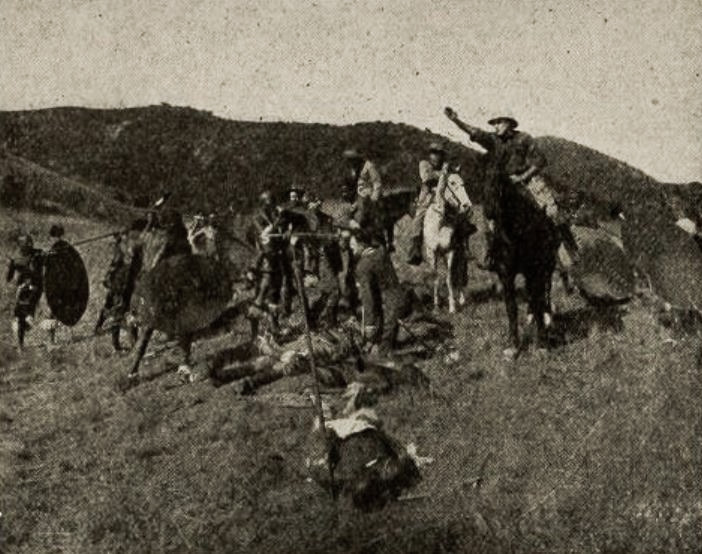
Africa, 1915: bullets hiss through liana like hot needles through silk.
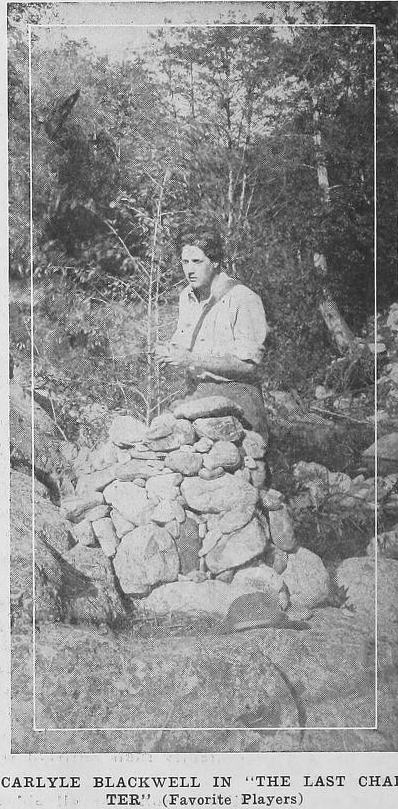
Gordon, journalistic flotsam, collapses face-first into red earth while vultures convene overhead like critics at an opening night. Enter James Egerton—pith-helmeted Midas whose chequebook outweighs his conscience—scooping up the wounded scribbler the way one salvages a dropped sovereign. The freighter home is a floating microcosm: mahogany-paneled parlours reek of colonial entitlement, while steerage hums with the engine’s cardiac throb. Between these spheres Gordon and Alice orbit, their courtship lit by phosphorescent spray and the ship’s trembling electrics. Carlyle Blackwell plays Gordon with a wounded hawk’s watchfulness; Ruth Hartman’s Alice carries herself like someone who has read too many pre-Raphaelite sonnets and now finds life obliged to imitate them.
Back in the imperial capital, the film’s palette cools from ochre to slate. William Desmond Taylor’s Lord Arbuthton glides through drawing rooms with the languid menace of a man who has never needed to open his own umbrella. The camera lingers on his white gloves—spotless as fresh balance sheets—while Gordon’s ink-stained fingers clench behind his back. The class arithmetic is pitiless: a title plus zero income equals eligibility; a salary minus title equals expulsion from the Eden of drawing-room approval. Egerton’s ultimatum—go solve my rubber famine or forget my daughter—feels less like parental concern than a boardroom tactic divested of sentiment.
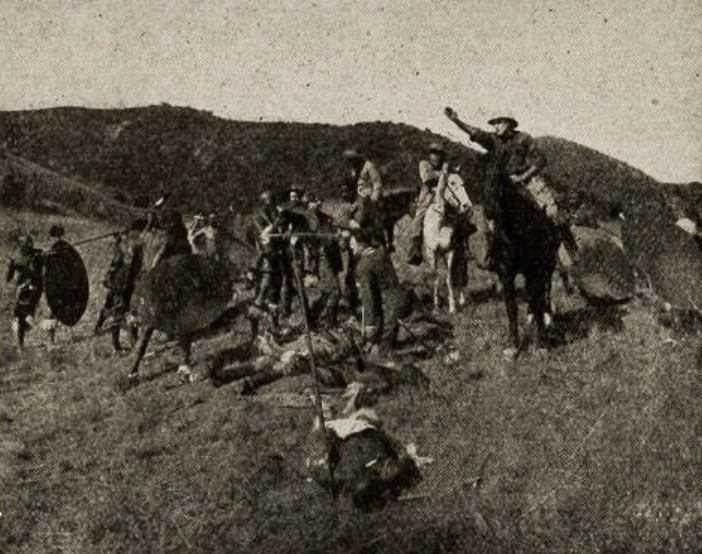
The second act erupts into a chromatic fever dream of greens so saturated they almost smell of chlorophyll and rot. Cinematographer (uncredited, as was 1916 custom) captures mist curling around buttress roots like cigar smoke around a gambler’s fingers. Gordon’s investigation is less whodunit than accountancy noir: barrels tallied versus barrels shipped; signatures forged with the languid flourish of a man who knows that empire runs on paperwork no one will audit until the profits sag. When the overseer’s perfidy surfaces, violence detonates—not the hygienic shootout of later westerns, but a chaotic scrabble of kerosene, machetes and splintered bamboo. The plantation burns like a votive offering to the god of balance sheets; Gordon crawls from a hut as flames stripe his torso with tigerish scars.
Staggering through the charred aftermath, Gordon finds on a corpse a map that folds destiny like origami. The Lost River—mythic artery sought by geographers since Burton and Speke—turns out to have been discovered by a nameless porter now silenced by a lead slug. The irony is exquisite: imperial science fails, but death’s random cartography succeeds. When the returning expedition greets Gordon as the late Tracy, the misnaming operates like a baptism; identity becomes a matter of consensus rather than fact. Back in London, newspapers trumpet his resurrection before he himself believes it.
Richard Willis’s script understands that Edwardian society weaponises information the way a shaman employs charms. Arbuthton’s whisper campaign—Gordon perished, condolences premature—travels faster than any telegraph wire. Compare this to the lethal gossip in Fantômas: In the Shadow of the Guillotine, where reputation unravels like silk; here, the malice is subtler, a social ledger balancing itself through hearsay. Alice, imprisoned in mourning attire, becomes a porcelain figure behind curtained windows, her locket the single hinge keeping faith from fracturing.
Gordon’s incognito return—top hat tilted, cane tapping like a metronome—channels the urban alienation later perfected in Les heures - Épisode 4: Le soir, la nuit. Crowds cheer the explorer-ghost while he scans faces for Alice’s lighthouse gaze. The sequence is staged against Trafalgar’s lions, stone sentinels indifferent to human resurrection. Willis inserts a sly meta-wink: flashbulbs pop, newspapers flutter like wounded birds, and yet truth remains negotiable. Gordon’s dilemma—reveal himself and shatter Alice’s impending nuptials, or remain martyr and relinquish love—plays out in a montage of omnibuses, fog, and ticker-tape headlines.
Arbuthton’s abrupt equine mishap—rendered off-screen, reported by a breathless footman—feels less like screenwriter convenience than a moral adjustment engineered by narrative thermodynamics. Death here is not tragedy but societal recalibration, akin to the stock-market crash that will arrive a decade later. With the rival removed, Egerton’s capitalism suddenly discovers sentiment; partnership papers slide across mahogany as smoothly as coffin lids. The final scene—bells pealing over a London skyline still sooty from coal—restores equilibrium but leaves an aftertaste of iron: love sanctioned only when fiscal and social ledgers zero out.
Blackwell’s Gordon carries the weary magnetism of a man who has seen the globe’s seams and expects them to split; his eyes telegraph both hunger and ethical fatigue. Opposite him, Hartman’s Alice oscillates between porcelain composure and flickers of rebellion—notice how she removes her locket: not a coquettish flourish but a surgical transfer of agency. John Sheehan’s Egerton exudes the affable menace of a tycoon who believes geography is negotiable so long as capital accompanies it; his final handshake with Gordon is filmed in medium close-up, fingers tightening like a contract clause.
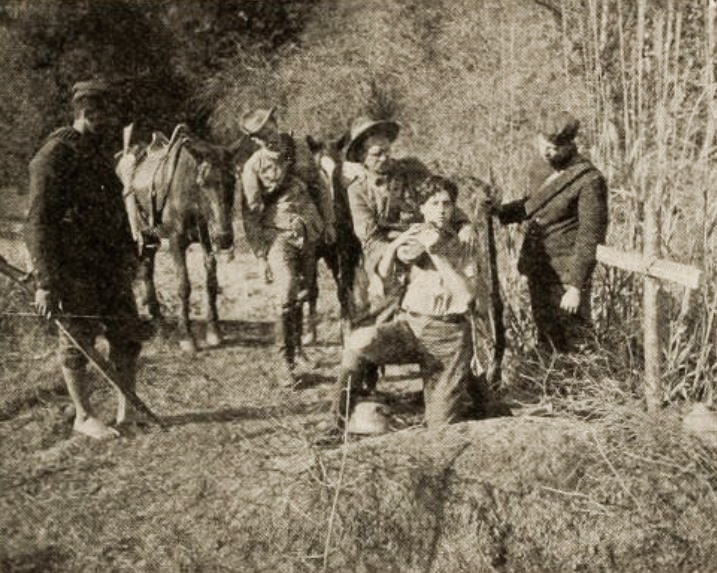
Though filmed without tinting, the lighting design evokes chromatic suggestion: African scenes blaze with high-key kinetics that feel ochre even in greyscale; London salons swim in low-key chiaroscuro reminiscent of bruised pewter. Compare this palette strategy to the nocturnal blues conjured in A Study in Scarlet, where darkness becomes almost tactile. Directors could learn how suggestion trumps exposition: a single overexposed highlight on a brass porthole can imply equatorial glare more persuasively than intertitles.
The expedition subplot rhymes with the imperial swagger of Scotland yet prefigures the existential futility in The Land of the Lost. Meanwhile, the transactional marriage market anticipates the monetary fatalism of The Man Who Could Not Lose. Willis’s screenplay stages capitalism not as invisible hand but as gloved fist, a thematic through-line connecting rubber plantations to London drawing rooms with the inevitability of a balance-sheet sum.
At fifty-eight minutes, the narrative moves with the propulsion of a novella rather than the languor of Victorian triple-deckers. Act transitions hinge on locomotive imagery: the steamer’s pistons, the Underground’s thunder, carriage wheels that semaphore time’s passage. Notice how the cut from jungle conflagration to London fog feels like a hard exhalation—editors of 1916 excelled at such kinetic punctuation long before the montage theories of Eisenstein.
In an era of algorithmic matchmaking, the film’s insistence that love requires fiscal clearance feels simultaneously antique and eerily familiar. Streaming natives might scoff at the deus-ex-equine, yet swipe-right romances hinge on similar statistical pruning. The Last Chapter offers a portal where emotion is negotiated via parchment and pistol rather than emoji and ghosting. For cinephiles, it’s a masterclass in how silent cinema could conjure world-spanning scope without leaving the backlot; for historians, it’s a cautionary ledger of imperial capitalism balancing its books in blood and rubber.
Verdict: A riveting artifact that marries pulp adventure to social arithmetic, performed with a restraint that speaks louder than words. Watch it for the locket, stay for the indictment.
IMDb 5.4
1924
Community
Log in to comment.