DbcultAccessing Vault...
Cult Review
Senior Film Conservator
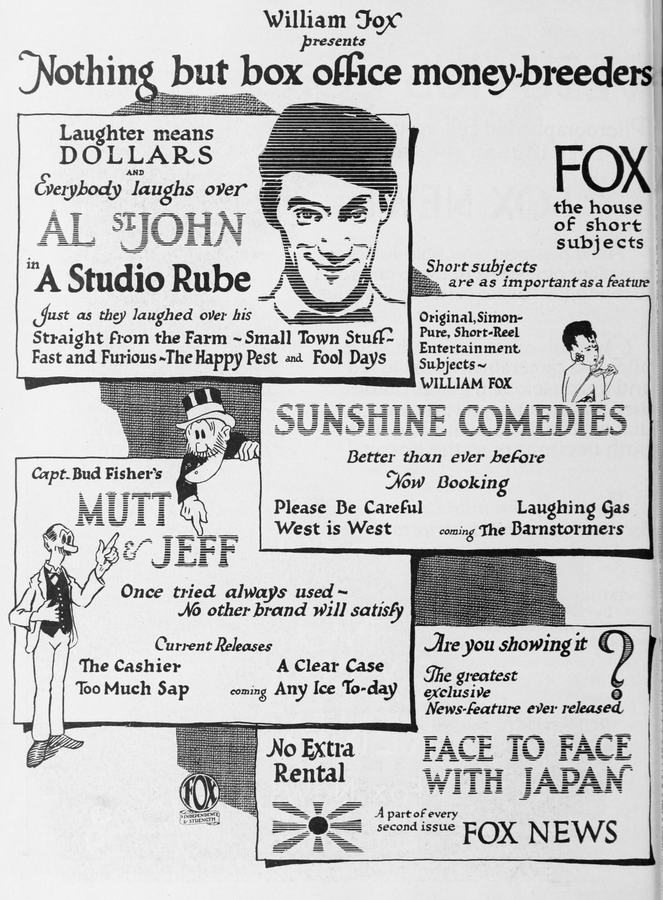
Stepping into the world of early 20th-century slapstick is akin to entering a vibrant, boisterous carnival. Each frame bursts with an unbridled energy, a testament to a burgeoning art form finding its voice through physical comedy and outlandish scenarios. Among the many luminaries who shaped this era, Al St. John, often celebrated for his work alongside giants like Fatty Arbuckle and Buster Keaton, carved out a distinct niche for himself. His 1921 short, A Studio Rube, epitomizes the charming chaos that defined his comedic persona, offering a delightful glimpse into the meta-narrative of filmmaking itself, even as it revels in pure, unadulterated pandemonium.
The premise is deceptively simple: a lovestruck protagonist, Al (played with characteristic gusto by St. John), harbors an ardent desire to meet an actress. This isn't a mere casual interest; it's a singular, all-consuming mission that propels him towards the most improbable of schemes. The object of his affection resides within the seemingly impenetrable fortress of a bustling film studio, a place of industry and artifice, where dreams are manufactured and reality is meticulously staged. For an outsider, a 'rube' as the title suggests, gaining entry is an insurmountable challenge, yet Al's romantic desperation fuels an ingenious, if utterly absurd, solution.
The film truly ignites when Al executes his masterstroke: a daring swap with a studio dummy. This pivotal moment is a stroke of comedic genius, a visual gag that perfectly encapsulates the film's playful subversion of reality. The dummy, a lifeless prop, is replaced by a living, breathing, albeit clumsy, human, effectively blurring the lines between the staged and the genuine. This act of infiltration is not just about gaining access; it's a commentary, however unintentional, on the interchangeable nature of figures in a factory-like studio environment, where even humans can become mere props in the grander scheme of things. St. John's physical comedy shines here, as he navigates the awkward transition, his body language conveying both the thrill of success and the inherent precariousness of his disguise.
Once inside, the studio transforms from a distant dream into a vibrant, overwhelming reality. The film sets, each a microcosm of a different narrative, become the unsuspecting canvases for Al's unwitting artistry of disruption. He isn't malicious; his intentions remain purely romantic, but his very presence is a force of entropy. He stumbles into a dramatic scene, perhaps a tense standoff or a tender embrace, and with a misplaced prop or an ill-timed movement, shatters the illusion. The beauty of this chaos lies in its escalating nature. One ruined take leads to another, the frustration of directors and actors palpable even without spoken dialogue. This escalating mayhem is a hallmark of silent comedy, where actions speak louder than words, and the cumulative effect of small mishaps builds into a grand, delightful catastrophe.
The studio itself functions as a character in A Studio Rube, a labyrinthine world of frantic activity, temperamental artists, and perpetually moving equipment. It's a place where multiple realities coexist, often simultaneously, creating a fertile ground for comedic collision. Al's journey through this bustling microcosm offers a fascinating, albeit exaggerated, glimpse into the early filmmaking process. We see crews meticulously arranging lights, actors rehearsing lines, and directors bellowing instructions. The film playfully exposes the fragility of this carefully constructed world, demonstrating how easily a single, uninvited element can unravel the entire intricate tapestry. This behind-the-scenes peek, even if satirized, adds another layer of enjoyment for contemporary audiences, allowing us to appreciate the foundational elements of cinema production.
Al St. John's performance is, as expected, a masterclass in physical comedy. His rubbery expressions, his precise yet seemingly uncontrolled movements, and his ability to convey a gamut of emotions from hopeful yearning to bewildered panic, are all on full display. He embodies the 'rube' not as an idiot, but as a man out of his element, driven by a simple, powerful desire that blinds him to the complexities of his surroundings. His character is relatable in his earnestness, even as his actions are absurd, a delicate balance that makes his antics endearing rather than irritating. This ability to elicit both laughter and a degree of sympathy is a testament to St. John's comedic prowess.
While Al St. John may not enjoy the same household recognition as Chaplin or Keaton today, his contributions to silent comedy are undeniable. His style often leaned into a more boisterous, less refined brand of slapstick, frequently involving chases, elaborate stunts, and a general air of delightful mayhem. In A Studio Rube, we see elements that foreshadow the broader comedic landscape. His willingness to throw himself into the fray, to be the catalyst for chaos, aligns with the spirit of many contemporary comedies. For instance, comparing his character here to his portrayal in Billy Blazes, Esq., one can discern a consistent thread of a character who, despite varying circumstances, remains a magnet for trouble, often due to his own well-meaning but misguided efforts. Both films showcase his distinctive physical presence and his knack for turning everyday situations into uproarious spectacles.
The pursuit of a love interest, a common trope in early cinema, is handled with a unique blend of desperation and wit in A Studio Rube. Unlike the more romanticized or heroic pursuits seen in films like Don Juan, where the protagonist is often suave and calculated, Al's approach is pure, unadulterated earnestness, bordering on the ridiculous. His methods are clumsy, his tactics transparent, yet his conviction is absolute. This contrast highlights the spectrum of romantic narratives prevalent at the time, from grand, sweeping gestures to the more grounded, albeit comically exaggerated, attempts of the common man. His character isn't a suave lover; he's an everyman whose heart has simply led him astray, directly into the path of a production crew's wrath.
The culmination of Al's studio invasion is a gloriously chaotic near-riot. This isn't just a simple ejection; it’s an explosion of pent-up frustration from the studio staff, who have endured his escalating blunders. The 'riot' serves as the ultimate comedic payoff, a physical manifestation of the disruption Al has caused. It’s a moment where the carefully constructed illusion of filmmaking completely breaks down, giving way to primal anger and desperate attempts to restore order. The rapid-fire editing, typical of silent comedies, would have amplified the frenetic energy of this scene, creating a sensory overload of movement and reaction. The image of Al being unceremoniously, perhaps even violently, thrown out of the studio is a classic comedic trope, signaling the inevitable consequence of a character's inability to conform to societal or professional norms.
The film's brevity, common for shorts of this era, works to its advantage. There's no wasted motion, no superfluous dialogue (for obvious reasons), and every gag is delivered with precision and impact. The narrative arc, despite its simplicity, is remarkably effective: introduction of desire, the audacious plan, the execution, the escalating conflict, and the satisfyingly conclusive expulsion. This tight structure ensures that the audience is constantly engaged, moving from one laugh-inducing predicament to the next without a moment's respite.
A Studio Rube, while perhaps not as widely studied as the magnum opuses of its contemporaries, holds significant value as a piece of cinematic history. It's a vibrant snapshot of an era when filmmaking was still in its nascent stages, a period of experimentation and boundless creativity. It reminds us of the universal appeal of physical comedy, a language understood across cultures and generations. The humor, rooted in human foibles and the clash between individual desire and institutional order, remains remarkably fresh. Even today, the sight of a hapless individual inadvertently bringing an entire system to its knees elicits a chuckle, a testament to the timeless nature of such comedic archetypes.
The film serves as a charming reminder of Al St. John's unique contribution to the silent screen, showcasing his distinctive blend of athleticism, expressive pantomime, and an innate understanding of comedic timing. It's a small but potent example of how early filmmakers leveraged the visual medium to create stories that transcended linguistic barriers, delivering pure, unadulterated entertainment. For anyone interested in the evolution of comedy, the early days of Hollywood, or simply in need of a good laugh, A Studio Rube remains an enjoyable and insightful watch, a vibrant relic from a bygone era that still resonates with its delightful, chaotic energy.
The supporting cast, including Billy Engle and Marvin Loback, contributes effectively to the escalating pandemonium. Their reactions, whether of bewilderment, annoyance, or outright fury, provide the perfect foil to Al's oblivious determination. They are the anchors of the 'normal' world, their exasperation amplifying the absurdity of Al's actions. Without their grounded responses, Al's antics might seem less impactful. It's a testament to the ensemble nature of even simple slapstick that these supporting roles, though often brief, are crucial in building the comedic tension and eventual release. The collective groan of the studio crew, the frantic gestures of the director, and the bewildered expressions of the actors all paint a vivid picture of a professional environment pushed to its breaking point by one man's singular, misguided quest for love.
Ultimately, A Studio Rube is more than just a series of gags; it's a playful deconstruction of desire, ambition, and the inherent chaos that underpins even the most organized endeavors. It's a joyous celebration of the 'rube' who dares to enter a world he doesn't understand, only to leave an indelible, if destructive, mark. A delightful piece of cinematic history, it continues to charm with its irreverent humor and Al St. John's inimitable comedic presence.
IMDb 5.4
1924
Community
Log in to comment.