DbcultAccessing Vault...
6.6/10
Senior Film Conservator
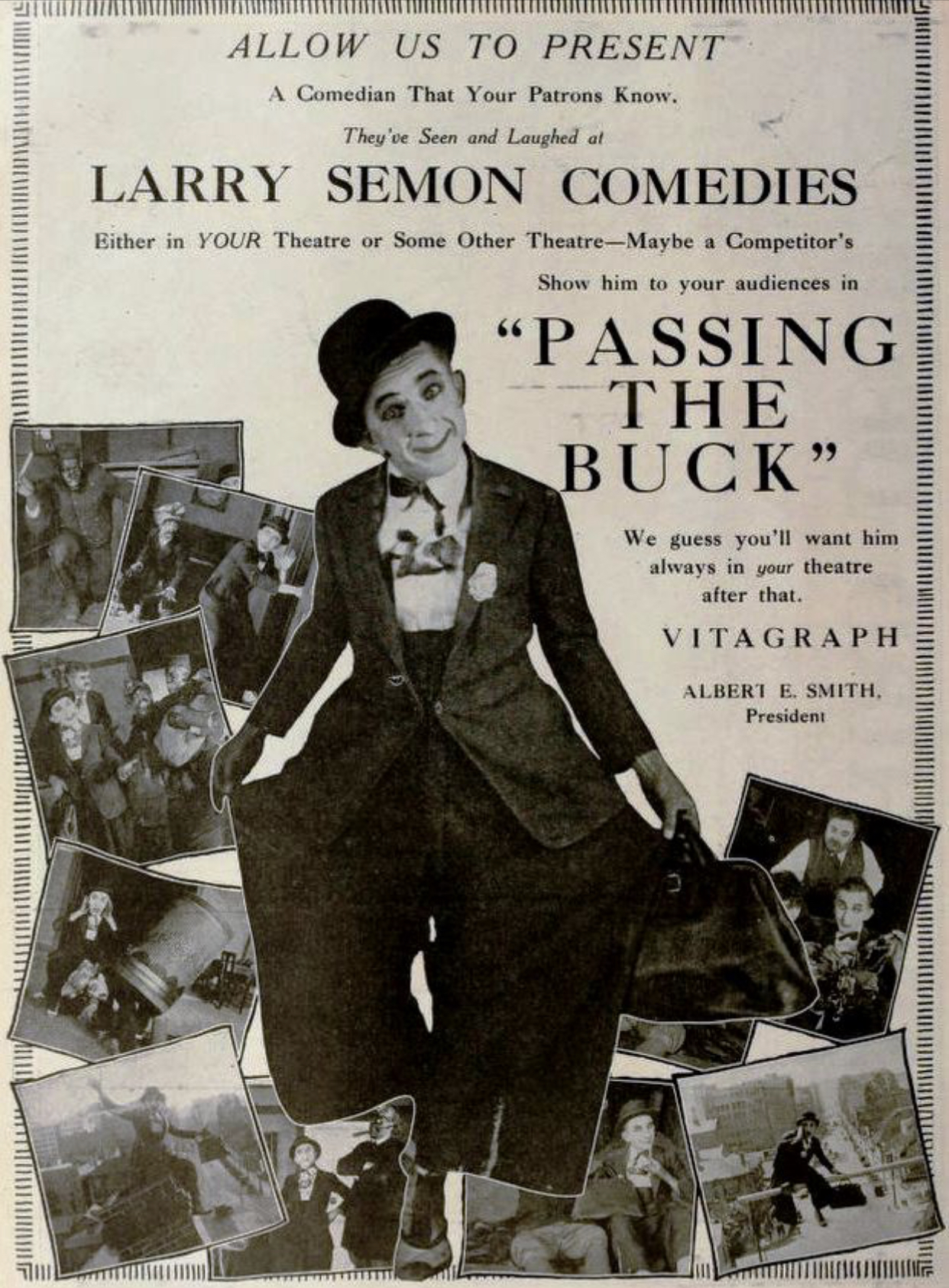
A definitive 6.6/10 rating for a film that redefined the boundaries of cult cinema. Passing the Buck remains a cornerstone of transgressive art.
The silent era of cinema, often erroneously characterized as a primitive precursor to modern storytelling, frequently revealed a level of technical and physical choreography that contemporary CGI-laden blockbusters struggle to emulate. Among the pantheon of frantic visionaries who defined this period, Larry Semon remains a figure of polarizing genius. In his 1919 effort, Passing the Buck, Semon orchestrates a symphony of chaos that transcends the mere 'gag' and enters the realm of structuralist comedy. Unlike the grounded, character-driven narratives found in As the Sun Went Down, Semon’s work is a celebration of the impossible, a rejection of gravity, and a masterclass in the escalation of stakes.
The film opens by establishing a veneer of high-society tranquility. The hotel lobby, a microcosm of early 20th-century class dynamics, is populated by 'pretty women' who serve as aesthetic anchors in an otherwise volatile environment. Larry’s role as the 'secret guardian' is a fascinating narrative device; it positions him as both an insider and an outsider, a ghost in the machine of luxury. This setting provides a stark contrast to the gritty realism of The Prison Without Walls, opting instead for a sanitized, gilded playground where the only real threat is the loss of property—specifically, a valise brimming with jewels.
When the jewels are introduced, the film’s pacing undergoes a radical metamorphosis. The 'buck' being passed is not merely a metaphor for responsibility, but a literal object of desire that dictates the movement of every character on screen. Semon, acting as both writer and lead, understands that the hotel safe is more than a plot device; it is the center of a centrifugal force. As soon as the crooks glimpse the gems, the film sheds its leisure-suit and dons the frenetic garb of the chase. The spatial logic of the hotel is exploited with an ingenuity that rivals the domestic disruptions seen in The Lost Bridegroom.
Larry Semon’s screen persona—a stark, white-faced figure with an almost jittery energy—serves as a visual disruption to the lush production design of Vitagraph films. While contemporaries like Buster Keaton were the 'Great Stone Face,' Semon was a whirlwind of expressive anxiety. In Passing the Buck, this energy is channeled into a defensive posture. He is not the aggressor but the protector, a role that allows him to weaponize his surroundings in increasingly absurd ways. His interactions with the cast, including the formidable Frank Alexander and the graceful Lucille Carlisle, create a rhythmic counterpoint that keeps the audience in a state of perpetual anticipation.
The inclusion of Spencer Bell is a point of significant historical interest. Bell, a frequent collaborator with Semon, often bore the brunt of the era’s problematic racial tropes. However, from a purely technical standpoint, his comedic timing and physical resilience were indispensable to the 'Semon style.' The interplay between Semon and Bell in this film highlights a level of stunt-work that was genuinely perilous. Unlike the more somber explorations of social duty in Pro Patria, the stakes here are purely physical, yet they carry an visceral weight because of the tangible nature of the stunts.
The 'art and artifice' employed by the crooks to separate Larry from the jewels constitutes the meat of the film’s second act. Here, the film deviates from the traditional crime drama—such as the psychological depth found in Raskolnikov—and instead treats the heist as a series of Rube Goldberg-esque challenges. Every door, window, and service lift becomes a potential trap or a means of escape. The crooks are not mere villains; they are the catalysts for Semon’s physical poetry. They represent the encroaching chaos of the outside world, attempting to breach the sanctity of the hotel’s vault.
One must admire the sheer scale of the production. Semon was notorious for inflating budgets with his insistence on elaborate sets and massive, destructive gags. In Passing the Buck, this extravagance is visible in the fluid camera work and the density of the action. While a film like A Bid for Fortune might rely on narrative tension to sustain interest, Semon relies on visual overwhelming. The viewer is never given a moment to breathe, as the 'buck' is passed through a gauntlet of increasingly improbable scenarios.
To understand the significance of Passing the Buck, one must view it through the lens of its contemporaries. It lacks the pastoral charm of Davy Crockett or the wartime satire of Arms and the Girl. Instead, it occupies a space of pure, unadulterated kineticism. It shares some DNA with Speedy Meade in its preoccupation with velocity, but Semon’s film is more focused on the spatial constraints of its urban setting. The hotel is a labyrinth, and Larry is its Minotaur, albeit a Minotaur who is constantly tripping over his own hooves.
Furthermore, the film’s treatment of the 'pretty women' lounging in the lobby suggests a subtle commentary on the idle rich. While Barriers of Society takes a more direct approach to class warfare, Semon uses the socialites as mere set dressing—human furniture that Larry must navigate around. This dehumanization is not malicious but rather a byproduct of the slapstick genre’s requirements: everything and everyone is a prop to be used in the service of the gag.
Semon’s direction is characterized by a relentless forward momentum. The editing in Passing the Buck is remarkably sophisticated for 1919, utilizing cross-cutting to build tension during the heist sequences. The use of depth of field, particularly in the long corridors of the hotel, allows for multiple layers of action to occur simultaneously. This density of information was a hallmark of the Vitagraph style, distinguishing it from the more sparsely staged productions of the era, such as As a Woman Sows.
The lighting, too, deserves mention. While many comedies of the period relied on flat, high-key lighting, the sequences involving the hotel safe utilize shadows to heighten the sense of 'mystery'—even if that mystery is immediately subverted by a pie to the face or a spectacular fall. This interplay of light and dark mirrors the film’s thematic tension between the 'roses' of Larry’s peaceful existence and the 'artifice' of the criminal underworld. It is a visual representation of the dual life Larry leads as the hotel’s secret guardian.
As the film reaches its crescendo, the distinction between the hero and the villains becomes blurred by the sheer speed of the action. The jewels, once the primary motivation, become secondary to the survival of the characters within the mechanical meat-grinder of Semon’s choreography. This shift from material desire to existential slapstick is what elevates Passing the Buck above its peers. It is not just about the gems; it is about the resilience of the human spirit when confronted with a world that refuses to obey the laws of physics.
In the broader context of silent film history, Semon is often overshadowed by the likes of Chaplin or Keaton. However, a close reading of this film reveals a creator who was deeply invested in the cinematic medium’s potential for pure, unmediated spectacle. While La España trágica o Tierra de sangre might offer more in the way of cultural gravitas, Semon offers a visceral thrill that is uniquely cinematic. He reminds us that film began as a 'cinema of attractions,' and in Passing the Buck, the attraction is the sublime beauty of a perfectly executed disaster.
Ultimately, Passing the Buck stands as a testament to a bygone era of craftsmanship. The cast, from the stalwart James Donnelly to the often-overlooked Louise Du Pre, performs with a synchronized precision that suggests weeks of grueling rehearsal. The writing, credited to Semon himself, is a lean, efficient engine designed to deliver maximum impact with minimum exposition. It lacks the sprawling narrative ambition of Love's Pilgrimage to America, but it succeeds entirely within its own self-imposed boundaries.
For the modern viewer, the film offers more than just a historical curiosity. It is an invitation to witness the birth of the action-comedy, a genre that would eventually dominate the global box office. Larry Semon’s 'secret guardian' may be a figure from the past, but his struggle against the 'art and artifice' of a chaotic world remains universally relatable. Whether he is locking gems in a safe or navigating a lobby full of distractions, Larry is a surrogate for all of us trying to maintain order in an inherently disorderly universe. This is the enduring power of Passing the Buck: it turns the mundane act of security into an operatic display of human frailty and ingenuity.
In conclusion, if one wishes to see the pinnacle of 1910s physical comedy, they need look no further than this hotel lobby. Semon’s vision is a chaotic, beautiful, and relentlessly entertaining piece of celluloid history that deserves a prominent place in the conversation of early American cinema, right alongside the dramatic weight of The Rose of Blood or the international flair of Mister Smith fait l'ouverture.
IMDb —
1919
Community
Log in to comment.