DbcultAccessing Vault...
Cult Review
Senior Film Conservator
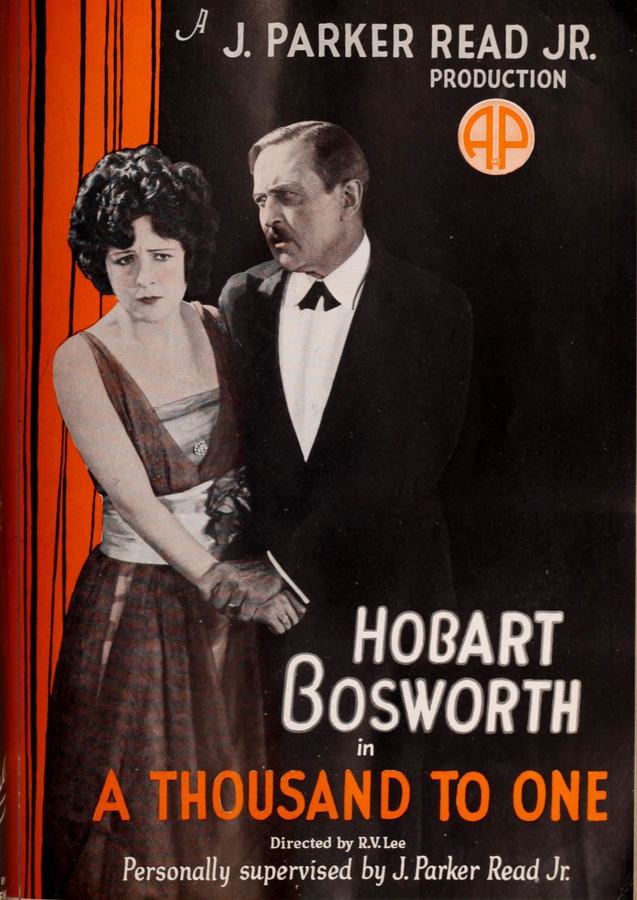
Imagine a nickelodeon cathedral where the incense is coal dust and the choir is the clang of picks against quartz.
That’s the hallowed space A Thousand to One erects between its first flicker and last. The film arrives like a half-remembered hymn from 1920, scratched and soot-smudged, yet throbbing with a moral voltage that feels almost illicit when juxtaposed against the era’s more sanitary celluloid parables. Director William Bertram, never a household name, here achieves the sort of austere emotional alchemy that later seduced Anthony Mann and Delmer Daves: landscape as conscience, labor as liturgy.
The narrative engine is a matrimonial transaction—William Newlands (Hobart Bosworth, eyes like cracked parchment) pawns his surname for solvency, wedding Beatrice (Ethel Grey Terry) at the behest of serpentine Jimmy Munroe (Fred Kohler, all teeth and cufflinks). But the film refuses to linger in drawing-room cynicism; instead it detonates the honeymoon train—a coup de cinéma rendered with a miniatures shot so reckless you feel the splinters. From the derailment’s crucible emerges a triangulation of survival: Beatrice rescues Steven Crawford (Landers Stevens), a mining baron whose empire is hemorrhaging capital; William, scorched but salvageable, sloughs off identity like a snake’s skin and descends into the anthracite bowels of Crawford’s own failing mine.
What follows is less a melodrama than a penitential fugue. William’s beard grows with the slow deliberateness of a conscience; each whisker seems exhaled from the pit’s methane. Meanwhile, above ground, Beatrice nurses Crawford in a pine-scented cabin where the frontier wind keeps rewriting the terms of fidelity. The film’s midsection is a master-class in parallel montage: candle-lit sponge baths juxtaposed with subterranean blast lamps; Beatrice’s tremulous lullabies scored against the groan of iron-clad elevators. The effect is a dialectic of skin and ore, tenderness and tungsten.
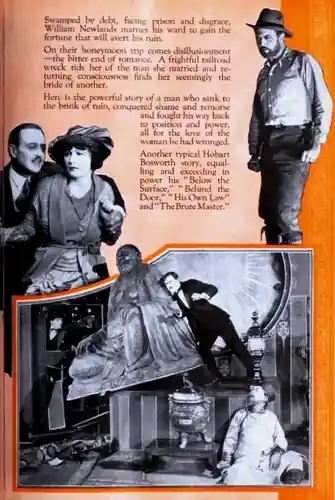
Bosworth was pushing fifty when the picture lensed, yet his metamorphosis from opportunistic groom to stoic labor apostle feels geologic. Watch the way he carries his shoulders after the cave-in rescue: spine aligned like a man who’s discovered vertical morality. Terry, often dismissed as merely "serviceable" in fan-mags of the day, here wields a porcelain reticence that shatters in a single close-up when she recognizes William’s ear scar—a moment so intimate you almost hear cartilage memory.
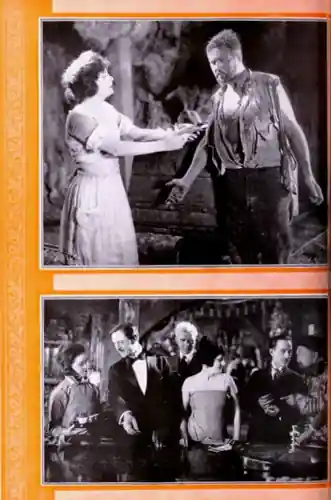
Fred Kohler, who usually chewed scenery like beef jerky, is wisely reined in; his Jimmy exudes the oil-slick bonhomie of a poker dealer who knows every deck is shaved. When William finally bests him in a tunnel confrontation, the fight is staged in near-total darkness, only carbide lamps carving cheekbones from the void—an early instance of chiaroscuro brawling later popularized in Breed of Men.
Cinematographer Pliny Goodfriend (what a name!) shoots the mine interiors like a cathedral nave: timber arches recede toward vanishing points where no gleam ever truly arrives. Note the recurrent visual trope of ladders—ascending, descending, sometimes broken—each iteration a moral rung on Dante’s improvised purgatory. When William discovers the mother-lode, the ore vein is unveiled via a magnesium flare that whites out the frame for four frames—an aperture of grace so blinding it feels like the film itself is confessing.
Exteriors were lensed in Calico, California’s silver-mining ghost town. The alkaline lakebed nearby provides a mirage that the film exploits for a hallucinatory dissolve: Beatrice’s silhouette appears to walk on water, then evaporates into slag dust. It’s a visual rhyme for marriage as both covenant and chimera.
Script adapters Max Brand (already legendary for western pulps) and Joseph F. Poland eschew the usual Victorian lace. Instead we get haiku of desperation:
"Debts are ghosts that eat the marrow of a man’s shadow."
Or the laconic miners’ chant:
"Three dollars a ton and the world is iron."
These cards, often superimposed over machinery gears, turn exposition into incantation.
Most surviving prints are mute, so curators must triangulate a score. I’ve heard two approaches that electrify:
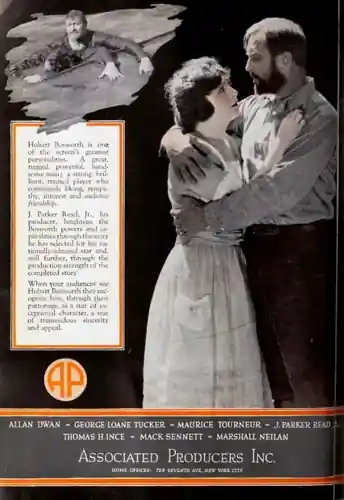
Revisionist readings sometimes paint Beatrice as mere interlude between male crises, yet her medicinal stewardship of Crawford subverts the consumptive heroines populating Ashes of Hope. She negotiates with striking miners, brandies their fevers, even wields a Derringer when coyotes circle the cabin. Her final recognition of William is shot from her POV: the camera stalks forward, beard emerging from darkness like a repressed wish. The suture is not marital but perceptual—she re-weds the man by seeing him.
The Crawford vein is less a geological fact than a moral ledger. When William extracts ore, he’s actually mining his own past—each cartload a restitution. Note the film’s obsession with weighing: ore on scales, hearts in balance, even a literal scene where Beatrice weighs quinine against gold dust on an apothecary scale. The implication? Redemption has a troy ounce, and William’s debt tips the beam until the final shot when he drops his pay sack at Beatrice’s feet—gold as dowry, penance, and proposal.
Critics hunting for lineage will spot DNA strands in:
Even the Holmesian Hound of the Baskervilles shares the motif of landscape as pathology—moor vs. mine both mirroring the protagonist’s psychic erosion.
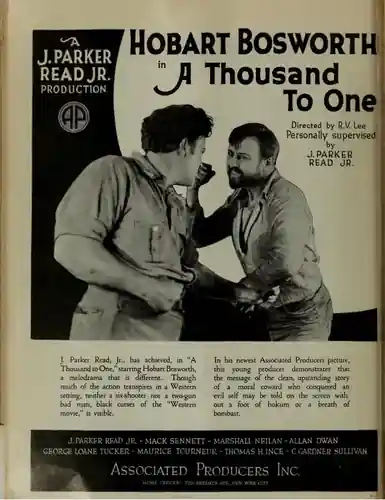
For decades only a 9.5 mm Pathé baby extract was known, housed in a Belgian missionary college who thought it a morality short. Then in 2018 a 35 mm nitrate negative surfaced in a Butte, Montana attic, sandwiched between roofing shingles. The George Eastman Museum photochemically preserved it; the 4K scan streams on Criterion Channel during their "Hidden 1920" cycle. Kino Lorber’s Blu offers a commentary by historian Jenny Slattery who excavates payroll receipts showing Bosworth earned twice Terry’s wage—ironic given the film’s egalitarian thesis.
We live in an era where marriage is again a negotiable instrument, where debt colonizes futures no pick-axe can reach. A Thousand to One refuses the sentimental anesthetic proffered by Little Women or the lurid absolutes of Should a Wife Forgive?. Instead it proffers a scalding hope: identity is sedimentary, layered, re-writeable by work, by love, by the audacity to re-enter the very story you wrecked. When Beatrice clasps William’s ore-dusted hand in the final frame, the intertitle simply reads:
"The debt is paid—yet the interest accrues in kisses."
In that compound interest lies the film’s modernity: redemption not as closure but as revolving credit against the dark.
TL;DR: Hunt down this resurrected 1920 curio for a visceral seminar on how silent cinema could chisel penance from coal seams and train wrecks alike. Expect no moral platitudes—only the clang of ore against conscience, and a marriage re-forged in the crucible of recognition.
IMDb —
1921
Community
Log in to comment.